Ultra-Fine Metal Ion Analysis Chip (50 um)
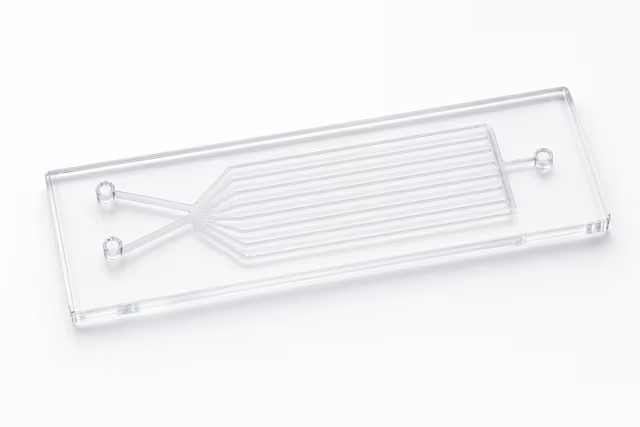
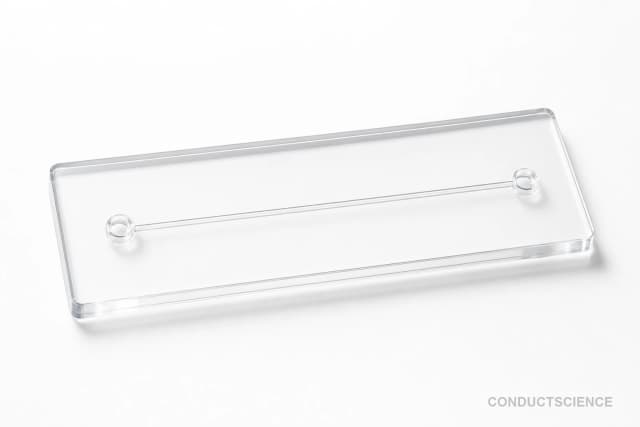
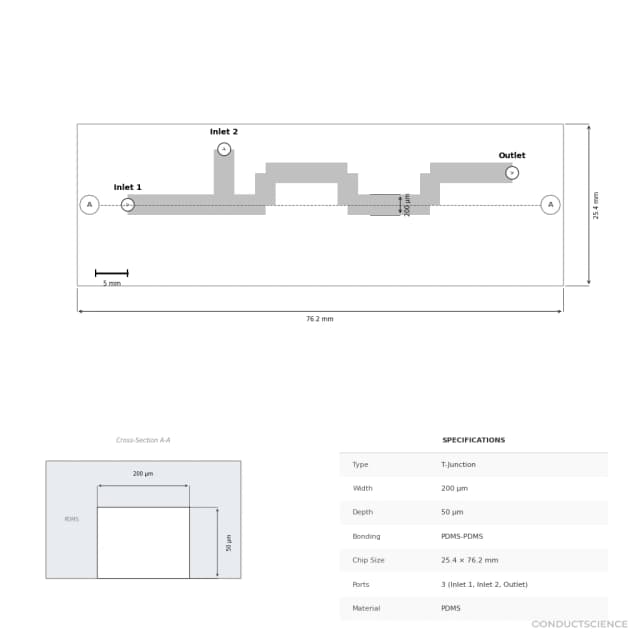
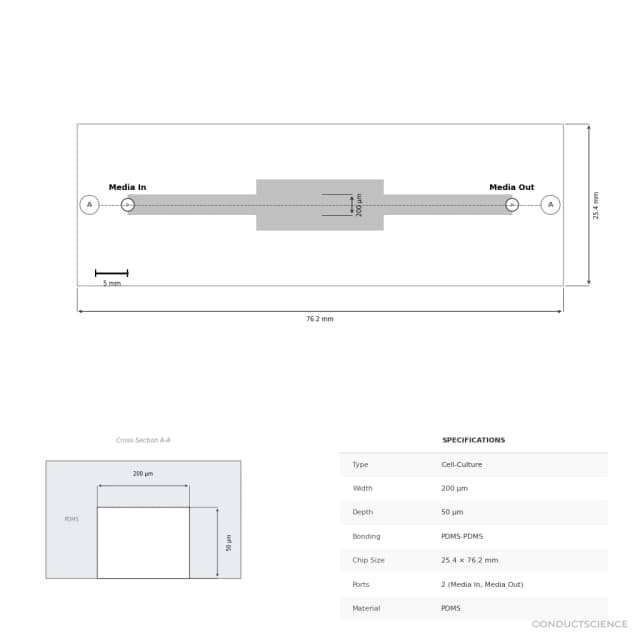
Microfluidic electrochemical sensor with 50 x 40 μm channels for high-sensitivity trace metal ion analysis in environmental and analytical applications.
Reusable chip — designed for multiple experimental runs. Compatible with standard microfluidic tubing: steel pins (0.7 mm ID / 1.0 mm OD) and silicone tubing (0.8 mm ID / 1.9 mm OD). Available in bulk packs (5‑, 10‑, and 25‑unit) for lab-scale and consumable workflows.

Louise Corscadden, PhD
Director of Science · ConductScience
Ask Louise about Ultra-Fine Metal Ion Analysis Chip (50 um) fit, setup, configuration, or quote prep.
Already working with us? Sign in to connect this with My Scientist.
Key Specifications
Full details →- Model fit
- 3 selectable configurations
- SKU family
- WHM-0134
- Shipping box
- 181.8 x 136.3 x 90.9 cm
- Ordering
- Online checkout and quote request available
- Category
- Environmental Detection Chips
- Build notes
- Confirm accessories, station layout, and support needs before purchase
The Ultra-Fine Metal Ion Analysis Chip (50 μm) is a microfluidic electrochemical sensor designed for trace metal detection and quantification in environmental and analytical applications. The chip features 50 x 40 μm microchannels optimized for high-sensitivity analysis of metal ions at ultra-low concentrations. Electrochemical detection provides direct, real-time measurement capabilities without requiring sample preconcentration or complex optical systems.
This microfluidic platform enables researchers to perform quantitative metal ion analysis with minimal sample volumes and reduced analysis time compared to traditional methods. The ultra-fine channel dimensions enhance mass transport efficiency and increase surface-to-volume ratios, improving detection sensitivity for trace-level measurements. The chip design accommodates standard microfluidic connectors and is compatible with common electrochemical measurement systems.
How It Works
The Ultra-Fine Metal Ion Analysis Chip operates on electrochemical detection principles, utilizing controlled potential techniques to selectively detect and quantify metal ions. Sample solution is introduced into the 50 x 40 μm microchannel where target metal ions interact with working electrodes integrated into the chip design. The electrochemical cell configuration enables voltammetric or amperometric measurements depending on the analytical protocol.
The ultra-fine channel dimensions create high surface-to-volume ratios that enhance mass transport of analytes to the electrode surface. This microfluidic environment promotes efficient mixing and reduces diffusion distances, resulting in improved signal-to-noise ratios and faster equilibration times. Metal ions undergo oxidation or reduction reactions at characteristic potentials, generating measurable current responses proportional to concentration.
Electrochemical stripping techniques can be employed for enhanced sensitivity, where metal ions are first preconcentrated at the electrode surface through controlled potential deposition, then stripped using potential scanning to generate amplified analytical signals.
Features & Benefits
Shipping weight
- 3.3 lb
Shipping box
- L: 181.8 cm
- W: 136.3 cm
- H: 90.9 cm
| Feature | This Product | Typical Alternative | Advantage |
|---|---|---|---|
| Channel Dimensions | 50 x 40 μm microchannels | Conventional electrochemical cells typically use millimeter-scale dimensions | Ultra-fine channels provide higher surface-to-volume ratios for enhanced mass transport and detection sensitivity. |
| Detection Method | Electrochemical detection system | Some alternatives rely on optical detection or require sample preconcentration | Direct electrochemical measurement eliminates the need for complex optical systems or time-consuming sample preparation. |
| Sample Volume | Microliter sample requirements | Traditional methods often require milliliter sample volumes | Minimal sample consumption is critical when analyzing precious or limited-volume samples. |
| Application Focus | Optimized for trace metal analysis with high sensitivity | General-purpose electrochemical sensors may lack optimization for ultra-low concentrations | Specialized design targets the specific requirements of environmental and analytical trace metal detection. |
This chip provides electrochemical detection in 50 x 40 μm microchannels specifically optimized for trace metal analysis. The ultra-fine channel dimensions and microfluidic platform design offer enhanced sensitivity and reduced sample consumption compared to conventional electrochemical measurement approaches.
| Model | SKU | Listed price | Status | Shipping box |
|---|---|---|---|---|
| 25-Pack | WHM-0134-25PK | Quote | Available | 181.8 x 136.3 x 90.9 cm |
| 10-Pack | WHM-0134-10PK | $1,490.00 | Available | 181.8 x 136.3 x 90.9 cm |
| 5-Pack | WHM-0134-5PK | Quote | Available | 181.8 x 136.3 x 90.9 cm |
Practical Tips
Use degassed electrolyte solutions to prevent bubble formation in the microchannels during analysis.
Why: Air bubbles can disrupt fluid flow and interfere with electrochemical measurements.
Perform calibration with standard solutions covering the expected concentration range of your samples.
Why: Electrochemical response may be non-linear at trace concentrations, requiring appropriate calibration curves.
Flush channels with clean electrolyte between analyses to prevent carryover and electrode fouling.
Why: Residual metal ions from previous samples can interfere with subsequent measurements and affect accuracy.
Allow sufficient equilibration time after sample introduction before recording measurements.
Why: The microfluidic environment requires time for complete sample exchange and electrode response stabilization.
If baseline drift occurs, perform electrode cleaning cycles in supporting electrolyte.
Why: Electrode surface contamination can cause unstable baselines and poor analytical precision.
Handle the chip carefully to avoid damage to the delicate microchannel structure.
Why: Ultra-fine channels are susceptible to blockage or structural damage from excessive pressure or mechanical stress.
Setup Guide
What’s in the Box
- Ultra-Fine Metal Ion Analysis Chip (50 μm)
- Fluidic connection fittings (typical)
- User manual and protocols (typical)
- Quality control documentation (typical)
Warranty
ConductScience provides a one-year manufacturer warranty covering defects in materials and workmanship. Technical support includes application guidance and troubleshooting assistance for optimal system performance.
Compliance
What metal ions can be detected with this chip?
The chip supports electrochemical detection of various metal ions including heavy metals like lead, mercury, cadmium, and other electroactive species. Specific detection capabilities depend on the electrochemical measurement technique and electrode materials used.
What sample volume is required for analysis?
The ultra-fine microchannel design requires minimal sample volumes, typically in the microliter range. Exact volume requirements depend on the analysis protocol and residence time needed for optimal detection.
How does this compare to conventional electrochemical cells?
The 50 x 40 μm channels provide higher surface-to-volume ratios and improved mass transport compared to millimeter-scale conventional cells, resulting in enhanced sensitivity and faster analysis times.
What electrochemical techniques are compatible?
The chip supports various electrochemical methods including cyclic voltammetry, differential pulse voltammetry, and stripping voltammetry techniques for trace metal analysis.
Can the chip be reused for multiple analyses?
Reusability depends on the specific metal ions analyzed and electrode fouling characteristics. Proper cleaning protocols between analyses can extend chip lifetime for multiple measurements.
What detection limits can be achieved?
Detection limits vary with the specific metal ion and measurement conditions. The ultra-fine channel geometry and electrochemical detection enable trace-level analysis capabilities. Consult product datasheet for specific sensitivity specifications.
Is the chip compatible with standard potentiostats?
Yes, the chip is designed to interface with standard electrochemical measurement systems and potentiostats commonly used in analytical laboratories.
Have a question about this product?
Have a question? Just ask.
Send it over and we'll email you a personalized answer — no call, no scheduling.
Prefer to talk it through?