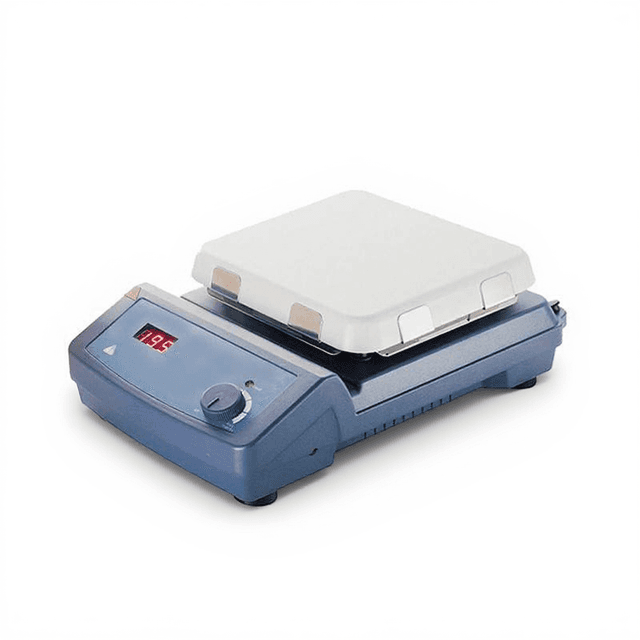
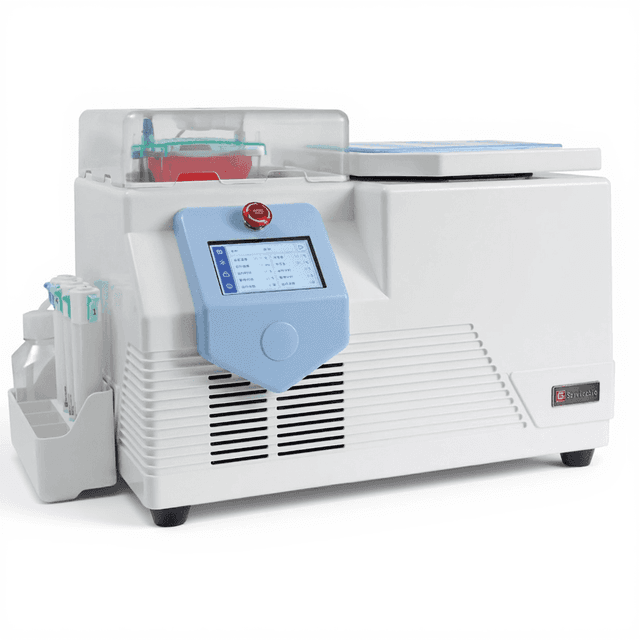
Vertical Rotating Mixer BK-RL20 MX-RL-E MX-RL-Pro
Vertical rotating mixer with brushless DC motor providing precise speed control from 10-100 rpm for gentle laboratory mixing applications.

Louise Corscadden, PhD
Director of Science · ConductScience
Ask Louise about Vertical Rotating Mixer BK-RL20 MX-RL-E MX-RL-Pro fit, setup, configuration, or quote prep.
Already working with us? Sign in to connect this with My Scientist.
Key Specifications
Full details →- Model fit
- Configured during quote
- SKU family
- BIO-0593
- Shipping box
- 28.5 x 52.3 x 23.7 cm
- Ordering
- Online checkout and quote request available
- Category
- Benchtop Instruments
- Build notes
- Confirm accessories, station layout, and support needs before purchase
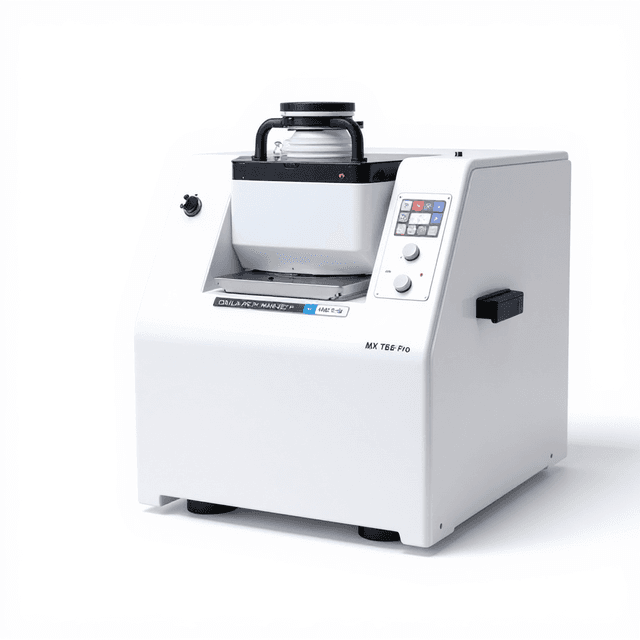
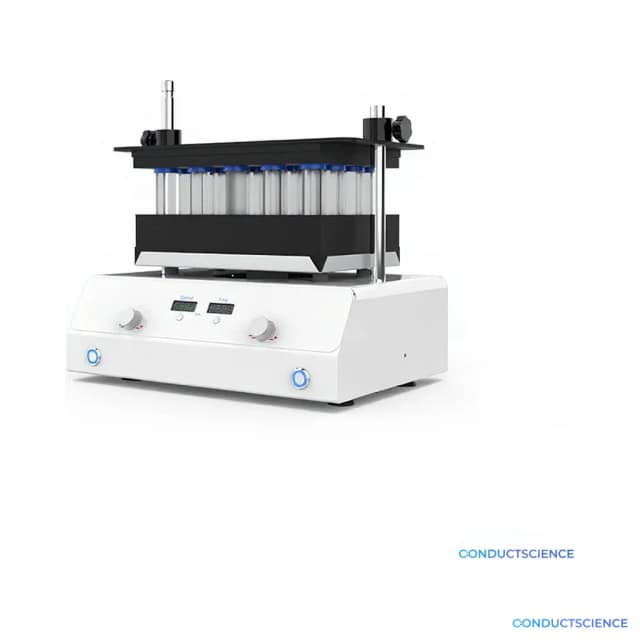
The Vertical Rotating Mixer BK-RL20 series provides controlled rotational mixing for laboratory applications requiring gentle, consistent agitation. This benchtop instrument utilizes a brushless DC motor to deliver precise speed control across a range of 10-100 rpm, with timing capabilities extending up to 9999 minutes for extended mixing protocols.
Available in multiple configurations (MX-RL-E and MX-RL-Pro), the system accommodates various sample types and volumes through vertical rotation mechanics. The LED or LCD display interface provides clear monitoring of operational parameters, while the continuous or timing operation modes support both brief mixing protocols and extended incubation procedures requiring intermittent agitation.
How It Works
The vertical rotating mixer operates through controlled rotational motion around a vertical axis, providing gentle agitation that maintains sample homogeneity without generating excessive turbulence. The brushless DC motor system delivers precise speed control, eliminating the vibration and speed fluctuations associated with brushed motor designs.
Samples are secured in the rotating mechanism and subjected to consistent rotational forces that promote mixing through gravitational and centrifugal effects. The vertical orientation ensures that samples experience uniform mixing action throughout the container, preventing stratification that can occur with horizontal mixing methods.
The timing control system allows for programmable mixing intervals, enabling automated protocols where samples require specific agitation periods followed by rest phases. This capability is particularly valuable for temperature-sensitive samples or reactions requiring controlled kinetics.
Features & Benefits
Automation Level
- semi-automated
MX-RL-E
- MX-RL-Pro
Item No.
- /
8031402000
- 8031402100
Speed Range
- 10~100rpm
0~80rpm
- 10~70rpm
Timing Range
- 1~9999min
/
- 1~1199min
Operation Mode
- Continuous or timing
Continuous
- Continuous or timing
Scale
- LCD
Motor Type
- Brushless DC motor
DC motor
- Brushless DC motor
Ambient Temp.
- 5~40°C
Brand
- ConductScience
Research Domain
- Analytical Chemistry
- Cell Biology
- Food Science
- Materials Science
- Microbiology
- Pharmaceutical QC
Display Type
- LED
Shipping weight
- 8.5 lb
Shipping box
- L: 28.5 cm
- W: 52.3 cm
- H: 23.7 cm
| Feature | This Product | Typical Alternative | Advantage |
|---|---|---|---|
| Motor Type | Brushless DC motor | Many entry-level mixers use brushed DC motors | Brushless design provides longer operational life and more consistent speed control with reduced maintenance requirements |
| Speed Range | 10-100 rpm | Basic mixers often offer narrower speed ranges | Extended range accommodates both gentle resuspension and more vigorous mixing protocols within a single instrument |
| Timing Control | Up to 9999 minutes | Standard timers typically offer shorter maximum durations | Extended timing capability supports overnight protocols and long-duration experiments without manual intervention |
| Operation Modes | Continuous or timing modes | Basic models often provide continuous operation only | Programmable timing enables automated protocols and prevents over-mixing of sensitive samples |
| Display Interface | LED or LCD display | Entry-level units may have basic analog controls | Digital display provides precise parameter monitoring and improved protocol reproducibility |
| Temperature Tolerance | 5-40°C ambient operation | Standard laboratory equipment typically operates within similar ranges | Reliable performance across typical laboratory environmental conditions without special climate control requirements |
The BK-RL20 series combines brushless motor reliability with extended timing capabilities and flexible operation modes, providing consistent vertical mixing performance for diverse laboratory applications requiring gentle, controlled agitation.
Practical Tips
Verify rotation speed accuracy periodically using a tachometer or strobe light, particularly for applications requiring precise mixing rates.
Why: Speed accuracy affects mixing efficiency and protocol reproducibility in quantitative applications
Clean the rotation mechanism and mounting hardware regularly to prevent sample contamination and ensure smooth operation.
Why: Residue buildup can affect balance and introduce contaminants to subsequent samples
Balance sample containers when using multiple positions to prevent vibration and ensure uniform mixing across all samples.
Why: Proper balance reduces mechanical stress and provides consistent mixing action for all mounted containers
If speed appears inconsistent, check for loose mounting hardware or container imbalance before adjusting motor settings.
Why: Mechanical issues often manifest as apparent speed variations and should be resolved before electronic adjustments
Document mixing parameters and duration for each protocol to ensure reproducibility across experiments and operators.
Why: Consistent mixing conditions are critical for experimental reproducibility and regulatory compliance
Ensure containers are properly secured before starting rotation and never exceed the recommended weight capacity for the mounting system.
Why: Unsecured containers can become projectiles, and overloading can damage the motor or create safety hazards
Allow the unit to reach ambient temperature before operation if moved between environments with significant temperature differences.
Why: Temperature equilibration prevents condensation formation and ensures stable motor performance
Inspect the power cord and connections regularly for signs of wear, particularly in high-use environments.
Why: Electrical safety is critical for continuous operation and prevents equipment damage from power fluctuations
Setup Guide
What’s in the Box
- Vertical rotating mixer main unit
- Power cord and adapter (typical)
- Sample mounting hardware (typical)
- User manual and operation guide (typical)
- Warranty documentation (typical)
Warranty
ConductScience provides a standard one-year manufacturer warranty covering defects in materials and workmanship, with technical support available for troubleshooting and operational guidance.
Compliance
What types of containers and volumes can be accommodated by the vertical rotation mechanism?
Consult product datasheet for specific container compatibility and weight limits. The vertical design typically accommodates standard laboratory bottles and flasks, with capacity determined by the mounting system specifications.
How does the speed control accuracy compare across the operational range?
The brushless DC motor provides consistent speed control throughout the 10-100 rpm range. Specific accuracy tolerances should be verified in the technical specifications for critical applications requiring precise rotation rates.
Can the unit operate continuously for extended periods without overheating?
The system supports continuous operation mode with ambient temperature tolerance from 5-40°C. For extended continuous operation, ensure adequate ventilation and monitor for any temperature elevation during prolonged use.
What maintenance procedures are required to maintain motor performance?
Brushless DC motors require minimal maintenance compared to brushed alternatives. Regular cleaning of the rotation mechanism and periodic inspection of mounting hardware are typically sufficient for reliable operation.
How does vertical rotation compare to horizontal mixing for different sample types?
Vertical rotation provides more uniform mixing for liquid systems and prevents stratification, while generating less shear stress than horizontal or orbital mixing methods. This makes it suitable for delicate samples requiring gentle agitation.
Can timing protocols be programmed for complex mixing sequences?
The timing range extends up to 9999 minutes with continuous or timed operation modes. For complex sequences requiring multiple intervals, consult the user manual for available programming capabilities.
What are the power requirements and electrical specifications?
Consult product datasheet for specific voltage, frequency, and power consumption requirements. Ensure electrical supply compatibility before installation.
How does the LED vs LCD display configuration affect operation?
Different models feature either LED or LCD displays for parameter monitoring. Both provide clear visibility of speed and timing settings, with specific interface details available in the model specifications.
Have a question about this product?
Have a question? Just ask.
Send it over and we'll email you a personalized answer — no call, no scheduling.
Prefer to talk it through?
Frequently Bought Together