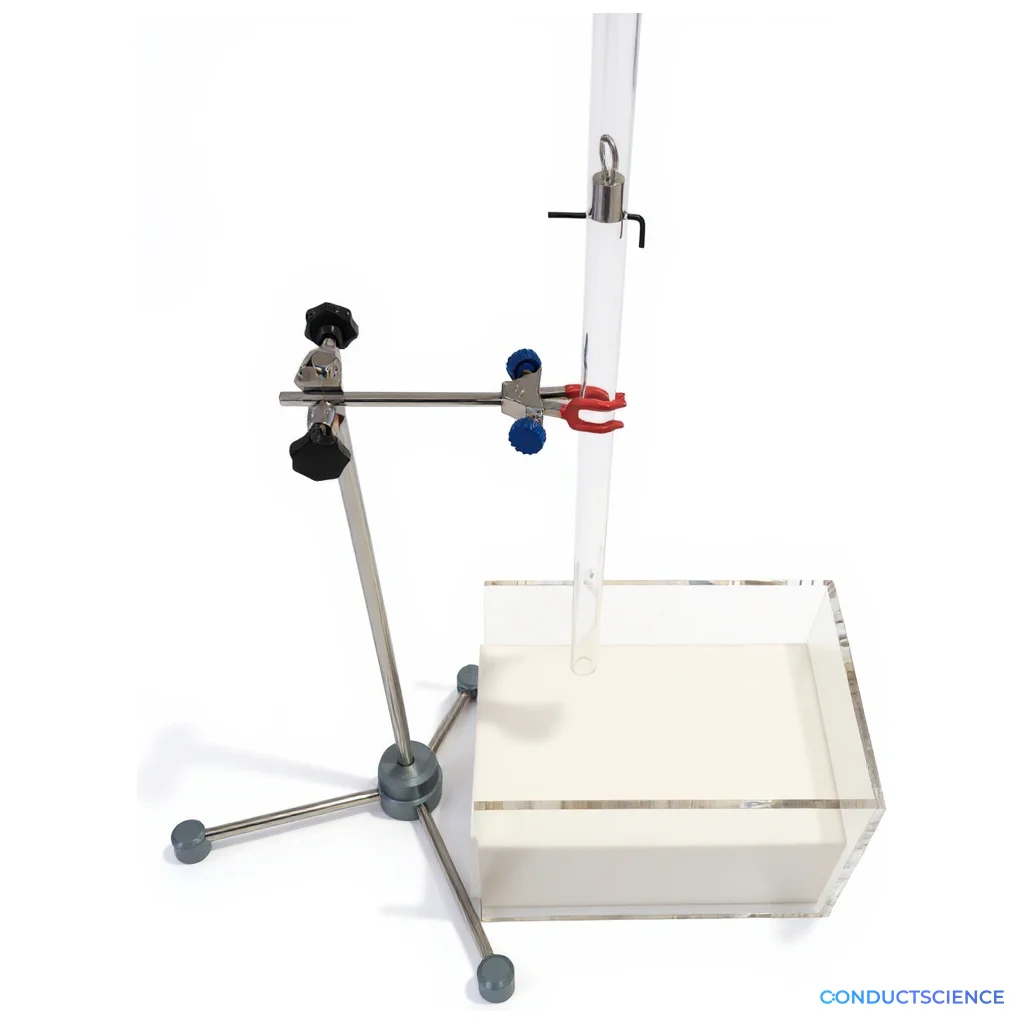
Weight Drop TBI Model System & Brass Weights
Weight-drop TBI system with selectable base setup and optional brass weight accessory configurations in a single product family.
The Weight Drop TBI Model for Mice and Rats provides researchers with a controlled method for inducing mild traumatic brain injury (mTBI) through a glancing blow mechanism that transmits acceleration, deceleration, and rotational forces to the brain. This apparatus addresses the critical need for reliable animal models of mTBI, which occurs three times more frequently than moderate and severe brain injuries combined. The system employs a freely moving rodent protocol that better replicates the biomechanics of human concussive injuries compared to traditional fixed-head models.
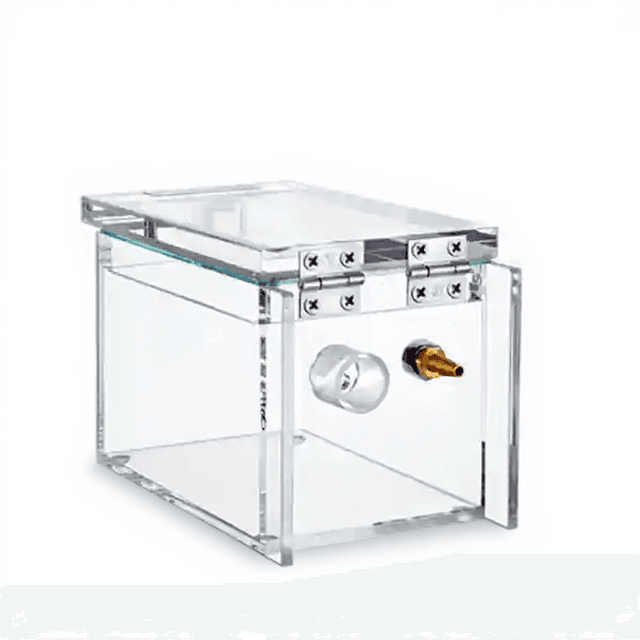
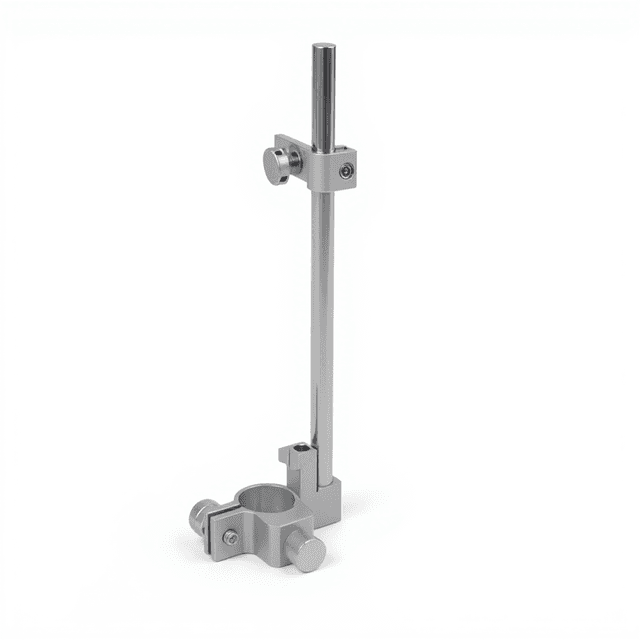
The apparatus consists of a U-shaped plexiglas stand (38 x 27 x 27 cm³) with a 150 cm guide tube containing precision-positioned holes at 50 cm and 100 cm heights. Brass weights ranging from 50g to 500g can be dropped through the 1-inch diameter guide tube to deliver controlled impact forces. The system includes a collection sponge (38 x 18 x 25 cm³) for safe animal recovery and is suitable for animals 30 days post-natal and older.
How It Works
The weight-drop TBI model operates on the principle of delivering controlled kinetic energy to a freely moving rodent's head through gravitational acceleration. A brass weight is positioned at predetermined heights (50 cm or 100 cm) within a precision guide tube and released to strike the animal's head with a glancing blow. This impact mechanism generates the three critical force components observed in human concussive injuries: linear acceleration, deceleration, and rotational forces.
The biomechanical advantage of this approach lies in the freedom of head movement during impact, which allows for more physiologically relevant energy transfer compared to fixed-head models. The glancing blow creates diffuse axonal injury patterns similar to those observed in human mTBI cases. The collection sponge system ensures safe animal recovery while maintaining experimental reproducibility.
Impact severity is controlled through weight selection (50g to 500g brass weights available) and drop height adjustment. The 1-inch diameter brass weights maintain consistent impact surface area, while the guide tube ensures reproducible trajectory and prevents off-target impacts. This standardized approach enables dose-response studies and inter-laboratory comparisons of mTBI research protocols.
Features & Benefits
Configuration
- Base System (Mice & Rats)
- Brass Weight 600gr (Accessory only)
- Brass Weight 550gr (Accessory only)
- Brass Weight 500gr (Accessory only)
- Brass Weight 450gr (Accessory only)
- Brass Weight 400gr (Accessory only)
- Brass Weight 350gr (Accessory only)
- Brass Weight 300gr (Accessory only)
Weight
- 48.04 kg
Dimensions
- L: 39.37 mm
- W: 14.96 mm
- H: 10.63 mm
Comparison Guide
| Feature | This Product | Typical Alternative | Advantage |
|---|---|---|---|
| Impact Mechanism | Glancing blow to freely moving animal with acceleration, deceleration, and rotational forces | Fixed-head models often use controlled cortical impact or fluid percussion | Better replicates the biomechanics of human concussive injuries by allowing natural head movement during impact. |
| Weight Options | Seven weight options from 50g to 500g with 1-inch diameter brass construction | Limited weight selections or non-standardized impact surfaces | Enables precise dose-response studies and accommodation of different animal sizes while maintaining consistent impact area. |
| Drop Height Adjustment | Precision holes at 50cm and 100cm with 150cm total guide tube length | Fewer height options or manual height adjustment systems | Provides standardized impact velocities with easy height selection for protocol reproducibility. |
| Animal Recovery System | Integrated collection sponge (38 x 18 x 25 cm³) for safe post-impact recovery | Separate recovery areas or less cushioned collection systems | Ensures immediate post-impact safety while maintaining sterile experimental conditions. |
| Age Range Compatibility | Suitable for animals 30 days post-natal and older | Often limited to adult animals only | Enables developmental studies of traumatic brain injury across juvenile to adult age groups. |
| Custom Options | Custom dimensions and weights available for specific experimental requirements | Fixed configurations with limited modification options | Allows protocol adaptation for unique experimental designs and non-standard animal models. |
This weight-drop TBI model provides a physiologically relevant approach to mild traumatic brain injury research through its freely moving animal protocol and precision impact delivery system. The apparatus offers comprehensive weight and height options with integrated safety features for reproducible experimental outcomes.
Practical Tips
Verify guide tube vertical alignment and weight drop trajectory before each experimental session using a test weight.
Why: Ensures consistent impact delivery and prevents off-target strikes that could affect experimental reproducibility.
Inspect brass weights for deformation or surface irregularities after every 50 impacts and replace if damaged.
Why: Maintains consistent impact surface area and energy transfer characteristics throughout the experimental series.
Standardize animal positioning by marking optimal head placement zones on the collection sponge.
Why: Reduces variability in impact angle and location, improving experimental consistency and reducing animal-to-animal variation.
Implement a two-person protocol with one operator controlling weight release and another monitoring animal positioning.
Why: Prevents accidental impacts during animal positioning and ensures immediate post-impact response capabilities.
Record ambient temperature and humidity during experiments as these factors can affect brass weight density and impact energy.
Why: Environmental conditions may introduce subtle variations in impact force that could influence injury severity and experimental outcomes.
If weights stick in the guide tube, check for debris buildup and clean with appropriate solvents, ensuring complete drying before use.
Why: Obstructions can alter drop velocity and impact timing, compromising the controlled nature of the injury induction.
Establish clear exclusion criteria for animals that do not exhibit expected post-impact responses within defined timeframes.
Why: Ensures experimental groups contain animals with appropriate injury severity and maintains statistical power for outcome measures.
Setup Guide
What’s in the Box
- U-shaped plexiglas stand (38 x 27 x 27 cm³)
- 150 cm guide tube with precision holes
- Brass weights (50g or 100g included)
- Collection sponge (38 x 18 x 25 cm³)
- Assembly hardware and fasteners
- User manual and protocol guide (typical)
- Safety guidelines documentation (typical)
Warranty
ConductScience provides a one-year manufacturer warranty covering defects in materials and workmanship, along with technical support for apparatus setup and protocol optimization.
Compliance
What impact energies can be achieved with different weight and height combinations?
Impact energy varies from 0.245 J (50g at 50cm) to 4.9 J (500g at 100cm). Consult product datasheet for complete energy calculations and recommended parameters for different injury severities.
How does this model compare to controlled cortical impact (CCI) devices?
Unlike CCI devices that deliver focal injuries to fixed heads, this weight-drop model produces diffuse injuries in freely moving animals, better replicating the biomechanics of human concussive injuries.
What anesthesia protocols are recommended for this procedure?
Brief anesthesia sufficient for animal positioning but allowing rapid recovery is typically used. Specific protocols should be developed with veterinary consultation and IACUC approval.
Can the apparatus be modified for larger animal models?
Custom dimensions and weights are available to accommodate different animal sizes. Contact manufacturer for specifications regarding modifications for animals larger than standard rats.
What post-impact monitoring is required?
Standard monitoring includes assessment of righting reflex, neurological scoring, and behavioral observation according to established mTBI protocols and institutional guidelines.
How reproducible are the injuries produced by this model?
The precision guide tube and standardized weights provide consistent impact delivery, though individual animal responses may vary. Protocol standardization and adequate sample sizes are essential for reproducible results.
What maintenance is required for the apparatus?
Regular cleaning of plexiglas components, inspection of guide tube alignment, and verification of weight integrity. The brass weights should be checked for deformation after extended use.
Can I position or fix the mouse in place during the weight drop procedure?
The system supports both fixed and freely moving rodent protocols. In the freely moving protocol, the animal is placed unrestrained on the collection sponge, which better replicates the biomechanics of human concussive injuries by allowing acceleration, deceleration, and rotational forces. For fixed-head protocols, optional positioning accessories are available. Contact us to discuss your experimental requirements.
Have a question about this product?
Accessories
Enhance your setup with compatible accessories
Frequently Bought Together