Microdrill Bit
Precision microdrill bits in 11 diameters (0.5-2.7mm) with flat or round tips for accurate drilling in neuroscience research applications.

Louise Corscadden, PhD
Director of Science · ConductScience
Ask Louise about Microdrill Bit fit, setup, configuration, or quote prep.
Already working with us? Sign in to connect this with My Scientist.
Key Specifications
Full details →- Model fit
- Hamster, Rabbit, Mouse, Rat, Guinea pig
- SKU family
- CS-958446
- Shipping box
- 65.0 x 36.0 x 27.0 cm
- Ordering
- Online checkout and quote request available
- Category
- Neuroscience Models
- Build notes
- Confirm accessories, station layout, and support needs before purchase
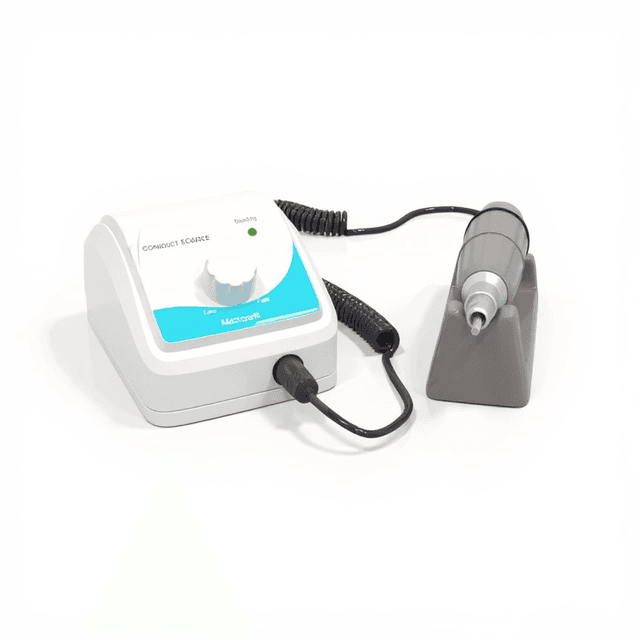
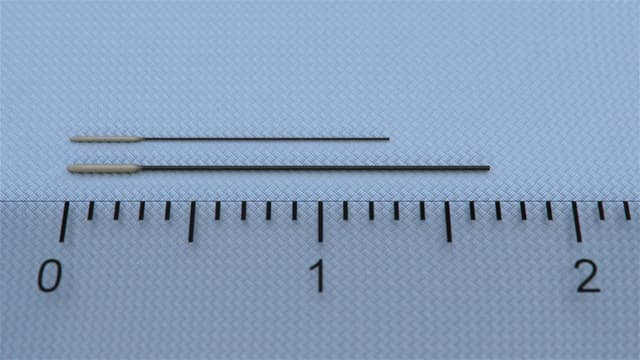
Precision microdrill bits designed for neuroscience research applications requiring accurate drilling of small-diameter holes in bone, tissue, or experimental substrates. These high-precision bits feature controlled geometry and sharp cutting edges optimized for delicate drilling operations where hole diameter accuracy and minimal tissue trauma are critical.
Available in 11 diameter options from 0.5mm to 2.7mm with both flat and round tip configurations to accommodate different drilling requirements. The range of sizes enables researchers to select the appropriate diameter for specific experimental protocols, from fine cannula guide holes to larger access ports for recording electrodes or injection sites.
How It Works
Microdrill bits function through rotational cutting action where sharp cutting edges remove material in controlled increments. The bit geometry determines cutting characteristics - flat tips provide clean entry and precise hole initiation, while round tips offer gradual penetration with reduced breakthrough force that minimizes tissue damage upon exit.
The small diameters require high rotational speeds (typically 10,000-30,000 RPM) to maintain effective cutting action while preventing bit binding or deflection. Material removal occurs through chip formation as the cutting edges shear microscopic layers of bone or tissue, with hole quality dependent on feed rate, rotational speed, and cooling if required.
Precision is maintained through rigid bit construction and sharp cutting geometry that resists dulling during repeated use. The range of available sizes allows researchers to match hole diameter precisely to experimental requirements, minimizing excess tissue removal while ensuring adequate clearance for implanted devices.
Features & Benefits
Automation Level
- manual
Research Domain
- Behavioral Pharmacology
- Histopathology
- Learning and Memory
- Motor Function
- Neuroscience
- Pain Research
Species
- Hamster
- Rabbit
- Mouse
- Rat
- Guinea pig
Shipping weight
- 6.06 lb
Shipping box
- L: 65.0 cm
- W: 36.0 cm
- H: 27.0 cm
| Feature | This Product | Typical Alternative | Advantage |
|---|---|---|---|
| Diameter Range | 11 sizes from 0.5mm to 2.7mm | Entry-level sets often provide 4-6 sizes with larger increment steps | Fine size gradation enables precise matching to experimental requirements without oversizing holes unnecessarily |
| Tip Configuration Options | Both flat and round tip styles available | Standard sets typically offer single tip geometry | Allows researchers to select optimal tip design for specific tissue types and drilling requirements |
| Size Selection Precision | Increments as small as 0.1mm between adjacent sizes | Larger increments often skip intermediate sizes | Enables exact hole-to-device clearance matching for optimal experimental outcomes |
| Small Diameter Availability | Includes 0.5mm and 0.6mm options | Many sets start at 0.8mm or 1.0mm minimum | Supports ultra-fine procedures requiring minimal tissue disruption |
This microdrill bit set provides comprehensive diameter coverage with dual tip configurations specifically designed for precision neuroscience applications. The fine size gradation and geometry options offer researchers greater experimental control than standard drilling solutions.
| Model | SKU | Listed price | Status | Shipping box |
|---|---|---|---|---|
| 2.3mm | RWD-MB78067 | $31.50 | Available | 65.0 x 36.0 x 27.0 cm |
| 2.1mm | RWD-MB78066 | $31.50 | Available | 65.0 x 36.0 x 27.0 cm |
| 1.8mm | RWD-MB78065 | $31.50 | Available | 65.0 x 36.0 x 27.0 cm |
| 1.6mm | RWD-MB78064 | $31.50 | Available | 65.0 x 36.0 x 27.0 cm |
| 1.4mm | RWD-MB78063 | $31.50 | Available | 65.0 x 36.0 x 27.0 cm |
| 1.2mm | RWD-MB78062 | $31.50 | Available | 65.0 x 36.0 x 27.0 cm |
| 1.0mm | RWD-MB78061 | $31.50 | Available | 65.0 x 36.0 x 27.0 cm |
| 0.8mm | RWD-MB78060 | $31.50 | Available | 65.0 x 36.0 x 27.0 cm |
| 2.7mm | RWD-MB78050 | $35.50 | Available | 65.0 x 36.0 x 27.0 cm |
| 2.3mm | RWD-MB78049 | $31.50 | Available | 65.0 x 36.0 x 27.0 cm |
| 2.1mm | RWD-MB78048 | $31.50 | Available | 65.0 x 36.0 x 27.0 cm |
| 1.8mm | RWD-MB78047 | $31.50 | Available | 65.0 x 36.0 x 27.0 cm |
| 1.6mm | RWD-MB78046 | $31.50 | Available | 65.0 x 36.0 x 27.0 cm |
| 1.4mm | RWD-MB78045 | $31.50 | Available | 65.0 x 36.0 x 27.0 cm |
| 1.2mm | RWD-MB78044 | $31.50 | Available | 65.0 x 36.0 x 27.0 cm |
| 1.0mm | RWD-MB78043 | $31.50 | Available | 65.0 x 36.0 x 27.0 cm |
| 0.8mm | RWD-MB78042 | $31.50 | Available | 65.0 x 36.0 x 27.0 cm |
| 0.6mm | RWD-MB78041 | $31.50 | Available | 65.0 x 36.0 x 27.0 cm |
| 0.5mm | RWD-MB78040 | $31.50 | Available | 65.0 x 36.0 x 27.0 cm |
Practical Tips
Verify hole diameter with precision pin gauges or microscopy before proceeding with device implantation.
Why: Ensures proper fit and prevents device binding or excessive clearance that could affect experimental outcomes.
Clean bits immediately after use with appropriate solvents and inspect cutting edges under magnification.
Why: Prevents debris buildup and allows early detection of edge wear that could compromise hole quality.
Use pilot holes for diameters larger than 2.0mm to improve hole accuracy and reduce breakthrough forces.
Why: Prevents bit wandering and reduces the risk of tissue damage from excessive exit-side forces.
If holes appear oversized, check for bit runout in the chuck and verify proper clamping tension.
Why: Loose or eccentric bit mounting causes orbital cutting that enlarges hole diameter beyond specification.
Document drilling parameters (speed, feed rate, cooling) for each experimental condition to ensure reproducibility.
Why: Consistent drilling conditions are essential for valid comparisons between experimental groups.
Always wear appropriate eye protection and secure loose clothing when operating high-speed rotary tools.
Why: Small bits can fragment at high speeds, and rotating equipment poses entanglement hazards in laboratory settings.
Store bits in organized cases with diameter markings to prevent size confusion during procedures.
Why: Incorrect bit selection can compromise experimental outcomes and potentially damage expensive implanted devices.
Setup Guide
What’s in the Box
- Individual microdrill bit in specified diameter and tip configuration (typical)
- Protective storage case (typical)
- Size identification marking (typical)
Warranty
ConductScience provides standard manufacturer warranty coverage for precision drilling tools, including replacement for manufacturing defects and technical support for proper application guidance.
Compliance
References
Background reading relevant to this product:
What rotational speed should be used for different bit sizes?
Smaller diameters typically require higher speeds (20,000-30,000 RPM) while larger sizes (>2.0mm) operate effectively at 10,000-20,000 RPM. Consult your rotary tool specifications for optimal speed ranges.
How do I prevent bit breakage during use?
Maintain appropriate feed rates, avoid excessive lateral pressure, and ensure the workpiece is properly secured. Back out periodically when drilling deep holes to clear debris accumulation.
What is the difference between flat and round tip configurations?
Flat tips provide precise hole initiation and clean entry, ideal for exact positioning. Round tips offer gradual penetration with reduced breakthrough force, minimizing exit-side tissue damage.
How many holes can I expect from one drill bit?
Hole count depends on material hardness and drilling parameters. Typical performance ranges from 20-100 holes in bone before significant dulling occurs. Monitor cutting efficiency and replace when drilling force increases noticeably.
Can these bits be used for both bone and soft tissue?
Yes, but adjust parameters accordingly. Bone requires higher speeds and controlled feed rates, while soft tissues need lower speeds to prevent tearing and clogging of cutting edges.
What cooling methods are recommended for extended drilling?
For bone drilling, intermittent saline irrigation helps remove debris and prevent thermal damage. For soft tissues, minimal cooling is usually sufficient due to lower cutting forces.
How do I maintain hole accuracy during deep drilling?
Use a drill guide or jig when possible, maintain consistent downward pressure, and avoid lateral forces that can cause bit deflection. Consider pilot holes for larger diameters.
Have a question about this product?
Have a question? Just ask.
Send it over and we'll email you a personalized answer — no call, no scheduling.
Prefer to talk it through?
Accessories
Enhance your setup with compatible accessories
Frequently Bought Together
Upgrade Options