Whiteness Meter for Flour and Starch
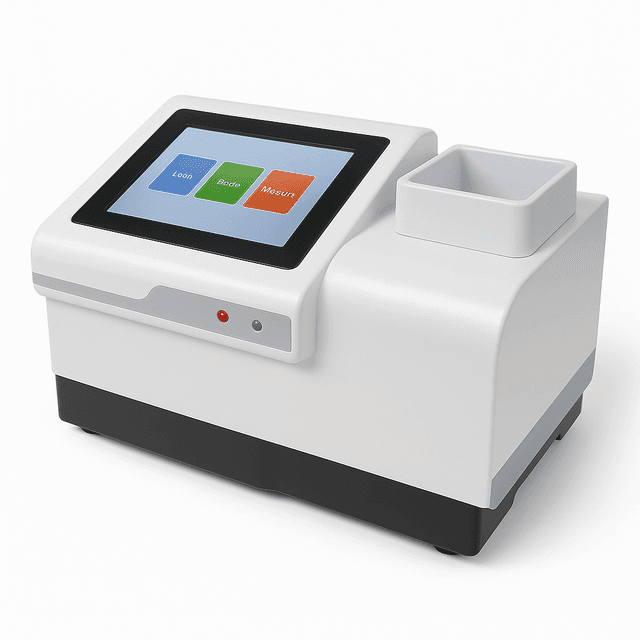
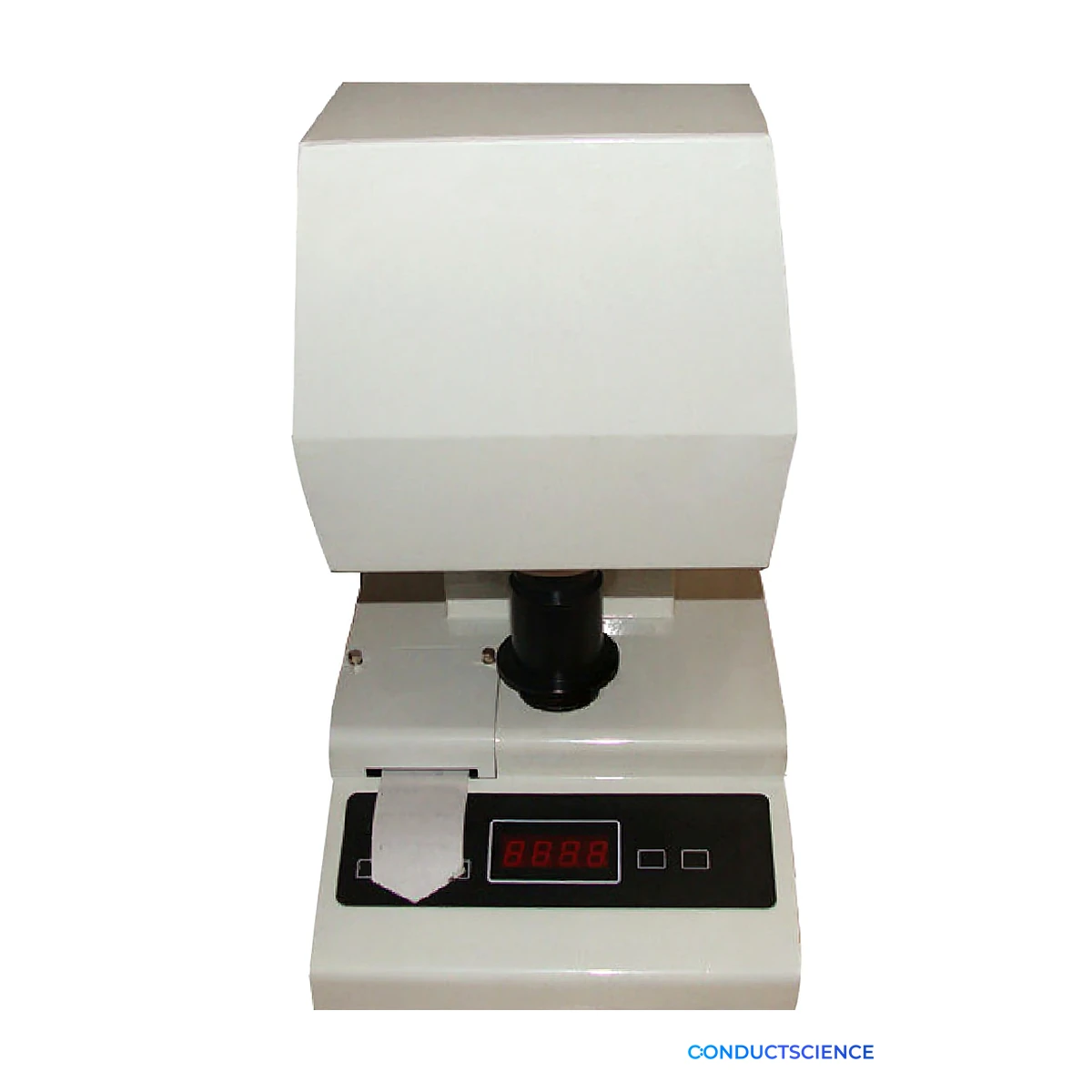
The benchtop whiteness meter reads the whiteness of flour, starch, rice flour and salt as one number on a digital display.

Louise Corscadden, PhD
Director of Science · ConductScience
Ask Louise about Whiteness Meter for Flour and Starch fit, setup, configuration, or quote prep.
Already working with us? Sign in to connect this with My Scientist.
Key Specifications
Full details →- Measuring Geometry
- d/0 (diffuse illumination, 0° viewing)
- Illumination
- Approximates CIE illuminant D65 (daylight)
- Repeatability
- ≤0.1
- Accuracy
- Within ±0.5
- Display Resolution
- 0.1
- Power Supply
- 220 V AC, 50 Hz
The meter lights the sample diffusely, with light that approximates CIE illuminant D65 (daylight). The detector views the sample straight on, along the perpendicular to its surface (d/0 geometry).
A gloss trap removes the specular (mirror-like) reflection, so surface sheen does not raise the reading. The measuring port is 20 mm in diameter. Samples must be at least 30 mm across.
Calibration is automatic once you start it. One key sets the zero, and a white standard board sets the white point. The meter saves the calibration values.
Each reading shows on the digital display at 0.1 resolution. The built-in printer prints it for your records.
Measuring Geometry
- d/0 (diffuse illumination, 0° viewing)
Illumination
- Approximates CIE illuminant D65 (daylight)
Repeatability
- ≤0.1
Accuracy
- Within ±0.5
Display Resolution
- 0.1
Power Supply
- 220 V AC, 50 Hz
Measuring Port Diameter
- 20 mm
Minimum Sample Size
- 30 mm across
Printer
- Built-in
Zero Drift
- ≤0.1
Span Drift
- ≤0.1
Operating Environment
- 0 to 40 °C, below 80% RH
Dimensions
- 32 × 40 × 48 cm
Weight
- 9.3 kg
Setup Guide
Will it run on 120 V, 60 Hz power?
No. It is built for 220 V AC at 50 Hz. If your lab runs on 120 V or 60 Hz power, request a quote before you order, and we will confirm the power setup with you.
Is a version without the printer available?
Yes. A version without the printer is available by quote. Without the printer, you read each result from the display.
How do I prepare flour so readings repeat?
Fill the cup the same way every time, press the powder with the same force and level the surface. Particle size and packing change the reading, so compare only samples prepared the same way.
Have a question about this product?
Have a question? Just ask.
Send it over and we'll email you a personalized answer, with no call or scheduling.
Prefer to talk it through?
Frequently Bought Together