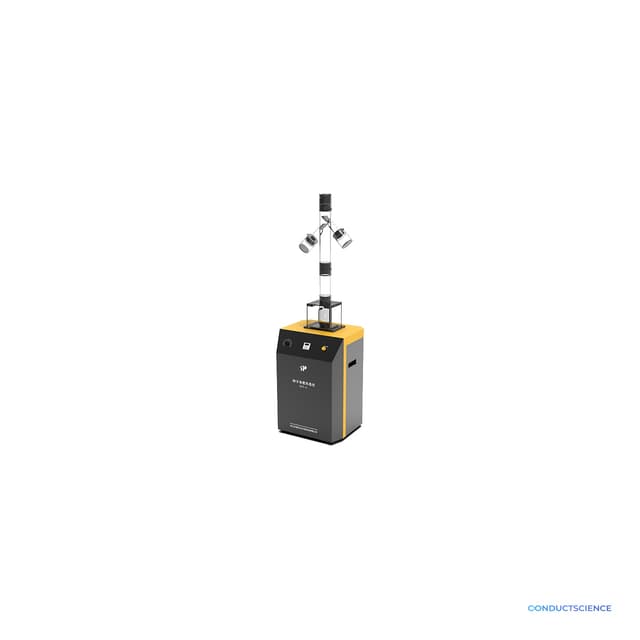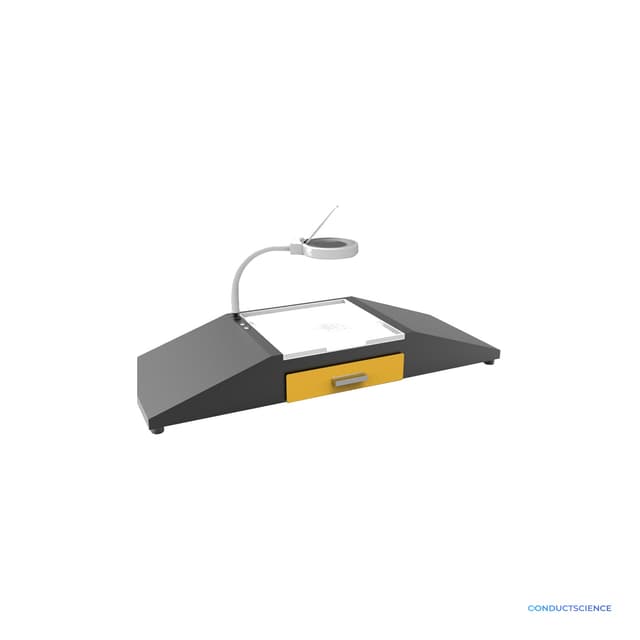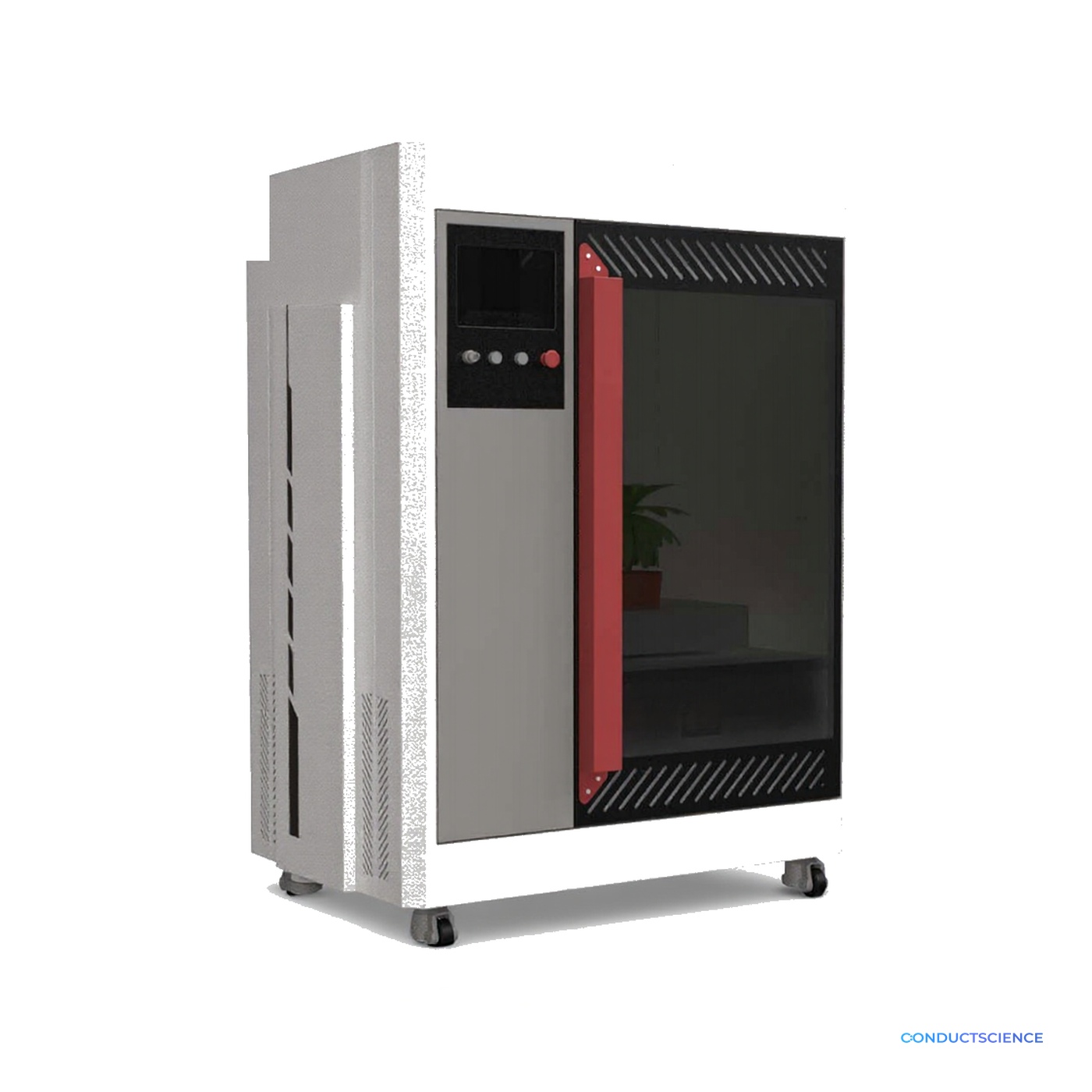
HIPS Potted Plant Phenotyping System
Configurable potted-plant phenotyping platform with 2D, 3D, and hyperspectral imaging for morphology, stress response, mutant screening, and nutrient analysis.

Louise Corscadden, PhD
Director of Science · ConductScience
Ask Louise about HIPS Potted Plant Phenotyping System fit, setup, configuration, or quote prep.
Already working with us? Sign in to connect this with My Scientist.
Key Specifications
Full details →- Model fit
- Configured during quote
- SKU family
- AGR-0027
- Sizing
- Model-specific dimensions confirmed from the selected configuration
- Ordering
- Quote-reviewed before fulfillment
- Category
- Agriculture & Food Science
- Build notes
- Confirm accessories, station layout, and support needs before purchase
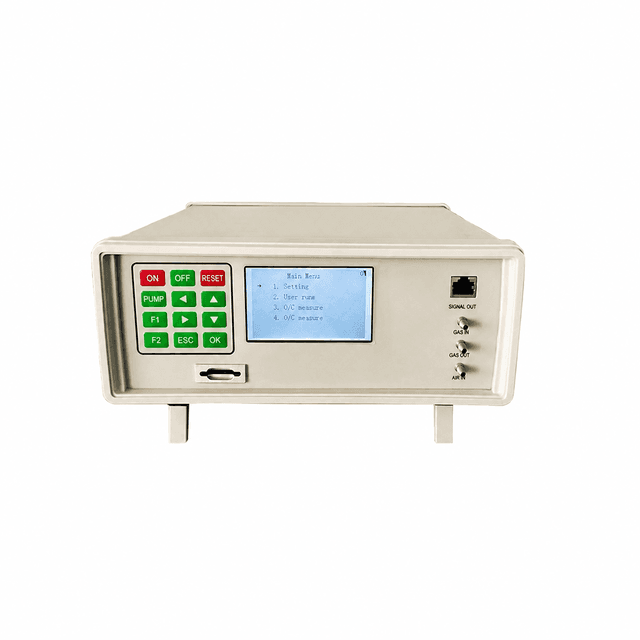
The Digital Phenotype Acquisition and Analysis System for Potted Plants (HIPS) is a configurable, multi-modal imaging platform designed to capture, quantify, and analyze the phenotypic traits of potted plants with high precision. Three imaging modalities are available—2D, 3D, and hyperspectral—allowing researchers to select the combination that best matches their study protocol and the depth of morphological or physiological data they require.
On the morphological side, the system extracts a comprehensive set of structural parameters from both top-view and side-view imagery, including contour area, convex hull area, canopy height, canopy width, leaf curling degree, leaf apex count, compactness, eccentricity, greenness retention, and senescence degree. The 3D modality builds high-precision volumetric models of each plant, enabling extraction of volume, surface area, biomass, and full-scale morphological and color trait analysis. Hyperspectral imaging adds a physiological layer, supporting plant nutritional analysis, chlorophyll quantification, disease recognition, and genotype or mutant screening through spectral differentiation.
The integrated analysis environment automatically generates canopy spectral curves, supports region-of-interest spectral comparison, and applies AI-driven algorithms to calculate vegetation indices including NDVI, RVI, and GVI. Built-in agricultural models translate spectral data into biological parameters such as nitrogen and chlorophyll content. Researchers can also build custom models for growth, disease, and stress response, and run multi-type stress experiments—heat, cold, salinity, and drought—with quantified visualization of plant responses.
Because imaging configuration, modality selection, and analytical module requirements vary by crop type, research objective, and throughput, HIPS is offered as a configured system. Reach out to request a quote and work with our team to specify the setup that fits your phenotyping protocol.
Available Imaging Modalities
- 2D, 3D, Hyperspectral
2D Morphological Parameters
- Contour Area (Top View, Side View), Convex Hull Area (Top View, Side View), Canopy Height, Canopy Width, Leaf Curling Degree, Leaf Apex Count, Greenness Retention, Senescence Degree, Compactness, Eccentricity
3D Phenotypic Analysis
- Volume, Surface Area, Biomass; full-scale morphological parameter and color trait analysis from high-precision 3D models
Hyperspectral Analysis — Nutritional & Physiological
- Plant nutritional analysis, water and fertilizer use efficiency (genotype/mutant screening), chlorophyll analysis (growth status and resistance genotype screening)
Hyperspectral Analysis — Disease & Stress
- Disease recognition and resistant genotype screening; pest and disease severity analysis via spectral curve comparison of diseased vs. healthy plant tissue; multi-type stress experiment support (heat, cold, salinity, drought)
Vegetation Indices Calculated
- NDVI, RVI, GVI (calculated via AI algorithms)
Biological Parameters Analyzed
- Nitrogen content, chlorophyll content (derived from built-in agricultural models)
Spectral Analysis Tools
- Automatic canopy spectral curve generation; region-of-interest selection for spectral comparison and analysis
Custom Modeling
- Fast custom model building using vegetation indices; supports growth, disease, and other research-defined factors
Differential Visualization
- Quantifies and visualizes differences in mutant growth and nutrient use efficiency
Which imaging modalities are available, and can I combine them?
Three imaging modalities are available: 2D, 3D, and hyperspectral. The system is configurable, so you can select a single modality or a combination depending on your research goals. 2D provides top-view and side-view structural measurements; 3D adds volumetric and surface-area analysis from high-precision models; and hyperspectral enables nutritional, chlorophyll, and disease analysis through spectral data.
What plant traits and parameters can the system measure?
The system measures a wide range of morphological and physiological traits. Structural parameters include contour area, convex hull area, canopy height, canopy width, leaf curling degree, leaf apex count, compactness, eccentricity, greenness retention, and senescence degree. The 3D modality adds volume, surface area, biomass, and color trait extraction. Hyperspectral analysis covers chlorophyll content, nitrogen content, vegetation indices (NDVI, RVI, GVI), disease severity, and nutritional status.
Can the system screen for mutants or resistant genotypes?
Yes. The platform is specifically designed for efficient genotype and mutant screening. Differential visualization tools quantify and display differences in mutant growth and nutrient use efficiency. Hyperspectral imaging supports screening for disease-resistant and stress-tolerant genotypes by comparing spectral signatures of different plant groups.
What types of stress experiments does the system support?
The system supports multi-type stress experiments, including heat, cold, salinity, and drought conditions. It captures and visualizes plant responses to these stressors and can be used to assess and compare stress resistance across different genotypes or treatment groups.
How is the system configured for my research needs?
HIPS is a configured system—modality selection (2D, 3D, hyperspectral, or a combination), analytical modules, and custom modeling options are all matched to your specific study protocol. Contact us to request a quote, and our team will help determine the configuration appropriate for your crop types, throughput requirements, and research objectives.
Have a question about this product?
Have a question? Just ask.
Send it over and we'll email you a personalized answer — no call, no scheduling.
Prefer to talk it through?
Frequently Bought Together