Near-Infrared Grain Analyzer
Fast, non-destructive NIR analysis of moisture, protein, starch, fat, gluten & ash across wheat, rice, soybean, corn & flour.
Request a quote.

Louise Corscadden, PhD
Director of Science · ConductScience
Ask Louise about Near-Infrared Grain Analyzer fit, setup, configuration, or quote prep.
Already working with us? Sign in to connect this with My Scientist.
Key Specifications
Full details →- Supported Commodities
- Wheat, Flour, Paddy Rice, Milled Rice, Soybean, Corn
- Wheat Parameters
- Moisture, Protein, Wet Gluten
- Paddy Rice Parameters
- Moisture, Starch, Protein
- Milled Rice Parameters
- Moisture, Protein, Starch
- Soybean Parameters
- Moisture, Protein, Fat
- Corn Parameters
- Moisture, Starch, Protein
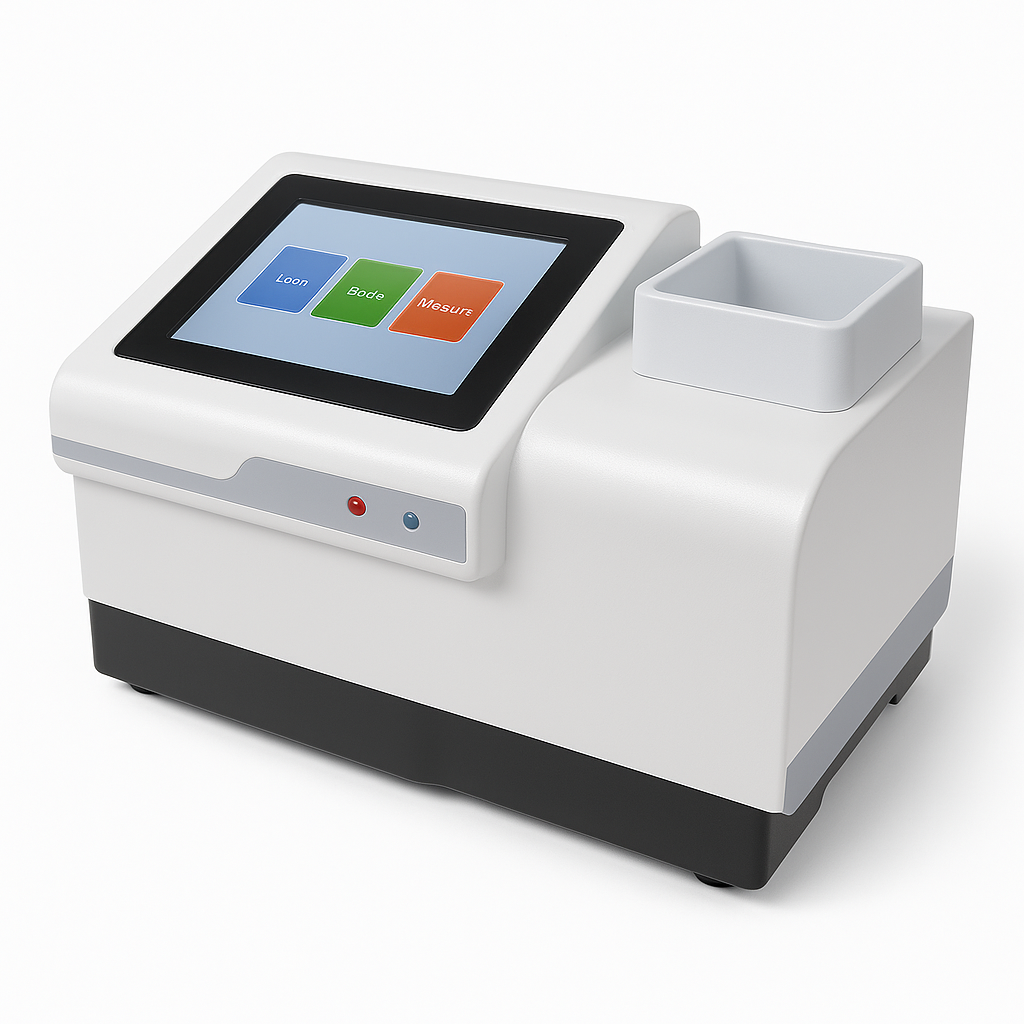
The ConductScience Near-Infrared Grain Analyzer delivers fast, non-destructive, multi-parameter quality analysis of cereal grains, oilseeds, and milled products. By measuring the characteristic near-infrared absorption signatures of grain samples, the instrument measures several quality indices of a sample at once, three for each supported commodity, without destroying the sample.
The analyzer has test items for wheat and wheat flour, paddy rice, milled rice, soybean, and corn. Each crop matrix is supported by its own dedicated parameter set, so laboratories and grain-handling operations can work across multiple commodities on the same instrument without switching platforms.
Each test reports moisture and protein for every supported commodity, plus starch for paddy rice, milled rice and corn, fat for soybean, wet gluten for wheat, and ash for flour.
A test takes 1 to 3 minutes on whole grain, with no grinding. The analyzer measures by transmission from 680 to 1050 nm with a silicon diode array detector, collects up to 25 subsamples per test, and takes sample cells with 6, 18 or 29 mm optical paths to suit the particle size. It has an 8-inch Android touch screen and USB Type A, USB Type B and RJ45 ports for maintenance, model upgrades and database updates.
Typical deployment contexts include grain intake and procurement labs, storage and elevator quality stations, flour mill process control, and research programs monitoring compositional variation across breeding lines or harvest seasons. Because configuration is matched to your specific crop set and measurement requirements, we recommend requesting a quote to ensure the instrument is set up for your sample matrices and analyte priorities.
Supported Commodities
- Wheat, Flour, Paddy Rice, Milled Rice, Soybean, Corn
Wheat Parameters
- Moisture, Protein, Wet Gluten
Paddy Rice Parameters
- Moisture, Starch, Protein
Milled Rice Parameters
- Moisture, Protein, Starch
Soybean Parameters
- Moisture, Protein, Fat
Corn Parameters
- Moisture, Starch, Protein
Flour Parameters
- Moisture, Protein, Ash
Measurement Method
- Near-Infrared (NIR) transmission, non-destructive
Analysis Type
- Multi-parameter quantitative
Spectral Range
- 680 to 1050 nm
Spectral Resolution
- Better than 7 nm
Detector
- Silicon diode array
Subsamples per Test
- Up to 25
Sample Cell Optical Paths
- 6 mm, 18 mm, 29 mm (chosen by particle size)
Test Time
- 1 to 3 min
Sample Preparation
- No grinding; whole grain can be tested
Display
- 8-inch touch screen, Android system
Interfaces
- USB Type A, USB Type B, RJ45
Dimensions
- 360 mm × 250 mm × 300 mm
Which grain and crop types does this analyzer support?
The analyzer supports wheat, wheat flour, paddy rice, milled rice, soybean, and corn. Each commodity has a dedicated measurement profile covering its relevant quality parameters.
What parameters can be measured for each crop?
Wheat: moisture, protein, and wet gluten. Paddy rice: moisture, starch, and protein. Milled rice: moisture, protein, and starch. Soybean: moisture, protein, and fat. Corn: moisture, starch, and protein. Flour: moisture, protein, and ash.
Is sample preparation or chemical reagents required?
No. Whole grain can be tested without grinding, and the near-infrared measurement method is non-destructive, so samples are not altered during analysis and no chemical reagents are consumed. This keeps per-sample costs low and turnaround fast.
Can a single instrument handle multiple grain types in the same laboratory?
Yes. The analyzer is designed for multi-commodity use, allowing operators to switch between grain types and retrieve the appropriate parameter set for each—making it well suited to intake labs or mills that handle more than one commodity.
How is this instrument configured, and how do I get pricing?
Because optimal performance depends on matching calibrations and parameter sets to your specific crop matrices and laboratory workflow, the analyzer is supplied as a configured instrument. Submit a quote request describing your target commodities and measurement requirements, and our team will prepare a specification matched to your application.
Have a question about this product?
Have a question? Just ask.
Send it over and we'll email you a personalized answer, with no call or scheduling.
Prefer to talk it through?
Frequently Bought Together