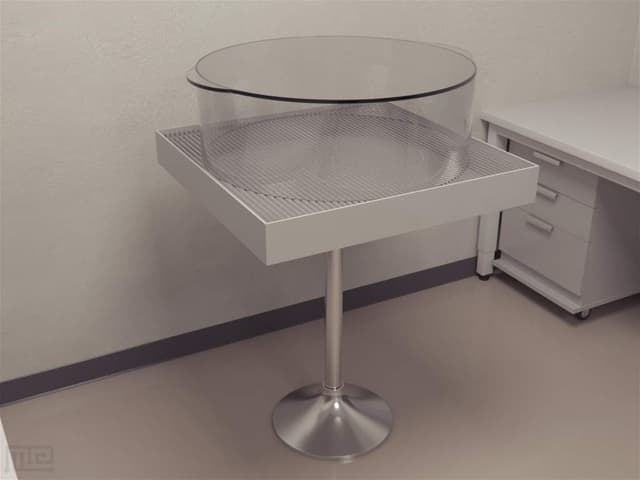
Zebrafinch Day Escape Maze
Specialized behavioral testing apparatus for evaluating spatial learning, memory, and escape behavior patterns in zebra finches and small songbirds.

Louise Corscadden, PhD
Director of Science · ConductScience
Ask Louise about Zebrafinch Day Escape Maze fit, setup, configuration, or quote prep.
Already working with us? Sign in to connect this with My Scientist.
Key Specifications
Full details →- Model fit
- Bird
- SKU family
- CS-958154
- Shipping box
- 65.0 x 36.0 x 27.0 cm
- Ordering
- Online checkout and quote request available
- Category
- Behavioral Mazes
- Build notes
- Confirm accessories, station layout, and support needs before purchase
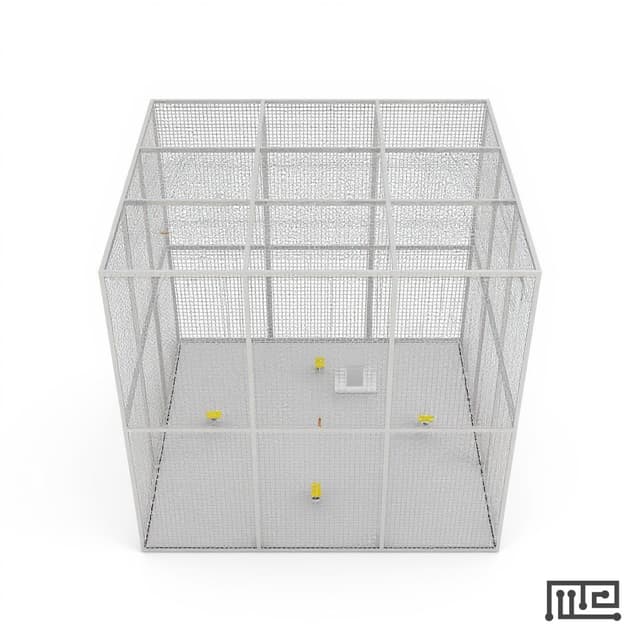
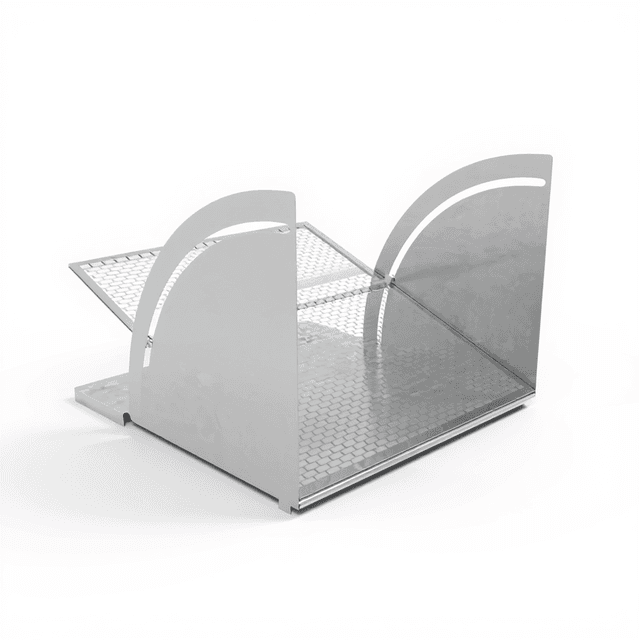
The Zebrafinch Day Escape Maze is a specialized behavioral testing apparatus designed for spatial learning and memory assessment in zebra finches and other small songbirds. This avian-specific maze adaptation allows researchers to evaluate cognitive abilities, spatial navigation, and escape behavior patterns in birds under controlled laboratory conditions.
The apparatus provides a standardized platform for investigating avian learning mechanisms, memory consolidation, and behavioral responses to spatial challenges. Researchers can utilize this system to study species-specific navigation strategies, assess the effects of experimental manipulations on cognitive function, and examine individual differences in spatial problem-solving abilities in songbird models.
How It Works
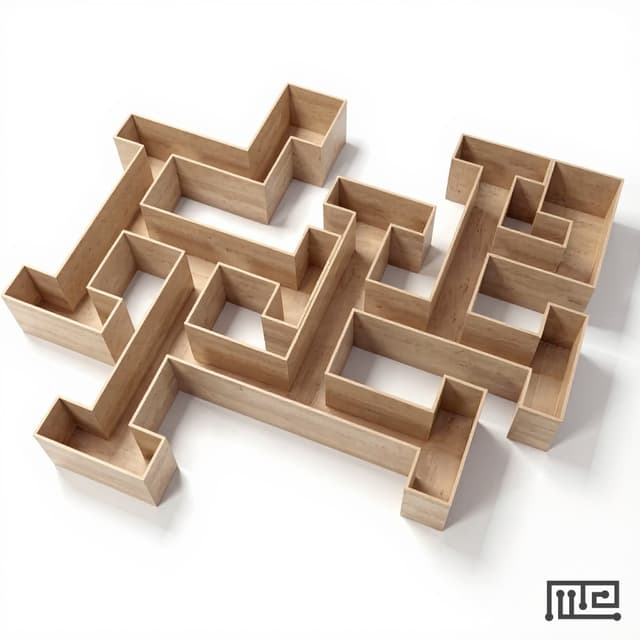
The Zebrafinch Day Escape Maze operates on the principle of spatial problem-solving under motivational pressure, where birds must navigate through the maze structure to reach an escape zone or goal location. The design capitalizes on the natural tendency of zebra finches to seek shelter and escape from open, potentially threatening environments.
During testing, the bird is placed at a designated starting position within the maze and must learn to navigate the spatial layout to locate the escape route. The maze configuration allows for assessment of spatial reference memory (consistent escape location across trials) and working memory (trial-specific information processing). Performance metrics include escape latency, path efficiency, error patterns, and retention across testing sessions.
The apparatus enables researchers to manipulate various environmental factors such as visual cues, maze complexity, and motivational conditions to examine how these variables influence spatial learning and memory performance in avian subjects.
Features & Benefits
Behavioral Construct
- spatial learning
- spatial memory
- escape behavior
- navigation
- cognitive assessment
Automation Level
- manual
Research Domain
- Behavioral Pharmacology
- Developmental Biology
- Learning and Memory
- Neurodegeneration
- Neuroscience
Species
- Bird
Compatible Tracking Software
- ConductVision
Shipping weight
- 6.06 lb
Shipping box
- L: 65.0 cm
- W: 36.0 cm
- H: 27.0 cm
| Feature | This Product | Typical Alternative | Advantage |
|---|---|---|---|
| Species Optimization | Designed specifically for zebra finch dimensions and behavior patterns | Many mazes are adapted from rodent designs without species-specific considerations | Ensures natural movement patterns and reduces stress-related confounding variables in behavioral assessment |
| Construction Method | Modular design allowing configuration changes | Fixed maze structures with limited adaptability | Enables researchers to modify complexity and layout for different experimental protocols |
| Observation Access | Open design for clear behavioral monitoring | Some designs may have limited visibility for behavior tracking | Facilitates accurate data collection and video analysis of spatial navigation patterns |
| Target Species | Optimized for small songbirds like zebra finches | Most commercial mazes designed for rodents or larger birds | Provides appropriate scale and environmental context for songbird cognitive research |
The Zebrafinch Day Escape Maze offers species-specific design optimization and modular flexibility for avian spatial cognition research. The apparatus provides standardized testing conditions while accommodating the natural behavioral patterns of zebra finches.
Practical Tips
Conduct habituation sessions before formal testing to reduce neophobia and establish baseline comfort levels in the maze environment.
Why: Reduces stress-related confounding factors that could interfere with cognitive performance assessment.
Use multiple performance metrics including latency, path efficiency, and error patterns rather than relying on single measures.
Why: Provides comprehensive assessment of different aspects of spatial learning and memory processes.
Inspect connection points and wall segments regularly for wear or loosening that could affect maze integrity.
Why: Ensures consistent spatial configuration across testing sessions and prevents structural changes that could influence results.
If birds show reluctance to enter the maze, verify that escape routes are clearly accessible and environmental conditions are not overly stressful.
Why: Ensures that task performance reflects cognitive ability rather than motivational or environmental factors.
Standardize starting position placement and orientation procedures to maintain consistent initial conditions across trials.
Why: Reduces variability in initial spatial orientation that could confound learning curve measurements.
Ensure all surfaces are smooth and free of sharp edges that could cause injury during rapid movement or escape attempts.
Why: Protects animal welfare while maintaining the validity of behavioral measurements.
Setup Guide
What’s in the Box
- Maze wall sections (typical)
- Base platform components (typical)
- Connection hardware (typical)
- Assembly instructions
- User protocol guide (typical)
Warranty
ConductScience provides standard manufacturer warranty coverage for one year from date of purchase, including technical support for setup and operational guidance.
Compliance
References
Background reading relevant to this product:
What is the optimal testing protocol duration for zebra finch spatial learning assessment?
Testing protocols typically involve 5-10 trials per session with inter-trial intervals of 30-60 seconds, conducted over multiple days to assess both acquisition and retention phases of spatial learning.
How should performance metrics be quantified in escape maze testing?
Primary measures include escape latency, path length, number of errors or wrong turns, and retention performance across sessions. Video analysis software can provide detailed movement tracking and spatial preference mapping.
What environmental factors should be controlled during testing?
Maintain consistent lighting conditions, ambient temperature, and minimize external noise or visual distractions. Visual landmarks should remain constant throughout the experimental period unless specifically manipulated.
How does this apparatus compare to traditional rodent maze designs?
The design is specifically scaled and configured for avian subjects, with appropriate pathway widths and heights that accommodate zebra finch natural movement patterns, unlike larger rodent maze systems.
What is the recommended cleaning protocol between subjects?
Clean all surfaces with appropriate disinfectant between subjects to eliminate olfactory cues that might influence subsequent bird behavior, allowing surfaces to dry completely before next trial.
Can the maze configuration be modified for different experimental needs?
Yes, modular design allows for pathway reconfiguration to create different spatial challenges, complexity levels, and goal locations based on specific research requirements.
Have a question about this product?
Have a question? Just ask.
Send it over and we'll email you a personalized answer — no call, no scheduling.
Prefer to talk it through?