Behavioral Tracking for American Cockroach
Periplaneta americana
Escape behavior, locomotion, and circadian biology in Periplaneta americana. ConductVision delivers automated tracking and quantitative parameter extraction across the full assay catalog below.
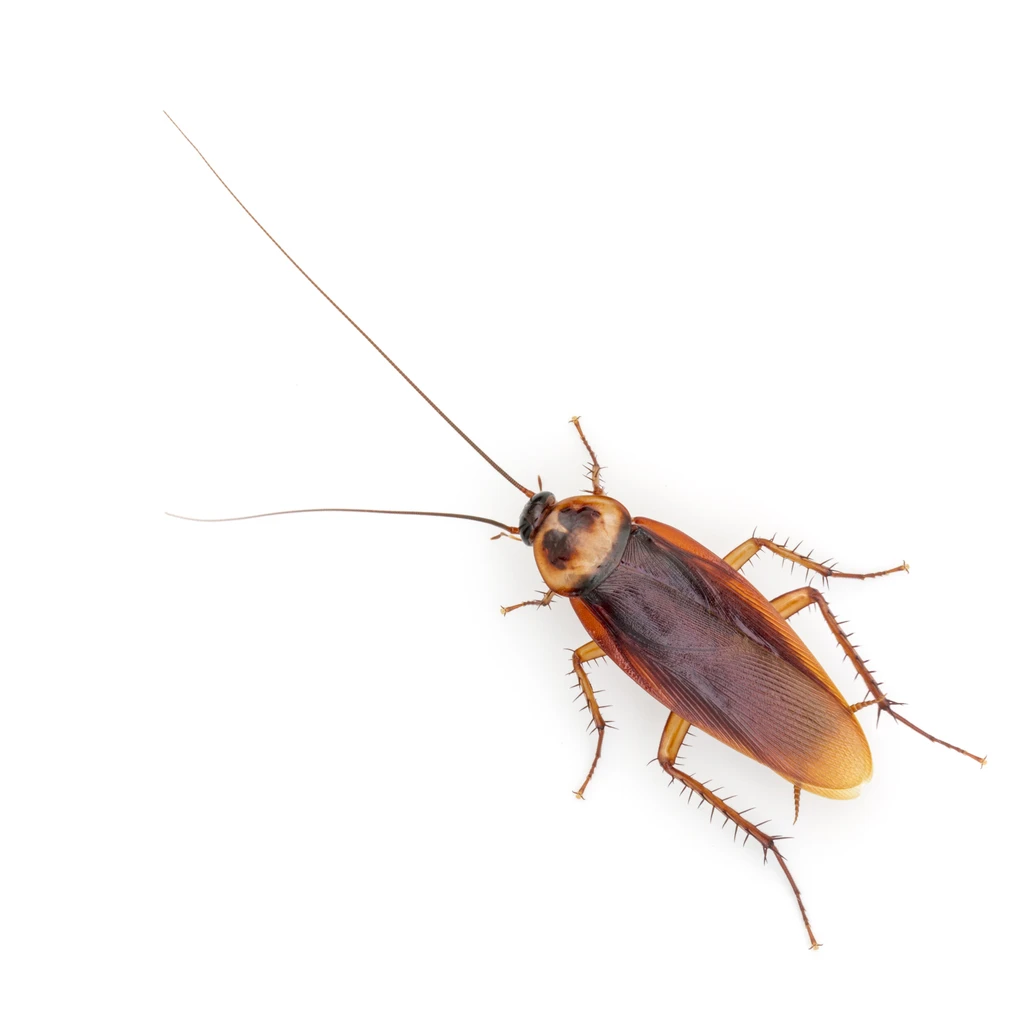
Why American Cockroach in Behavioral Research
The American cockroach is a classical model for ultra-fast escape responses driven by giant interneurons, locomotion, and circadian rhythms. Its size, robustness, and well-mapped sensory-motor circuits make it a workhorse of invertebrate neuroethology.
Camhi JM, Tom W, Volman S. (1978). The escape behavior of the cockroach Periplaneta americana. I. Turning response to wind puffs. J Comp Physiol, 128, 193-201.
Page TL. (1982). Transplantation of the cockroach circadian pacemaker. Science, 216(4541), 73-75. PMID: 7063873
What We Measure in American Cockroach
Validated assays with quantitative parameter tracking for Periplaneta americana.
Cerci-evoked giant-interneuron escape produces an ultra-fast turning response away from puff direction. Latency, turn angle, and accuracy are the canonical readouts.
| Parameter | Unit | Description |
|---|---|---|
| Response latency | ms | Puff to first leg movement |
| Turn angle | deg | Heading change away from wind |
| Run distance | cm | Distance traveled in escape |
| Accuracy index | % | Correct turn direction |
Camhi JM, et al. (1978). PMID: not indexed (J Comp Physiol)
Cockroaches show robust tripod gait and dynamic stability, supporting biomechanics and motor-control research. Speed, gait phase, and turning index motor output.
| Parameter | Unit | Description |
|---|---|---|
| Walking speed | cm/s | Translational velocity |
| Stride frequency | Hz | Step rate |
| Tripod-gait phase | rad | Inter-leg timing |
| Turning rate | deg/s | Heading change |
Full RJ, Tu MS. (1991). Mechanics of a rapid running insect: two-, four- and six-legged locomotion. J Exp Biol, 156, 215-231.
Periplaneta has a strong circadian rhythm with a nocturnal activity peak. Free-running period and entrainment quantify the optic-lobe pacemaker.
| Parameter | Unit | Description |
|---|---|---|
| Peak activity time | h | Phase of nocturnal peak |
| Free-running period | h | τ in DD |
| Activity onset variance | min | Phase precision |
| Total daily activity | min | Locomotor output |
Page TL. (1982). PMID: 7063873
Cockroaches learn the position of cool refuges in a heated arena. Trials to criterion and target latency benchmark spatial cognition in a non-eusocial insect.
| Parameter | Unit | Description |
|---|---|---|
| Trials to criterion | count | Acquisition speed |
| Target latency | s | Time to reach refuge |
| Reversal learning | trials | Cognitive flexibility |
| Spatial-search efficiency | index | Path length vs optimum |
Mizunami M, Weibrecht JM, Strausfeld NJ. (1998). Mushroom bodies of the cockroach: their participation in place memory. J Comp Neurol, 402(4), 520-537. PMID: 9862324
Cockroaches follow odor plumes (food or pheromone) using surge-and-cast strategies. Path tortuosity and source-localization time index plume tracking.
| Parameter | Unit | Description |
|---|---|---|
| Source localization time | s | To plume source |
| Path tortuosity | index | Search efficiency |
| Cast frequency | casts/min | Out-of-plume turns |
| Surge length | cm | In-plume bouts |
Willis MA, Avondet JL. (2005). Odor-modulated orientation in walking male cockroaches Periplaneta americana, and the effects of odor plumes of different structure. J Exp Biol, 208, 721-735. PMID: 15695764
More Behavioral Tests for American Cockroach
Aggregation (Pheromone)
Key Parameters: Group size, latency to join
Bell WJ, Roth LM, Nalepa CA. (2007). Cockroaches: Ecology, Behavior, and Natural History.
Climbing / Wall Following
Key Parameters: Wall-time, vertical climb success
Camhi JM, Johnson EN. (1999). PMID: 10097099
Flight (Adult Male)
Mating (Male Antennal Display)
Key Parameters: Display rate, mounting time
Roth LM, Willis ER. (1957). The biology of Periplaneta americana.
Tactile Antennal Sensing
Key Parameters: Antenna sweep rate, response latency
Comer C, Baba Y. (2011). Front Behav Neurosci, 5, 70.
ConductScience Hardware for American Cockroach Research
Wind-Puff Escape Arena
Giant-interneuron behavior
Walking Treadmill / Spherical Trackball
Tripod-gait analysis
Circadian Activity Monitor (DD/LD)
Locomotor rhythms
Heated Place-Learning Arena
Spatial cognition
Plume-Tracking Wind Tunnel
Olfactory navigation
Citations & Further Reading
- Camhi JM, Tom W, Volman S. (1978). The escape behavior of the cockroach Periplaneta americana. I. Turning response to wind puffs. J Comp Physiol, 128, 193-201.
- Page TL. (1982). Transplantation of the cockroach circadian pacemaker. Science, 216(4541), 73-75. PMID: 7063873
- Camhi JM, et al. (1978). PMID: not indexed (J Comp Physiol)
- Full RJ, Tu MS. (1991). Mechanics of a rapid running insect: two-, four- and six-legged locomotion. J Exp Biol, 156, 215-231.
- Page TL. (1982). PMID: 7063873
- Mizunami M, Weibrecht JM, Strausfeld NJ. (1998). Mushroom bodies of the cockroach: their participation in place memory. J Comp Neurol, 402(4), 520-537. PMID: 9862324
- Willis MA, Avondet JL. (2005). Odor-modulated orientation in walking male cockroaches Periplaneta americana, and the effects of odor plumes of different structure. J Exp Biol, 208, 721-735. PMID: 15695764
Other Model Systems
Discuss Your Cockroach Research
Tell us about your models, assays, and experimental goals — we’ll show you how ConductVision fits your workflow.