Primary Assay — Water Flea
Heart Rate
Daphnia magna
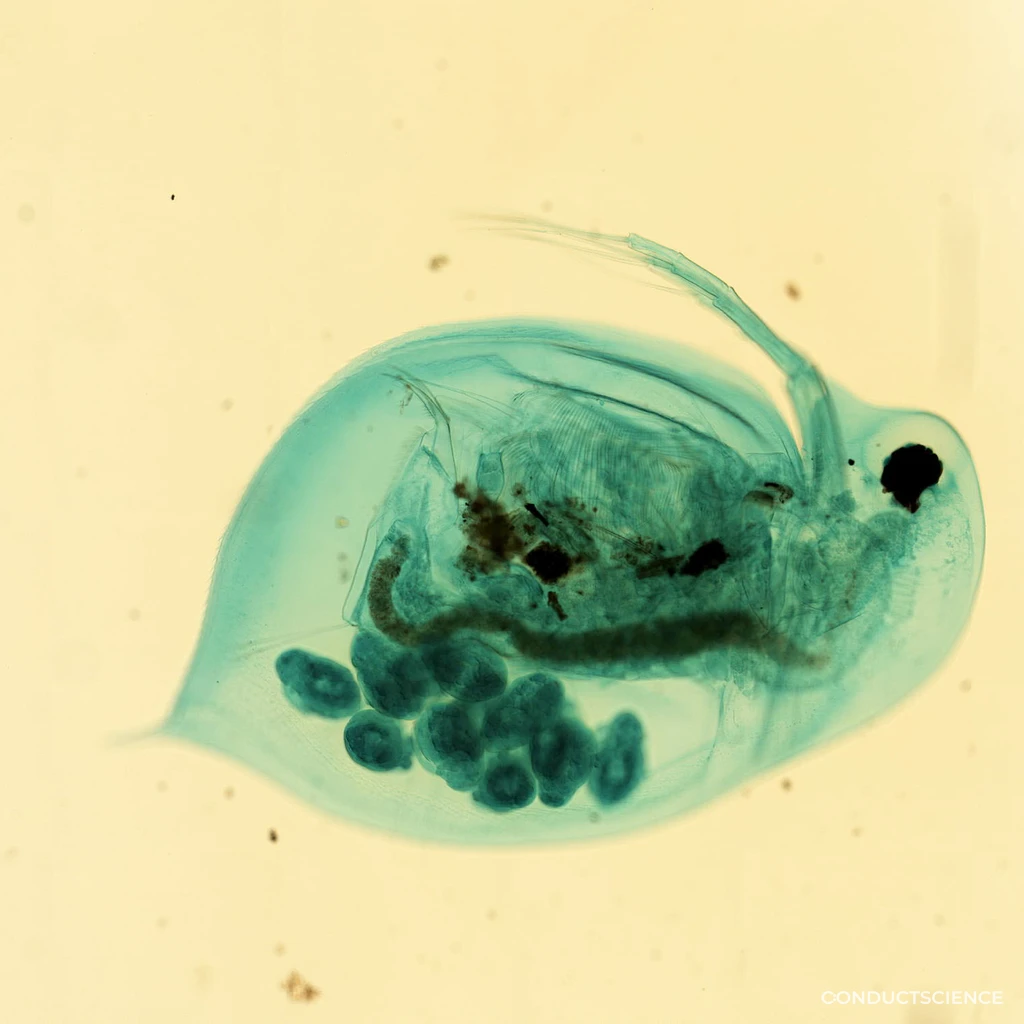
Heart rate is visible through the transparent carapace and is sensitive to chemical exposure and temperature. Beats-per-minute is a high-throughput cardiotoxicity readout.
Quantitative Output
Measured Parameters
Every parameter is automatically tracked frame-by-frame in the ConductVision pipeline for Daphnia magna.
| Parameter | Unit | Description |
|---|---|---|
| Heart rate | bpm | Cardiac frequency |
| Heart-rate variability | ms | Beat-to-beat variation |
| Tachycardia threshold | mg/L | Drug-induced HR rise |
| Recovery time | min | Post-exposure return to baseline |
References
Citations for Heart Rate
- Villegas-Navarro A, et al. (2003). Heart rate of Daphnia magna as toxicity endpoint. Ecotoxicol Environ Saf, 56(2), 269-275. PMID: 12915155
Compatible Equipment
Hardware for Water Flea Research
Glass Column Phototaxis Chamber
Vertical phototactic assay
Multi-Well Behavioral Imaging Plate
High-throughput toxicology
Heart-Rate Imaging Microscope
Cardiotoxicity
Predator-Cue Exposure Chamber
Inducible defense induction
Acute Immobilization Test Plate
OECD 202 endpoint
Related Assays
Other Water Flea Primary Assays
11
Phototaxis
Daphnia magna
Daphnia move toward dim light and away from bright illumination, a behavior used in toxicology and circadian research. V…
11
Predator-Induced Defenses
Daphnia magna
Kairomones from predatory fish or invertebrates induce morphological defenses (helmets, neck-teeth) and altered swimming…
11
Swimming Activity
Daphnia magna
Spontaneous swimming with characteristic hop-and-sink pattern. Bout frequency, speed, and pause duration are baseline me…
Run Heart Rate on ConductVision
Our team will configure the protocol, camera rig, and analysis pipeline for your water flea facility.