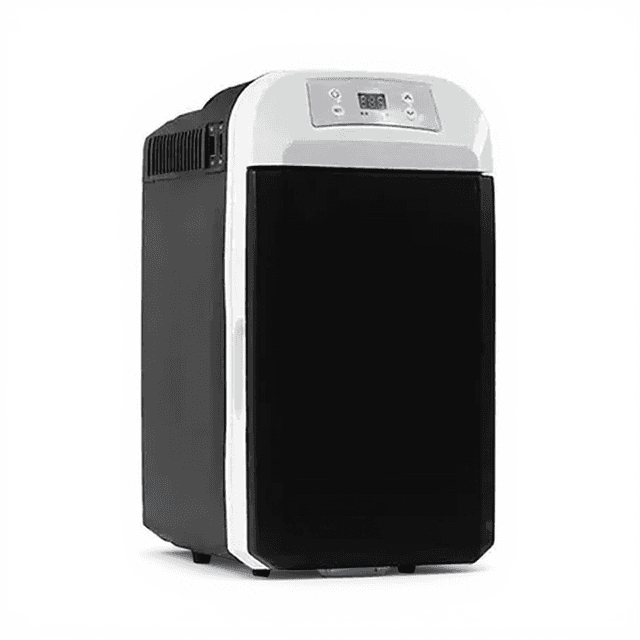
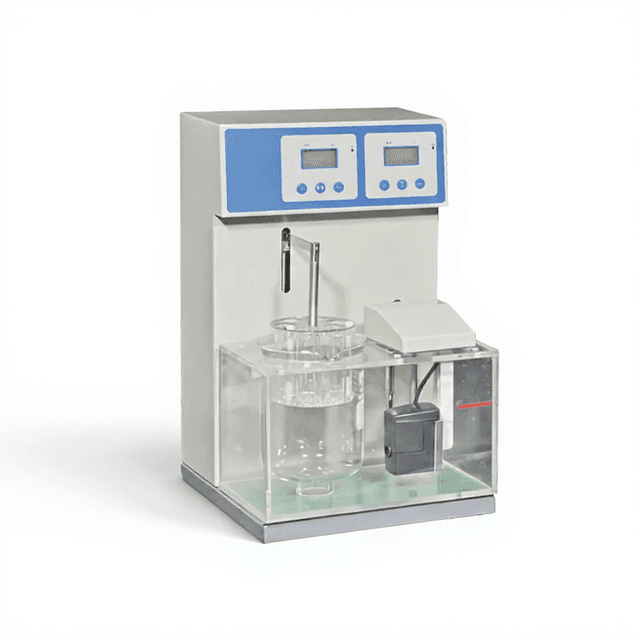
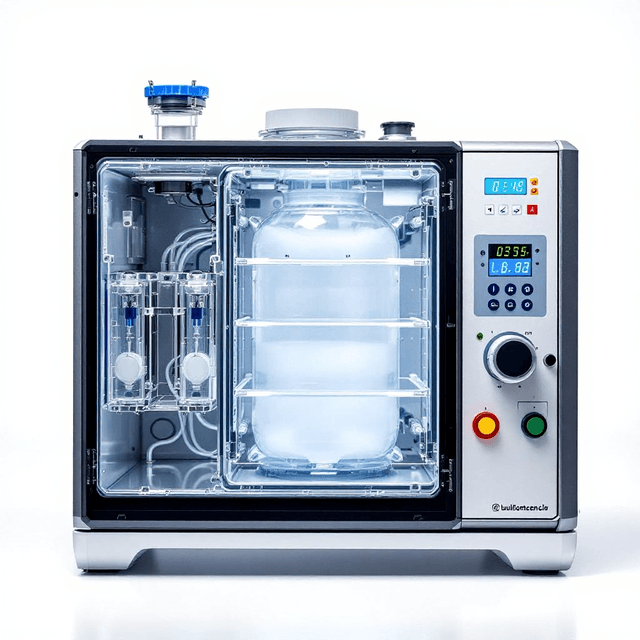
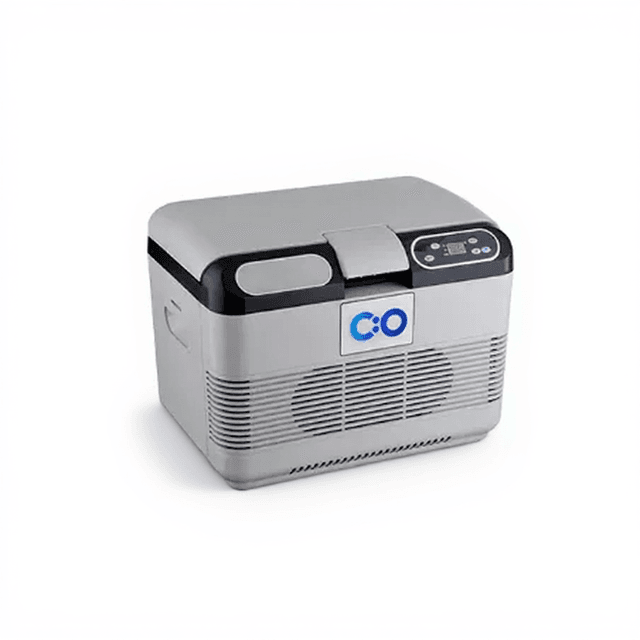
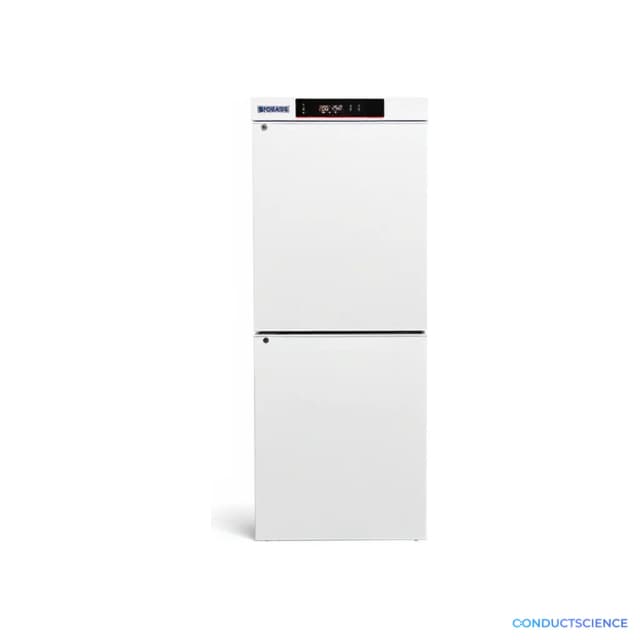
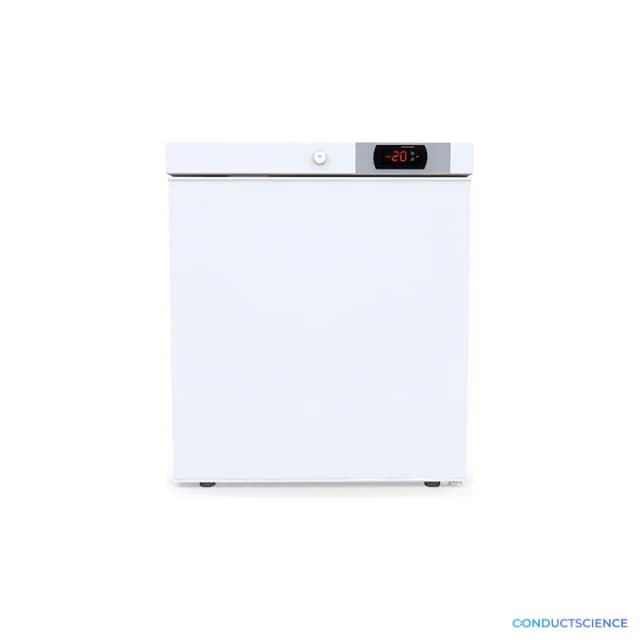
25℃ Freezer Combined Refrigerator and Freezer
Combined refrigerator and freezer unit with microprocessor temperature control, providing dual-temperature storage for biospecimen preservation and laboratory sample management with ±0.1°C accuracy.

Louise Corscadden, PhD
Director of Science · ConductScience
Ask Louise about 25℃ Freezer Combined Refrigerator and Freezer fit, setup, configuration, or quote prep.
Already working with us? Sign in to connect this with My Scientist.
Key Specifications
Full details →- Model fit
- 4 selectable configurations
- SKU family
- BIO-0083
- Shipping box
- 170.0 x 59.5 x 60.0 cm
- Ordering
- Online checkout and quote request available
- Category
- Cold Storage
- Build notes
- Confirm accessories, station layout, and support needs before purchase
The 25°C Freezer Combined Refrigerator and Freezer provides dual-temperature storage capabilities for biospecimen preservation and laboratory sample management. This unit combines refrigeration and freezing compartments in a single footprint, offering microprocessor-controlled temperature regulation with LED display monitoring. The system maintains precise temperature control with ±0.1°C accuracy and ≤3°C temperature stability across both compartments.
Designed for research environments requiring reliable sample storage, this combined unit accommodates varying storage requirements from short-term refrigerated samples to longer-term frozen preservation. The microprocessor control system enables consistent temperature maintenance critical for sample integrity in biobanking, clinical research, and laboratory workflows requiring temperature-sensitive reagent storage.
How It Works
The combined refrigerator and freezer operates through separate cooling circuits that maintain distinct temperature zones within a single unit. The microprocessor control system monitors temperature sensors in both compartments and regulates compressor operation to maintain set points with ±0.1°C accuracy. The LED display provides real-time temperature readouts and system status indicators.
Temperature stability is achieved through precise thermostat control and insulated compartment design that minimizes thermal transfer between refrigeration and freezing zones. The system maintains ≤3°C temperature uniformity within each compartment, ensuring consistent storage conditions throughout the usable volume.
Features & Benefits
Automation Level
- semi-automated
BRF-25V318
- BRF-25V368
174L
- 208L
183L
- 295L
Freezer
- 420*450*670mm
110L
- 185L
Temp. Range
- Refrigerator
Temp. Accuracy
- 0.1℃
Temp. Uniformity
- Refrigerator
Temp. Stability
- ≤3℃
Recovery Time
- Refrigerator
Cooling Time
- Refrigerator
Control System
- Microprocessor control
Brand
- ConductScience
Research Domain
- Analytical Chemistry
- Cell Biology
- Clinical Diagnostics
- Microbiology
- Pharmaceutical QC
Capacity
- Refrigerator
Display Type
- LED
Shipping weight
- 69.0 lb
Shipping box
- L: 170.0 cm
- W: 59.5 cm
- H: 60.0 cm
| Feature | This Product | Typical Alternative | Advantage |
|---|---|---|---|
| Temperature Control System | Microprocessor control with LED display | Basic thermostat controls often lack digital displays | Enables precise temperature setting and continuous monitoring for critical sample storage applications |
| Temperature Accuracy | ±0.1°C accuracy specification | Entry-level units typically offer ±1-2°C accuracy | Tighter temperature control reduces risk of sample degradation in temperature-sensitive applications |
| Compartment Configuration | Dual-compartment combined design | Separate units or single-temperature models | Maximizes laboratory space utilization while providing temperature versatility |
| Temperature Uniformity | ≤3°C temperature uniformity | Basic models often have wider temperature variations | Ensures consistent storage conditions throughout compartment volume for reliable sample preservation |
This unit combines precise microprocessor temperature control with dual-compartment versatility, offering ±0.1°C accuracy and ≤3°C uniformity in a space-efficient design. The LED display system provides continuous monitoring capabilities suitable for regulated laboratory environments requiring documented temperature control.
| Model | SKU | Listed price | Status | Shipping box |
|---|---|---|---|---|
| BDF-25V450 | BDF-25V450 | $3,399.00 | Available | 170.0 x 59.5 x 60.0 cm |
| BDF-25V368 | BDF-25V368 | $2,799.00 | Available | 170.0 x 59.5 x 60.0 cm |
| BDF-25V318 | BDF-25V318 | $2,399.00 | Available | 170.0 x 59.5 x 60.0 cm |
| BDF-25V300 | BDF-25V300 | $1,899.00 | Available | 170.0 x 59.5 x 60.0 cm |
Practical Tips
Verify temperature accuracy monthly using calibrated reference thermometers placed in both compartments.
Why: Regular verification ensures continued compliance with ±0.1°C accuracy specification critical for sample integrity.
Clean condenser coils quarterly to maintain cooling efficiency and prevent temperature drift.
Why: Dust accumulation reduces heat transfer efficiency and can compromise temperature stability.
Allow samples to pre-cool at room temperature before placement to minimize temperature fluctuations.
Why: Reducing thermal load helps maintain stable compartment temperatures and protects existing samples.
Check door seals regularly for proper closure to prevent temperature excursions.
Why: Compromised seals allow warm air infiltration that can exceed the ≤3°C stability specification.
Position temperature monitoring probes away from door areas and air circulation fans.
Why: Central placement provides more representative temperature readings of actual sample storage conditions.
Install external temperature monitoring with alarms for critical sample storage applications.
Why: Provides backup monitoring to protect valuable samples in case of unit failure or power outages.
Setup Guide
What’s in the Box
- Combined refrigerator/freezer unit
- Power cable
- User manual and operation guide
- Temperature calibration certificate (typical)
- Interior shelving and storage accessories (typical)
Warranty
ConductScience provides standard 1-year manufacturer warranty covering parts and components, with technical support available for installation and operational guidance.
Compliance
References
Background reading relevant to this product:
What is the temperature recovery time after door opening?
Recovery time specifications are not provided in the product datasheet - consult manufacturer documentation for thermal recovery characteristics under typical usage conditions.
Can both compartments be independently controlled?
Yes, the microprocessor control system enables independent temperature setting and monitoring for refrigerator and freezer compartments with separate temperature displays.
What type of temperature monitoring is available?
The unit features LED display for real-time temperature monitoring with ±0.1°C accuracy. External temperature logging capabilities should be verified in the product datasheet.
How does this compare to separate refrigerator and freezer units?
Combined units offer space efficiency and reduced power requirements compared to separate units, though individual compartment capacities may be smaller than dedicated single-temperature units.
What maintenance is required for optimal performance?
Regular cleaning of interior surfaces, condenser coil cleaning, and periodic temperature calibration verification are recommended. Consult user manual for specific maintenance intervals.
Can the unit operate in ambient temperatures above 25°C?
Operating ambient temperature range is not specified in the provided data - consult product specifications for environmental operating conditions and cooling capacity at elevated ambient temperatures.
What happens during power failures?
The unit lacks specified backup power or extended thermal retention capabilities in the provided specifications. Consider external battery backup systems for critical sample protection during power outages.
Have a question about this product?
Have a question? Just ask.
Send it over and we'll email you a personalized answer — no call, no scheduling.
Prefer to talk it through?
Accessories
Enhance your setup with compatible accessories
Frequently Bought Together