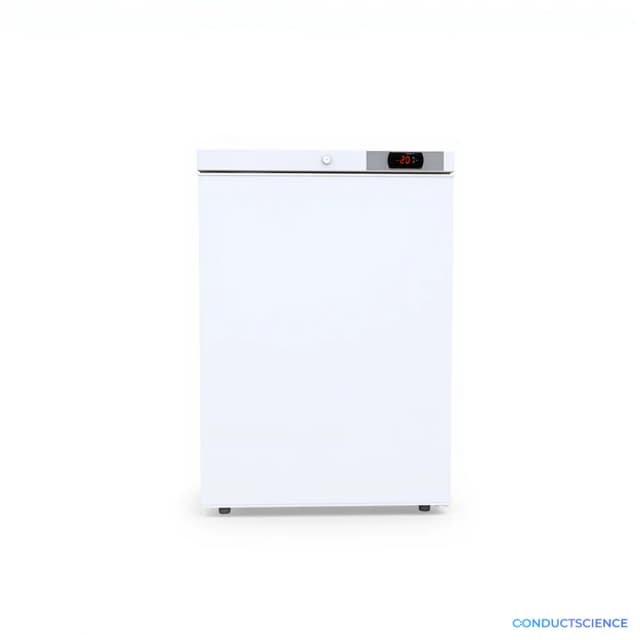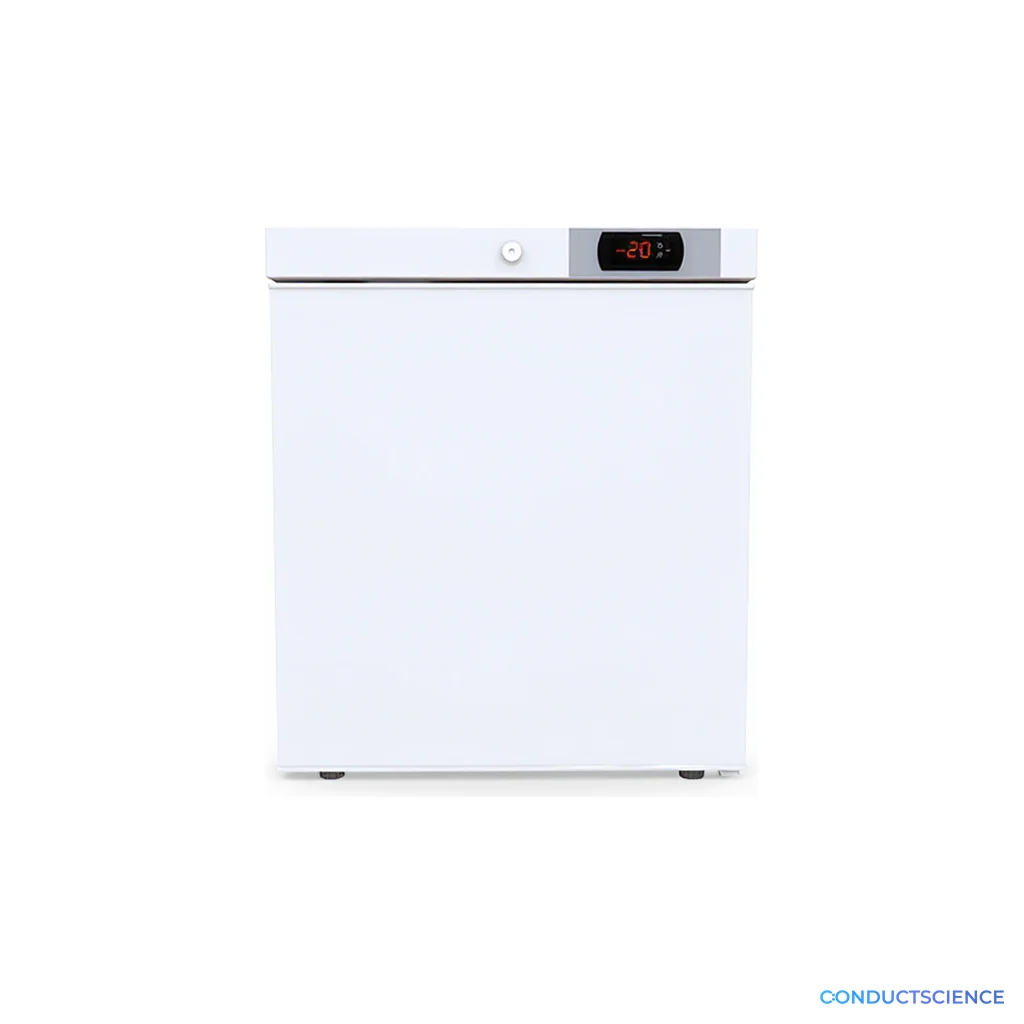
20/25℃ Freezer(Economic Type)
Direct-cooling laboratory freezer operating at -10°C to -20°C with microprocessor control, multiple alarm systems, and capacity options from 40L to 300L for routine sample storage.

Louise Corscadden, PhD
Director of Science · ConductScience
Ask Louise about 20/25℃ Freezer(Economic Type) fit, setup, configuration, or quote prep.
Already working with us? Sign in to connect this with My Scientist.
Key Specifications
Full details →- Model fit
- 3 selectable configurations
- SKU family
- BIO-0082
- Shipping box
- 42.6 x 40.0 x 29.5 cm
- Ordering
- Online checkout and quote request available
- Category
- Cold Storage
- Build notes
- Confirm accessories, station layout, and support needs before purchase
The ConductScience 20/25℃ Freezer (Economic Type) provides reliable frozen storage for laboratory samples and specimens requiring moderate sub-zero temperatures. This direct-cooling freezer operates in the -10°C to -20°C range with microprocessor control and LED display for precise temperature monitoring. The unit features comprehensive alarm systems including high/low temperature alerts, thermostat fault detection, and door switch monitoring to protect valuable samples from temperature excursions.
Available in multiple capacity configurations (40L, 230L, 300L), this freezer utilizes R600a refrigerant and an international brand compressor for efficient operation. Temperature uniformity and stability specifications of ±3°C ensure consistent storage conditions throughout the chamber. The microprocessor-based control system provides reliable temperature regulation suitable for routine laboratory storage requirements.
How It Works
The freezer operates on direct-cooling refrigeration principles using R600a refrigerant in a single-compressor system. The international brand compressor circulates refrigerant through evaporator coils directly mounted within the storage chamber, providing efficient heat removal from samples and maintaining sub-zero temperatures. This direct-cooling design eliminates the need for fans, reducing air circulation that could cause temperature fluctuations and sample dehydration.
Microprocessor control continuously monitors chamber temperature via integrated sensors and adjusts compressor operation to maintain the selected setpoint within the -10°C to -20°C operating range. The control system maintains temperature accuracy within ±1°C while ensuring uniformity and stability specifications of ±3°C throughout the storage volume. Multiple alarm circuits monitor temperature extremes, thermostat function, and door status to alert users of conditions that could compromise sample integrity.
Features & Benefits
Automation Level
- semi-automated
BDF-25V230
- BDF-25V300
230L
- 300L
Temp. Range
- -10~-20℃
Temp. Accuracy
- 1℃
Temp. Uniformity
- ≤3℃
Temp. Stability
- ≤3℃
Control System
- Microprocessor control
Alarm
- High and low temperature alarm, thermostat fault alarm, door switch alarm
Refrigeration Type
- Direct-cooling
Refrigerant
- R600a/40g
R600a/64g
- R600a/80g
Compressor
- International famous brand compressor/1
Brand
- ConductScience
Research Domain
- Analytical Chemistry
- Cell Biology
- Clinical Diagnostics
- Food Science
- Microbiology
- Pharmaceutical QC
Capacity
- 40L
Display Type
- LED
Shipping weight
- 18.0 lb
Shipping box
- L: 42.6 cm
- W: 40.0 cm
- H: 29.5 cm
| Feature | This Product | Typical Alternative | Advantage |
|---|---|---|---|
| Temperature Range | -10°C to -20°C operating range | Entry-level models often limited to -15°C to -18°C | Broader temperature range provides flexibility for different sample storage requirements |
| Temperature Accuracy | ±1°C accuracy specification | Basic models typically offer ±2°C to ±3°C accuracy | Tighter temperature control maintains sample integrity for temperature-sensitive materials |
| Alarm Systems | High/low temperature, thermostat fault, and door switch alarms | Limited alarm functions or audio-only alerts | Comprehensive monitoring protects valuable samples through multiple failure modes |
| Control System | Microprocessor control with LED display | Mechanical thermostats with analog gauges | Digital control provides precise setpoint adjustment and continuous temperature display |
| Capacity Options | Available in 40L, 230L, and 300L configurations | Limited size options in economy segment | Multiple capacity choices accommodate different laboratory space and storage volume requirements |
This freezer combines microprocessor control with comprehensive alarm systems and multiple capacity options in an economical package. The direct-cooling refrigeration system provides reliable temperature maintenance with minimal complexity while offering broader temperature range and tighter accuracy specifications than basic mechanical models.
| Model | SKU | Listed price | Status | Shipping box |
|---|---|---|---|---|
| BDF-25V300 | BDF-25V300-E | $1,899.00 | Available | 42.6 x 40.0 x 29.5 cm |
| BDF-25V230 | BDF-25V230 | $1,599.00 | Available | 42.6 x 40.0 x 29.5 cm |
| BDF-20V40 | BDF-20V40 | $799.00 | Available | 42.6 x 40.0 x 29.5 cm |
Practical Tips
Place calibrated reference thermometer in chamber center during temperature verification checks.
Why: Center location provides most representative temperature reading for overall chamber performance assessment.
Clean condenser coils monthly using soft brush or compressed air to remove dust buildup.
Why: Dirty coils reduce heat transfer efficiency and force compressor to work harder, increasing energy consumption and wear.
Allow 24-48 hours for temperature stabilization before loading critical samples after initial startup or extended shutdown.
Why: Complete thermal equilibration ensures uniform temperature distribution and optimal storage conditions.
Check door seal integrity if temperature alarms occur frequently without obvious cause.
Why: Damaged door seals allow warm air infiltration that can overwhelm refrigeration capacity and trigger alarms.
Maintain daily temperature logs and document any alarm events for regulatory compliance and performance trending.
Why: Temperature records provide evidence of proper storage conditions and help identify gradual performance degradation.
Ensure adequate ventilation around unit and never store flammable solvents in freezer chamber.
Why: Proper ventilation prevents compressor overheating while avoiding flammable materials eliminates ignition risks from electrical components.
Organize samples using labeled boxes or racks to minimize door opening time during retrieval.
Why: Efficient sample organization reduces temperature excursions and maintains consistent storage conditions.
Schedule annual refrigerant system inspection by qualified service technician.
Why: Professional maintenance identifies potential issues before failure and ensures optimal refrigeration performance.
Setup Guide
What’s in the Box
- Freezer unit
- Power cord
- User manual
- Temperature monitoring guide (typical)
- Warranty documentation (typical)
Warranty
ConductScience provides a standard one-year manufacturer warranty covering parts and labor, with technical support available for installation guidance and troubleshooting assistance.
Compliance
References
Background reading relevant to this product:
What is the temperature recovery time after door opening?
Recovery time depends on door opening duration and ambient conditions. Consult product datasheet for specific recovery performance data. Minimize door opening frequency and duration to maintain temperature stability.
How often should temperature calibration be performed?
Recommend quarterly calibration verification using NIST-traceable reference thermometer. More frequent calibration may be required in regulated environments or based on institutional SOPs.
What maintenance is required for optimal performance?
Monthly cleaning of condenser coils, quarterly door seal inspection, and annual refrigerant system check. Keep temperature monitoring logs for performance trending and preventive maintenance scheduling.
Can the unit operate in varying ambient temperatures?
Consult product specifications for operating ambient temperature range. Performance may be affected by extreme ambient conditions or inadequate ventilation around condenser coils.
What backup power options are available?
Unit requires standard AC power input. Consider uninterruptible power supply (UPS) or backup generator systems for critical sample storage applications to maintain temperature during power outages.
How is temperature uniformity verified throughout the chamber?
Use multiple calibrated temperature sensors placed at different chamber locations to map temperature distribution. Uniformity specification of ±3°C should be maintained across all monitoring points.
What sample container types are compatible?
Direct-cooling design accommodates standard laboratory containers, tubes, and boxes. Ensure adequate spacing between containers for proper air circulation and temperature uniformity.
Have a question about this product?
Have a question? Just ask.
Send it over and we'll email you a personalized answer — no call, no scheduling.
Prefer to talk it through?
Accessories
Enhance your setup with compatible accessories
Frequently Bought Together