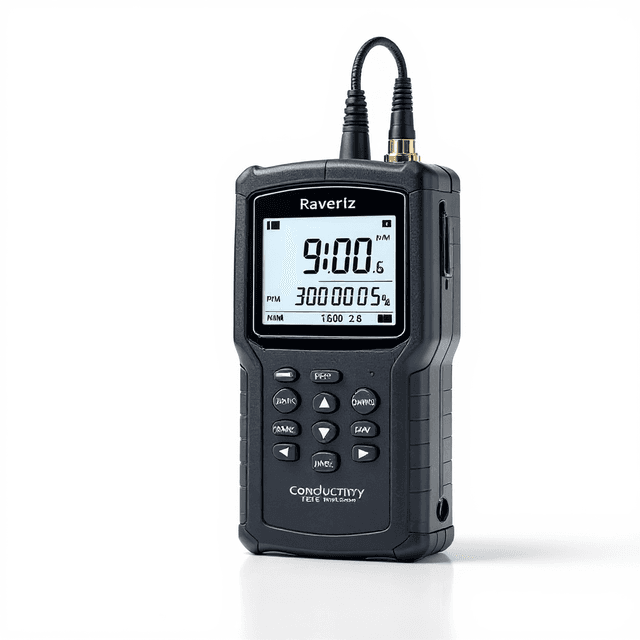
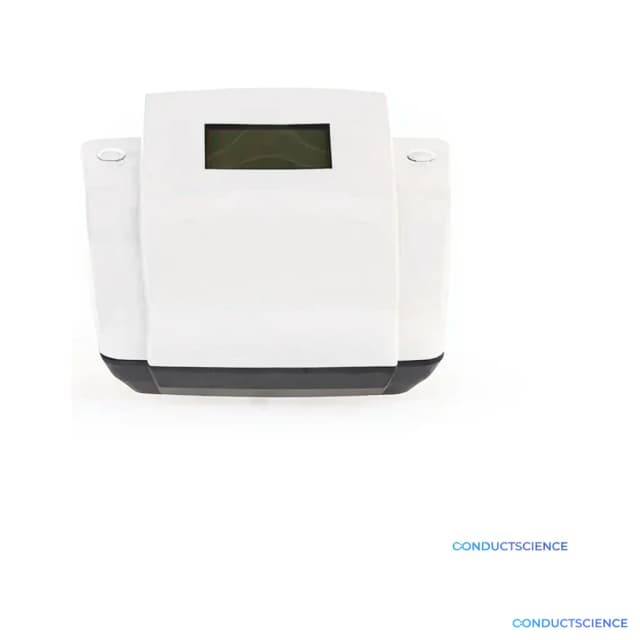
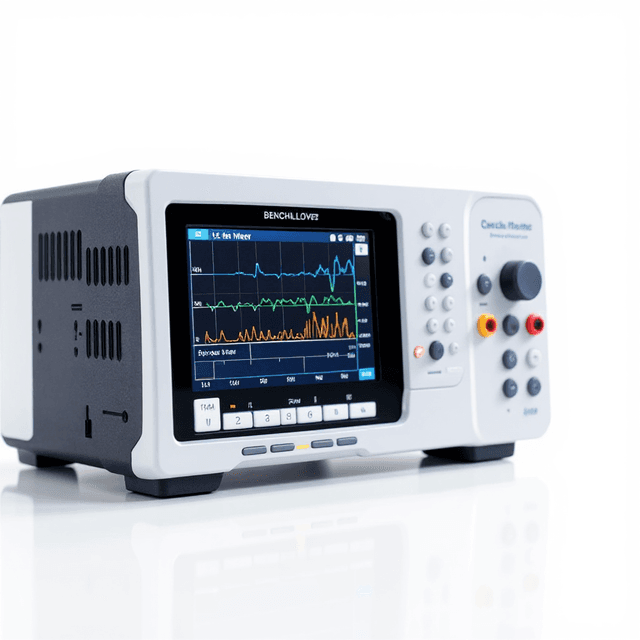
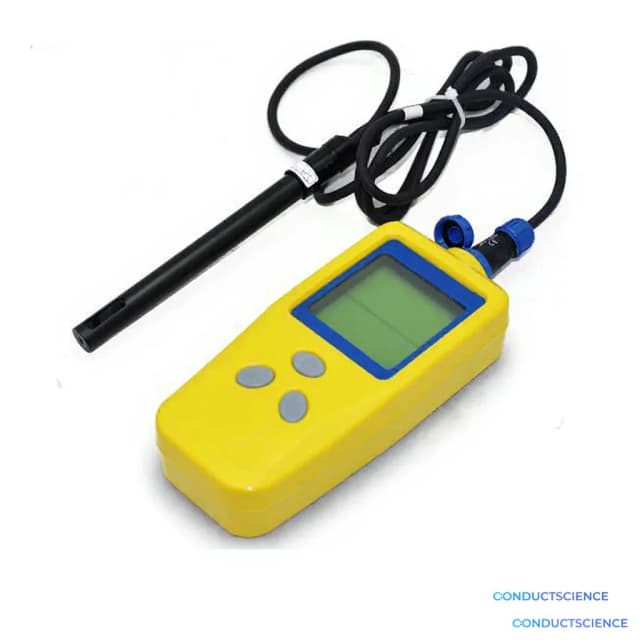
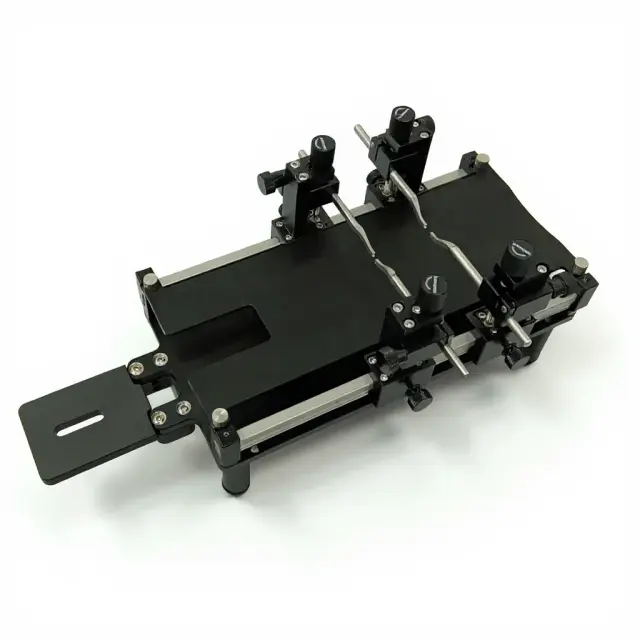
Bench Top Conductivity Analyzer
Laboratory conductivity meter with automatic temperature compensation measuring 0.1 μS/cm to 199.9 mS/cm for precise ionic content analysis in aqueous solutions.
| Model No. | Technical data |
| electrical conductivity meterDDS-22C | 1, Corresponding electrode constant=0.1 Measuring range: (0~199.9)μs/cm, Resolution: 0.1μs/cm2, Corresponding electrode constant=1 Measuring range: (200~1999)μs/cm; (2.00~19.99)ms/cm, Resolution: 1μs/cm; 0.01 ms/cm3, Corresponding electrode constant=10 Measuring range: (20.0~199.9)ms/cm, Resolution: 0.1ms/cmAccuracy: ±1.0%FSATC:5-55°CTemperature coefficient: 2.0%/°CWorking condition: 5~35°C, RH<85%Power: 220V±10%, 50Hz ± 1Hz,DC9VNo notable vibrationNo strong magnetic field interference(except for geomagnetic field)1 point automatic calibration |
| Automation Level | semi-automated |
| Brand | ConductScience |

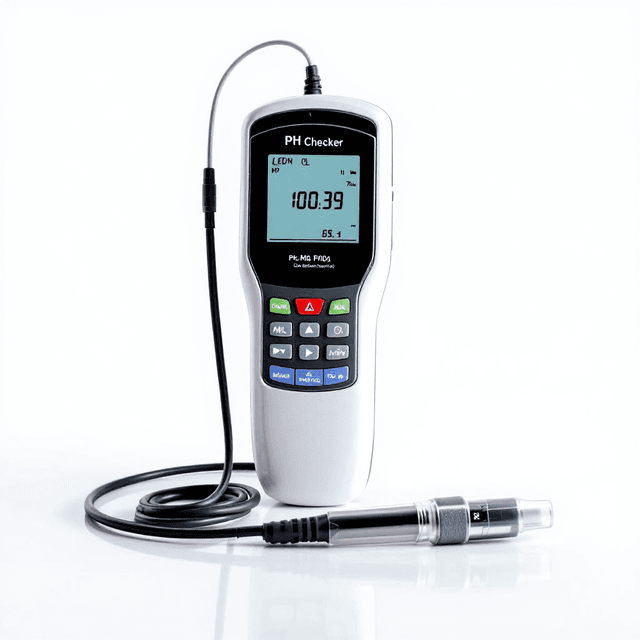
The Bench Top Conductivity Analyzer (Model DDS-22C) is a laboratory-grade electrical conductivity meter designed for precise measurement of ionic content in aqueous solutions. This instrument employs conductometric analysis to quantify dissolved salts, nutrients, and impurities across a wide range of conductivity values from 0.1 μS/cm to 199.9 mS/cm using interchangeable electrode constants.
The analyzer features automatic temperature compensation (ATC) from 5-55°C with a 2.0%/°C temperature coefficient, ensuring accurate measurements across varying thermal conditions. With ±1.0% full-scale accuracy and one-point automatic calibration, this instrument provides reliable conductivity data for quality control, environmental monitoring, and research applications requiring quantitative assessment of solution ionic strength.
How It Works
Conductivity measurement relies on the principle that ionic species in solution conduct electrical current proportionally to their concentration. The analyzer applies a known voltage between two electrodes immersed in the sample and measures the resulting current flow. The conductivity is calculated using Ohm's law, with the cell constant (electrode geometry factor) determining the measurement range and sensitivity.
The DDS-22C utilizes three electrode constant configurations: 0.1 cm⁻¹ for ultra-pure water applications, 1.0 cm⁻¹ for general laboratory use, and 10 cm⁻¹ for high-conductivity samples. Automatic temperature compensation corrects for the temperature dependence of ionic mobility, as conductivity typically increases 2% per degree Celsius. The instrument's microprocessor applies real-time temperature coefficients to provide temperature-normalized conductivity values.
One-point calibration using standard reference solutions ensures measurement accuracy by correcting for electrode aging and coating effects. The analyzer compares measured values against known standards and applies correction factors to subsequent measurements.
Features & Benefits
Model No.
- Technical data
electrical conductivity meterDDS-22C
- 1, Corresponding electrode constant=0.1 Measuring range: (0~199.9)μs/cm, Resolution: 0.1μs/cm2, Corresponding electrode constant=1 Measuring range: (200~1999)μs/cm; (2.00~19.99)ms/cm, Resolution: 1μs/cm; 0.01 ms/cm3, Corresponding electrode constant=10 Measuring range: (20.0~199.9)ms/cm, Resolution: 0.1ms/cmAccuracy: ±1.0%FSATC:5-55°CTemperature coefficient: 2.0%/°CWorking condition: 5~35°C, RH<85%Power: 220V±10%, 50Hz ± 1Hz,DC9VNo notable vibrationNo strong magnetic field interference(except for geomagnetic field)1 point automatic calibration
Automation Level
- semi-automated
Brand
- ConductScience
Research Domain
- Analytical Chemistry
- Environmental Monitoring
- Food Science
- Industrial Hygiene
- Materials Science
- Pharmaceutical QC
Weight
- 0.26 kg
Dimensions
- L: 8.8 mm
- W: 7.3 mm
- H: 5.9 mm
Comparison Guide
| Feature | This Product | Typical Alternative | Advantage |
|---|---|---|---|
| Measurement Range Span | Five orders of magnitude (0.1 μS/cm to 199.9 mS/cm) with three electrode constants | Entry-level models often cover 2-3 orders of magnitude with fixed electrodes | Eliminates the need for multiple instruments when working with samples of varying ionic strength. |
| Temperature Compensation | Automatic compensation from 5-55°C with 2.0%/°C coefficient | Basic models may offer limited ATC ranges or require manual temperature entry | Provides accurate readings across laboratory temperature variations without manual corrections. |
| Calibration System | One-point automatic calibration with microprocessor control | Manual calibration procedures with user calculation requirements | Reduces calibration time and eliminates calculation errors in routine quality control workflows. |
| Measurement Accuracy | ±1.0% full-scale accuracy across all ranges | Entry-level instruments often specify ±2-3% accuracy | Delivers research-grade precision suitable for quantitative analysis and regulatory compliance testing. |
The DDS-22C offers laboratory-grade measurement capabilities with wide dynamic range and automatic temperature compensation. The multiple electrode constant system provides flexibility for diverse sample types while maintaining consistent accuracy specifications across all measurement ranges.
Practical Tips
Use conductivity standards that bracket your expected measurement range and calibrate at the temperature closest to your sample conditions.
Why: This minimizes interpolation errors and maximizes accuracy within your specific measurement window.
Store the conductivity electrode in appropriate storage solution and replace it if readings become unstable or drift significantly.
Why: Electrode degradation is the primary source of measurement errors in conductivity analysis.
Allow samples to equilibrate for several minutes before taking readings and ensure the electrode is completely immersed.
Why: Temperature gradients and air bubbles can cause reading instability and measurement errors.
If readings are erratic, check for electrode coating, air bubbles, or electromagnetic interference from nearby equipment.
Why: These common issues can cause significant measurement drift or noise in conductivity readings.
Record both temperature-compensated and actual temperature values for each measurement.
Why: This documentation supports data interpretation and troubleshooting if unusual results are obtained.
Ensure proper grounding and avoid measuring solutions with extreme pH or organic solvents that may damage the electrode.
Why: Electrode damage can compromise measurement accuracy and create safety hazards in subsequent measurements.
Rinse the electrode thoroughly with distilled water between samples to prevent cross-contamination.
Why: Residual ions from previous samples can bias subsequent measurements, especially in low-conductivity samples.
Verify calibration with a second standard solution after initial calibration to confirm accuracy across your measurement range.
Why: This two-point verification ensures the electrode response remains linear across your working range.
Setup Guide
What’s in the Box
- DDS-22C conductivity analyzer main unit
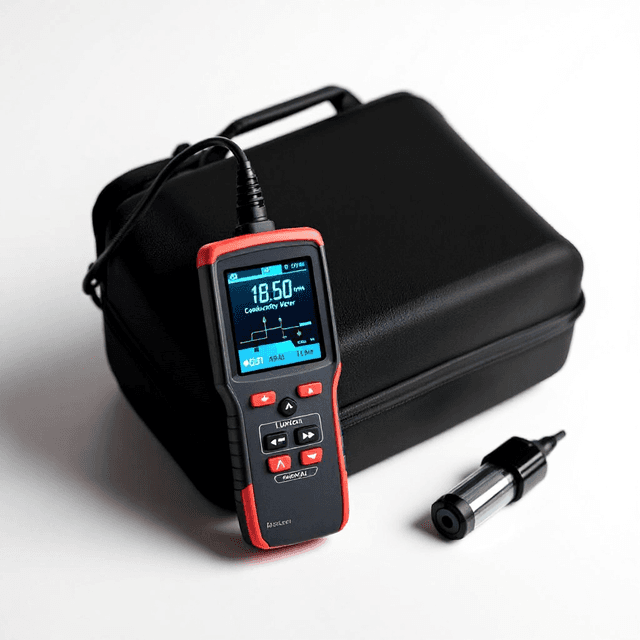
- Conductivity electrode with cable
- Power adapter (220V AC)
- Temperature probe
- Calibration solution (typical)
- User manual and documentation
- Electrode storage solution (typical)
Warranty
ConductScience provides a standard one-year manufacturer warranty covering defects in materials and workmanship, with technical support for calibration and operational guidance.
Compliance
What electrode constant should I use for measuring ultrapure water conductivity?
Use the 0.1 cm⁻¹ electrode constant for measuring conductivity in the 0-199.9 μS/cm range, which is appropriate for ultrapure and deionized water applications.
How often should I calibrate the conductivity meter?
Perform daily calibration for critical measurements or weekly for routine work using certified conductivity standards. The one-point automatic calibration simplifies this process.
Can this analyzer measure conductivity in organic solvents?
This instrument is designed for aqueous solutions. Organic solvents may damage the electrode or provide unreliable readings due to different ionic behavior and temperature coefficients.
What is the temperature coefficient and why does it matter?
The 2.0%/°C temperature coefficient corrects for the natural increase in ionic mobility with temperature. This ensures consistent results when sample temperatures vary from calibration conditions.
How do I choose between the three measurement ranges?
Select based on expected conductivity: 0.1 constant for pure water (<200 μS/cm), 1.0 constant for typical laboratory solutions (200 μS/cm - 20 mS/cm), and 10 constant for concentrated samples (>20 mS/cm).
What maintenance is required for the conductivity electrode?
Rinse with distilled water between measurements, store in appropriate storage solution when not in use, and inspect for coating or damage that could affect readings.
Can I export measurement data from this analyzer?
Consult the product datasheet for data connectivity options. Many bench-top analyzers offer RS-232 or USB interfaces for data logging and export capabilities.
Have a question about this product?
Accessories
Enhance your setup with compatible accessories
Upgrade Options