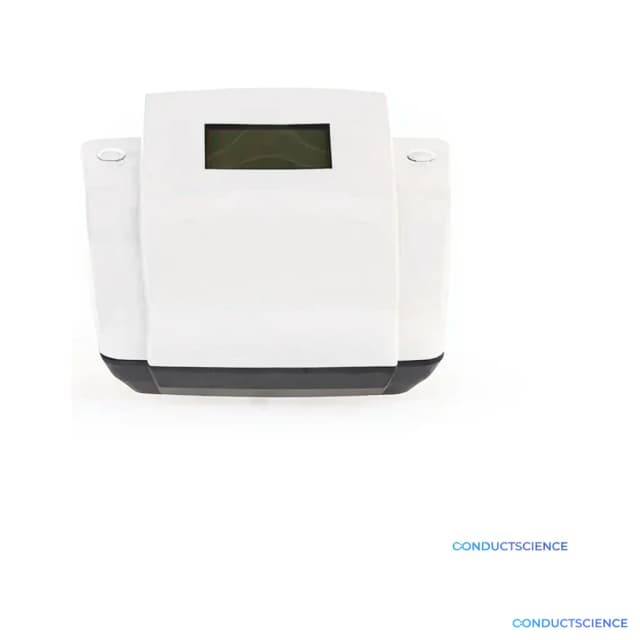
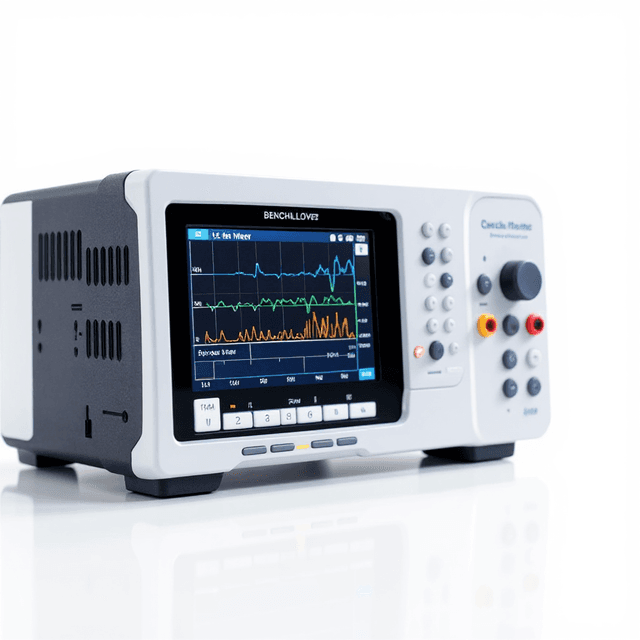
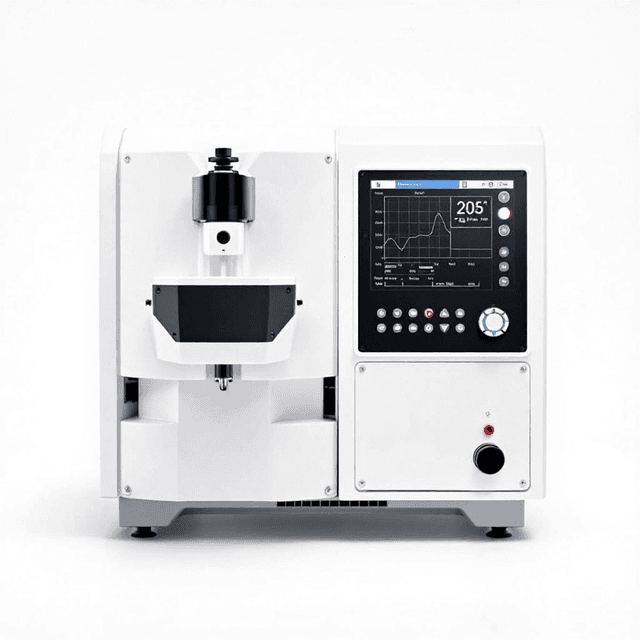
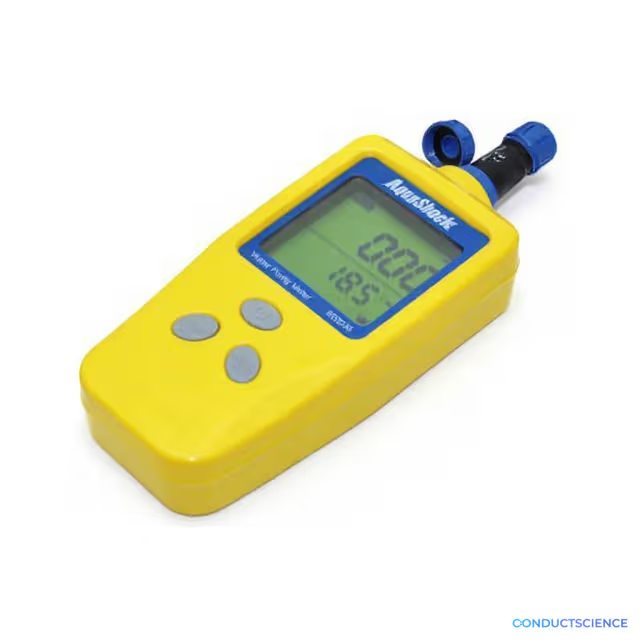
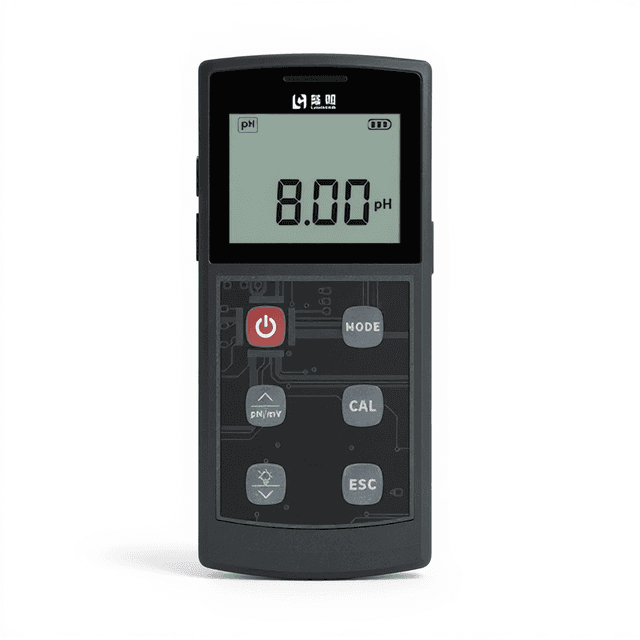
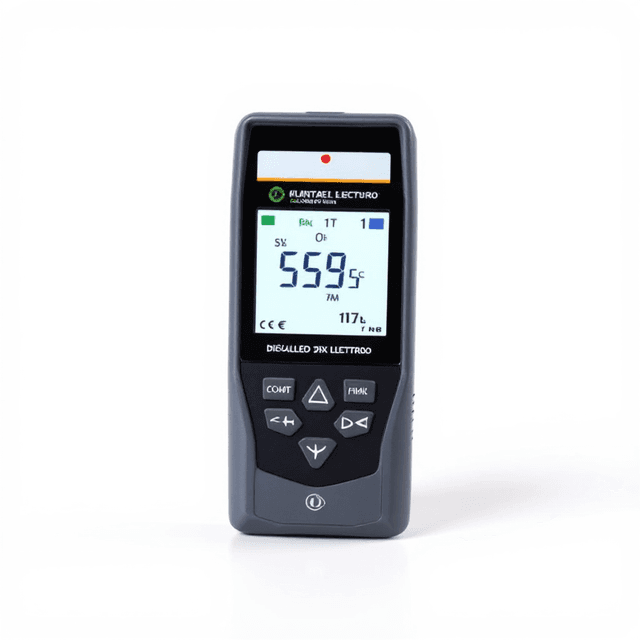
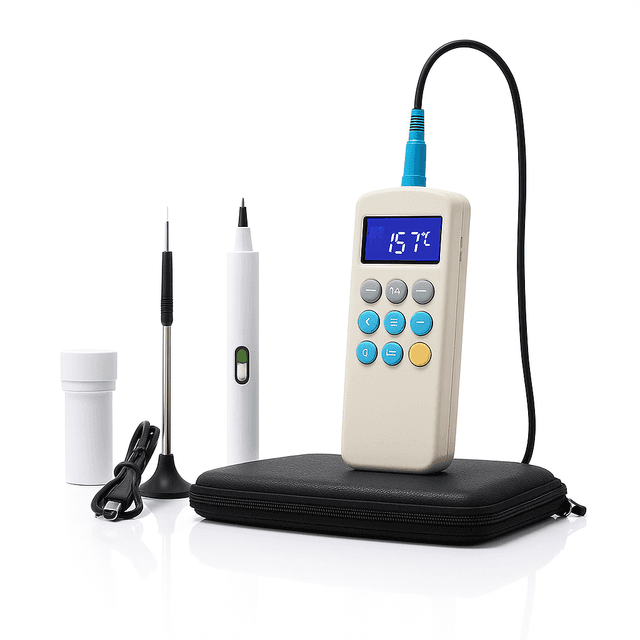
Conductivity Test Meter
Benchtop electrical conductivity meter measuring 0-199.9 μS/cm with automatic temperature compensation, designed for precise ionic content analysis in aqueous solutions.

Louise Corscadden, PhD
Director of Science · ConductScience
Ask Louise about Conductivity Test Meter fit, setup, configuration, or quote prep.
Already working with us? Sign in to connect this with My Scientist.
Key Specifications
Full details →- Model fit
- Configured during quote
- SKU family
- CS-LH-EC017
- Shipping box
- 12.2 x 9.84 x 7.36 cm
- Ordering
- Online checkout and quote request available
- Category
- Portable Analyzers
- Build notes
- Confirm accessories, station layout, and support needs before purchase
The DDS-22C Conductivity Test Meter is a benchtop electrical conductivity instrument designed for precise measurement of ionic content in aqueous solutions. With a measuring range of 0-199.9 μS/cm and 0.1 μS/cm resolution, this meter provides quantitative assessment of dissolved salts, nutrients, and impurities through electrical conductivity measurement. The instrument features automatic temperature compensation (ATC) across 0-50°C with a 2.0%/°C temperature coefficient, ensuring accurate readings across varying thermal conditions.
Built for laboratory and field applications, the meter operates with a corresponding electrode constant of 0.1 and maintains ±1.0% full scale accuracy. The robust design accommodates standard laboratory conditions (5-35°C, RH<85%) while providing stable measurements free from magnetic field interference. This conductivity meter serves as a primary analytical tool for water quality assessment, solution preparation verification, and process monitoring in research and industrial settings.
How It Works
Electrical conductivity measurement relies on the principle that dissolved ions in solution facilitate electrical current flow between electrodes. The DDS-22C applies a known voltage across platinum electrodes immersed in the test solution, measuring the resulting current flow. Higher ionic concentrations produce greater conductivity values, providing quantitative assessment of dissolved salt content.
The instrument employs automatic temperature compensation to account for temperature-dependent conductivity changes, applying a 2.0%/°C correction factor. This ensures accurate readings regardless of sample temperature variations within the 0-50°C ATC range. The electrode constant of 0.1 defines the geometric relationship between electrode spacing and area, calibrating the instrument for specific measurement ranges.
Real-time digital processing converts the measured conductance to standardized conductivity units (μS/cm), compensating for temperature effects and electrode geometry. The 0.1 μS/cm resolution enables detection of subtle ionic concentration changes, while the ±1.0% full scale accuracy provides reliable quantitative data for research applications.
Features & Benefits
Research Domain
- Analytical Chemistry
- Environmental Monitoring
- Food Science
- Industrial Hygiene
- Microbiology
- Pharmaceutical QC
Measuring range
- (0ï½199.9)μs/cm
ATC
- 0ï½50â
Temperature coefficient
- 2.0%/â
corresponding electrode constant
- 0.1
Working condition
- temperature: 5~35°C, RH<85%Power: 220V±10%, 50Hz ± 1Hz,DC9VNo notable vibrationNo strong magnetic field interference(except for geomagnetic field)
Automation Level
- manual
Brand
- ConductScience
Accuracy
- ±1.0%FS
Dimensions
- 310Ã250Ã187mm
Weight
- 1.52 kg
Shipping weight
- 3.35 lb
Shipping box
- L: 12.2 cm
- W: 9.84 cm
- H: 7.36 cm
| Feature | This Product | Typical Alternative | Advantage |
|---|---|---|---|
| Measuring Range | 0-199.9 μS/cm | Entry-level models often provide broader ranges but with reduced resolution at low conductivity levels | Optimized range provides maximum resolution for water quality and purified water applications. |
| Resolution | 0.1 μS/cm | Basic meters typically offer 1-10 μS/cm resolution | Higher resolution enables detection of subtle contamination changes in high-purity applications. |
| Temperature Compensation | Automatic 0-50°C with 2.0%/°C coefficient | Manual compensation or limited ATC ranges in lower-cost instruments | Eliminates operator error and ensures consistent accuracy across varying sample temperatures. |
| Accuracy | ±1.0% full scale | Portable meters often provide ±2-5% accuracy | Laboratory-grade accuracy supports quantitative analysis and regulatory compliance requirements. |
| Design Format | Benchtop with stable platform | Handheld meters offer portability but with reduced stability | Fixed installation minimizes measurement variability from electrode positioning and vibration. |
The DDS-22C provides laboratory-grade accuracy and resolution in a specialized low-conductivity range, offering automatic temperature compensation and stable benchtop operation for consistent analytical results. The instrument balances precision requirements with practical laboratory workflow needs.
Practical Tips
Use certified conductivity standards within the 0-199.9 μS/cm range for calibration verification, storing standards in sealed containers to prevent evaporation.
Why: Standard solution concentration changes affect calibration accuracy and measurement reliability.
Clean electrodes weekly with dilute acid solution followed by distilled water rinse to remove mineral deposits.
Why: Electrode fouling reduces conductivity sensitivity and causes measurement drift over time.
Allow samples and standards to equilibrate to room temperature before measurement to maximize ATC accuracy.
Why: Large temperature differences can exceed compensation range and introduce measurement errors.
Record sample temperature along with conductivity readings to verify proper temperature compensation function.
Why: Temperature documentation helps identify ATC malfunctions and validates measurement conditions.
If readings drift during measurement, check for air bubbles on electrode surfaces and ensure complete immersion.
Why: Incomplete electrode wetting creates variable contact area and unstable conductivity readings.
Ensure proper grounding of the instrument and avoid measurements in flammable solvents.
Why: Electrical safety prevents instrument damage and protects operators from potential hazards.
Rinse electrodes with sample solution before taking final readings to eliminate contamination from previous measurements.
Why: Residual solutions can alter ionic content and compromise measurement accuracy.
Setup Guide
What’s in the Box
- DDS-22C conductivity meter main unit
- Conductivity electrode with cable
- Power adapter (220V)
- Electrode storage solution (typical)
- User manual and technical documentation
- Calibration certificate (typical)
Warranty
ConductScience provides a standard one-year manufacturer warranty covering defects in materials and workmanship, with technical support for calibration and operational guidance.
Compliance
References
Background reading relevant to this product:
What is the measurement uncertainty at the lower end of the range?
The ±1.0% full scale accuracy translates to ±2.0 μS/cm uncertainty across the full range, providing adequate precision for most water quality applications above 20 μS/cm.
How frequently should calibration verification be performed?
Calibration should be verified daily with standard solutions for critical measurements, or weekly for routine monitoring, depending on measurement accuracy requirements.
Can this meter measure conductivity in organic solvents?
This instrument is designed for aqueous solutions; consult product datasheet for compatibility with specific organic solvents that may damage electrodes or affect accuracy.
What electrode maintenance is required?
Regular rinsing with distilled water between samples and periodic cleaning with appropriate solutions to remove fouling deposits that could affect measurement accuracy.
How does temperature affect measurement accuracy?
The automatic temperature compensation corrects for thermal effects using a 2.0%/°C coefficient within 0-50°C range, eliminating need for manual temperature corrections.
What is the response time for stable readings?
Consult product datasheet for specific response time specifications, which depend on solution properties and temperature stability.
Can measurements be logged or exported for data analysis?
Data logging capabilities are not specified in the basic specifications; consult product datasheet for available data output options.
Have a question about this product?
Have a question? Just ask.
Send it over and we'll email you a personalized answer — no call, no scheduling.
Prefer to talk it through?
Accessories
Enhance your setup with compatible accessories