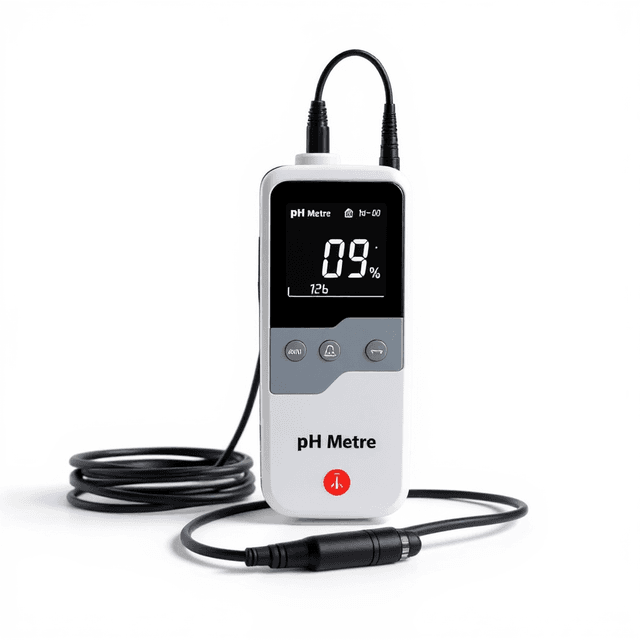
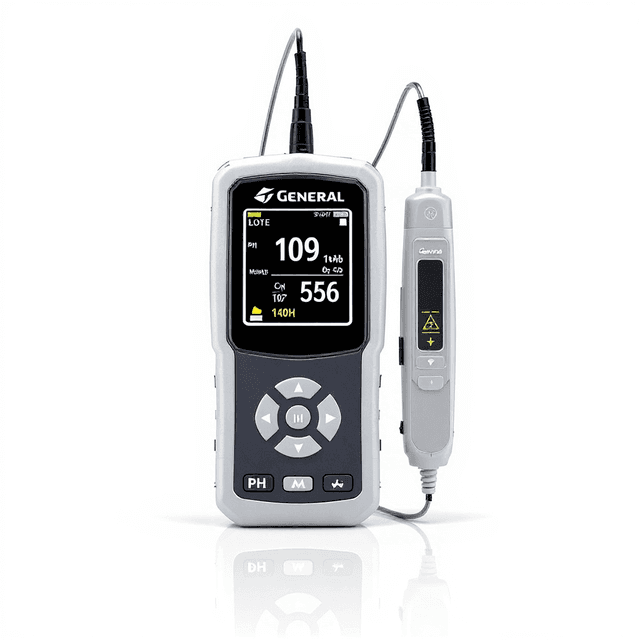
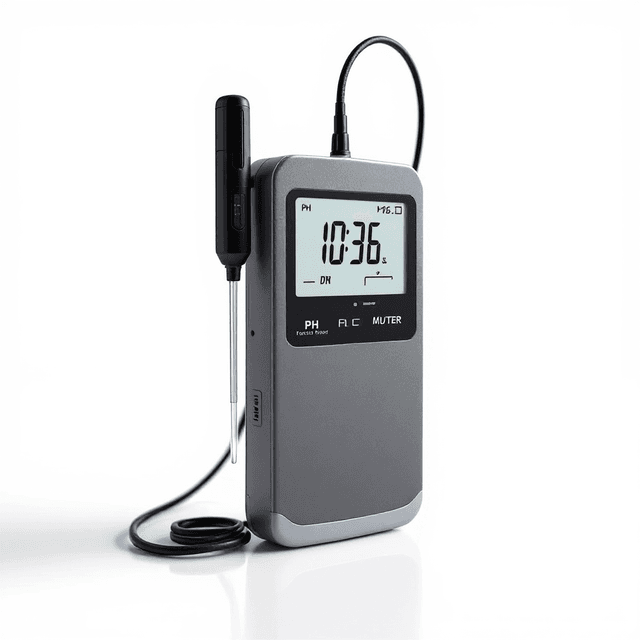
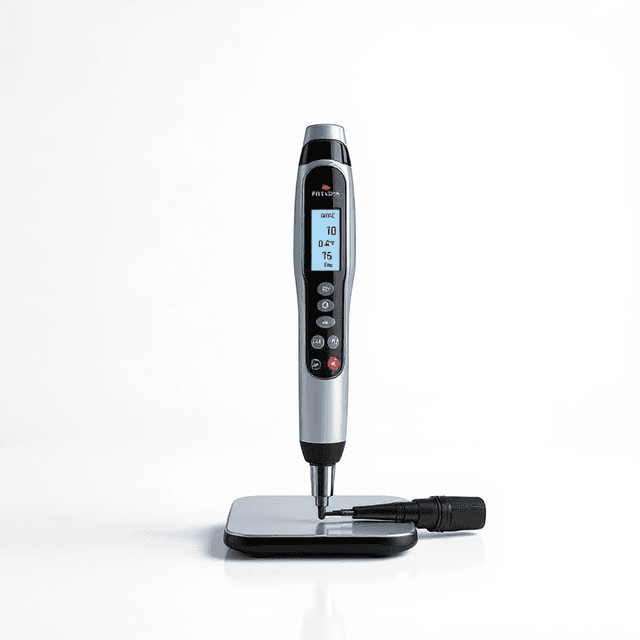
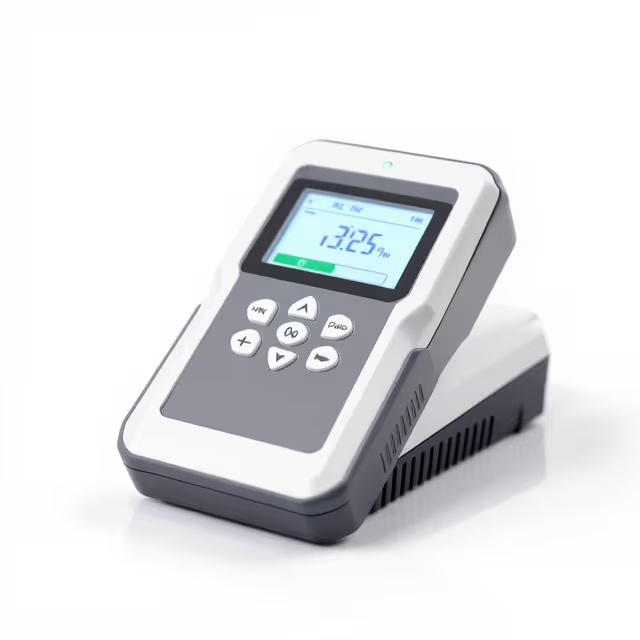
Benchtop Digital pH Meter
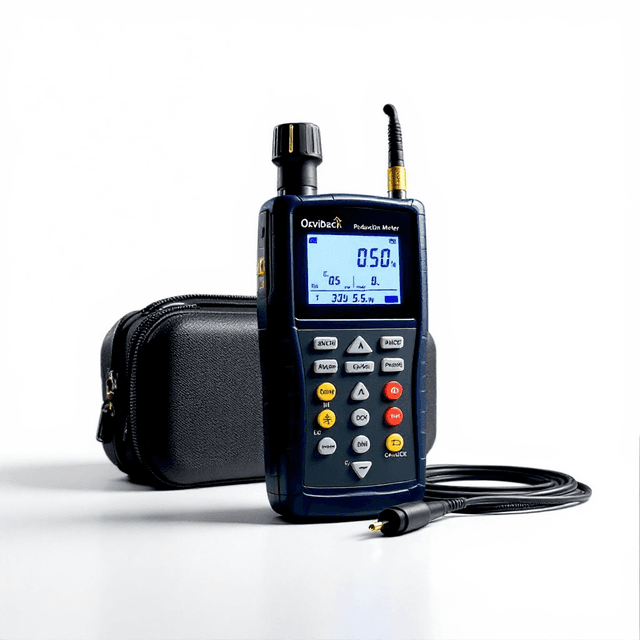
Multi-parameter benchtop pH meter measuring pH, mV, temperature, conductivity, and TDS with automatic temperature compensation and dual power options for laboratory and field use.
| Model | PH-2603 |
| Product name | pH machine PH-2603 |
| Measuring range | pH: 0.00~14.00mV: 0~ ±1999mVâ: 0~100°CEC: 0.00~19.99ms/cmCF: 0.0~199.9CFTDS: 10~19990ppm |
| Input impedance | 102Ω |
| Calibration | 1 or 2point |
| Working temperature | 0~95°C |

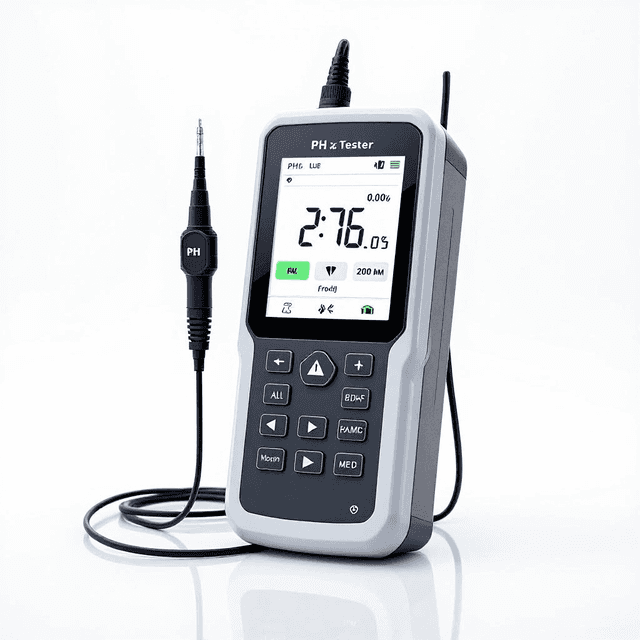
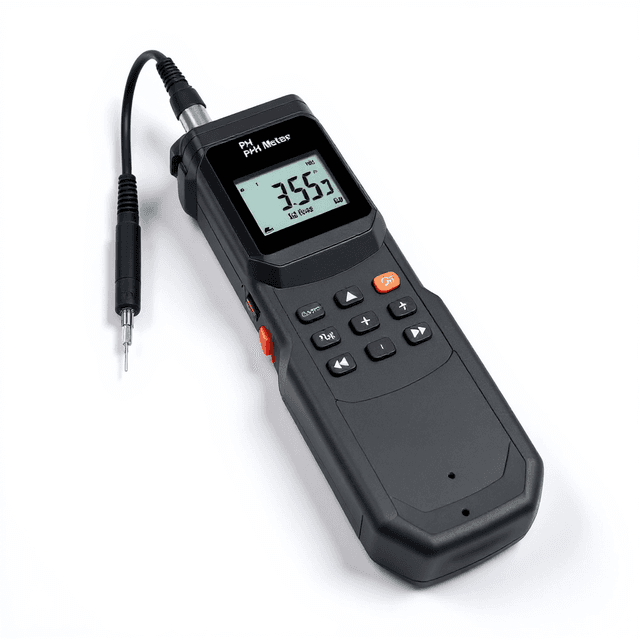
The PH-2603 multi-parameter benchtop pH meter provides comprehensive water quality analysis for laboratory and field applications. This digital instrument measures pH, mV potential, temperature, electrical conductivity (EC), conductivity factor (CF), and total dissolved solids (TDS) with automatic temperature compensation to correct measurement errors due to thermal variations.
The unit features a 1 or 2-point calibration system with pH range 0.00-14.00, resolution of 0.01 pH units, and accuracy of ±0.01 pH. The high input impedance of 10²Ω minimizes electrode loading effects. Dual power options include DC 9V/200mA adapter or rechargeable battery with low battery indicator for portable field measurements. The front panel display shows real-time readings for all measured parameters.
How It Works
The PH-2603 employs a glass electrode system for pH measurement, utilizing the potential difference that develops across a pH-sensitive glass membrane when exposed to hydrogen ion activity in solution. The electrode assembly includes a reference electrode that provides a stable potential, allowing accurate pH determination through the Nernst equation relationship between electrode potential and hydrogen ion concentration.
Conductivity measurement utilizes a two-electrode configuration that applies an AC voltage and measures the resulting current flow through the solution. The instrument calculates electrical conductivity based on Ohm's law, with automatic temperature compensation adjusting for the temperature dependence of ionic mobility. Total dissolved solids values are derived from conductivity measurements using empirical conversion factors.
Automatic temperature compensation continuously monitors solution temperature and applies correction algorithms to both pH and conductivity readings, compensating for temperature-dependent changes in electrode response and ionic conductivity to provide accurate measurements across the operating temperature range of 0-95°C.
Features & Benefits
Model
- PH-2603
Product name
- pH machine PH-2603
Measuring range
- pH: 0.00~14.00mV: 0~ ±1999mVâ: 0~100°CEC: 0.00~19.99ms/cmCF: 0.0~199.9CFTDS: 10~19990ppm
Input impedance
- 102Ω
Calibration
- 1 or 2point
Working temperature
- 0~95°C
Operating conditions
- 5~60°C,RHâ¤95%(Without magnetic interference around the meter & conspicuous centrum)
Automation Level
- manual
Brand
- ConductScience
Accuracy
- pH: ±0.01pHmV: ±1mVâ: ±0.4°CEC.CF.TDS: ±2%F.S
Power/Voltage
- DC9V/200mA or Rechargeable battery
Dimensions
- 208Ã200Ã76mm
Weight
- 510g
Research Domain
- Analytical Chemistry
- Clinical Diagnostics
- Environmental Monitoring
- Food Science
- Microbiology
- Pharmaceutical QC
Weight
- 1.12 kg
Dimensions
- L: 8.19 mm
- W: 7.87 mm
- H: 2.99 mm
Comparison Guide
| Feature | This Product | Typical Alternative | Advantage |
|---|---|---|---|
| pH Measurement Range | 0.00 to 14.00 pH with 0.01 pH resolution | Entry-level meters often provide 0.1 pH resolution | Higher resolution enables more precise pH control in buffer preparation and quality control applications. |
| Multi-Parameter Capability | Measures pH, mV, temperature, EC, CF, and TDS | Single-parameter instruments require multiple devices | Reduces equipment costs and sample handling time by providing comprehensive water quality analysis from one instrument. |
| Power Options | DC adapter or rechargeable battery with low battery indicator | Many benchtop meters are AC-powered only | Portable operation capability extends measurement applications to field locations without AC power. |
| Temperature Compensation Range | Automatic compensation from 0-95°C working range | Basic meters may have limited temperature compensation | Maintains measurement accuracy across wide temperature range for diverse sample types and field conditions. |
| Input Impedance | 10²Ω high input impedance | Lower impedance inputs in basic models | Minimizes electrode loading effects and maintains accuracy with aging electrodes or high-resistance samples. |
The PH-2603 combines multi-parameter measurement capability with portable operation flexibility, offering comprehensive water quality analysis in both laboratory and field environments. The high input impedance and automatic temperature compensation provide measurement accuracy across diverse sample conditions.
Practical Tips
Use fresh pH buffer solutions and perform 2-point calibration spanning your expected sample pH range for maximum accuracy.
Why: Buffer degradation and appropriate calibration range selection directly impact measurement precision.
Store pH electrodes in appropriate storage solution (typically 3M KCl) when not in use and replace electrode storage solution monthly.
Why: Proper electrode hydration maintains glass membrane sensitivity and extends electrode lifespan.
Allow electrode readings to stabilize for at least 30 seconds before recording values, especially in poorly buffered solutions.
Why: Electrode equilibration time affects measurement reproducibility and accuracy, particularly in low ionic strength samples.
If pH readings drift or respond slowly, check electrode condition and perform thorough cleaning with appropriate electrode cleaning solution.
Why: Electrode fouling or aging affects response time and measurement stability.
Record ambient temperature and sample temperature during measurements to verify automatic temperature compensation functionality.
Why: Temperature documentation helps identify compensation errors and validates measurement conditions.
Avoid measuring samples above 60°C ambient temperature as this exceeds the instrument's specified operating conditions.
Why: Operating outside specified environmental conditions can damage internal electronics and affect measurement accuracy.
Verify conductivity measurements periodically using certified conductivity standard solutions with known values at measured temperature.
Why: Conductivity cell constant may drift over time, requiring verification to maintain measurement traceability.
Setup Guide
What’s in the Box
- PH-2603 main unit
- pH electrode (typical)
- Temperature probe (typical)
- DC 9V power adapter
- pH calibration buffers (typical)
- Electrode storage solution (typical)
- User manual
- Calibration certificate (typical)
Warranty
ConductScience provides a standard 1-year manufacturer warranty covering defects in materials and workmanship, with technical support for calibration procedures and measurement protocols.
Compliance
References
Background reading relevant to this product:
What is the electrode response time for pH measurements?
Response time depends on electrode type and sample conditions; consult product datasheet for specific electrode response characteristics. Glass electrodes typically reach 95% of final reading within 30-60 seconds in stirred solutions.
Can the meter store calibration data and measurement results?
The product specifications do not indicate internal data storage capability; consult product datasheet for data logging features. Manual recording of calibration parameters and measurements may be required.
What is the recommended calibration frequency for pH measurements?
Calibration frequency depends on measurement accuracy requirements and sample matrix. Daily calibration is recommended for critical applications, while weekly calibration may suffice for routine monitoring.
Does the conductivity measurement compensate for cell constant variations?
The meter measures conductivity using standard electrode configurations; consult product datasheet for cell constant specifications and compensation algorithms. Periodic cell constant verification with standard solutions is recommended.
What is the operating temperature range for the instrument itself?
The meter operates in ambient conditions of 5-60°C with relative humidity ≤95%, while sample temperature measurement range extends from 0-100°C with automatic compensation.
Can the meter interface with laboratory information systems?
The product specifications do not mention digital communication interfaces; consult product datasheet for RS-232, USB, or other connectivity options for data transfer to LIMS systems.
How does magnetic interference affect measurement accuracy?
The operating conditions specify use without magnetic interference around the meter, indicating potential susceptibility to electromagnetic fields that could affect sensitive pH and conductivity measurements.
Have a question about this product?
Accessories
Enhance your setup with compatible accessories
Upgrade Options