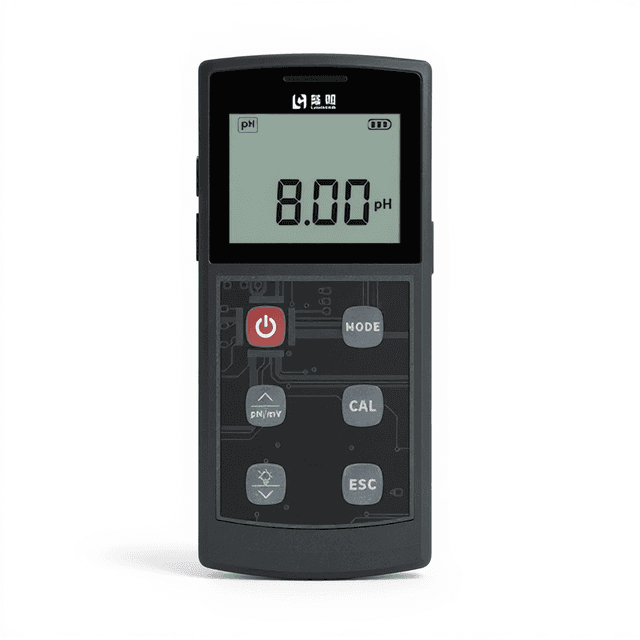
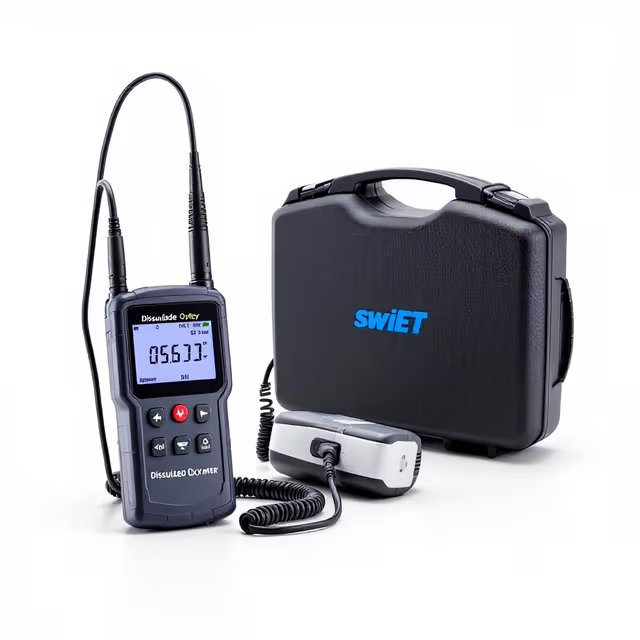
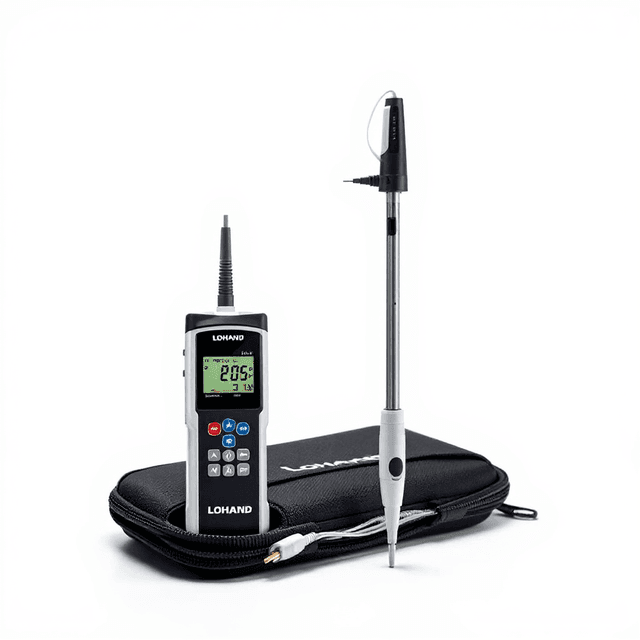
Turbidity Meters
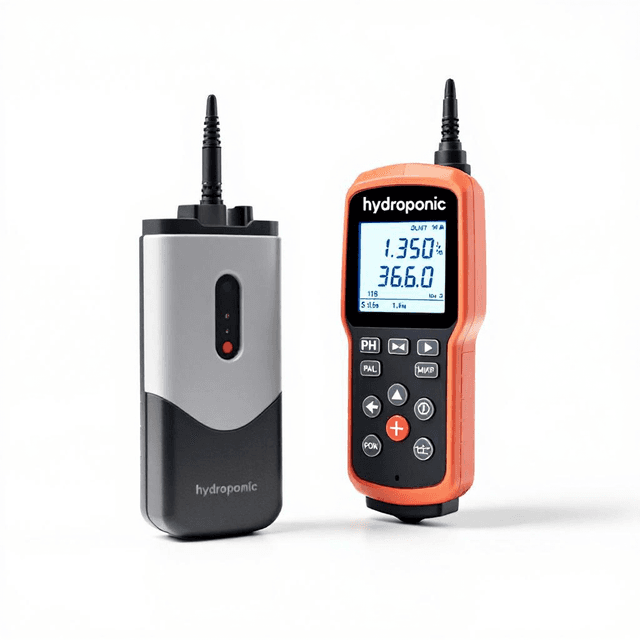
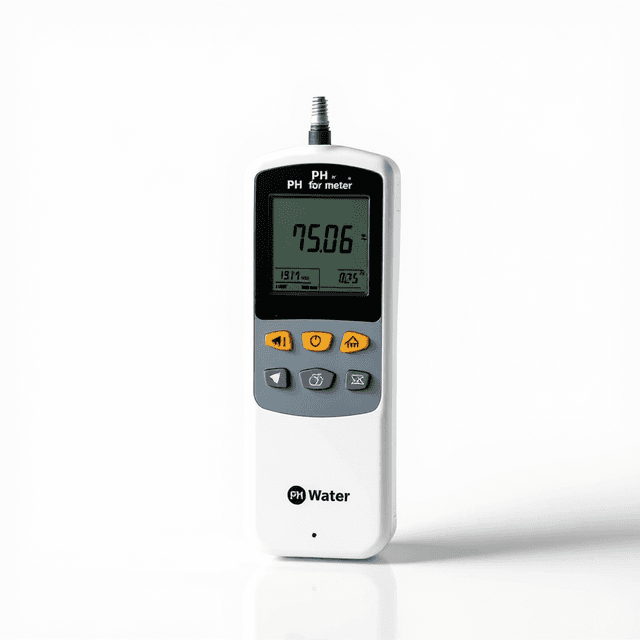
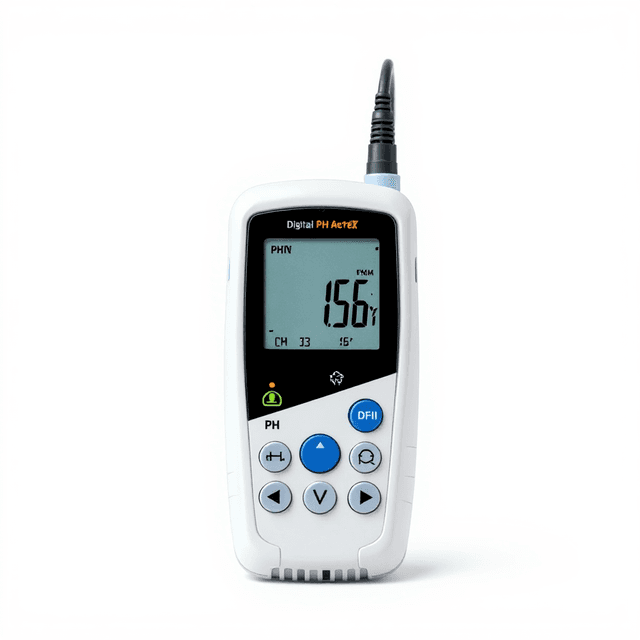
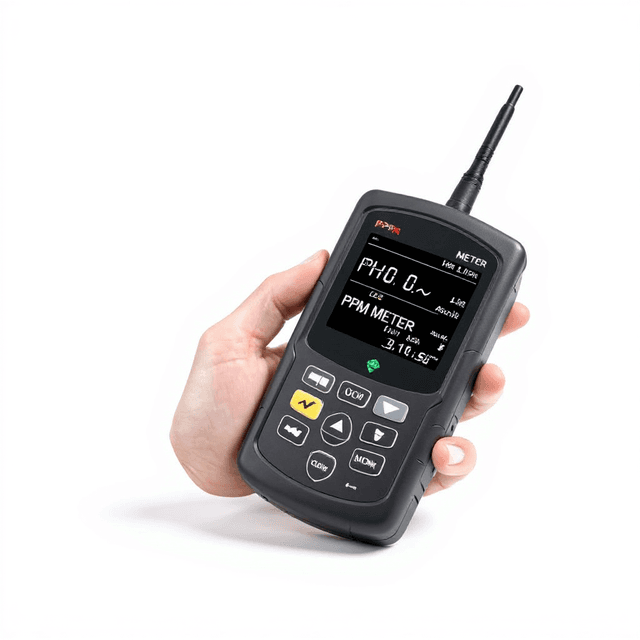
Portable turbidity meter measuring 0-200 NTU with ±2.5% accuracy using scattered light technology for water quality assessment and environmental monitoring.

Louise Corscadden, PhD
Director of Science · ConductScience
Ask Louise about Turbidity Meters fit, setup, configuration, or quote prep.
Already working with us? Sign in to connect this with My Scientist.
Key Specifications
Full details →- Model fit
- Configured during quote
- SKU family
- CS-LH-WGZ-1B
- Shipping box
- 20.0 x 10.0 x 5.0 cm
- Ordering
- Online checkout and quote request available
- Category
- Portable Analyzers
- Build notes
- Confirm accessories, station layout, and support needs before purchase
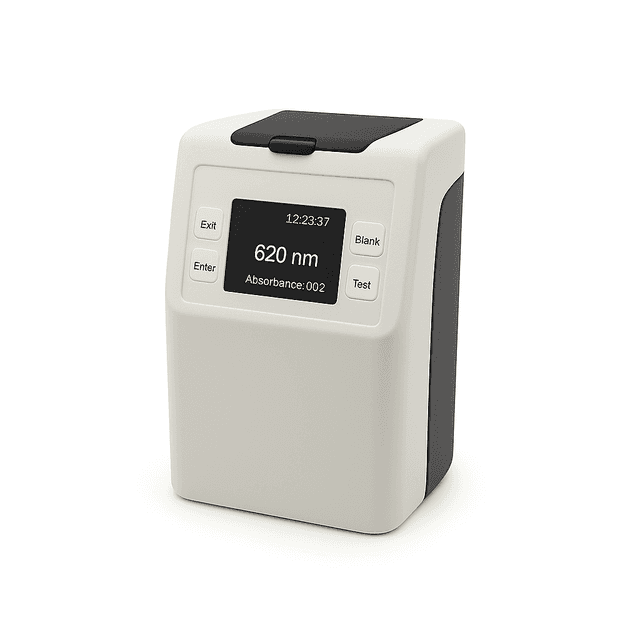
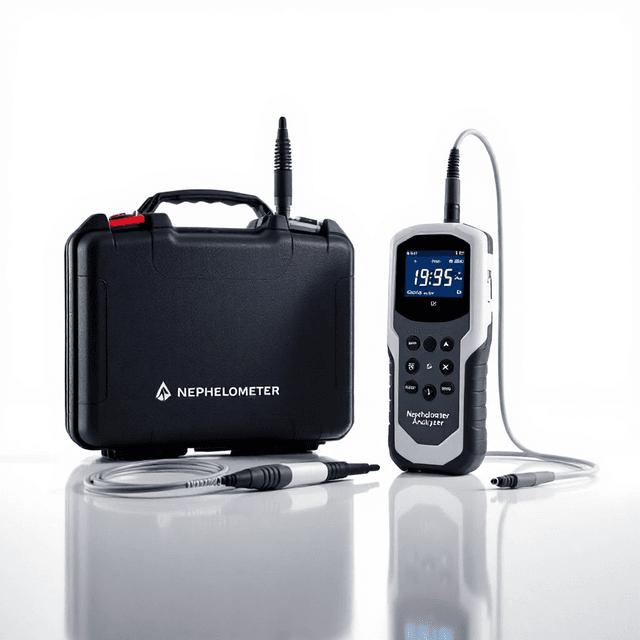
The ConductScience WGZ-1B Turbidity Meter is a portable optical instrument designed for quantitative measurement of water turbidity using scattered light technology. When light passes through a water sample, suspended particles cause light scattering proportional to the particle concentration and size distribution. The instrument measures this scattered light at a 90-degree angle to determine turbidity levels from 0 to 200 NTU with 0.1 NTU resolution.
This battery-powered turbidity meter features dual power supply options (AC/DC), automatic low-voltage shutoff, and data output interface for integration with laboratory information systems. The stable light source and precision optics provide ±2.5% accuracy with ≤1.5% repeatability, making it suitable for routine water quality assessment in environmental monitoring, industrial process control, and research applications requiring quantitative turbidity measurements.
How It Works
The WGZ-1B operates on the principle of nephelometric turbidity measurement, where light scattering intensity is proportional to the concentration and size of suspended particles. A stable light source illuminates the water sample, and when particles are present, they scatter light in multiple directions. The instrument's photodetector positioned at 90 degrees to the incident light beam measures this scattered light intensity.
In particle-free water, light passes through without directional change, producing minimal scattered light signal. As particle concentration increases, more light scattering occurs, generating a stronger signal that correlates directly with turbidity levels. The instrument's optical system maintains consistent measurement geometry and light intensity to ensure accurate readings across the 0-200 NTU measurement range.
Features & Benefits
Model
- WGZ-1B
Product name
- Turbidity tester
Minimum Readout ( NTU)
- 0.1
Measuring Range(NTU)
- 0--200
Basic Error(F.S)
- ±2.5%
Repeatability
- â¤1.5%
Zero Draft(F.S)
- ±0.5%
Power Supply
- DC 1.5VX5 AA battery; AC220V/50Hz
Characters
- Portable type; Low voltage auto power offfunction; data output interface; AC&DC power supply
Automation Level
- semi-automated
Brand
- ConductScience
Research Domain
- Analytical Chemistry
- Environmental Monitoring
- Food Science
- Industrial Hygiene
- Microbiology
- Pharmaceutical QC
Shipping weight
- 3.31 lb
Shipping box
- L: 20.0 cm
- W: 10.0 cm
- H: 5.0 cm
| Feature | This Product | Typical Alternative | Advantage |
|---|---|---|---|
| Measurement Range | 0-200 NTU with 0.1 NTU resolution | Entry-level models often provide 0-100 NTU ranges with 1.0 NTU resolution | Extended range accommodates both pristine water samples and moderately turbid industrial samples in a single instrument. |
| Accuracy Specification | ±2.5% full scale with ≤1.5% repeatability | Basic portable units typically offer ±5% accuracy | Higher precision enables reliable quantitative analysis for regulatory compliance and research documentation. |
| Power Supply Options | Dual AC (220V/50Hz) and DC (5 AA batteries) operation | Many portable units offer battery-only operation | Flexible power options support both laboratory bench use and extended field measurements. |
| Data Interface | Integrated data output interface | Basic models often provide display-only functionality | Direct data transfer capability facilitates integration with laboratory information systems and eliminates transcription errors. |
| Zero Drift Performance | ±0.5% full scale zero drift | Standard portable instruments typically have higher drift rates | Superior baseline stability reduces calibration frequency requirements during extended measurement sessions. |
The WGZ-1B combines laboratory-grade measurement precision with portable operation, offering extended measurement range and dual power capability. The integrated data interface and superior zero drift performance support both field measurements and laboratory integration requirements.
Practical Tips
Perform zero calibration with fresh distilled water at the beginning of each measurement session.
Why: Environmental changes and optical drift can affect baseline readings between uses.
Allow samples to reach room temperature and settle for 2-3 minutes before measurement to eliminate temperature effects and air bubbles.
Why: Temperature gradients and dissolved gases can create optical artifacts that interfere with accurate turbidity measurement.
Clean cuvettes with dilute acid solution followed by distilled water rinse to remove mineral deposits and organic films.
Why: Optical surfaces must remain pristine to prevent light scattering artifacts that bias turbidity readings.
Record multiple measurements and calculate averages for samples with turbidity near detection limits.
Why: Statistical averaging improves measurement precision for low-turbidity samples approaching the 0.1 NTU detection threshold.
If readings appear unstable, verify that sample cuvette is properly seated and free of external condensation or fingerprints.
Why: Optical path obstructions or refractive index changes at surfaces can cause measurement variability.
Use appropriate personal protective equipment when handling unknown water samples that may contain pathogens or chemicals.
Why: Environmental water samples can contain biological or chemical hazards requiring standard laboratory safety protocols.
Verify calibration monthly using certified turbidity standards spanning the measurement range.
Why: Regular calibration verification ensures measurement accuracy and identifies optical system degradation before it affects data quality.
Setup Guide
What’s in the Box
- WGZ-1B turbidity meter main unit
- AC power adapter (220V/50Hz)
- Sample cuvettes (typical)
- Data cable for output interface (typical)
- User manual and calibration certificate (typical)
- Carrying case (typical)
Warranty
ConductScience provides a standard one-year manufacturer warranty covering defects in materials and workmanship, with technical support for calibration procedures and measurement protocols.
Compliance
References
Background reading relevant to this product:
What calibration standards are required for accurate turbidity measurement?
The instrument requires zero calibration using distilled water and should be verified against certified turbidity standards (e.g., formazin or polymer standards) to ensure measurement accuracy across the operating range.
How does sample temperature affect turbidity readings?
Temperature variations can influence particle behavior and light scattering properties. Maintain consistent sample temperature during measurements and allow samples to equilibrate to room temperature for optimal repeatability.
What sample volume is required for measurement?
Consult product datasheet for specific cuvette volume requirements. Ensure sufficient sample volume to fill the optical measurement path completely without air bubbles.
Can this meter distinguish between different particle types?
This nephelometric turbidity meter measures total light scattering and cannot differentiate between organic and inorganic particles. It provides bulk turbidity measurements regardless of particle composition.
What maintenance is required for consistent performance?
Regular cleaning of optical surfaces, periodic calibration verification, and replacement of light source when intensity degrades are essential for maintaining measurement accuracy.
How does this compare to other turbidity measurement methods?
Nephelometric measurement at 90 degrees provides better sensitivity for low turbidity levels compared to attenuation-based methods, making it suitable for drinking water and clean sample analysis.
What data formats are available through the output interface?
Consult product datasheet for specific data output protocols and formats supported by the interface for integration with laboratory data systems.
Have a question about this product?
Have a question? Just ask.
Send it over and we'll email you a personalized answer — no call, no scheduling.
Prefer to talk it through?
Accessories
Enhance your setup with compatible accessories
Frequently Bought Together