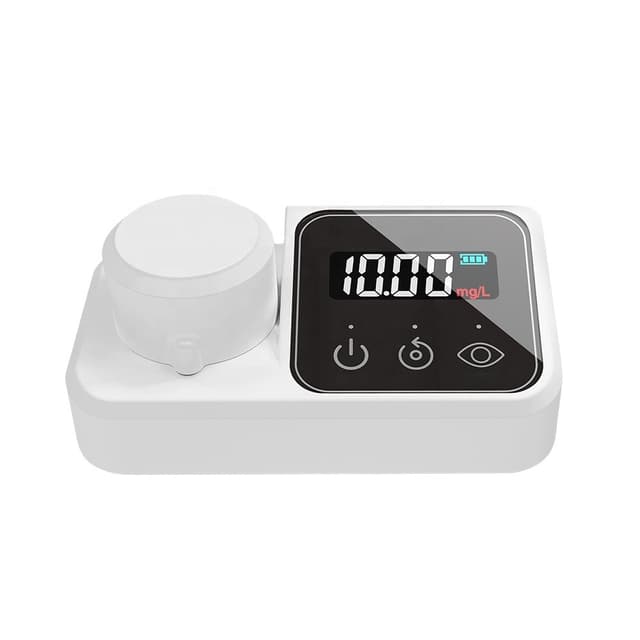
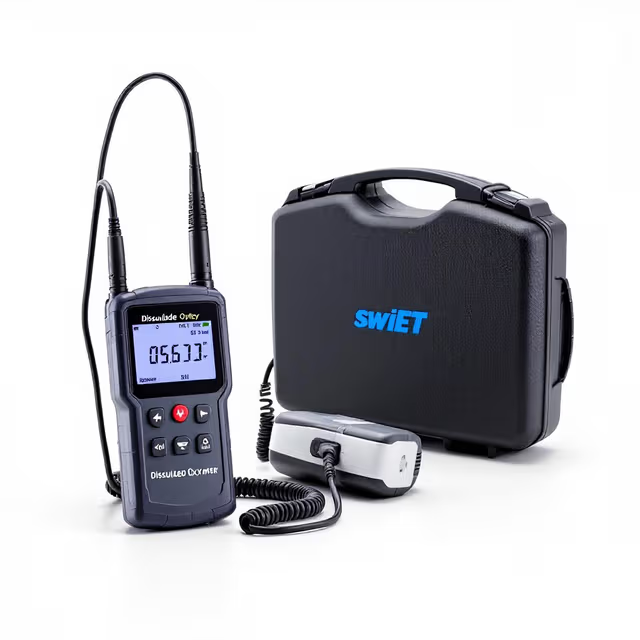
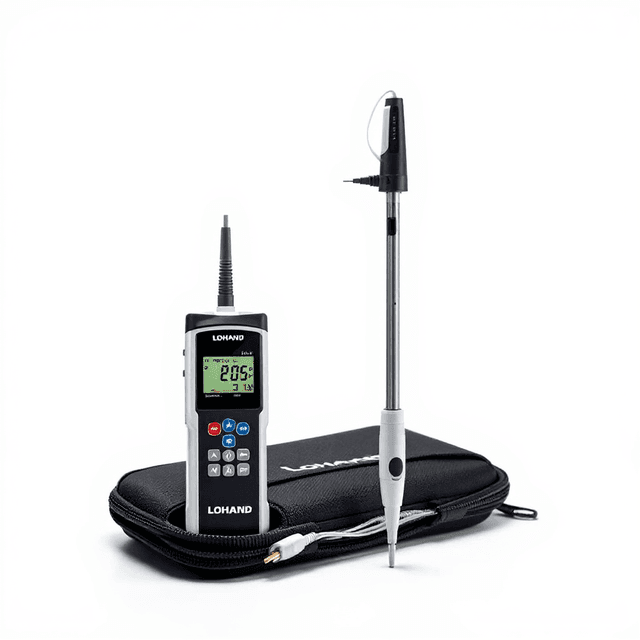
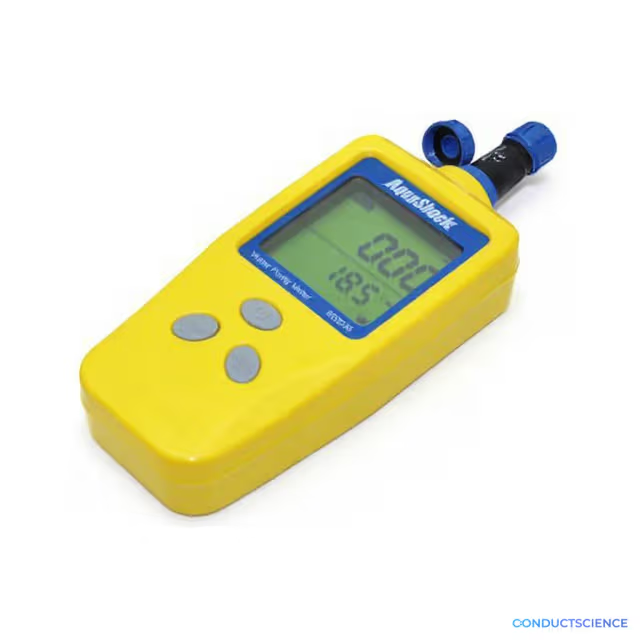
Total Dissolved Solids Meter
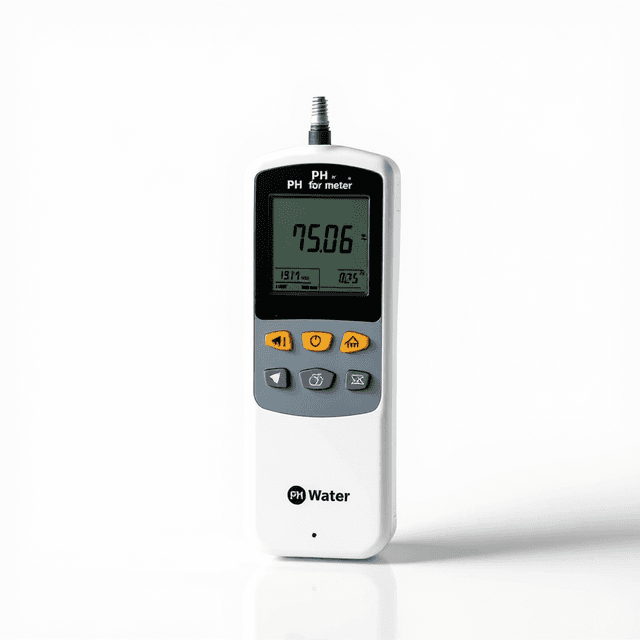
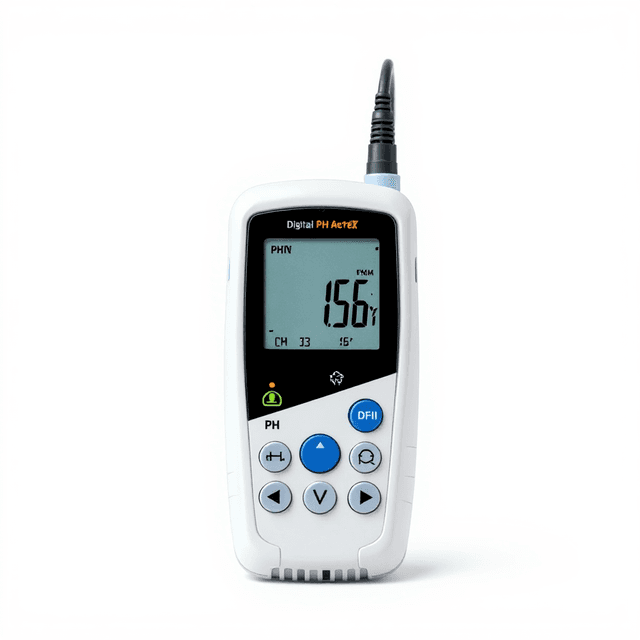
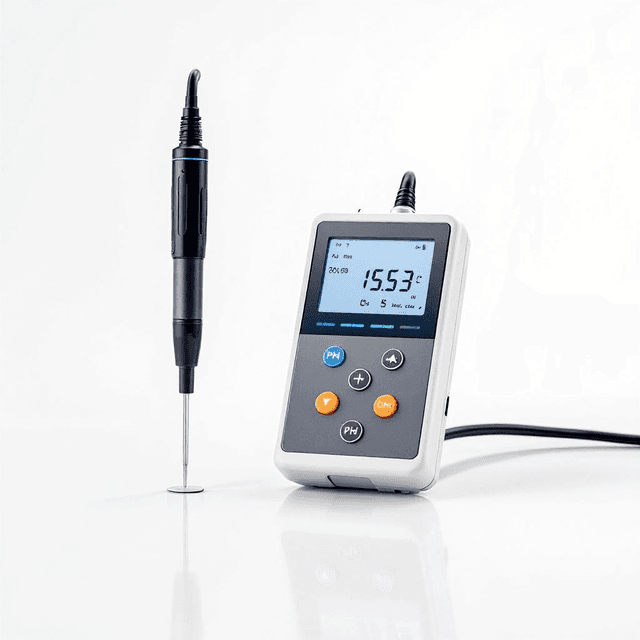
Portable conductometric TDS meter measuring 0-9990 ppm dissolved solids with integrated temperature monitoring for water quality assessment and environmental monitoring applications.

Louise Corscadden, PhD
Director of Science · ConductScience
Ask Louise about Total Dissolved Solids Meter fit, setup, configuration, or quote prep.
Already working with us? Sign in to connect this with My Scientist.
Key Specifications
Full details →- Model fit
- Configured during quote
- SKU family
- CS-LH-TDS-3
- Shipping box
- 6.06 x 1.02 x 0.75 cm
- Ordering
- Online checkout and quote request available
- Category
- Portable Analyzers
- Build notes
- Confirm accessories, station layout, and support needs before purchase
The ConductScience TDS-3 Total Dissolved Solids Meter provides precise quantification of dissolved ionic content in aqueous samples through conductometric analysis. This portable instrument measures TDS concentrations from 0-9990 ppm with ±2% accuracy while simultaneously monitoring sample temperature from 0-99°C. The meter employs electrical conductivity principles to determine total dissolved solids concentration, making it suitable for field and laboratory applications requiring rapid water quality assessment.
Built for practical research use, the TDS-3 features automatic shutoff after 8 minutes to conserve battery life and compact dimensions (154×26×19mm) for field portability. The dual-parameter measurement capability eliminates the need for separate temperature compensation calculations, providing temperature-corrected TDS readings essential for accurate water quality monitoring protocols.
How It Works
The TDS-3 operates on the principle of conductometric analysis, where the electrical conductivity of an aqueous solution is directly proportional to the concentration of dissolved ions. When the meter's electrodes are immersed in a sample, dissolved salts dissociate into ions that facilitate electrical current flow. The instrument applies a small AC voltage between the electrodes and measures the resulting current, which increases with higher concentrations of dissolved ionic species.
The meter converts conductivity measurements to TDS values using a predetermined conversion factor, typically based on the assumption that dissolved solids consist primarily of common inorganic salts. Simultaneous temperature measurement enables automatic temperature compensation, as conductivity varies with temperature. The integrated temperature sensor ensures accurate TDS readings across the 0-50°C operating range by applying standard temperature correction algorithms.
Digital processing circuits convert the analog signals to numerical readings displayed on the LCD screen. The measurement process is completed within seconds of electrode immersion, providing real-time TDS and temperature values for immediate sample assessment.
Features & Benefits
Model
- TDS-3
Name
- total dissolved solids meter TDS-3
Type
- Water quality analyzer
Measuring range
- TDS: 0-9990ppm (mg/L) Temp:0-99
Auto shutoff
- 8 minutes
Accessories
- 1 TDS meter2 batteries (included)1 manual
Applied range
- TDS meter is a easy tool for testing the level of water quality, popular in water deal industry, household, travlling, and etc.
Usage Situation
- drinking water, water filters, hydroponics, aquariums, food & coffee, pools & spas.
Automation Level
- manual
Brand
- ConductScience
Accuracy
- TDS: ±2%(F.S)
Weight
- 65g
Dimensions
- 154mmx26mmx19mm
Temperature Range
- 0°C~50°C
Power/Voltage
- 2*1.5V ( Button cell)
Research Domain
- Analytical Chemistry
- Environmental Monitoring
- Food Science
- Industrial Hygiene
- Microbiology
- Pharmaceutical QC
Shipping weight
- 0.04 lb
Shipping box
- L: 6.06 cm
- W: 1.02 cm
- H: 0.75 cm
| Feature | This Product | Typical Alternative | Advantage |
|---|---|---|---|
| Measurement Range | 0-9990 ppm TDS with 0-99°C temperature | Entry-level models often provide narrower ranges or single-parameter measurement | Wide measurement range accommodates diverse sample types from purified water to moderately mineralized solutions in a single instrument |
| Temperature Compensation | Integrated temperature sensor with automatic compensation | Basic models may require manual temperature correction or lack compensation entirely | Automatic temperature correction ensures measurement accuracy across varying sample temperatures without manual calculations |
| Display Technology | LCD digital display showing both TDS and temperature | Analog displays or single-parameter digital readouts | Dual-parameter digital display reduces reading errors and eliminates the need for separate temperature measurement equipment |
| Power Management | 8-minute automatic shutoff with button cell batteries | Manual power control with shorter battery life | Extended battery life for field applications and prevents accidental power drain during transport |
| Measurement Accuracy | ±2% full scale accuracy | Basic models may offer lower accuracy or unspecified precision | Laboratory-grade accuracy suitable for quality control documentation and regulatory compliance applications |
| Physical Design | 65g weight, 154×26×19mm compact dimensions | Larger form factors or heavier construction | Optimal portability for field sampling while maintaining professional instrument durability and electrode protection |
The TDS-3 offers laboratory-grade measurement accuracy in a portable format with integrated temperature compensation. The dual-parameter capability and automatic power management provide practical advantages for both field and laboratory applications where measurement reliability and instrument longevity are priorities.
Practical Tips
Use certified TDS standard solutions rather than preparing your own calibration standards from pure salts.
Why: Commercial standards account for ion activity coefficients and provide traceable accuracy for quality control documentation.
Rinse electrodes with distilled water after each measurement series and store with protective cap in place.
Why: Prevents sample cross-contamination and electrode fouling that degrades measurement accuracy over time.
Allow samples to reach ambient temperature before measurement or use the temperature reading to assess thermal equilibrium.
Why: Temperature-compensated readings are most accurate when samples are thermally stable and not undergoing rapid temperature change.
Record both TDS and temperature values for each measurement to enable post-analysis temperature correction verification.
Why: Documented temperature conditions support data interpretation and quality assurance review of measurement protocols.
If readings appear unstable, check for air bubbles on electrode surfaces and ensure adequate sample mixing.
Why: Air bubbles and stratified samples create local conductivity variations that produce inconsistent measurements.
Perform replicate measurements on critical samples and calculate the mean value for improved precision.
Why: Replicate analysis reduces random measurement error and provides confidence intervals for quality control reporting.
Avoid measuring samples containing organic solvents or aggressive chemicals that may damage the electrode materials.
Why: Electrode degradation compromises measurement accuracy and may require instrument replacement or costly electrode repair.
Verify calibration using fresh standard solutions rather than aged or diluted stocks to maintain measurement traceability.
Why: Standard solution degradation over time introduces systematic error that affects all subsequent measurements until recalibration.
Setup Guide
What’s in the Box
- TDS-3 Total Dissolved Solids Meter
- 2 × 1.5V Button Cell Batteries (pre-installed)
- User Manual
- Protective Electrode Cap (typical)
- Calibration Reference Card (typical)
Warranty
ConductScience provides a standard one-year manufacturer warranty covering defects in materials and workmanship, with technical support available for calibration procedures and troubleshooting assistance.
Compliance
References
Background reading relevant to this product:
What is the typical measurement precision for replicate TDS readings?
With ±2% full scale accuracy, expect measurement precision suitable for quality control applications. For optimal precision, ensure stable sample temperature and clean electrodes between measurements.
How does temperature affect TDS measurements and what compensation is provided?
Conductivity increases approximately 2% per °C temperature rise. The integrated temperature sensor enables automatic temperature compensation algorithms to correct TDS readings to standard conditions.
What types of dissolved solids does this meter detect?
The meter responds to all dissolved ions that contribute to electrical conductivity, including common salts, acids, and bases. It does not detect non-ionic dissolved substances like sugars or alcohols.
How frequently should the meter be calibrated?
Calibrate monthly for critical applications or when measurement accuracy appears compromised. Use certified TDS standard solutions spanning your typical measurement range for multi-point calibration.
What sample volume is required for accurate measurement?
Ensure the electrode is completely submerged with sufficient surrounding sample volume to prevent concentration effects. Minimum 50mL sample volume is typically adequate for stable readings.
Can this meter be used in high-salinity or extreme TDS samples?
The 0-9990 ppm range covers most environmental and laboratory samples. For seawater or highly concentrated brines exceeding this range, sample dilution with known dilution factors may be required.
How does electrode contamination affect measurements?
Electrode fouling causes measurement drift and reduced accuracy. Clean electrodes with appropriate solvents and maintain in protective storage solution between uses to ensure measurement reliability.
What is the expected battery life under typical laboratory use?
Button cell batteries typically provide months of operation with automatic shutoff functionality. Battery life depends on usage frequency, with field applications potentially requiring more frequent replacement than laboratory bench use.
Have a question about this product?
Have a question? Just ask.
Send it over and we'll email you a personalized answer — no call, no scheduling.
Prefer to talk it through?
Accessories
Enhance your setup with compatible accessories
Frequently Bought Together