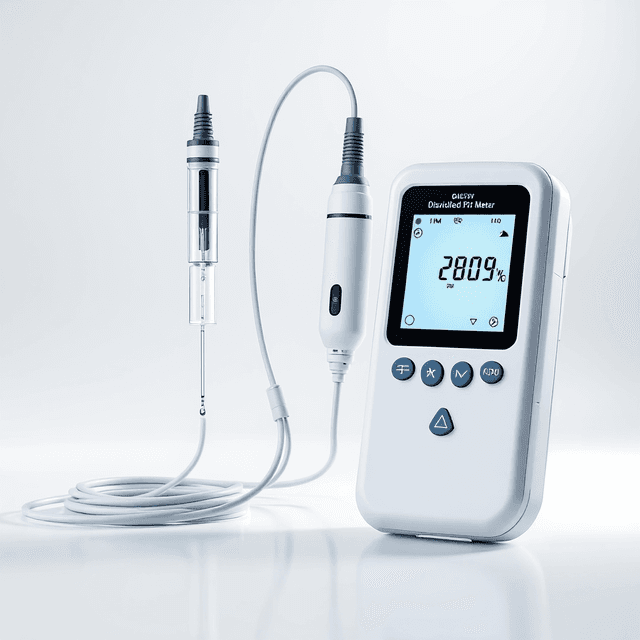
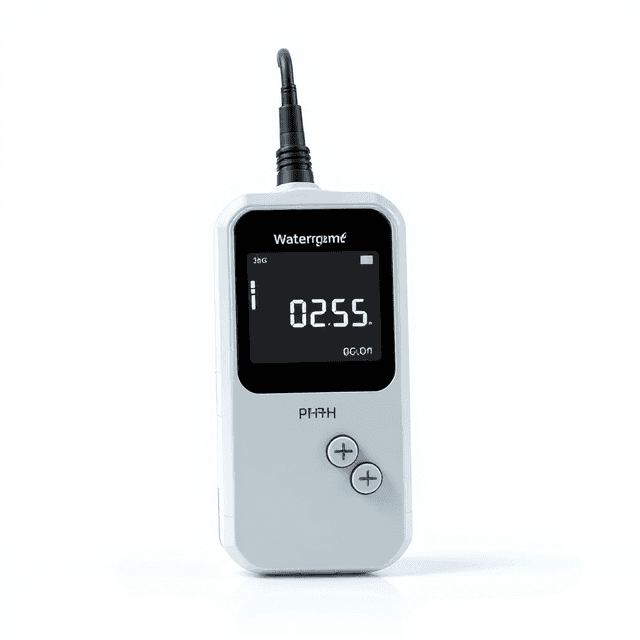
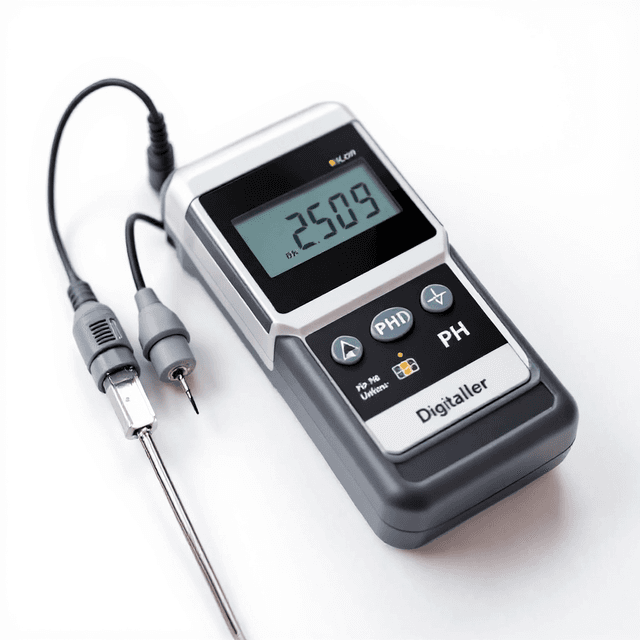
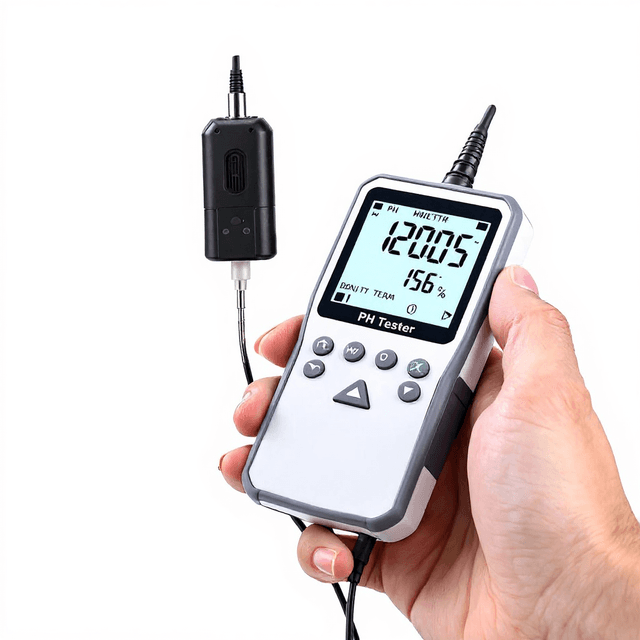
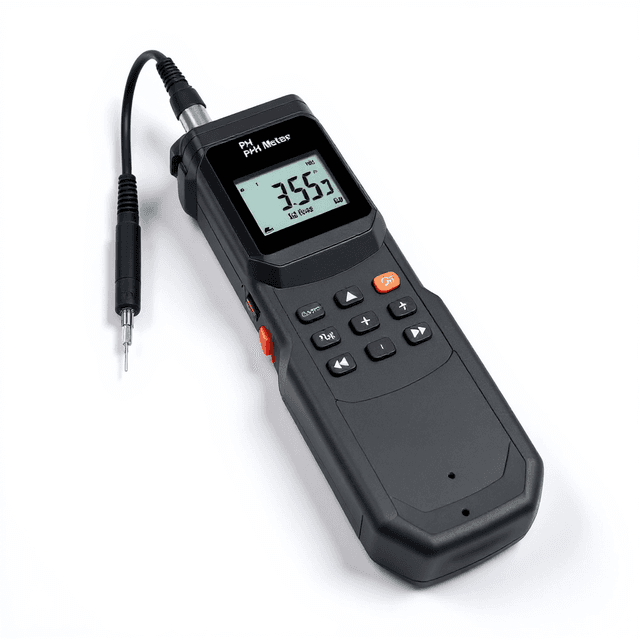
Benchtop pH/Conductivity/DO/ORP Meter
Multi-parameter benchtop analyzer for simultaneous pH, conductivity, dissolved oxygen, and ORP measurements with temperature compensation and rapid response capabilities.

Louise Corscadden, PhD
Director of Science · ConductScience
Ask Louise about Benchtop pH/Conductivity/DO/ORP Meter fit, setup, configuration, or quote prep.
Already working with us? Sign in to connect this with My Scientist.
Key Specifications
Full details →- Model fit
- Configured during quote
- SKU family
- BIO-0394
- Shipping box
- 4.0 x 21.5 x 17.0 cm
- Ordering
- Online checkout and quote request available
- Category
- pH Meters
- Build notes
- Confirm accessories, station layout, and support needs before purchase
The Benchtop pH, Conductivity, Dissolved Oxygen, and ORP Meter is a multi-parameter analytical instrument designed for comprehensive water quality assessment in laboratory and field applications. This benchtop system integrates four critical measurement capabilities in a single unit, providing researchers with simultaneous monitoring of pH, oxidation-reduction potential (ORP), electrical conductivity, and dissolved oxygen concentrations in aqueous samples.
The instrument features temperature compensation with selectable reference temperatures (25°C, 20°C, 18°C) and provides rapid response times for dissolved oxygen measurements (≤30s for 90% response at 25°C). With measurement stability of ±0.01 pH/3h and dissolved oxygen accuracy of ±0.10 mg/L, this system supports routine analytical workflows requiring reliable multi-parameter water quality data across environmental, pharmaceutical, and research applications.
How It Works
The instrument employs four distinct electrochemical measurement principles for multi-parameter analysis. pH measurement utilizes a glass electrode system with reference electrode to detect hydrogen ion activity through potential difference measurements. The ORP sensor measures oxidation-reduction potential using a platinum electrode against a reference electrode, providing insight into the oxidizing or reducing nature of the solution.
Conductivity measurement applies an alternating current between electrodes to determine ionic concentration through electrical resistance measurements, while resistivity represents the inverse relationship. The dissolved oxygen sensor operates on the polarographic principle, where oxygen diffuses through a permeable membrane and undergoes electrochemical reduction at the cathode, generating a current proportional to dissolved oxygen concentration.
Temperature compensation algorithms automatically adjust readings based on the selected reference temperature (25°C, 20°C, or 18°C), ensuring accuracy across varying sample temperatures. The integrated measurement system provides simultaneous or sequential parameter analysis depending on the measurement protocol requirements.
Features & Benefits
Automation Level
- semi-automated
PH
- Range
Repeatability
- ±0.40mg/L
Stability
- ±0.01pH/3h
ORP
- Range
Conductivity Range
- Standard
Resistivity
- 0~100MΩ/cm
TDS
- 0~100g/L
Salinity
- Range
Reference Temperature
- 25℃, 20℃, 18℃
DO
- Range
Response Time
- ≤30s(25℃, 90% response)
Residual Current
- ≤0.1mg/L
Brand
- ConductScience
Research Domain
- Analytical Chemistry
- Environmental Monitoring
- Food Science
- Industrial Hygiene
- Microbiology
- Pharmaceutical QC
Accuracy
- 0.1°C
Shipping weight
- 0.6 lb
Shipping box
- L: 4.0 cm
- W: 21.5 cm
- H: 17.0 cm
| Feature | This Product | Typical Alternative | Advantage |
|---|---|---|---|
| Multi-parameter Integration | Four parameters (pH, ORP, conductivity, dissolved oxygen) in single unit | Many systems require separate instruments for each parameter or offer only 2-3 parameters | Reduces bench space requirements and ensures all measurements from the same sample under identical conditions |
| Dissolved Oxygen Response Time | ≤30 seconds for 90% response at 25°C | Response times often range from 45 seconds to several minutes | Enables faster sample throughput and supports time-critical monitoring applications |
| pH Stability | ±0.01 pH over 3 hours | Basic systems may show drift of ±0.02-0.05 pH over similar periods | Maintains measurement consistency during extended analysis sessions and reduces recalibration frequency |
| Temperature Compensation Options | Three selectable reference temperatures (25°C, 20°C, 18°C) | Many instruments offer single reference temperature or limited options | Provides flexibility for different analytical protocols and international standard compliance |
| Resistivity Range | 0-100 MΩ/cm measurement capability | Entry-level systems often limited to lower resistivity ranges | Accommodates both high-purity water analysis and conductive solutions in single instrument |
This multi-parameter system integrates four critical water quality measurements with rapid dissolved oxygen response and stable pH performance. The combination of wide measurement ranges, multiple temperature compensation options, and compact benchtop design provides comprehensive analytical capabilities for diverse water quality applications.
Practical Tips
Perform dissolved oxygen calibration in air-saturated water at the measurement temperature to ensure accurate readings.
Why: Air saturation provides a stable, reproducible reference point for DO sensor calibration.
Store pH electrodes in appropriate storage solution (not distilled water) when not in use to prevent junction damage.
Why: Proper storage maintains electrode hydration and extends operational lifetime.
Allow samples to reach thermal equilibrium before measurement to maximize temperature compensation accuracy.
Why: Temperature gradients can cause measurement errors even with automatic compensation active.
Use the 30-second DO response time specification to establish consistent waiting periods between measurements.
Why: Standardized timing ensures reproducible results and prevents premature readings.
If measurements drift beyond the ±0.01 pH/3h stability specification, check for electrode contamination or depletion of reference electrolyte.
Why: Drift exceeding specifications typically indicates electrode maintenance requirements rather than instrument malfunction.
Clean conductivity electrodes with appropriate solvents based on sample matrix to prevent fouling and maintain accuracy.
Why: Electrode fouling affects conductivity measurements more rapidly than other parameters due to surface area dependence.
Document the selected reference temperature (25°C, 20°C, or 18°C) in analytical records for method reproducibility.
Why: Reference temperature selection affects reported values and must be consistent for comparable results.
Handle ORP electrodes carefully as the platinum surface is sensitive to mechanical damage and chemical contamination.
Why: Damaged ORP electrode surfaces provide erratic readings and require expensive replacement or refurbishment.
Setup Guide
What’s in the Box
- Benchtop multi-parameter meter (main unit)
- pH electrode with protective cap (typical)
- ORP electrode (typical)
- Conductivity probe (typical)
- Dissolved oxygen sensor (typical)
- Power adapter (typical)
- Electrode stands and holders (typical)
- Calibration solutions starter kit (typical)
- User manual and quick start guide (typical)
- USB cable for data transfer (typical)
Warranty
ConductScience provides a standard one-year manufacturer warranty covering defects in materials and workmanship, with technical support for calibration procedures and measurement protocols.
Compliance
What calibration frequency is recommended for maintaining measurement accuracy?
Calibration frequency depends on sample matrix and accuracy requirements. For routine applications, daily single-point checks with weekly multi-point calibration are typical. High-accuracy applications or aggressive sample matrices may require more frequent calibration verification.
Can the instrument handle samples with high ionic strength or extreme pH values?
The system accommodates a wide range of sample conductivities (resistivity 0-100 MΩ/cm) and provides standard pH and ORP ranges. Consult the product datasheet for specific measurement ranges and any limitations with extreme sample matrices.
How does temperature compensation affect measurement accuracy?
The instrument provides automatic temperature compensation with selectable reference temperatures (25°C, 20°C, 18°C). Temperature resolution of 0.1°C ensures accurate compensation, particularly important for pH and conductivity measurements that are highly temperature-dependent.
What maintenance is required for the dissolved oxygen sensor?
The DO sensor requires periodic membrane and electrolyte replacement, typically every 3-6 months depending on usage. Regular cleaning and calibration verification using air-saturated water or Winkler titration standards maintains measurement accuracy.
Can data be exported for analysis in external software?
The instrument typically includes data logging capabilities with USB connectivity for data transfer. Consult the product datasheet for specific data output formats and software compatibility.
How does the rapid DO response time affect measurement protocols?
The ≤30 second response time (90% response at 25°C) enables efficient sample throughput and supports real-time monitoring applications. This rapid response is particularly beneficial for time-sensitive measurements and batch processing workflows.
What is the difference between this multi-parameter system and separate single-parameter instruments?
The integrated system reduces bench space, eliminates the need for multiple calibrations, and provides simultaneous measurements from the same sample volume. This approach minimizes sample handling and ensures all parameters are measured under identical conditions.
Have a question about this product?
Have a question? Just ask.
Send it over and we'll email you a personalized answer — no call, no scheduling.
Prefer to talk it through?