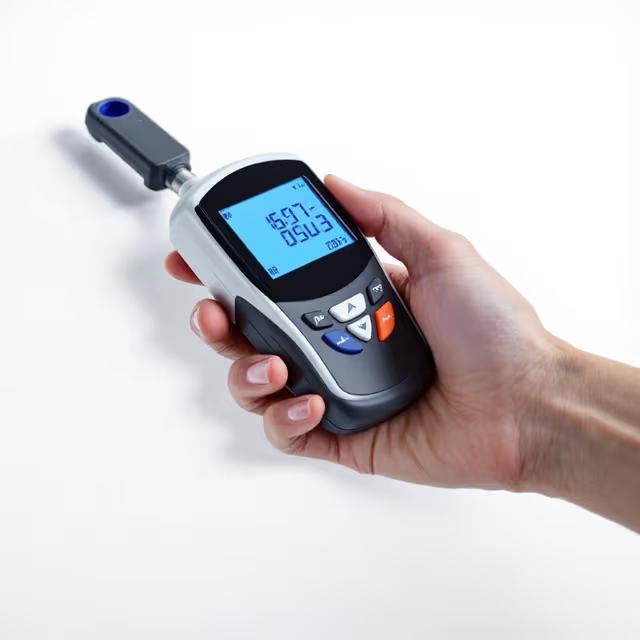
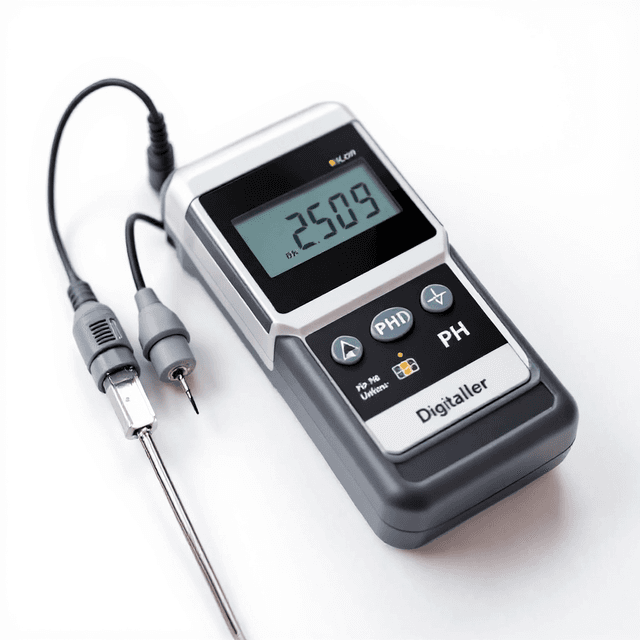
Portable Dissolved Oxygen Meter
Portable dissolved oxygen meter with ±0.5mg/L accuracy, automatic temperature compensation, and USB data transfer for field and laboratory DO measurements.

Louise Corscadden, PhD
Director of Science · ConductScience
Ask Louise about Portable Dissolved Oxygen Meter fit, setup, configuration, or quote prep.
Already working with us? Sign in to connect this with My Scientist.
Key Specifications
Full details →- Model fit
- 1 selectable configurations
- SKU family
- BIO-0383
- Shipping box
- 3.0 x 17.0 x 8.5 cm
- Ordering
- Online checkout and quote request available
- Category
- pH Meters
- Build notes
- Confirm accessories, station layout, and support needs before purchase
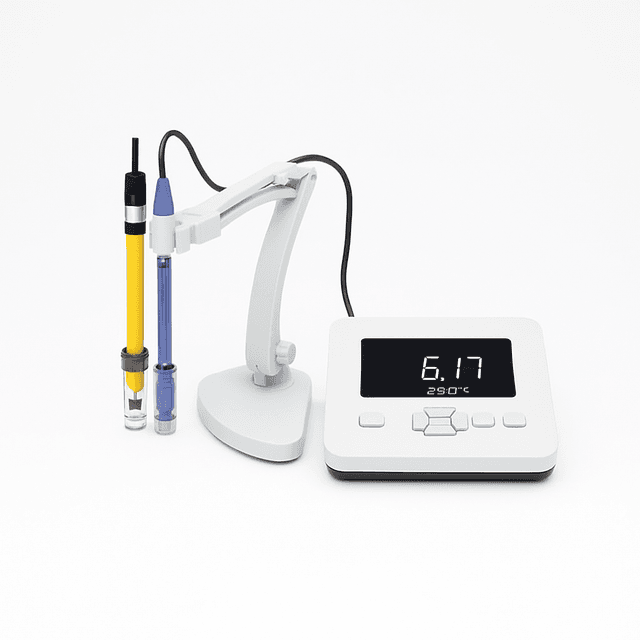
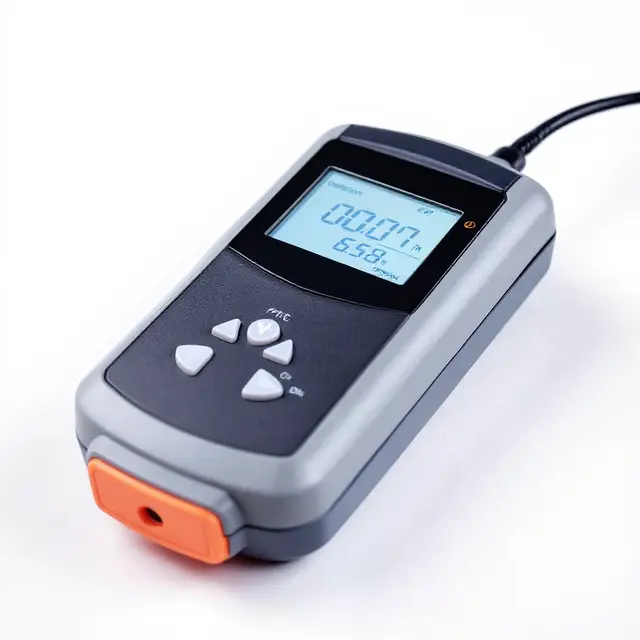
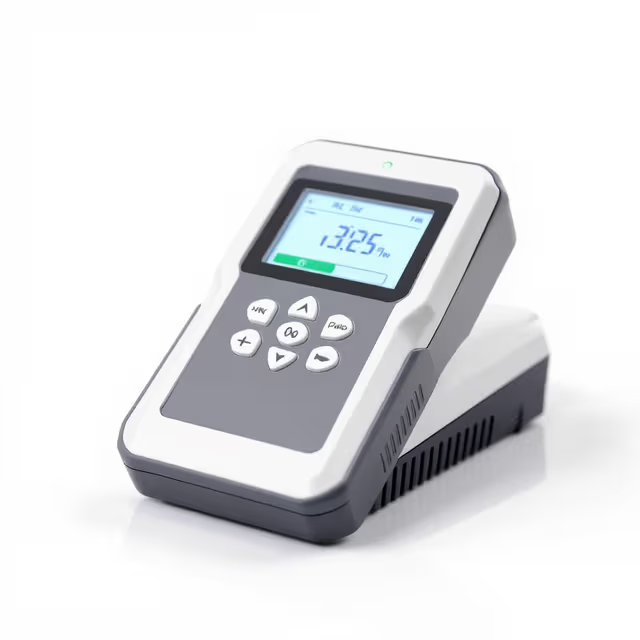
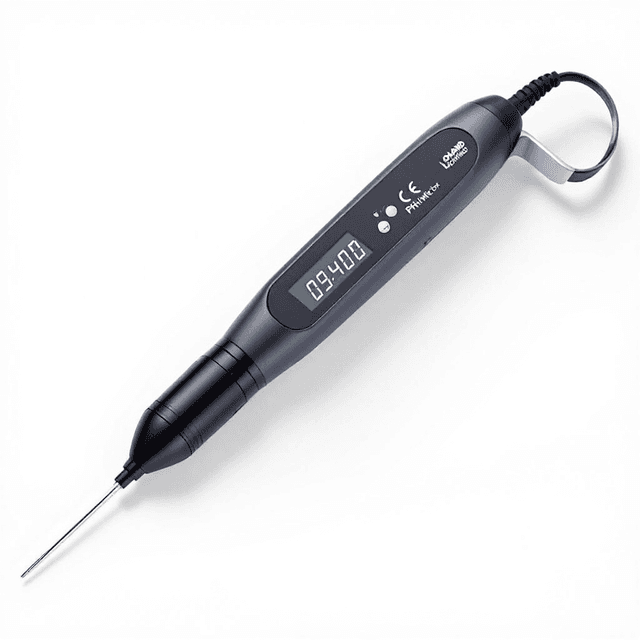
The Portable Dissolved Oxygen Meter (BIO-0383) provides field-portable measurement of dissolved oxygen concentrations in aqueous samples with ±0.5mg/L accuracy and 0.01mg/L resolution. This handheld instrument features automatic temperature compensation across 0-50°C and manual corrections for barometric pressure (60.0-112.5kPa) and salinity (0.0-50.0g/L), enabling accurate DO measurements across diverse environmental conditions.
The meter stores up to 100 data sets in internal memory and connects via USB interface for data transfer. Manual or auto-endpoint hold functions facilitate stable readings, while the 30-minute auto-off feature conserves battery life during field operations. The 6-pin mini-DIN connector provides reliable probe interface for dissolved oxygen sensing applications.
How It Works
Dissolved oxygen measurement relies on electrochemical sensing technology, typically employing a Clark-type polarographic electrode or optical fluorescence quenching principle. In polarographic systems, oxygen diffuses through a gas-permeable membrane and undergoes electrochemical reduction at the cathode, generating a current proportional to dissolved oxygen concentration. The membrane isolates the electrode from sample interference while allowing oxygen transport.
Temperature compensation is critical because oxygen solubility decreases with increasing temperature following Henry's Law. The instrument automatically adjusts readings based on sample temperature to provide accurate DO concentrations. Barometric pressure and salinity corrections account for their effects on oxygen solubility - higher pressure increases solubility while dissolved salts reduce it.
The meter processes the sensor signal through analog-to-digital conversion and applies calibration coefficients to display dissolved oxygen in mg/L or percent saturation. Internal algorithms compensate for temperature, pressure, and salinity effects to deliver corrected DO values under varying environmental conditions.
Features & Benefits
Shipping weight
- 1.7 lb
Shipping box
- L: 3.0 cm
- W: 17.0 cm
- H: 8.5 cm
| Feature | This Product | Typical Alternative | Advantage |
|---|---|---|---|
| Measurement Accuracy | ±0.5mg/L, ±2.0% | Entry-level models often provide ±1.0mg/L accuracy or lower precision | Higher accuracy enables reliable measurements for regulatory compliance and research applications requiring precise DO quantification |
| Resolution | 0.01mg/L, 0.1% | Basic meters commonly offer 0.1mg/L resolution | Finer resolution allows detection of small changes in dissolved oxygen critical for process monitoring and environmental studies |
| Temperature Compensation | Automatic 0-50°C/32-122°F | Manual temperature correction or limited automatic range | Eliminates user error from manual corrections and covers full environmental temperature range encountered in field work |
| Environmental Corrections | Manual barometric pressure and salinity correction | Many portable meters lack barometric pressure adjustment | Enables accurate measurements across varying altitude and salinity conditions for comprehensive environmental monitoring |
| Data Storage | 100 data sets with USB interface | Limited memory or no data logging capability | Sufficient storage for field campaigns with direct computer connectivity for data management and analysis |
| Hold Functions | Manual or auto-endpoint hold | Manual hold only or no hold function | Auto-endpoint detection improves measurement consistency by capturing readings only when stable, reducing operator variability |
This meter combines research-grade accuracy with comprehensive environmental compensation features in a portable format. The automatic temperature compensation, manual pressure/salinity corrections, and auto-endpoint hold function provide measurement reliability typically found in benchtop instruments while maintaining field portability.
Practical Tips
Perform calibration at the temperature closest to your expected sample temperature range for optimal accuracy.
Why: Temperature affects both sensor response and oxygen solubility, making temperature-matched calibration critical for precise measurements.
Use fresh calibration solutions and avoid exposing standards to atmospheric oxygen contamination during storage.
Why: Oxygen contamination of zero standards or degradation of saturated solutions leads to calibration drift and measurement errors.
Store probe in distilled water or manufacturer-specified storage solution, never allow the membrane to dry completely.
Why: Dried membranes can crack or change permeability characteristics, affecting sensor response time and accuracy.
Clean probe regularly with mild detergent solution and rinse thoroughly to prevent fouling buildup.
Why: Organic fouling and mineral deposits on the membrane surface slow response time and can cause measurement drift.
Ensure gentle sample stirring or flow past the probe during measurement to prevent oxygen depletion at the sensor surface.
Why: Stagnant conditions can create oxygen gradients around the probe, leading to artificially low readings.
Record barometric pressure and salinity values for each measurement location when these corrections are significant.
Why: Manual correction accuracy depends on having actual environmental values rather than estimated or default settings.
If readings drift or respond slowly, check membrane condition and electrolyte level in membrane-based probes.
Why: Low electrolyte or damaged membranes are the most common causes of poor sensor performance and measurement instability.
Use the auto-endpoint hold function in variable conditions to ensure measurements are captured only when readings stabilize.
Why: Unstable readings due to temperature fluctuations or sample movement can compromise data quality and reproducibility.
Setup Guide
What’s in the Box
- Portable dissolved oxygen meter (typical)
- Dissolved oxygen probe (typical)
- Probe cable with 6-pin mini-DIN connector (typical)
- USB cable (typical)
- Power adapter/batteries (typical)
- User manual (typical)
- Calibration certificate (typical)
- Protective carrying case (typical)
Warranty
ConductScience provides a standard one-year manufacturer warranty covering defects in materials and workmanship. Technical support includes calibration guidance, troubleshooting assistance, and probe maintenance recommendations.
Compliance
What calibration standards are required for dissolved oxygen measurement?
Calibration typically uses water-saturated air (100% saturation) or Winkler-titrated standards. Some applications require zero-oxygen solutions using sodium sulfite. Consult probe manual for specific calibration procedures.
How does salinity affect dissolved oxygen readings?
Higher salinity reduces oxygen solubility according to the salting-out effect. The meter's manual salinity correction (0.0-50.0g/L) compensates for this effect to provide accurate DO concentrations in saline waters.
What probe maintenance is required for accurate measurements?
Membrane-based probes require periodic electrolyte replacement and membrane inspection. Clean probe regularly with distilled water and avoid fouling from oils or biological growth that can affect response time.
Can the meter measure dissolved oxygen in turbid or colored samples?
Electrochemical probes are generally unaffected by turbidity or color, unlike optical methods. However, fouling of the membrane can occur in samples with high particulate loads or biological activity.
What is the typical response time for stable readings?
Response time varies with probe type, temperature, and sample conditions. Membrane probes typically require 30-90 seconds for 90% response. Use gentle stirring to improve response time and measurement accuracy.
How accurate are the temperature and pressure compensation features?
Automatic temperature compensation provides readings corrected to actual sample temperature. Manual barometric pressure correction requires local pressure measurement for highest accuracy, especially at altitude variations.
What data formats are supported for USB transfer?
Consult product datasheet for specific data output formats and software compatibility. Most instruments provide CSV or text format data suitable for spreadsheet analysis.
How does this compare to Winkler titration methods?
Electrochemical measurement provides real-time results without sample fixation, making it ideal for field monitoring. Winkler titration offers reference-quality accuracy but requires laboratory analysis and sample preservation.
Have a question about this product?
Have a question? Just ask.
Send it over and we'll email you a personalized answer — no call, no scheduling.
Prefer to talk it through?
Accessories
Enhance your setup with compatible accessories
Frequently Bought Together