Digital pH Tester
Portable pen-type pH meter with 0.01 pH resolution, temperature compensation (0-50°C), and three-point calibration for accurate field and laboratory pH measurements.

Louise Corscadden, PhD
Director of Science · ConductScience
Ask Louise about Digital pH Tester fit, setup, configuration, or quote prep.
Already working with us? Sign in to connect this with My Scientist.
Key Specifications
Full details →- Model fit
- Configured during quote
- SKU family
- CS-LH-PH-220
- Shipping box
- 7283.46 x 1574.8 x 5.0 cm
- Ordering
- Online checkout and quote request available
- Category
- pH Meters
- Build notes
- Confirm accessories, station layout, and support needs before purchase
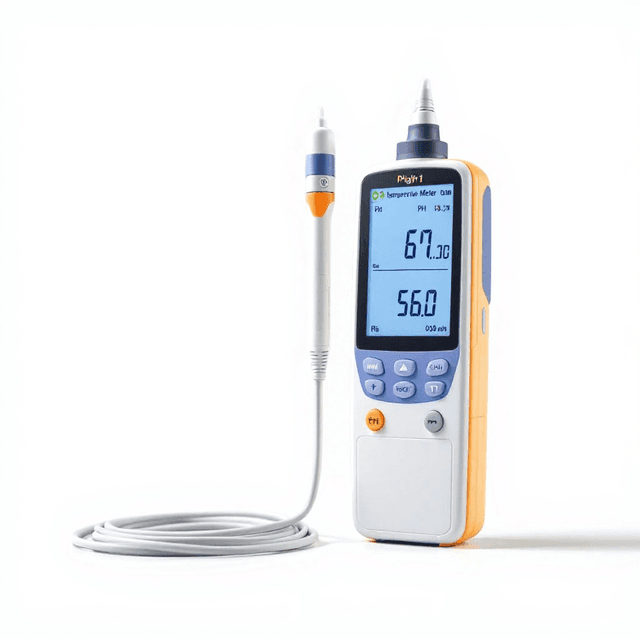
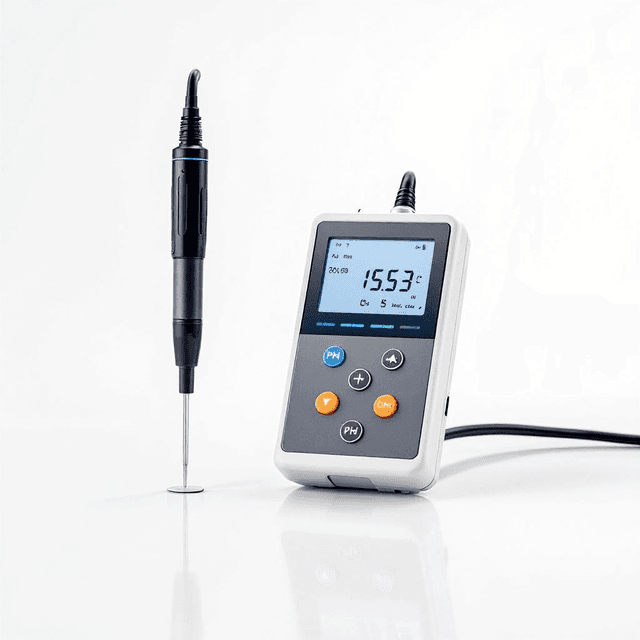
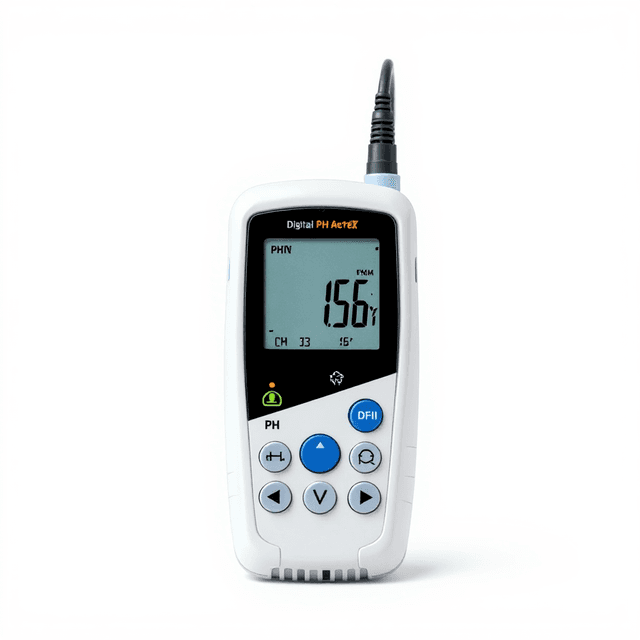
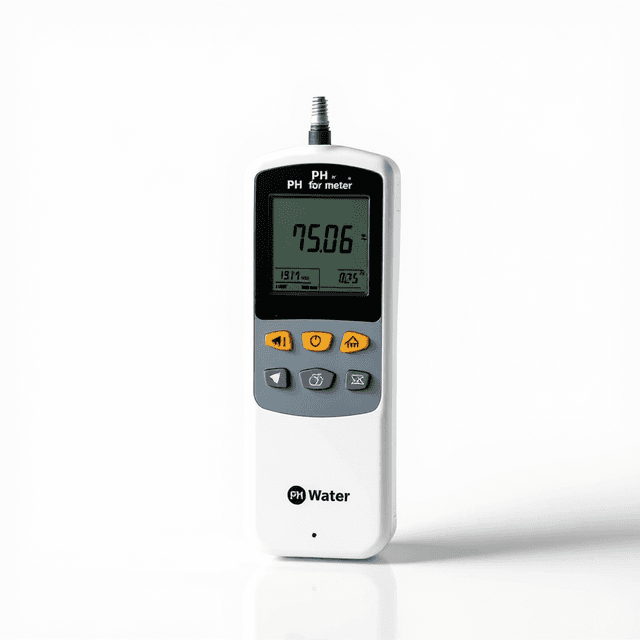
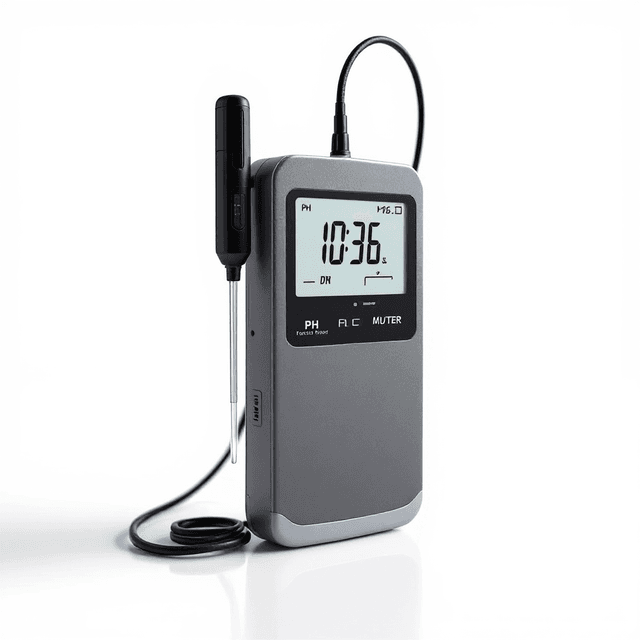
The Digital pH Tester (Model pH-220) is a portable pen-type potentiometric instrument designed for rapid, accurate pH and temperature measurements in laboratory and field environments. This handheld meter combines fundamental glass electrode technology with digital readout capabilities, offering researchers a practical solution for routine pH monitoring across diverse analytical workflows. The instrument features a wide measurement range (pH 0.01-14.00) with 0.01 pH unit resolution and accuracy, making it suitable for applications requiring precise hydrogen ion concentration determination.
The integrated temperature compensation system (0-50°C) ensures measurement reliability across varying thermal conditions, while the compact form factor (40×185mm, 88g) and battery-powered operation (four 1.5V batteries) enable deployment in mobile sampling scenarios. The instrument incorporates a three-point calibration protocol using standard buffer solutions (pH 4.01, 6.86, 9.18 at 25°C) to maintain measurement traceability and analytical performance standards expected in research environments.
How It Works
The pH-220 operates on potentiometric principles using a glass electrode system that responds to hydrogen ion activity in aqueous solutions. The glass membrane contains a pH-sensitive surface layer where hydrogen ions from the test solution exchange with sodium ions in the hydrated gel layer of the glass structure. This ion exchange creates a potential difference across the membrane that is proportional to the logarithm of hydrogen ion concentration according to the Nernst equation.
The instrument measures the potential difference between the glass indicator electrode and an integrated reference electrode, converting this voltage to pH units through internal calibration algorithms. Temperature compensation is automatically applied using the built-in temperature sensor, correcting for the theoretical Nernstian slope variation of approximately 1.98 mV per degree Celsius. The digital processing system displays both pH and temperature readings simultaneously, with 0.01 pH and 0.1°C resolution for precise measurement documentation.
Three-point calibration using standard pH buffer solutions (4.01, 6.86, 9.18) establishes the instrument response curve, accounting for electrode aging and drift. The measurement system operates within a 0-50°C temperature range, suitable for most laboratory and field conditions encountered in analytical work.
Features & Benefits
Model No.
- Pen type pH/Temp digital pH tester pH-220
Test range
- pH:0.01-14.00 pH, Temp: 0-50âï¼32-122F
Research Domain
- Analytical Chemistry
- Environmental Monitoring
- Food Science
- Industrial Hygiene
- Microbiology
- Pharmaceutical QC
Model
- pH-220
pH Calibration
- 25â 3 points: 4.01 6.86 9.18
Working temperature
- 0-50â
Automation Level
- manual
Brand
- ConductScience
Accuracy
- pH:0.01pH , Temp:0.1âï¼1F
Power/Voltage
- 1.5Vx4 battery
Dimensions
- 40x185mm
Weight
- 88g
Shipping weight
- 0.19 lb
Shipping box
- L: 7283.46 cm
- W: 1574.8 cm
- H: 5.0 cm
| Feature | This Product | Typical Alternative | Advantage |
|---|---|---|---|
| Measurement Resolution | 0.01 pH units with 0.01 pH accuracy | Entry-level units often provide 0.1 pH resolution with lower accuracy | Higher resolution enables detection of small pH changes critical in analytical protocols |
| Temperature Compensation Range | 0-50°C automatic temperature compensation | Basic models may lack automatic temperature compensation | Ensures measurement accuracy across laboratory and field temperature conditions |
| Calibration Points | Three-point calibration (pH 4.01, 6.86, 9.18) | Single or two-point calibration in basic instruments | Provides superior linearity and accuracy across the full pH measurement range |
| Power System | Four 1.5V battery operation | Many field meters use single 9V battery or rechargeable systems | Standard batteries provide reliable power with easy field replacement availability |
| Form Factor | Compact pen-type design (40×185mm, 88g) | Handheld meters typically larger and heavier | Single-handed operation and minimal storage requirements for mobile applications |
| Display Parameters | Simultaneous pH and temperature display | Basic units may show only pH or require mode switching | Immediate access to both critical parameters for efficient data collection |
The pH-220 combines analytical-grade measurement precision (0.01 pH) with portable pen-type convenience, featuring comprehensive temperature compensation and three-point calibration in a compact battery-powered design. These specifications deliver laboratory-quality pH measurements in a field-deployable instrument suitable for diverse analytical applications.
Practical Tips
Perform calibration at the temperature closest to your sample temperature, and always use fresh buffer solutions within their expiration dates.
Why: Temperature affects both electrode response and buffer pH values, while aged buffers can introduce calibration errors
Clean the electrode with mild detergent solution if protein or organic deposits affect response time, then rinse thoroughly and recalibrate.
Why: Organic fouling can slow electrode response and introduce measurement drift
Allow samples to equilibrate to room temperature before measurement when possible, and ensure adequate solution depth to fully immerse the sensing area.
Why: Temperature equilibration improves measurement stability while proper immersion ensures accurate electrode response
If readings drift or respond slowly, check electrode storage solution level and ensure the glass bulb is properly hydrated by soaking in pH 7 buffer.
Why: Dehydrated electrodes exhibit poor response characteristics and measurement instability
Record both pH and temperature values for each measurement, and note sample conditions that might affect accuracy such as high ionic strength or presence of interfering ions.
Why: Complete documentation enables proper data interpretation and troubleshooting of anomalous results
Rinse electrode thoroughly between different sample types, especially when transitioning from high to low pH solutions or between different chemical systems.
Why: Cross-contamination can affect subsequent measurements and potentially damage the electrode membrane
Use the instrument's three calibration points (pH 4.01, 6.86, 9.18) to bracket your expected sample range for optimal accuracy.
Why: Interpolation between calibration points provides better accuracy than extrapolation beyond the calibrated range
Replace batteries before they reach critically low levels to prevent measurement errors, and monitor battery status regularly during extended field work.
Why: Low battery voltage can affect electrode bias and measurement stability
Setup Guide
What’s in the Box
- pH-220 digital pH meter
- Four 1.5V batteries
- Protective electrode cap (typical)
- User manual (typical)
- Calibration certificate (typical)
Warranty
ConductScience provides a one-year manufacturer warranty covering defects in materials and workmanship, with technical support for calibration and operational guidance.
Compliance
What is the electrode response time and stability for routine measurements?
The glass electrode typically stabilizes within 30-60 seconds in well-buffered solutions. Response time may increase in poorly buffered samples or extreme pH conditions. Consult product datasheet for specific response time specifications.
How often should the instrument be calibrated for analytical work?
Perform three-point calibration daily for analytical applications, or before each measurement session when high accuracy is required. More frequent calibration may be necessary for extreme pH samples or after electrode storage.
What data output and logging capabilities does this meter provide?
This is a basic digital display meter without data logging capabilities. Results must be manually recorded. For automated data collection, consider laboratory-grade pH meters with digital interfaces.
What is the expected electrode lifetime and replacement indicators?
Glass electrodes typically function for 6-12 months with proper maintenance. Replace when calibration drift exceeds acceptable limits, response time becomes excessively slow, or the glass membrane shows physical damage.
How should the electrode be stored between measurements?
Store electrode in pH 4 buffer solution or specialized storage solution to maintain glass membrane hydration. Never store dry or in distilled water, which can damage the electrode surface.
What sample volume and container requirements apply?
Minimum sample volume should allow complete immersion of the electrode sensing area (typically 10-20ml). Use clean glass or plastic containers; avoid metal containers that may interfere with measurements.
How does this compare to laboratory benchtop pH meters?
Provides similar accuracy (±0.01 pH) to basic benchtop units but lacks advanced features like data logging, multiple calibration options, or specialized electrodes. Ideal for field work and routine measurements.
What maintenance procedures are required for optimal performance?
Clean electrode with distilled water after each use, calibrate regularly, replace batteries when low voltage is indicated, and store properly. Periodic cleaning with mild detergent may be necessary for protein or organic contamination.
Have a question about this product?
Have a question? Just ask.
Send it over and we'll email you a personalized answer — no call, no scheduling.
Prefer to talk it through?
Accessories
Enhance your setup with compatible accessories