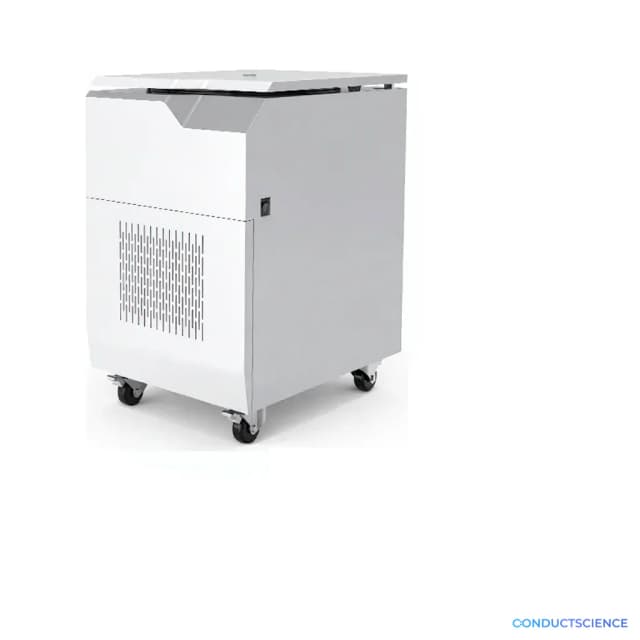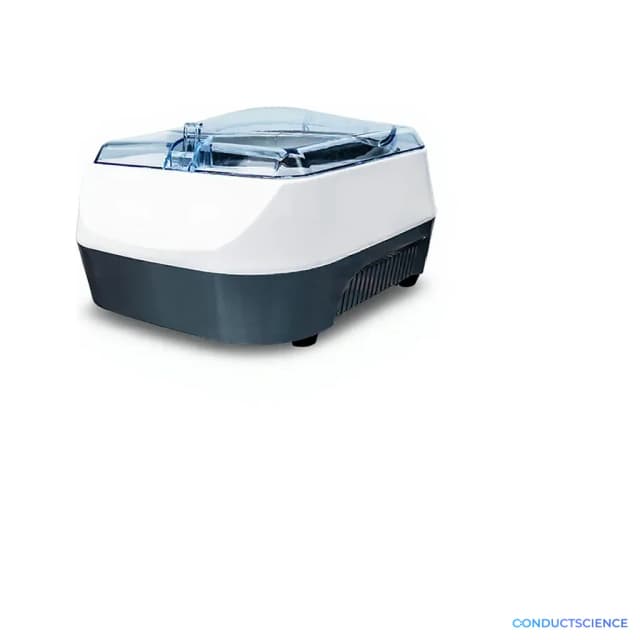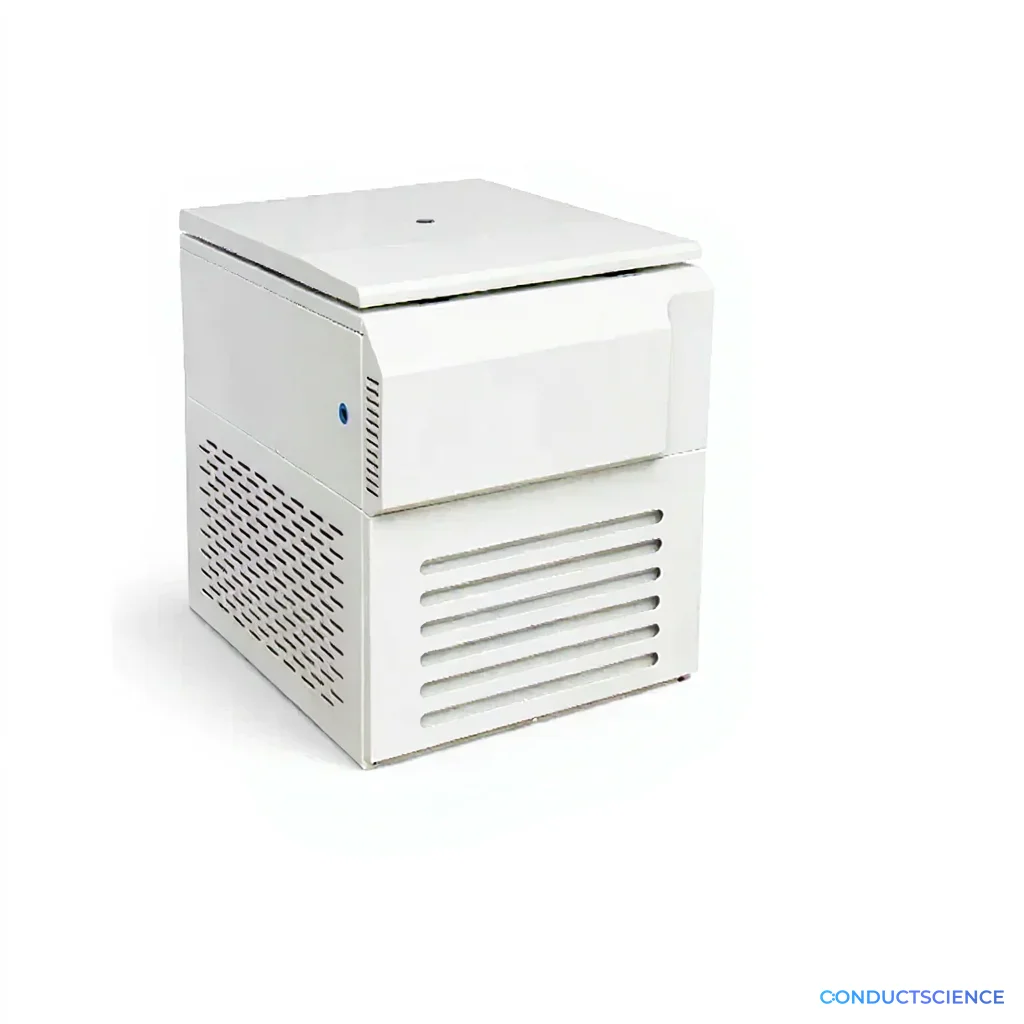
Blood Bag Bank Table Type Centrifuge Machine
Table-mounted centrifuge designed for blood banking applications, providing controlled separation for blood component processing and serological testing.

Louise Corscadden, PhD
Director of Science · ConductScience
Ask Louise about Blood Bag Bank Table Type Centrifuge Machine fit, setup, configuration, or quote prep.
Already working with us? Sign in to connect this with My Scientist.
Key Specifications
Full details →- Model fit
- Configured during quote
- SKU family
- BIO-0337
- Shipping box
- 42.0 x 43.6 x 38.0 cm
- Ordering
- Online checkout and quote request available
- Category
- Centrifuges
- Build notes
- Confirm accessories, station layout, and support needs before purchase
The Blood Bag Bank Table Type Centrifuge Machine represents a specialized centrifugation solution designed for blood banking and transfusion medicine applications. This table-mounted unit provides controlled centrifugal separation for blood component processing, plasma separation, and serological testing protocols. The system delivers consistent separation performance essential for blood product preparation and quality control workflows in blood banks, hospital laboratories, and research facilities.
Built for the demanding requirements of hematological applications, this centrifuge accommodates standard blood bag configurations and tube formats commonly used in blood banking operations. The tabletop design maximizes laboratory space efficiency while providing stable operation during high-speed separation cycles. Precise speed and time controls enable reproducible separation protocols for various blood components and diagnostic assays.
How It Works
The centrifuge operates on the principle of differential centrifugal separation, where rotational force creates a centrifugal field that separates blood components based on their density differences. During operation, the rotor accelerates samples to predetermined speeds, generating forces typically ranging from hundreds to thousands of times gravitational acceleration. Denser components such as red blood cells migrate toward the tube bottom, while lighter plasma components remain in the supernatant layer.
The separation process is governed by Stokes' law, where particle settling velocity depends on particle size, density difference between particle and medium, and centrifugal force applied. For blood banking applications, typical separation protocols utilize moderate speeds to maintain cell viability while achieving clean component separation. Temperature control and time management prevent hemolysis and preserve sample integrity during processing.
Features & Benefits
Automation Level
- manual
Research Domain
- Cardiovascular
- Cell Biology
- Clinical Diagnostics
- Immunology
- Microbiology
Shipping weight
- 29.98 lb
Shipping box
- L: 42.0 cm
- W: 43.6 cm
- H: 38.0 cm
| Feature | This Product | Typical Alternative | Advantage |
|---|---|---|---|
| Table-mounted Design | Compact tabletop configuration for space-efficient laboratory placement | Floor-standing models require dedicated floor space and installation | Maximizes laboratory bench utilization while maintaining full separation capabilities |
| Blood Banking Specialization | Specifically designed for blood bag and clinical sample processing | General-purpose centrifuges may lack specialized blood banking features | Optimized protocols and accessories enhance blood component processing efficiency |
| Safety Integration | Built-in lid interlock and imbalance detection systems | Basic models may have limited safety monitoring | Reduces operator risk and prevents damage from unsafe operating conditions |
| Rotor Compatibility | Accommodates multiple rotor types for diverse sample formats | Single-rotor systems limit application flexibility | Enables laboratory workflow optimization across different sample processing needs |
This blood bank centrifuge combines specialized clinical capabilities with compact design efficiency. The system provides dedicated blood processing features while maintaining the versatility needed for diverse laboratory applications.
Practical Tips
Verify rotor balance using precision scales before installing sample tubes to prevent vibration-related separation artifacts.
Why: Proper balance ensures consistent separation and prevents equipment damage from excessive vibration.
Clean rotor surfaces with mild detergent after each use and inspect for cracks or wear signs monthly.
Why: Regular cleaning prevents cross-contamination while inspection identifies potential safety hazards before failure.
Allow samples to reach room temperature before centrifugation to prevent condensation and ensure optimal separation.
Why: Temperature equilibration reduces thermal stress and improves separation consistency across samples.
If excessive vibration occurs, immediately stop operation and check sample balance and rotor installation.
Why: Unbalanced loads can damage the centrifuge and compromise sample integrity through mechanical stress.
Document centrifugation parameters including speed, time, and temperature for each protocol to ensure reproducibility.
Why: Standardized documentation enables protocol validation and troubleshooting of separation inconsistencies.
Never attempt to open the lid during operation or before complete rotor stop, even during emergency situations.
Why: Rotating components pose severe injury risk and lid interlocks prevent access during unsafe conditions.
Setup Guide
What’s in the Box
- Main centrifuge unit (typical)
- Standard rotor assembly (typical)
- Power cable (typical)
- Operation manual (typical)
- Safety documentation (typical)
- Rotor balancing accessories (typical)
Warranty
ConductScience provides a one-year manufacturer warranty covering parts and technical support, with extended service options available for critical laboratory applications.
Compliance
What rotor types are compatible with this blood bank centrifuge?
Consult product datasheet for specific rotor compatibility. Typically includes swinging bucket and fixed angle rotors designed for blood bags and standard laboratory tubes.
Can this centrifuge maintain temperature control during operation?
Consult product datasheet for temperature control capabilities. Some models include refrigeration while others operate at ambient temperature with passive temperature management.
What is the maximum capacity for blood bag processing?
Capacity depends on rotor configuration and blood bag size. Consult product datasheet for specific volume limits and bag compatibility specifications.
How do I ensure proper sample balance for blood banking applications?
Balance samples by weight across opposing rotor positions. Use water-filled balance tubes when processing odd numbers of samples to maintain rotor equilibrium.
What maintenance schedule is recommended for clinical use?
Follow manufacturer guidelines for routine cleaning, rotor inspection, and performance verification. Clinical applications typically require more frequent maintenance than research use.
Can the centrifuge process different tube sizes simultaneously?
This depends on rotor design. Some rotors accommodate mixed tube sizes while others require uniform sample containers for proper balance and separation.
What safety features prevent accidents during operation?
Standard safety features include lid interlock systems, imbalance detection, and emergency stop functions. Consult manual for complete safety specifications.
Have a question about this product?
Have a question? Just ask.
Send it over and we'll email you a personalized answer — no call, no scheduling.
Prefer to talk it through?