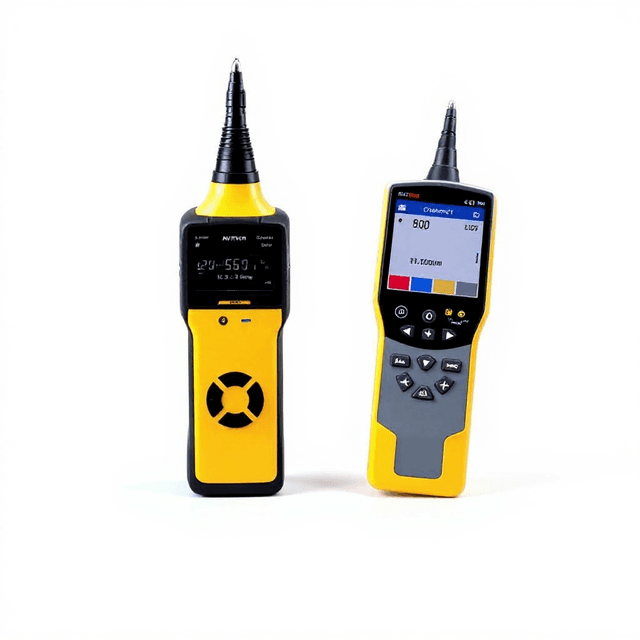
Conductivity Measurement Instrument
Portable conductivity meter with 0-999 μS/cm range, ±2% accuracy, and automatic temperature compensation for water quality and environmental monitoring applications.

Louise Corscadden, PhD
Director of Science · ConductScience
Ask Louise about Conductivity Measurement Instrument fit, setup, configuration, or quote prep.
Already working with us? Sign in to connect this with My Scientist.
Key Specifications
Full details →- Model fit
- Configured during quote
- SKU family
- CS-LH-EC008
- Shipping box
- 18 x 6.5 x 3.3 cm
- Ordering
- Online checkout and quote request available
- Category
- Portable Analyzers
- Build notes
- Confirm accessories, station layout, and support needs before purchase
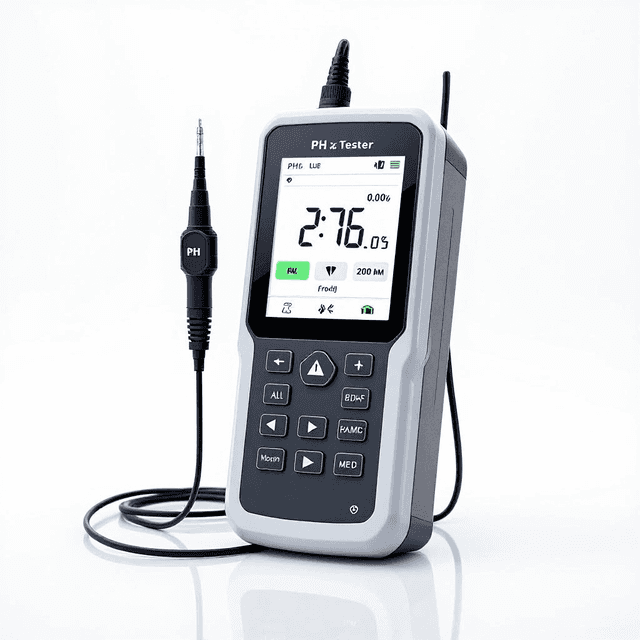
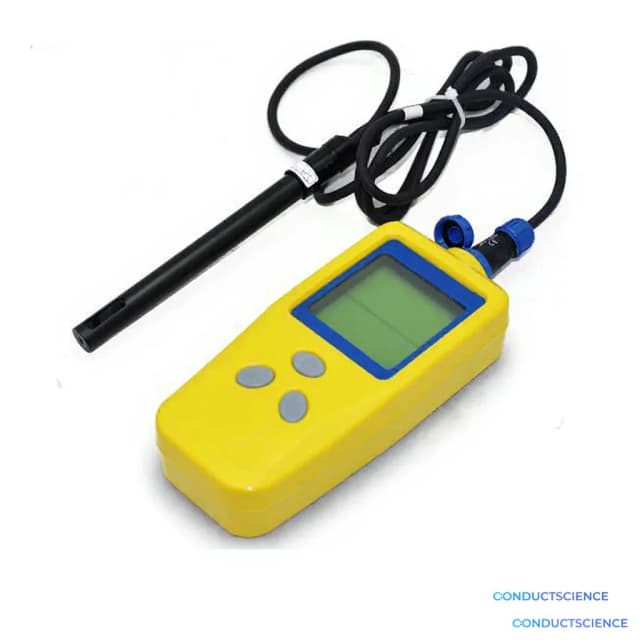
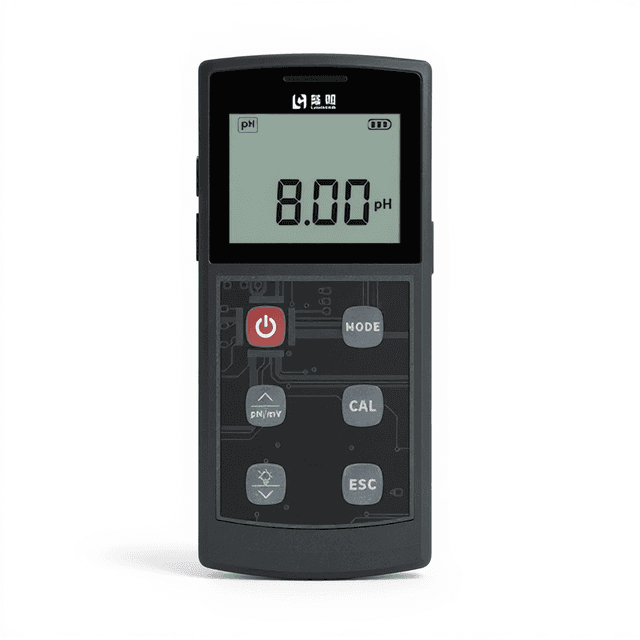
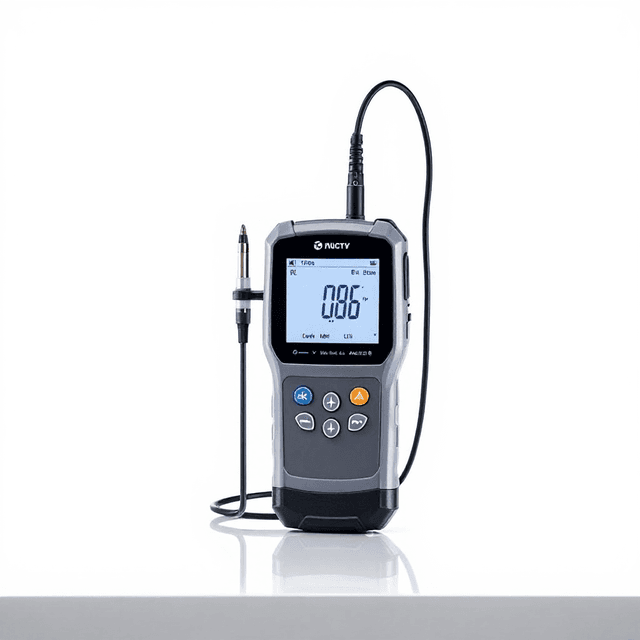
The CD-310 conductivity measurement instrument is a portable conductivity meter designed for field and laboratory measurement of electrical conductivity in aqueous solutions. This handheld instrument measures conductivity from 0-999 μS/cm with 1 μS/cm resolution and ±2% F·S accuracy, making it suitable for water quality assessment, environmental monitoring, and routine laboratory analyses where precise conductivity measurements are required.
The instrument features automatic temperature compensation (ATC) and a stability indicator on the LCD display to ensure accurate readings across varying thermal conditions. Its compact dimensions (180×65×33mm) and lightweight design (117g) facilitate fieldwork and mobile sampling protocols. Single-point calibration enables quick setup, while the 4×1.5V lithium battery configuration (AG-13 type) provides extended operational periods for remote monitoring applications.
How It Works
Conductivity measurement operates on the principle that electrical conductivity in aqueous solutions is proportional to the concentration of dissolved ionic species. The CD-310 employs a two-electrode conductivity cell that applies an alternating current between platinum or graphite electrodes immersed in the sample solution. The instrument measures the electrical resistance between the electrodes and calculates conductivity using the relationship σ = 1/R × K, where σ is conductivity, R is resistance, and K is the cell constant.
Automatic temperature compensation (ATC) corrects for temperature-dependent changes in ionic mobility using established temperature coefficients. The stability indicator monitors signal fluctuations and displays when readings have stabilized, ensuring measurement accuracy. Single-point calibration against a known conductivity standard establishes the cell constant and corrects for electrode geometry variations.
Features & Benefits
Model No.
- CD-310
Measuring range
- 0-999µS/cm
Research Domain
- Agricultural Research
- Environmental Monitoring
- Water Quality & Environmental Monitoring
Product name
- conductivity measurement instrument
Calibration
- 1 point
Working condition
- 0-50°C (32-122°F)
Feature
- Small size;portable ;Economical ;Accuracy ;With ATC
Automation Level
- manual
Brand
- ConductScience
Accuracy
- ±2%F·S
Power/Voltage
- 4Ã1.5V lithium batteries(AG-13 type button cell battery)
Dimensions
- 180Ã65Ã33mm
Weight
- 117g
Shipping weight
- 0.18 lb
Shipping box
- L: 18 cm
- W: 6.5 cm
- H: 3.3 cm
| Feature | This Product | Typical Alternative | Advantage |
|---|---|---|---|
| Measurement Range | 0-999 μS/cm | Entry-level models often offer narrower ranges or require range switching | Single range covers most freshwater and low-conductivity applications without manual range selection. |
| Resolution | 1 μS/cm | Basic handheld units may offer 5-10 μS/cm resolution | Higher resolution enables detection of smaller conductivity changes during monitoring protocols. |
| Temperature Compensation | Automatic temperature compensation (ATC) | Manual temperature compensation or no compensation | Eliminates manual corrections and reduces measurement errors in varying thermal conditions. |
| Stability Indicator | LCD stability indicator | Many portable units lack stability indication | Ensures measurement equilibration and prevents recording of unstable readings. |
| Power Source | 4×1.5V AG-13 lithium batteries | 9V battery or rechargeable battery packs | Lithium batteries provide extended field operation with consistent power output. |
| Calibration | Single-point calibration | Multi-point calibration requirements | Simplified calibration procedure reduces setup time for routine field measurements. |
The CD-310 combines essential conductivity measurement features with field-portable design. Its automatic temperature compensation, stability indication, and 1 μS/cm resolution provide reliable performance for environmental monitoring applications where portability and ease of use are priorities.
Practical Tips
Calibrate using a standard solution within the expected range of your samples rather than at the instrument's maximum range.
Why: Mid-range calibration minimizes extrapolation errors and improves accuracy for typical sample conductivities.
Rinse the electrode with distilled water after each use and store in electrode storage solution if available.
Why: Prevents salt buildup and maintains electrode response characteristics for consistent measurements.
Allow samples to equilibrate to ambient temperature before measurement when ATC is enabled.
Why: Temperature compensation algorithms are most accurate when thermal equilibrium is established between sample and electrode.
Record multiple readings per sample and average the results, especially for samples near the detection limit.
Why: Averaging reduces random measurement errors and improves precision of reported values.
If readings drift continuously, check for air bubbles on the electrode or inadequate sample immersion depth.
Why: Air bubbles and partial immersion create unstable electrical paths that prevent measurement stabilization.
Avoid measuring conductivity in samples containing strong acids or bases without appropriate electrode protection.
Why: Extreme pH conditions can damage electrode surfaces and affect measurement accuracy and electrode lifespan.
Document ambient temperature and sample conditions even when using ATC for quality assurance records.
Why: Environmental conditions provide context for data interpretation and help identify potential measurement artifacts.
Setup Guide
What’s in the Box
- CD-310 conductivity meter
- Conductivity electrode (typical)
- AG-13 lithium batteries (4 units)
- User manual (typical)
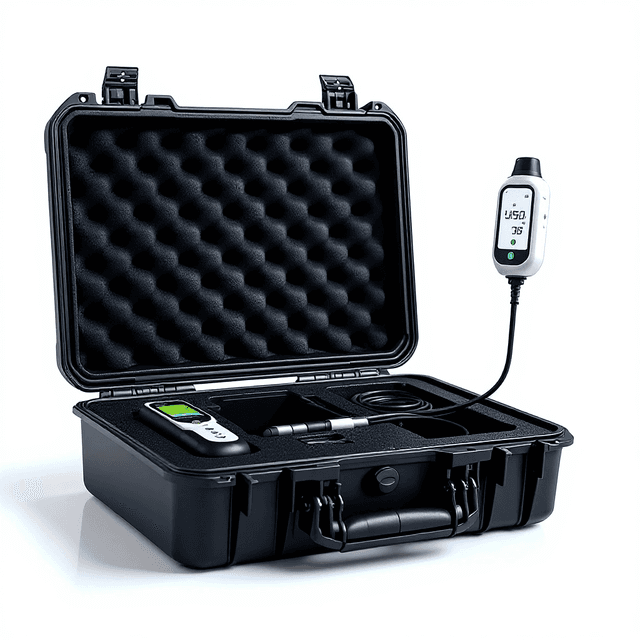
- Carrying case (typical)
- Calibration standard solution (typical)
Warranty
ConductScience provides a standard one-year manufacturer warranty covering defects in materials and workmanship, with technical support available for calibration procedures and measurement protocols.
Compliance
References
Background reading relevant to this product:
What is the minimum detectable conductivity change this instrument can reliably measure?
With 1 μS/cm resolution and ±2% F·S accuracy, the CD-310 can detect conductivity changes as small as 1 μS/cm, though practical detection limits depend on sample stability and measurement conditions.
How does the automatic temperature compensation function affect measurement accuracy?
The ATC system applies temperature coefficients to correct for temperature-dependent changes in ionic mobility, maintaining accuracy across the 0-50°C operating range without manual corrections.
What calibration standards are recommended for single-point calibration?
Consult product datasheet for specific calibration standard recommendations, typically using certified conductivity standards within the measurement range appropriate for your application.
How long do the AG-13 batteries typically last under normal field use?
Battery life depends on usage patterns and environmental conditions; consult product specifications for detailed power consumption data and expected operational hours.
Can this instrument measure conductivity in samples containing suspended solids?
While the instrument measures bulk solution conductivity, suspended particles may affect readings; filtration or settling may be necessary for samples with high turbidity.
What maintenance procedures are required for the conductivity electrode?
Regular rinsing with distilled water, gentle cleaning with appropriate solvents for stubborn deposits, and periodic recalibration maintain electrode performance and measurement accuracy.
How does this instrument compare to laboratory benchtop conductivity meters?
The CD-310 offers portable field measurement capabilities with good accuracy for its range, though benchtop units typically provide wider ranges, higher precision, and more advanced features for laboratory applications.
Have a question about this product?
Have a question? Just ask.
Send it over and we'll email you a personalized answer — no call, no scheduling.
Prefer to talk it through?
Accessories
Enhance your setup with compatible accessories