ConductScience Cell Culture Dishes 35mm, TC-Treated (Case of 10)
$65.00 per unit | 10 units per pack Bulk pricing: Case of 10 at $650.00 ($65.00 per unit)

Louise Corscadden, PhD
Director of Science · ConductScience
Ask Louise about ConductScience Cell Culture Dishes 35mm, TC-Treated (Case of 10) fit, setup, configuration, or quote prep.
Already working with us? Sign in to connect this with My Scientist.
Key Specifications
Full details →- Model fit
- Configured during quote
- SKU family
- CS-CCD-35-200
- Shipping box
- 30.0 x 25.0 x 20.0 cm
- Ordering
- Online checkout and quote request available
- Category
- Cell Culture
- Build notes
- Confirm accessories, station layout, and support needs before purchase
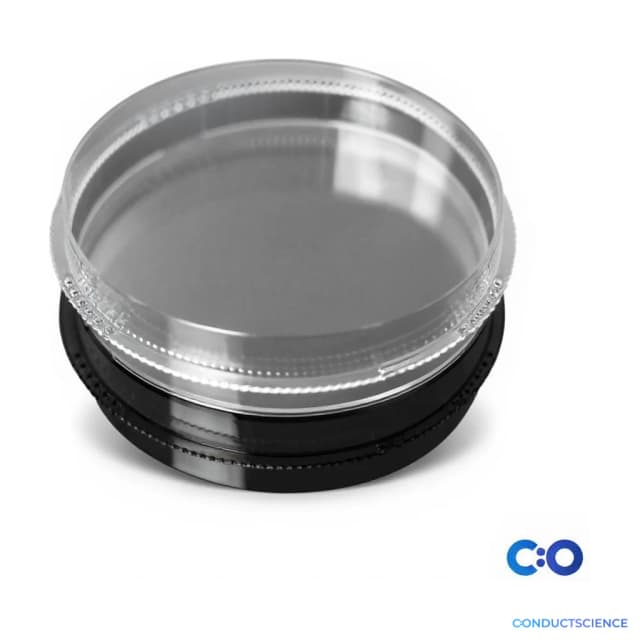
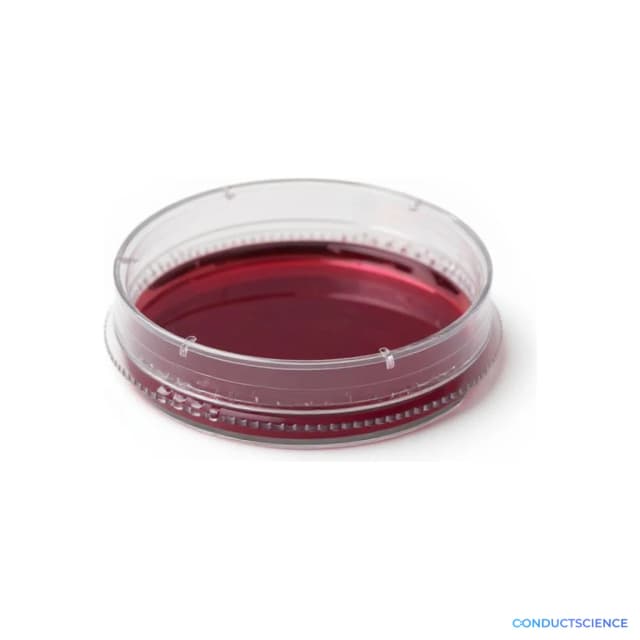
35mm cell culture dishes featuring tissue culture (TC)-treated polystyrene surface for optimal cell attachment and growth. These sterile, non-pyrogenic dishes provide a crystal-clear viewing surface for microscopic observation and cell manipulation procedures. The TC treatment creates a hydrophilic surface with optimal wettability characteristics to promote consistent cell adhesion across the growth surface.
Manufactured from high-grade polystyrene with precise dimensional tolerances to ensure uniform cell distribution and reliable experimental outcomes. The transparent construction allows for real-time monitoring of cell morphology, confluence, and experimental endpoints without removal from incubation conditions.
How It Works
The tissue culture treatment involves controlled corona discharge or plasma treatment of the polystyrene surface to introduce oxygen-containing functional groups including hydroxyl, carbonyl, and carboxyl moieties. This surface modification increases surface energy from approximately 33 dynes/cm to 55-60 dynes/cm, creating optimal wettability for aqueous cell culture media and promoting integrin-mediated cell adhesion.
The crystal-clear polystyrene construction provides optical clarity comparable to glass while maintaining chemical inertness and dimensional stability under standard incubation conditions. The uniform surface topography created during injection molding ensures consistent cell distribution and eliminates preferential attachment sites that could introduce experimental variability.
Gamma sterilization ensures sterility without compromising surface chemistry or optical properties, while the non-pyrogenic specification confirms absence of endotoxins that could interfere with cell viability or experimental endpoints.
Features & Benefits
Automation Level
- manual
Research Domain
- Cancer Research
- Cell Biology
- Developmental Biology
- Immunology
- Microbiology
- Pharmaceutical QC
Shipping weight
- 632.15 lb
Shipping box
- L: 30.0 cm
- W: 25.0 cm
- H: 20.0 cm
| Feature | This Product | Typical Alternative | Advantage |
|---|---|---|---|
| Surface Treatment | TC-treated for cell attachment | Some models offer non-treated surfaces | TC treatment eliminates need for additional coating steps and ensures consistent cell adhesion across experiments. |
| Material Clarity | Crystal-clear polystyrene | Standard polystyrene may have optical distortions | Enhanced optical clarity enables high-resolution microscopic observation and accurate cell counting procedures. |
| Sterility Assurance | Sterile, non-pyrogenic | Basic sterile packaging | Non-pyrogenic specification prevents endotoxin interference in sensitive cell culture and immunological applications. |
| Size Options | 35mm diameter format | Limited size selection in some product lines | Optimal surface area for single-colony isolation and small-scale experiments while maintaining microscope compatibility. |
This product offers TC-treated surface chemistry for reliable cell attachment combined with crystal-clear optical properties and non-pyrogenic specifications. The 35mm format provides optimal balance of surface area and reagent efficiency for microscale cell culture applications.
Practical Tips
Pre-warm culture medium to 37°C before adding to dishes to prevent thermal shock to seeded cells.
Why: Temperature fluctuations can affect cell attachment and viability during initial seeding.
Store unused dishes in original packaging at room temperature away from direct sunlight.
Why: UV exposure can degrade polystyrene and alter surface chemistry properties.
Add medium to dish walls rather than directly onto the center to minimize cell disturbance during feeding.
Why: Direct pipetting can dislodge newly attached cells and create uneven distribution patterns.
Use consistent seeding volumes and pipetting techniques across replicates to ensure uniform cell distribution.
Why: Variability in seeding can introduce experimental artifacts in growth rate and endpoint measurements.
If cells fail to attach, verify medium pH and osmolarity as polystyrene surfaces are sensitive to ionic strength.
Why: Surface charge interactions depend on solution chemistry and can affect cell adhesion efficiency.
Inspect dishes for cracks before use as damaged surfaces may harbor contaminants or create sharp edges.
Why: Structural integrity ensures sterility maintenance and prevents injury during handling procedures.
Label dishes on the bottom edge rather than the growth surface to avoid obscuring microscopic fields.
Why: Clear viewing areas are essential for accurate cell counting and morphological assessment.
Setup Guide
What’s in the Box
- 35mm TC-treated cell culture dishes (quantity per package specification - consult product datasheet)
- Individual sterile packaging (typical)
- Product certificate of analysis (typical)
Warranty
ConductScience provides standard manufacturer warranty covering defects in materials and workmanship, with technical support for product specifications and recommended applications.
Compliance
What is the optimal seeding density for 35mm dishes?
Seeding density depends on cell type and experimental objectives. For most adherent cell lines, 1-5 × 10⁴ cells/cm² provides appropriate confluence for growth studies, while single-cell cloning requires much lower densities around 10-100 cells per dish.
Can these dishes be used for immunofluorescence microscopy?
Yes, the crystal-clear polystyrene and flat bottom design are compatible with fluorescence microscopy. However, confirm that fixation and permeabilization protocols are optimized for polystyrene surfaces versus glass coverslips.
What is the maximum incubation temperature for these dishes?
Polystyrene dishes are typically stable to 80°C, well above standard cell culture conditions. However, consult product datasheet for specific thermal specifications and dimensional stability data.
Are these dishes suitable for long-term culture applications?
Surface chemistry and material properties support multi-week culture periods. Monitor for media evaporation in extended cultures and consider humidified incubation conditions to maintain osmolarity.
Can the dishes be reused after sterilization?
These are designed as single-use consumables. Heat sterilization may alter surface chemistry and dimensional properties, potentially affecting experimental reproducibility.
What microscope objectives work best with these dishes?
The flat bottom design accommodates standard inverted microscope objectives up to 40x magnification. For higher magnifications, consider working distance limitations and potential aberrations from the plastic bottom.
Have a question about this product?
Have a question? Just ask.
Send it over and we'll email you a personalized answer — no call, no scheduling.
Prefer to talk it through?
Upgrade Options