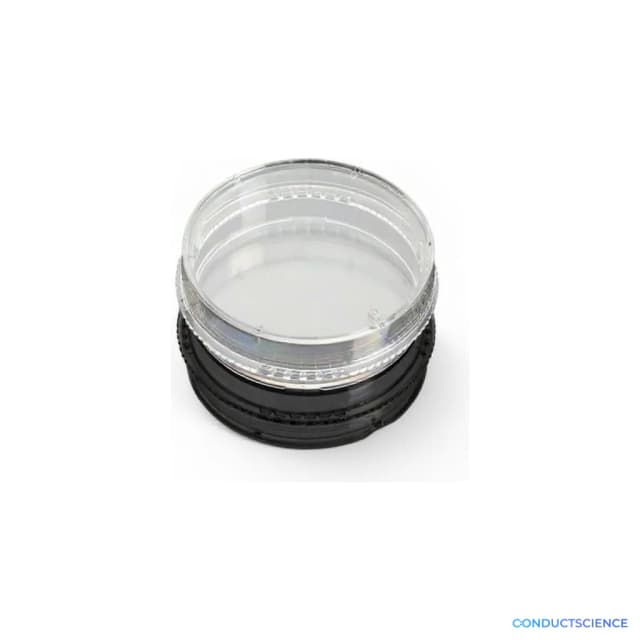
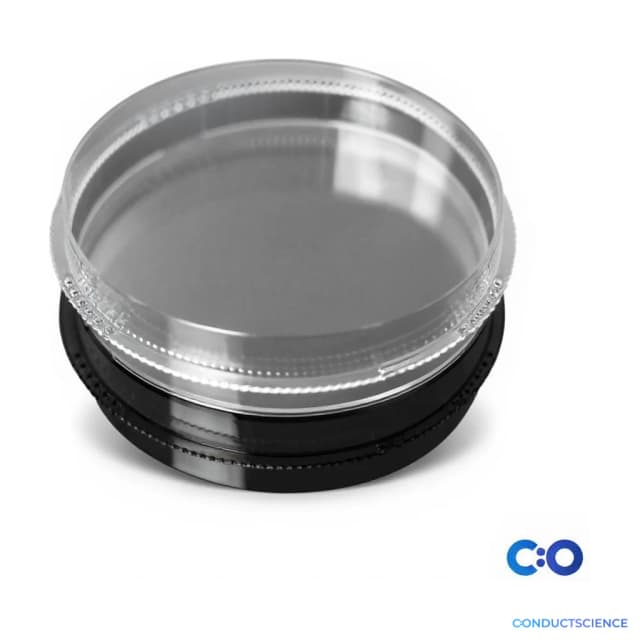
ConductScience Cell Culture Dishes 60mm, TC-Treated (Case of 10)
$72.00 per unit | 10 units per pack Bulk pricing: Case of 10 at $720.00 ($72.00 per unit)

Louise Corscadden, PhD
Director of Science · ConductScience
Ask Louise about ConductScience Cell Culture Dishes 60mm, TC-Treated (Case of 10) fit, setup, configuration, or quote prep.
Already working with us? Sign in to connect this with My Scientist.
Key Specifications
Full details →- Model fit
- Configured during quote
- SKU family
- CS-CCD-60-200
- Shipping box
- 885.83 x 39.37 x 2.36 cm
- Ordering
- Online checkout and quote request available
- Category
- Cell Culture
- Build notes
- Confirm accessories, station layout, and support needs before purchase
The ConductScience Cell Culture Dishes 60mm feature tissue culture (TC) treated surfaces designed for optimal cell attachment and growth in standard laboratory applications. Manufactured from crystal-clear polystyrene (PS), these sterile, non-pyrogenic dishes provide consistent optical clarity for microscopic observation and documentation throughout the culture period.
The 60mm diameter format offers an ideal surface area for routine cell maintenance, experimental treatments, and morphological assessments. The TC treatment creates a hydrophilic surface with optimal wettability characteristics, supporting adherent cell lines commonly used in research applications. Each dish is individually sterile-packaged to maintain aseptic conditions until use.
How It Works
Tissue culture treatment involves corona discharge or plasma treatment of the polystyrene surface to introduce polar functional groups, primarily hydroxyl and carboxyl moieties. This surface modification increases hydrophilicity and provides anchor points for protein adsorption from serum-containing media.
The treated surface promotes initial cell attachment through integrin-mediated interactions with adsorbed extracellular matrix proteins. Once attached, cells can spread and establish focal adhesions necessary for normal proliferation and metabolic function. The crystal-clear polystyrene material provides optical properties suitable for phase contrast and brightfield microscopy without interference from material birefringence.
Features & Benefits
Automation Level
- manual
Research Domain
- Cancer Research
- Cell Biology
- Developmental Biology
- Immunology
- Pharmaceutical QC
- Toxicology
Shipping weight
- 632.15 lb
Shipping box
- L: 885.83 cm
- W: 39.37 cm
- H: 2.36 cm
| Feature | This Product | Typical Alternative | Advantage |
|---|---|---|---|
| Surface Treatment | Tissue culture treated polystyrene surface | Non-treated dishes require additional coating steps | Ready-to-use format eliminates coating preparation time and improves experimental consistency. |
| Optical Clarity | Crystal-clear polystyrene construction | Standard plastic may have optical distortions | Enables high-quality microscopic imaging for morphological assessment and documentation. |
| Sterility Assurance | Individual sterile packaging | Bulk packaging requires sterile handling during distribution | Reduces contamination risk and simplifies sterile technique protocols. |
| Size Format | 60mm diameter providing 28.3 cm² surface area | 35mm dishes offer less surface area for cell expansion | Provides adequate space for routine cell maintenance while maintaining reagent economy. |
These dishes provide reliable TC-treated surfaces with excellent optical properties for routine cell culture applications. The 60mm format balances adequate growth surface with practical media volumes for standard laboratory workflows.
Practical Tips
Allow dishes to equilibrate to incubator temperature for 15-30 minutes before seeding to prevent thermal shock to cells.
Why: Temperature fluctuations can affect initial cell attachment and viability.
Add medium to dishes before introducing cells to allow protein adsorption and surface conditioning.
Why: Serum proteins create optimal attachment substrate for integrin-mediated cell adhesion.
Use dishes from the same lot for comparative experiments to minimize surface chemistry variability.
Why: Lot-to-lot variations in surface treatment can affect cell behavior and experimental reproducibility.
Store unused dishes in original packaging at room temperature away from direct sunlight.
Why: UV exposure can degrade surface treatment and polystyrene properties over time.
If cells show poor attachment, verify medium contains adequate serum concentration and check pH after CO₂ equilibration.
Why: Insufficient serum proteins or pH drift can impair cell adhesion to treated surfaces.
Handle dishes by the sides to avoid contaminating the growth surface with fingerprints or particles.
Why: Surface contamination can create attachment artifacts and affect cell distribution uniformity.
Setup Guide
What’s in the Box
- Cell culture dishes, 60mm diameter (quantity as specified per pack)
- Individual sterile packaging per dish
- Product certificate of analysis (typical)
Warranty
ConductScience provides standard warranty coverage for manufacturing defects. Technical support available for application-specific protocols and troubleshooting.
Compliance
What cell density should I use for seeding these 60mm dishes?
Seeding density depends on your experimental timeline and cell type. For routine maintenance, use 5,000-15,000 cells/cm². For confluence in 3-4 days, seed at 20,000-30,000 cells/cm². Fast-growing lines may require lower densities.
Can these dishes be used for primary cell isolations?
Yes, the TC-treated surface supports primary cell attachment. However, some primary cells benefit from additional coating with collagen, fibronectin, or poly-L-lysine depending on tissue origin.
What is the recommended media volume for 60mm dishes?
Use 3-5 mL of culture medium for standard applications. This provides adequate nutrient availability while maintaining appropriate gas exchange and preventing edge effects.
Are these dishes suitable for transfection experiments?
Yes, the consistent surface chemistry provides reliable conditions for transfection protocols. The clear bottom allows for fluorescence microscopy to assess transfection efficiency.
How long can cells be maintained in these dishes?
Culture duration depends on cell type and confluence. Most adherent lines can be maintained 3-7 days with media changes every 2-3 days before requiring passage.
Can these dishes withstand freeze-thaw cycles?
Polystyrene dishes are not designed for freeze-thaw applications. Use specialized cryogenic vessels for long-term cell storage or freeze-thaw protocols.
Have a question about this product?
Have a question? Just ask.
Send it over and we'll email you a personalized answer — no call, no scheduling.
Prefer to talk it through?
Upgrade Options