Electrochemical Microreactor
Precision electrochemical flow microreactor for controlled electrosynthesis, electroanalysis, and oxidation/reduction reactions in microscale volumes.

Louise Corscadden, PhD
Director of Science · ConductScience
Ask Louise about Electrochemical Microreactor fit, setup, configuration, or quote prep.
Already working with us? Sign in to connect this with My Scientist.
Key Specifications
Full details →- Model fit
- Configured during quote
- SKU family
- WHM-0059
- Shipping box
- 200.0 x 150.0 x 100.0 cm
- Ordering
- Online checkout and quote request available
- Category
- Lab Equipment
- Build notes
- Confirm accessories, station layout, and support needs before purchase
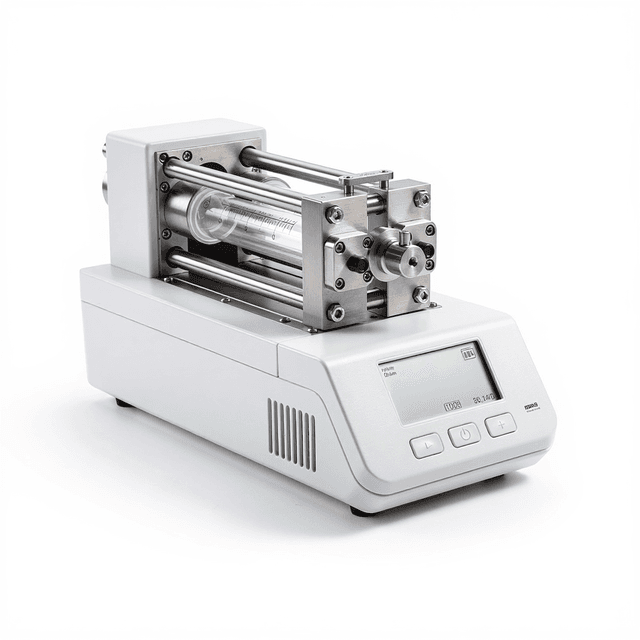
The Electrochemical Microreactor is a precision flow chemistry platform designed for controlled electrochemical synthesis and analysis in microscale volumes. This system enables researchers to perform electrosynthesis, electroanalysis, and oxidation/reduction reactions with enhanced reaction control and reduced reagent consumption compared to traditional batch electrochemistry.
The compact design integrates electrode materials with microfluidic flow channels, providing precise control over reaction conditions including residence time, temperature, and electrode potential. The system supports both preparative synthesis applications and analytical electrochemistry, making it suitable for pharmaceutical development, fine chemical synthesis, and mechanistic studies of electrochemical processes.
How It Works
The electrochemical microreactor operates by combining principles of electrochemistry with microfluidic flow control. Reactants are introduced through inlet channels and flow past working, counter, and reference electrodes positioned within the microchannel. Applied potential drives electron transfer reactions at the electrode-solution interface, enabling controlled oxidation or reduction of target molecules.
The microfluidic design provides several advantages over conventional electrochemical cells: enhanced mass transport due to short diffusion distances, precise residence time control through flow rate adjustment, and improved heat dissipation. The laminar flow regime typical in microchannels ensures predictable mixing and reaction kinetics, while the high surface-area-to-volume ratio increases reaction efficiency.
For analytical applications, the system functions as a flow-through electrochemical detector, generating current signals proportional to analyte concentration. For synthetic applications, products are continuously removed from the reaction zone, preventing over-reaction and enabling steady-state operation for extended periods.
Features & Benefits
Type
- Electrochemical
Automation Level
- semi-automated
Brand
- ConductScience
Research Domain
- Analytical Chemistry
- Environmental Monitoring
- Materials Science
- Pharmaceutical QC
Shipping weight
- 5.0 lb
Shipping box
- L: 200.0 cm
- W: 150.0 cm
- H: 100.0 cm
| Feature | This Product | Typical Alternative | Advantage |
|---|---|---|---|
| Reaction Volume | Microfluidic channels for microscale reactions | Conventional cells typically use milliliter volumes | Reduces reagent costs and enables studies with limited sample availability |
| Mass Transport | Enhanced mass transport via microfluidic design | Batch cells rely on convection or stirring | Provides more reproducible and controllable reaction kinetics |
| Operation Mode | Continuous flow operation | Most systems operate in batch mode | Enables steady-state conditions and real-time monitoring of reaction progress |
| Heat Management | High surface-area-to-volume ratio for efficient heat dissipation | Larger cells may require active temperature control | Maintains stable reaction temperatures without complex thermal management |
| System Integration | Compact design compatible with standard analytical setups | Traditional cells often require larger dedicated workstations | Integrates easily into existing laboratory workflows and instrument configurations |
This electrochemical microreactor combines the precision of microfluidics with electrochemical control, offering enhanced reaction efficiency and reduced sample requirements. The continuous flow design enables steady-state operation and real-time analysis capabilities not readily achieved with conventional batch electrochemical systems.
Practical Tips
Establish baseline cyclic voltammetry responses with standard redox couples before introducing unknown samples.
Why: Ensures electrode surfaces are properly conditioned and system is performing within expected parameters.
Flush channels with appropriate cleaning solvents after each use and store with inert atmosphere if possible.
Why: Prevents electrode degradation and channel blockage that could compromise performance.
Start with low flow rates and gradually increase to optimize residence time for your specific reaction.
Why: Allows systematic optimization of reaction conditions while maintaining stable flow characteristics.
Check for air bubbles in the system if you observe unstable electrochemical signals.
Why: Air bubbles disrupt electrical contact and create artifacts in electrochemical measurements.
Allow sufficient equilibration time when changing flow rates or solution compositions.
Why: Ensures steady-state conditions are achieved before collecting quantitative data.
Use appropriate ventilation and containment when working with volatile organic solvents in the flow system.
Why: Continuous flow operation may increase exposure to solvent vapors compared to closed batch systems.
Monitor system backpressure during operation to detect potential channel blockages early.
Why: Early detection of blockages prevents damage to the microfluidic channels and maintains consistent flow characteristics.
Setup Guide
What’s in the Box
- Electrochemical microreactor main unit
- Electrode connection cables (typical)
- Inlet/outlet tubing assemblies (typical)
- Mounting hardware (typical)
- User manual and setup guide (typical)
- Calibration certificate (typical)
Warranty
ConductScience provides a one-year manufacturer warranty covering defects in materials and workmanship, with comprehensive technical support for setup and operation.
Compliance
References
Background reading relevant to this product:
What electrode materials are compatible with this microreactor?
The system supports various electrode materials including platinum, gold, carbon, and modified electrodes. Specific compatibility depends on your solvent system and target reactions - consult the product datasheet for material specifications.
What flow rate range can the microreactor accommodate?
Flow rate capability depends on your pump system and pressure limitations. The microfluidic design is optimized for microscale flow rates typical of analytical and synthetic applications - refer to specifications for pressure ratings.
How do I prevent electrode fouling during extended operation?
Use pulsed potential waveforms or periodic cleaning cycles with appropriate solvents. The continuous flow design helps minimize fouling compared to static cells by constantly refreshing the electrode surface.
Can the system handle organic solvents and non-aqueous electrolytes?
Yes, the chemical-resistant construction supports various solvent systems. Verify compatibility of sealing materials and electrodes with your specific solvent before use.
What potentiostat specifications are required?
The system requires a standard three-electrode potentiostat with appropriate current and voltage ranges for your application. Ensure your instrument can handle the impedance characteristics of microelectrodes.
How is temperature controlled during operation?
Temperature control is achieved through external heating/cooling systems. The compact design enables efficient heat transfer - specific temperature control accessories may be available separately.
What maintenance procedures are required?
Regular cleaning with appropriate solvents, periodic electrode conditioning, and inspection of fluidic connections. The microfluidic design minimizes maintenance compared to conventional cells.
How does this compare to batch electrochemical cells?
Microreactors offer advantages including continuous operation, reduced sample volumes, better heat dissipation, and enhanced mass transport, though batch cells may be preferred for large-scale synthesis or when extensive reaction optimization is required.
Have a question about this product?
Have a question? Just ask.
Send it over and we'll email you a personalized answer — no call, no scheduling.
Prefer to talk it through?
Upgrade Options