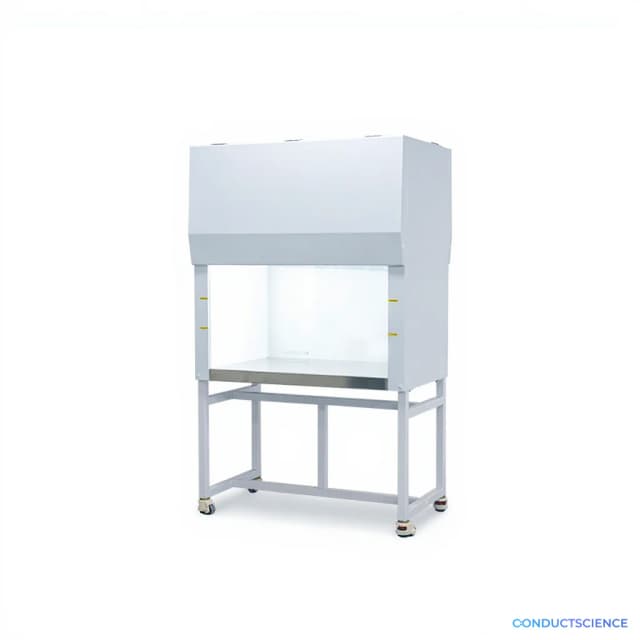
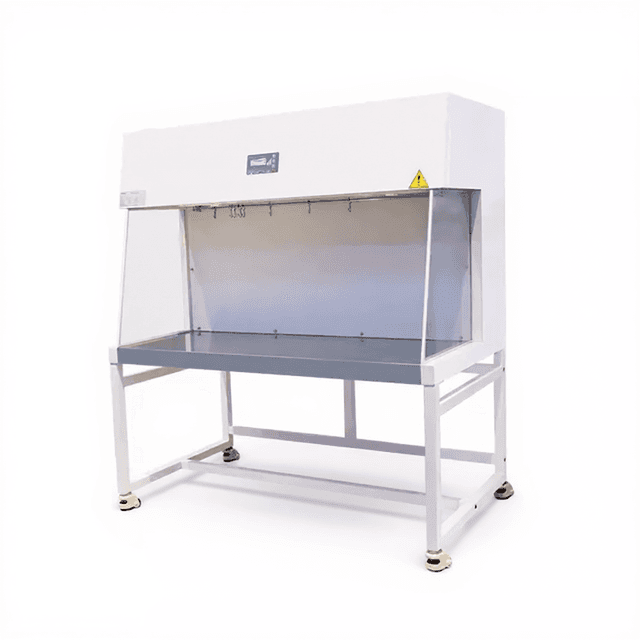
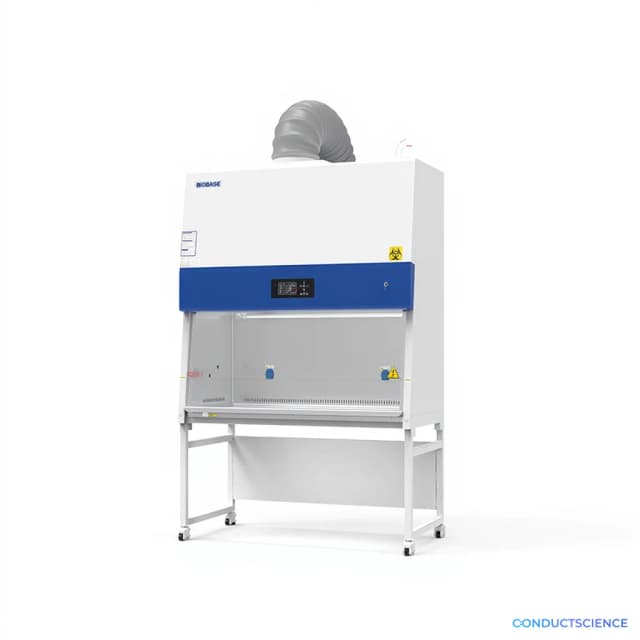
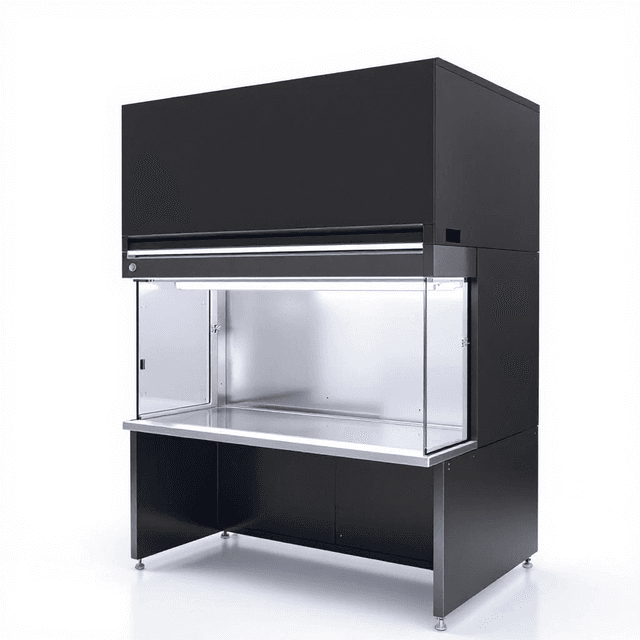
EN Class II A2 Biological Safety Cabinet
Class II A2 biological safety cabinet with dual HEPA filtration and laminar airflow for sterile handling of biological materials in research and clinical laboratories.

Louise Corscadden, PhD
Director of Science · ConductScience
Ask Louise about EN Class II A2 Biological Safety Cabinet fit, setup, configuration, or quote prep.
Already working with us? Sign in to connect this with My Scientist.
Key Specifications
Full details →- Model fit
- 2 selectable configurations
- SKU family
- BIO-0892
- Shipping box
- 226.5 x 108.7 x 77.5 cm
- Ordering
- Online checkout and quote request available
- Category
- Clean Benches & Fume Hoods
- Build notes
- Confirm accessories, station layout, and support needs before purchase
EN-Class II A2 Biological Safety Cabinet
Professional biosafety cabinet designed for safe handling of biological materials with airborne transmission risk potential (BSL-2 agents). Features European standards compliance with EN 12469 certification and comprehensive protection for personnel, product, and environment.
Key Features:
- Class II A2 certification for BSL-2 biosafety level
- EN 12469 European standards compliant
- Vertical laminar airflow with HEPA filtration
- Downflow and containment protection
- Multiple size configurations available
- Safety interlocks and monitoring systems
How It Works
The Class II A2 cabinet operates on the principle of laminar airflow containment with both inward and downward air movement. Room air enters through the front opening and joins HEPA-filtered air from the supply plenum to create a protective barrier. The downflow air moves at uniform velocity across the work surface, preventing turbulence that could compromise sterility or containment.
Two HEPA filters provide dual-stage filtration: the supply filter creates sterile downflow air for product protection, while the exhaust filter removes contaminants before air is recirculated or exhausted. The 65%/35% recirculation ratio maintains energy efficiency while ensuring adequate containment. The front air barrier prevents escape of aerosols generated within the work zone.
Manual sash positioning at the tested safety height of 200mm optimizes the balance between containment and ergonomic access. The laminated toughened glass with UV protection maintains optical clarity while withstanding chemical cleaning agents used in decontamination protocols.
Features & Benefits
Shipping weight
- 270.0 lb
Shipping box
- L: 226.5 cm
- W: 108.7 cm
- H: 77.5 cm
| Feature | This Product | Typical Alternative | Advantage |
|---|---|---|---|
| Work Chamber Size | 910×600×660mm internal dimensions | Smaller units often offer 600-800mm width with reduced depth | Larger work area accommodates multiple cell culture flasks and equipment simultaneously for increased productivity. |
| HEPA Filter Efficiency | 99.995% efficiency at 0.3 micrometers | Standard models typically offer 99.99% efficiency | Enhanced filtration provides additional margin of safety for critical applications requiring maximum containment. |
| Airflow Volume | 649 m³/h downflow, 348 m³/h inflow | Entry-level models often have lower airflow rates | Higher airflow rates improve containment performance and provide better protection during dynamic procedures. |
| Filter Monitoring | Integrated filter life indicators | Basic models require manual pressure gauge monitoring | Automated monitoring reduces maintenance uncertainty and ensures optimal filter performance throughout service life. |
| Front Sash Design | Manual operation with laminated toughened glass | Some models use standard tempered glass or motorized operation | Laminated glass provides enhanced chemical resistance while manual operation offers precise control without mechanical complexity. |
This cabinet offers a generous work chamber with high-efficiency filtration and integrated monitoring systems. The combination of substantial airflow rates and automated filter life indicators supports reliable containment performance for demanding research applications.
| Model | SKU | Listed price | Status | Shipping box |
|---|---|---|---|---|
| BSC-4FA2 | BIO-BSC4FA2 | $11,990.00 | Available | 226.5 x 108.7 x 77.5 cm |
| BSC-3FA2 | BIO-BSC3FA2 | $8,990.00 | Available | 226.5 x 108.7 x 77.5 cm |
Practical Tips
Verify airflow patterns using smoke visualization during initial setup and after any maintenance.
Why: Visual confirmation ensures proper air curtain formation and identifies any turbulence that could compromise containment.
Monitor filter life indicators monthly and document readings for trend analysis.
Why: Regular monitoring allows predictive maintenance scheduling and prevents unexpected filter failures during critical procedures.
Maintain the front sash at the tested safety height of 200mm during all procedures.
Why: This position optimizes the balance between containment effectiveness and ergonomic access for safe operation.
Allow 15-20 minutes for airflow stabilization before beginning work after powering on.
Why: Adequate stabilization time ensures full establishment of protective air barriers before handling biological materials.
Arrange equipment and materials to minimize arm movements across the front opening.
Why: Reduced arm movements minimize disruption of the air curtain and maintain optimal containment during procedures.
Check for obstructions in air intake grilles if airflow seems reduced.
Why: Clear air intakes are essential for maintaining proper airflow rates and containment performance.
Document all decontamination procedures and airflow verifications in laboratory records.
Why: Complete documentation supports quality assurance protocols and regulatory compliance in validated environments.
Clean the work surface with laboratory-grade disinfectants compatible with stainless steel.
Why: Appropriate cleaning agents maintain surface integrity while ensuring effective decontamination between procedures.
Setup Guide
What’s in the Box
- Class II A2 Biological Safety Cabinet
- Dual HEPA filters (pre-installed)
- Aluminum filter frames
- Filter life indicator system
- Work surface tray
- Installation hardware
- User manual and safety documentation
- Electrical connection components (typical)
Warranty
ConductScience provides a standard one-year manufacturer warranty covering parts and technical support. Extended service agreements are available for continued performance verification and maintenance support.
Compliance
References
Background reading relevant to this product:
What is the difference between inflow and downflow air velocities?
Inflow air (348 m³/h) creates the front air barrier for containment, while downflow air (649 m³/h) provides sterile product protection across the work surface.
How often should HEPA filters be replaced?
Filter replacement depends on usage and environmental conditions, typically 1-3 years. The integrated filter life indicators provide real-time monitoring for optimal replacement timing.
Can this cabinet be used for handling viral samples?
This Class II A2 cabinet is designed for BSL-1 and BSL-2 applications. For viral work, verify that your institutional biosafety protocols approve Class II cabinets for your specific viral agents.
What is the maximum equipment height that can be used inside?
The internal height of 660mm allows accommodation of standard laboratory equipment while maintaining proper airflow patterns for containment.
How is the cabinet decontaminated between different biological agents?
Standard decontamination includes UV irradiation (if equipped), surface disinfection with appropriate agents, and allowing airflow to clear airborne contaminants between procedures.
What electrical requirements are needed for installation?
Consult product datasheet for specific electrical specifications. Most biological safety cabinets require dedicated electrical circuits with appropriate amperage capacity.
How does the 65%/35% air recirculation affect containment?
The 35% exhaust rate ensures adequate removal of contaminants while the 65% recirculation maintains energy efficiency and stable temperature conditions within the work zone.
Have a question about this product?
Have a question? Just ask.
Send it over and we'll email you a personalized answer — no call, no scheduling.
Prefer to talk it through?
Accessories
Enhance your setup with compatible accessories