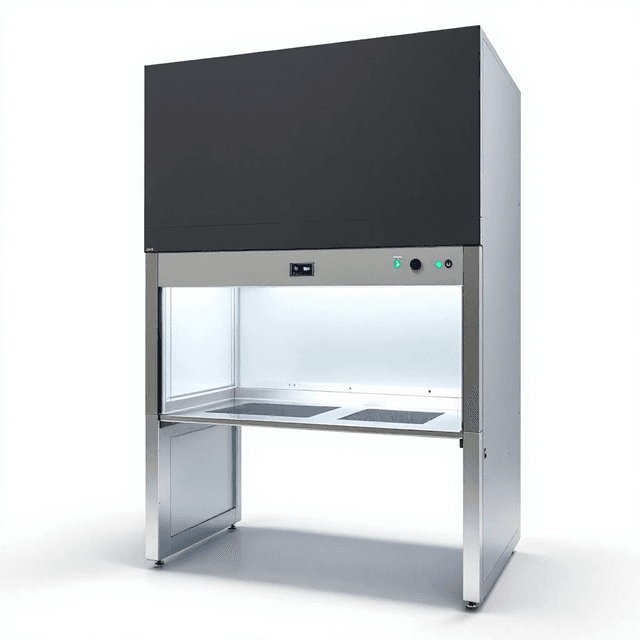
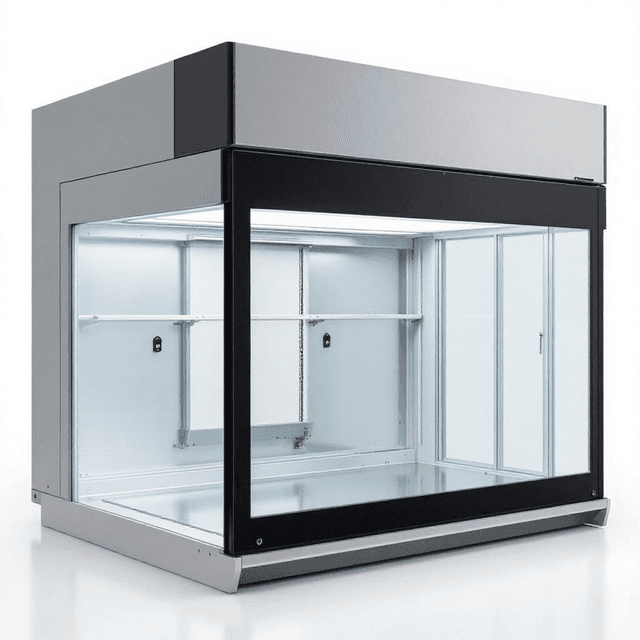
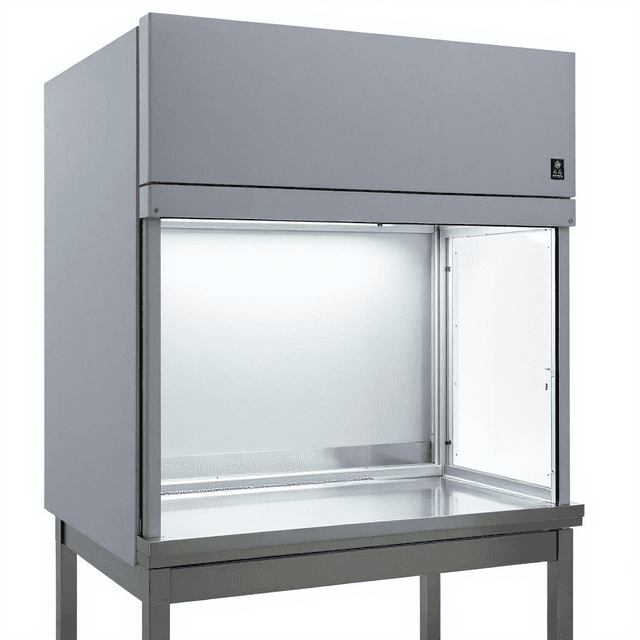
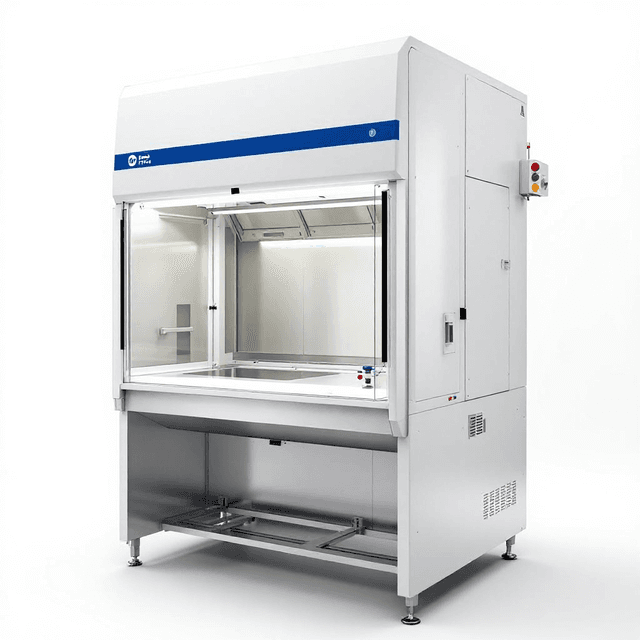
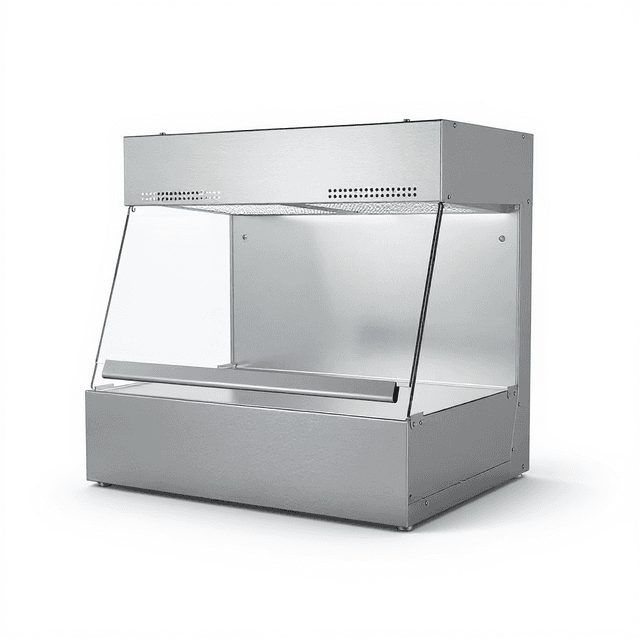
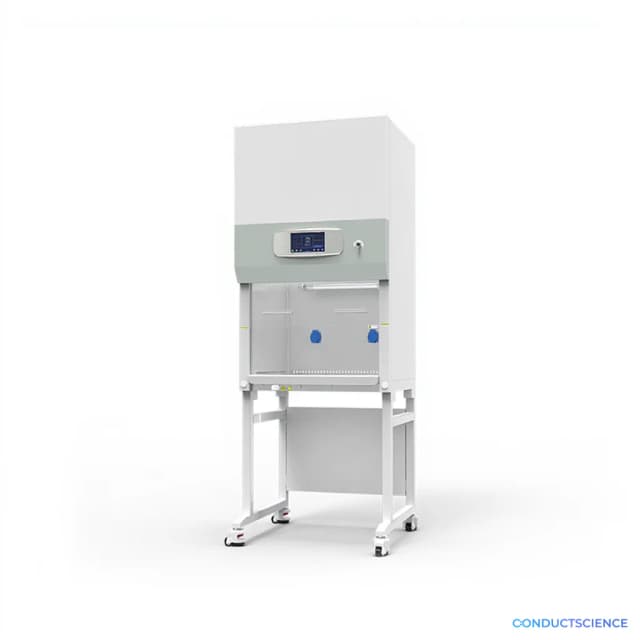
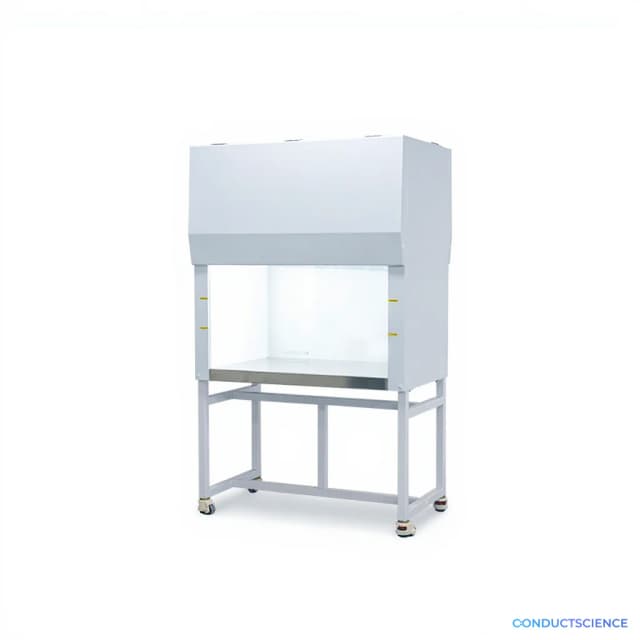
High Quality Laminar Flow Air Cabinet
Horizontal laminar flow cabinet providing sterile work environment with unidirectional airflow for contamination-sensitive laboratory procedures.
| Automation Level | manual |

The High Quality Laminar Flow Air Cabinet provides a controlled sterile work environment for laboratory applications requiring protection from airborne contaminants. This horizontal laminar flow workstation creates a unidirectional airflow pattern that maintains a clean workspace for sample preparation, cell culture work, and other procedures sensitive to particulate contamination.
Constructed with a generous work surface measuring 169 cm in length and 110 cm in width, this cabinet accommodates multiple instruments and provides ample space for complex protocols. The unit delivers consistent airflow across the work surface to minimize turbulence and maintain environmental control during critical procedures.
How It Works
Laminar flow cabinets operate by drawing ambient air through a pre-filtration system before passing it through a high-efficiency particulate air (HEPA) filter. The filtered air is then distributed uniformly across the work surface in a unidirectional horizontal flow pattern at a controlled velocity, typically 0.45 ± 0.1 m/s.
The horizontal airflow design sweeps contaminants away from the work area and prevents turbulent mixing with unfiltered air. A continuous positive pressure within the work zone ensures that any air entering the workspace has been filtered, while the laminar flow pattern minimizes particle resuspension from work surfaces.
The cabinet maintains its protective environment through continuous air circulation, with the blower system providing consistent airflow volume and the filter efficiency removing particles ≥0.3 micrometers at 99.97% efficiency or greater, depending on filter specifications.
Features & Benefits
Automation Level
- manual
Research Domain
- Analytical Chemistry
- Cell Biology
- Clinical Diagnostics
- Materials Science
- Microbiology
- Pharmaceutical QC
Weight
- 175.0 kg
Dimensions
- L: 169.0 mm
- W: 110.0 mm
- H: 80.8 mm
Comparison Guide
| Feature | This Product | Typical Alternative | Advantage |
|---|---|---|---|
| Work Surface Dimensions | 169 x 110 cm workspace | Compact models often offer 90-120 cm width | Larger workspace accommodates multiple instruments and complex experimental setups without crowding |
| Construction Weight | 175 kg stable construction | Lighter units may lack vibration resistance | Heavy construction minimizes vibration and airflow disruption from cabinet movement or external sources |
| Overall Height | 80.8 cm profile height | Taller units may exceed standard bench height | Ergonomic height allows comfortable operation while maintaining proper airflow characteristics |
| Airflow Design | Horizontal laminar flow pattern | Vertical flow designs limit workspace access | Horizontal flow allows unrestricted access to work surface and better accommodation of tall equipment |
| Installation Requirements | Benchtop installation with adjustable feet | Some units require built-in installation or external ducting | Flexible placement options without permanent facility modifications or complex installation procedures |
This cabinet offers a spacious 169 x 110 cm work surface in a robust 175 kg construction, providing substantial workspace for complex procedures while maintaining stable operation. The horizontal airflow design maximizes equipment accessibility compared to vertical flow alternatives, making it well-suited for laboratories requiring flexible instrument placement and extended experimental protocols.
Practical Tips
Verify airflow velocity at 9 points across the work surface using a calibrated anemometer, ensuring readings fall within ±10% of specification.
Why: Uniform airflow distribution is critical for consistent contamination protection across the entire workspace.
Monitor pre-filter condition monthly and replace when discolored or airflow resistance increases, as this extends HEPA filter life significantly.
Why: Pre-filter maintenance prevents premature HEPA filter loading and maintains optimal system performance.
Allow cabinet to run for 15-30 minutes before beginning work to establish stable airflow patterns and temperature equilibrium.
Why: Startup time ensures optimal air circulation and eliminates thermal convection currents that could disrupt laminar flow.
If airflow appears uneven, check for obstructions in the air intake or exhaust areas and ensure work surface is not overloaded with equipment.
Why: Airflow disruption often results from blocked ventilation paths or improper equipment placement within the workspace.
Position sensitive analytical balances and measurement devices in the center of the work surface where airflow is most uniform and stable.
Why: Central placement minimizes air current effects on precision measurements while maintaining contamination protection.
Never use the cabinet for volatile chemicals or biological materials requiring containment, as horizontal flow can carry contaminants toward the operator.
Why: This design provides product protection only and is not suitable for applications requiring personnel or environmental protection.
Clean work surfaces with appropriate disinfectants in a back-to-front motion following the airflow direction to avoid recontamination.
Why: Cleaning with the airflow prevents redistribution of contaminants across previously cleaned areas.
Minimize rapid movements and avoid placing items directly in front of the air intake to prevent disruption of laminar flow patterns.
Why: Sudden movements and airflow obstructions create turbulence that can compromise the sterile work environment.
Setup Guide
What’s in the Box
- Laminar flow cabinet main unit
- Pre-installed HEPA filter (typical)
- Work surface tray (typical)
- Power cord
- User manual and installation guide
- Airflow verification certificate (typical)
- Adjustment feet hardware (typical)
Warranty
ConductScience provides a standard one-year manufacturer warranty covering defects in materials and workmanship, with technical support available for installation guidance and operational questions.
Compliance
What airflow velocity should I expect across the work surface?
Typical laminar flow cabinets operate at 0.45 ± 0.1 m/s horizontal airflow velocity, though specific values should be verified from the product datasheet and confirmed during installation certification.
How often do HEPA filters need replacement?
Filter replacement intervals depend on usage conditions and environment, typically ranging from 1-3 years. Monitor pressure differential across filters and replace when manufacturer specifications are exceeded.
Can this cabinet handle volatile chemicals or solvents?
Standard laminar flow cabinets are designed for particulate control, not chemical containment. Consult product specifications for chemical compatibility and consider fume hood alternatives for volatile substances.
What electrical requirements are needed for installation?
Power requirements vary by model specifications. Consult the datasheet for voltage, amperage, and frequency requirements, ensuring adequate circuit capacity and proper grounding.
How do I verify proper airflow performance after installation?
Use calibrated anemometers to measure velocity at multiple points across the work surface, perform smoke pattern visualization, and conduct particle counting tests to verify uniform flow distribution.
What maintenance procedures are required for optimal performance?
Regular cleaning of work surfaces, periodic airflow verification, filter pressure monitoring, and annual professional certification ensure continued performance and compliance with facility standards.
Is this suitable for cell culture applications requiring CO2 incubation?
This provides sterile workspace for cell culture manipulations, but CO2 incubation requires separate environmental chambers. The cabinet complements but does not replace incubation equipment.
What is the maximum instrument weight capacity for the work surface?
Work surface load capacity should be verified from product specifications to ensure safe operation with heavy instruments while maintaining proper airflow characteristics.
Have a question about this product?
Upgrade Options