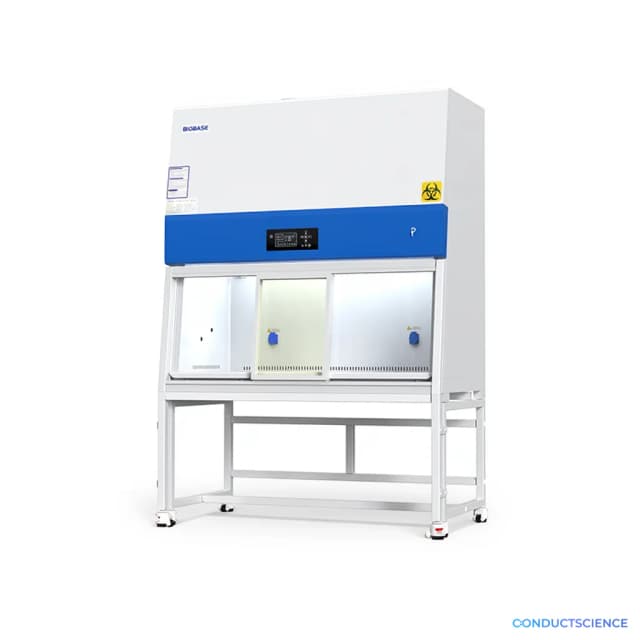
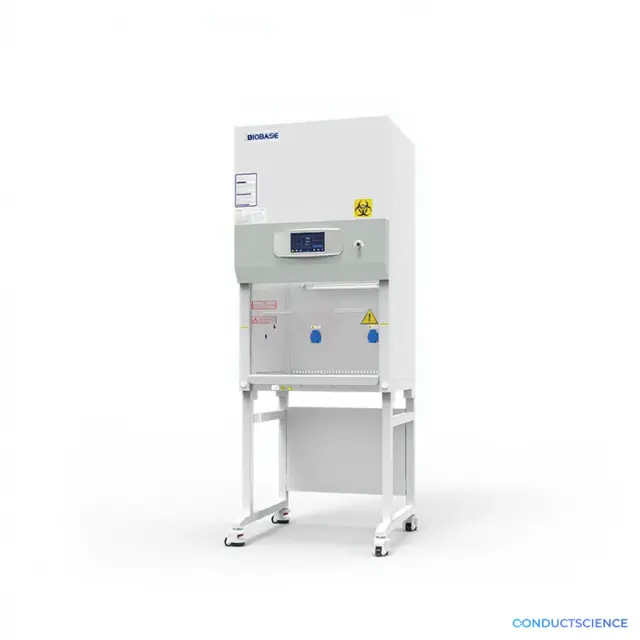
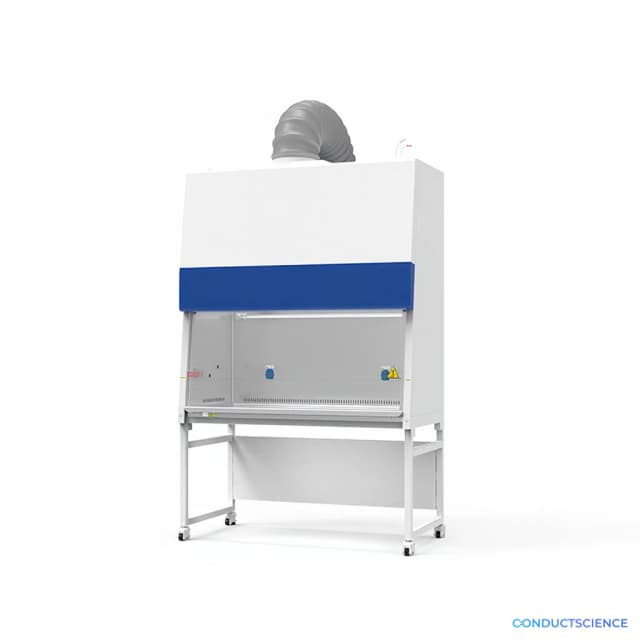
Vertical Laminar Flow Cabinet
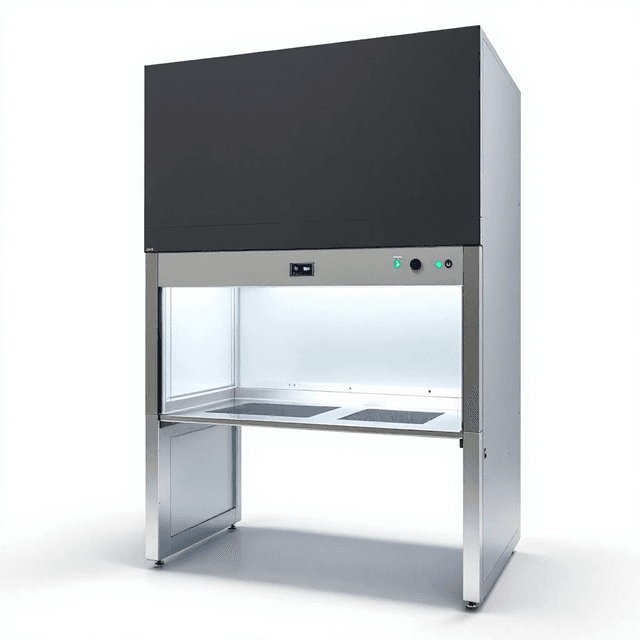
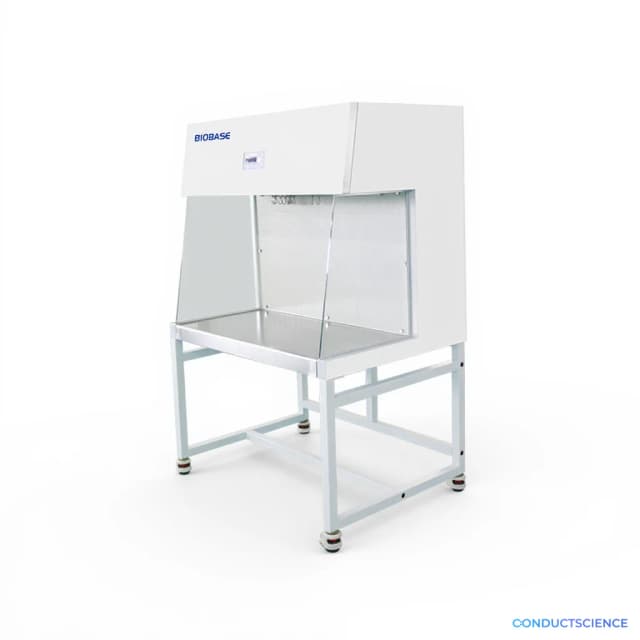
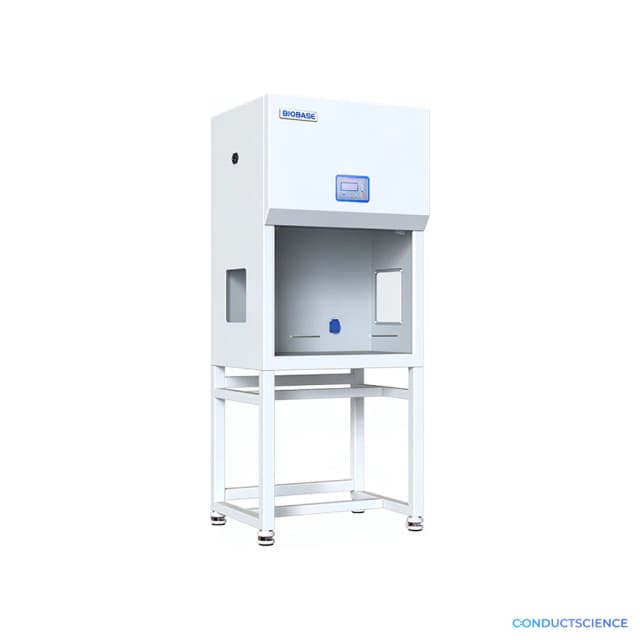
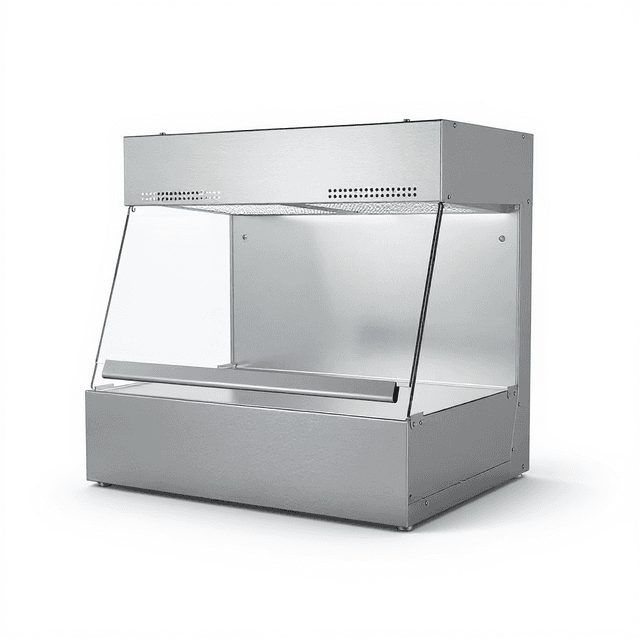
Vertical laminar flow cabinet with HEPA filtration providing Class II biological safety containment for sterile microbiological work and cell culture applications.

Louise Corscadden, PhD
Director of Science · ConductScience
Ask Louise about Vertical Laminar Flow Cabinet fit, setup, configuration, or quote prep.
Already working with us? Sign in to connect this with My Scientist.
Key Specifications
Full details →- Model fit
- Configured during quote
- SKU family
- _old_BIO-0048
- Shipping box
- 185.0 x 80.0 x 66.5 cm
- Ordering
- Online checkout and quote request available
- Category
- Clean Benches & Fume Hoods
- Build notes
- Confirm accessories, station layout, and support needs before purchase
The Vertical Laminar Flow Cabinet provides Class II biological safety containment for microbiological work requiring sterile conditions. This unit generates downward vertical airflow through a HEPA filter system, creating a controlled environment that protects both samples and operator from cross-contamination. The cabinet features adjustable airflow velocity between 0.3-0.45 m/s and incorporates a pre-filter and high-efficiency HEPA filter rated at 99.995% efficiency at 0.3 micrometers.
Available in three work surface widths (700mm, 1200mm, and 1700mm), the cabinet accommodates various laboratory workflows from routine cell culture to microbiological sample preparation. The unit includes LCD display monitoring, integrated LED illumination, and waterproof electrical outlets for equipment operation within the sterile field.
How It Works
The vertical laminar flow cabinet operates on the principle of controlled air filtration and directional airflow to maintain sterile working conditions. Ambient air enters through a pre-filter system that removes larger particulates and contaminants. The pre-filtered air then passes through a high-efficiency particulate air (HEPA) filter rated at 99.995% efficiency for particles 0.3 micrometers and larger.
Filtered air flows downward through the work area at a controlled velocity of 0.3-0.45 m/s, creating a unidirectional laminar flow pattern. This vertical airflow sweeps potential contaminants away from the work surface and samples, while simultaneously protecting the operator from exposure to biological materials. The controlled airflow velocity prevents turbulence that could compromise sterile conditions while maintaining adequate air exchange rates.
The LCD display continuously monitors airflow parameters, ensuring consistent performance throughout operation. The integrated lighting system provides uniform illumination at ≥300 lux for optimal visibility during detailed laboratory procedures.
Features & Benefits
Automation Level
- semi-automated
BBS-V1300-X
- BBS-V1800-X
External Size(W*D*H)
- 800*665*1850mm
1300*710*1850mm
- 1800*710*1850mm
Internal Size(W*D*H)
- 700*575*625mm
1200*575*625mm
- 1700*575*625mm
Work Surface Height
- 750mm
Max Opening
- 400mm
Display Type
- LCD display
Airflow Velocity
- 0.3~0.45m/s
Pre-Filter
- Polyester fiber
HEPA Filter
- One, 99.995% efficiency at 0.3μm
Noise
- ≤65dB(A)
Illumination
- ≥300lx
Waterproof Sockets
- Two sockets, Max. Power: 500W
Brand
- ConductScience
Research Domain
- Cell Biology
- Clinical Diagnostics
- Environmental Monitoring
- Food Science
- Microbiology
- Pharmaceutical QC
Shipping weight
- 140.0 lb
Shipping box
- L: 185.0 cm
- W: 80.0 cm
- H: 66.5 cm
| Feature | This Product | Typical Alternative | Advantage |
|---|---|---|---|
| HEPA Filter Efficiency | 99.995% at 0.3μm particles | Standard models often provide 99.97% efficiency | Higher filtration efficiency provides additional margin of safety for critical sterile procedures. |
| Airflow Velocity Control | Variable 0.3-0.45 m/s adjustment | Fixed airflow velocity in many entry-level models | Allows optimization for different procedures and maintains consistent sterile conditions across various applications. |
| Work Surface Configuration | Three width options: 700mm, 1200mm, 1700mm | Limited size options in standard product lines | Accommodates different laboratory space constraints and workflow requirements without compromising functionality. |
| Display Interface | LCD display with parameter monitoring | Basic indicator lights on simpler models | Real-time system monitoring enables quality documentation and preventive maintenance scheduling. |
| Electrical Outlets | Two waterproof outlets, 500W maximum | Fewer outlets or non-waterproof connections | Supports multiple equipment operation within sterile field while maintaining electrical safety in laboratory environment. |
| Noise Level | ≤65 dB(A) operation | Higher noise levels in some models | Maintains comfortable working environment during extended procedures without interfering with laboratory communication. |
This cabinet offers variable airflow control, comprehensive size options, and integrated monitoring capabilities. The HEPA filtration system and LCD display provide enhanced control and documentation compared to basic models, while the multiple electrical outlets and low noise operation support extended laboratory workflows.
Practical Tips
Allow the cabinet to run for 15-20 minutes before beginning work to ensure airflow stabilization and sterile conditions.
Why: Stabilized airflow patterns are essential for maintaining laminar flow characteristics and preventing contamination.
Monitor airflow velocity monthly using a calibrated anemometer at multiple points across the work surface.
Why: Declining airflow velocity indicates filter loading and helps determine optimal filter replacement timing.
Verify illumination levels quarterly using a calibrated light meter to ensure ≥300 lux uniformity.
Why: Adequate lighting is critical for sterile technique and accurate observation of microbiological specimens.
Never block the airflow path with large equipment or materials that disrupt laminar flow patterns.
Why: Airflow disruption creates turbulence zones that can compromise sterile conditions and increase contamination risk.
Document airflow velocity, filter replacement dates, and any performance deviations in laboratory quality records.
Why: Performance documentation supports quality assurance requirements and helps identify maintenance needs.
If airflow velocity drops below specification, check pre-filter loading before assuming HEPA filter replacement is needed.
Why: Pre-filter replacement is less expensive and often resolves airflow issues without HEPA filter replacement.
Clean work surface with appropriate disinfectant between samples and at the end of each work session.
Why: Regular disinfection prevents cross-contamination between samples and maintains sterile working conditions.
Replace UV lamps (if equipped) according to manufacturer schedule regardless of apparent brightness.
Why: UV output degrades over time even when lamps appear to function normally, reducing sterilization effectiveness.
Setup Guide
What’s in the Box
- Vertical laminar flow cabinet main unit
- Pre-filter (polyester fiber)
- HEPA filter (installed)
- LCD display control panel
- LED lighting system
- Power cord and electrical connections
- User manual and installation guide (typical)
- Performance verification documentation (typical)
Warranty
ConductScience provides a standard one-year manufacturer warranty covering defects in materials and workmanship, with technical support available for installation guidance and operational troubleshooting.
Compliance
What is the difference between the available cabinet sizes and how do I select the appropriate model?
Three configurations are available with work surface widths of 700mm, 1200mm, and 1700mm. Select based on your typical workflow volume, equipment requirements, and available laboratory bench space. All models maintain the same depth (575mm) and height (625mm) work area.
How often should the HEPA and pre-filters be replaced?
Replace the polyester fiber pre-filter every 3-6 months depending on laboratory conditions and usage frequency. HEPA filter replacement is typically required every 12-24 months, but should be based on airflow velocity measurements and contamination levels rather than time alone.
Can this cabinet be used for work with hazardous chemicals or volatile compounds?
No, this vertical laminar flow cabinet is designed for microbiological containment only. For chemical work requiring fume extraction, use a chemical fume hood with appropriate ventilation and filtration systems.
What airflow velocity should I use for different types of procedures?
Use 0.3 m/s for routine cell culture and sensitive manipulations to minimize turbulence. Increase to 0.45 m/s for procedures generating more particulates or when enhanced containment is required. Monitor with calibrated anemometer to ensure consistency.
Is the cabinet suitable for work with primary cell cultures and stem cells?
Yes, the HEPA filtration and laminar airflow provide appropriate sterile conditions for primary cell culture work. Ensure proper aseptic technique and consider CO2 supplementation if required for specific culture conditions.
What type of disinfection protocols are recommended for the work surface?
Use 70% ethanol or other laboratory-grade disinfectants suitable for the specific microorganisms being handled. Allow disinfectant contact time per manufacturer recommendations, then allow airflow to clear residual vapors before beginning work.
Can the LCD display provide data logging or connectivity features?
Consult the product datasheet for specific display capabilities and data output options. The LCD provides real-time monitoring, but data logging features vary by model configuration.
What are the electrical requirements and power consumption specifications?
The cabinet provides two waterproof outlets with 500W maximum total capacity for accessory equipment. Consult product datasheet for main unit power consumption and electrical connection requirements.
Have a question about this product?
Have a question? Just ask.
Send it over and we'll email you a personalized answer — no call, no scheduling.
Prefer to talk it through?
Upgrade Options