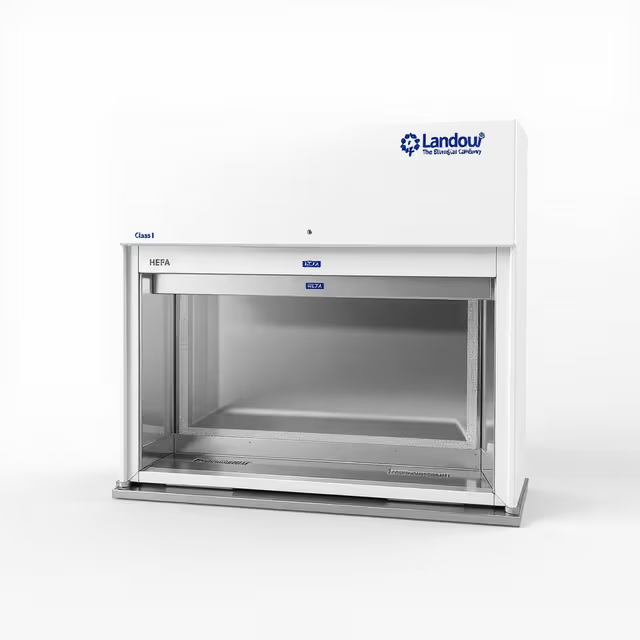
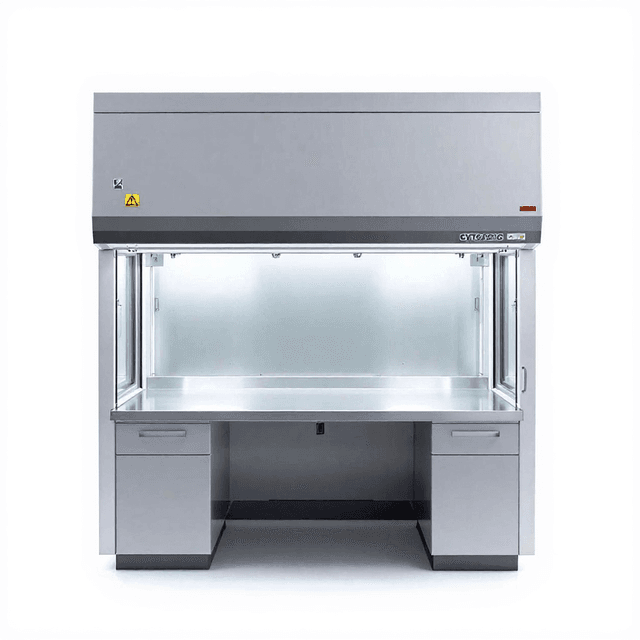
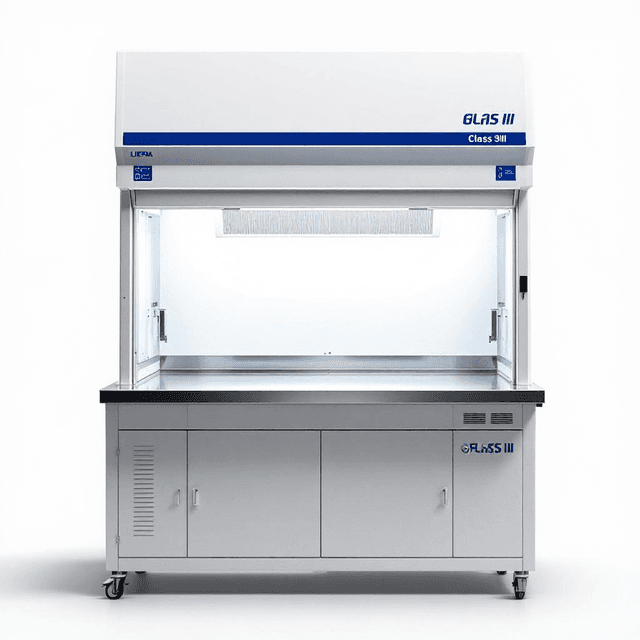
Vertical Laminar Flow CabinetBKCB-V1300D
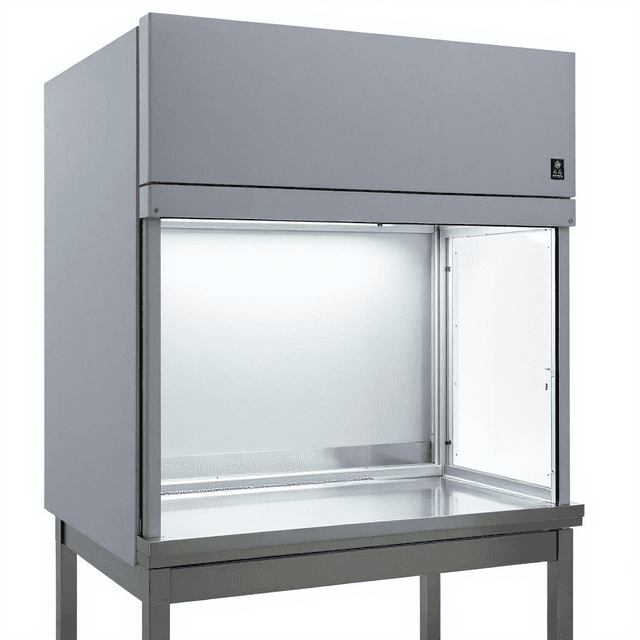
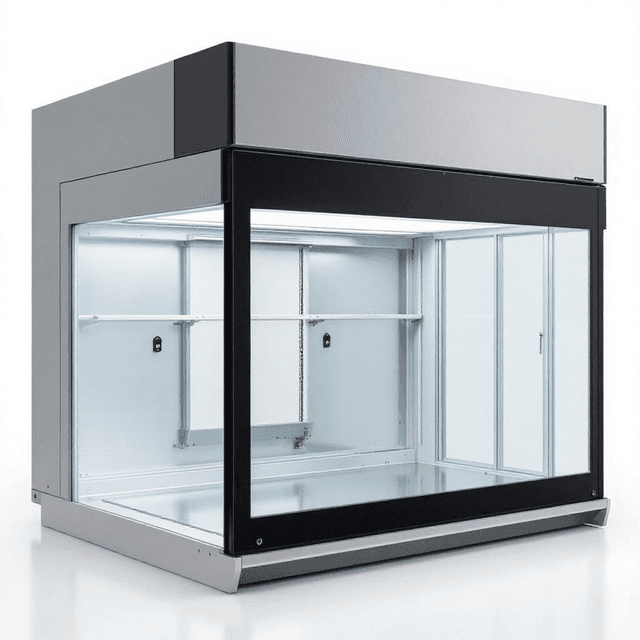
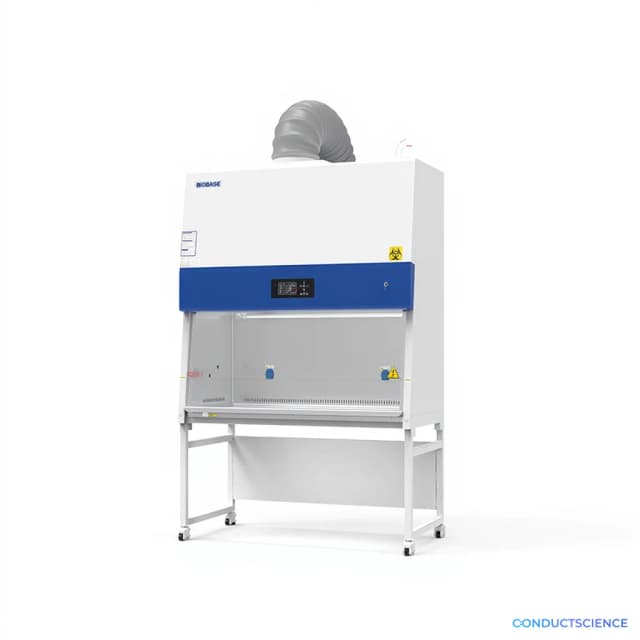
Vertical laminar flow cabinet providing ISO 5 clean environment for 1-2 users with H14 HEPA filtration and motorized glass front window for sterile laboratory workflows.
A laminar flow clean bench protects only the sample. It blows filtered air toward the user, so it is not for infectious or toxic work.

Louise Corscadden, PhD
Director of Science · ConductScience
Ask Louise about Vertical Laminar Flow CabinetBKCB-V1300D fit, setup, configuration, or quote prep.
Already working with us? Sign in to connect this with My Scientist.
Key Specifications
Full details →- Model fit
- Configured during quote
- SKU family
- BIO-0043
- Shipping box
- 186.0 x 130.0 x 67.5 cm
- Ordering
- Online checkout and quote request available
- Category
- Clean Benches & Fume Hoods
- Build notes
- Confirm accessories, station layout, and support needs before purchase
The Vertical Laminar Flow Cabinet BKCB-V1300D provides ISO 5 class contamination control for sterile work environments requiring 1-2 user capacity. This unit generates vertical downflow air curtains at velocities between 0.2-0.45 m/s, utilizing H14 HEPA filtration to achieve 99.995% particle removal efficiency for 0.3 μm particles. The motorized front window with 5mm toughened glass allows height adjustment from 200mm safety height to 350mm maximum opening.
The cabinet maintains colony counts ≤0.5 CFU/30min while operating at noise levels ≤65 dB(A) with minimal vibration (≤5 μm rms). The 750mm work surface height accommodates standard laboratory workflows, with 900VA total power capacity including 500VA for operating area socket loads. Integrated lighting provides ≥300 lx illumination for detailed manipulation work under sterile conditions.
How It Works
The vertical laminar flow system draws ambient air through the top-mounted H14 HEPA filter, creating a uniform downward airflow across the work surface. The HEPA filtration removes 99.995% of particles ≥0.3 μm through mechanical interception, impaction, and diffusion mechanisms. This creates a unidirectional air curtain that sweeps contaminants away from the work area and prevents upward migration of particles from the work surface.
The motorized front window system allows precise adjustment of the opening height while maintaining optimal airflow patterns. At the 200mm safety height, the system maintains maximum protection factor, while the 350mm maximum opening provides access for larger equipment manipulation. The internal blower system maintains consistent airflow velocity between 0.2-0.45 m/s regardless of window position.
Colony formation testing demonstrates the effectiveness of the containment system, with validated performance showing ≤0.5 CFU per 30-minute exposure period. The work surface positioning at 750mm height optimizes ergonomics while maintaining proper airflow dynamics across the manipulation zone.
Features & Benefits
Automation Level
- semi-automated
Flow Mode
- Vertical flow
Number of Users
- 1~2
Rated Power
- 900VA(including operating area socket load 500VA)
Airflow Velocity
- 0.2m/s~0.45m/s
Noise
- ≤65dB(A)
Lighting
- ≥300lx
Vibration
- ≤5μm(rms)
Safety
- Colonies number≤0.5CFU/30min
Clean Grade
- ISO 5(100 levels)
Filtration Efficiency
- HEPA(H14) high efficiency filter, filtration efficiency for 0.3μm particle≥99.995%
Front Window Safety Height
- 200mm
Max Opening
- 350mm
Work Surface Height
- 750mm(Can be customized)
Front Window
- Motorized, 5mm toughened glass, height adjustable
Brand
- ConductScience
Research Domain
- Cell Biology
- Clinical Diagnostics
- Environmental Monitoring
- Food Science
- Microbiology
- Pharmaceutical QC
Shipping weight
- 228.0 lb
Shipping box
- L: 186.0 cm
- W: 130.0 cm
- H: 67.5 cm
| Feature | This Product | Typical Alternative | Advantage |
|---|---|---|---|
| HEPA Filter Classification | H14 grade with 99.995% efficiency at 0.3 μm particles | H13 filters in entry-level models offer lower efficiency | Higher filtration efficiency provides better protection for sensitive cell culture and microbiological work. |
| Window Control System | Motorized adjustment with 5mm toughened glass | Manual sash systems require physical adjustment | Motorized control allows precise positioning without disrupting airflow patterns during operation. |
| Noise Level | ≤65 dB(A) operation | Higher noise levels in compact models | Quieter operation enables extended use without hearing fatigue in laboratory environments. |
| Power Capacity | 900VA total with 500VA for equipment sockets | Limited electrical capacity in basic models | Higher power allocation supports multiple instruments simultaneously within the clean environment. |
| Vibration Control | ≤5 μm (rms) specification | Higher vibration in units without isolation systems | Low vibration enables precise manipulations and microscopy work without mechanical interference. |
| User Capacity | 1-2 user design with 130cm width | Single-user systems offer narrower work areas | Wider work surface accommodates collaborative procedures or larger experimental setups. |
The BKCB-V1300D combines H14 HEPA filtration with motorized window control and high electrical capacity for versatile sterile work applications. The low noise and vibration specifications make it suitable for extended laboratory procedures requiring precision manipulation.
Practical Tips
Verify airflow velocity across multiple points of the work surface using a calibrated anemometer to ensure uniform 0.2-0.45 m/s flow patterns.
Why: Uniform airflow prevents dead zones where contaminants could accumulate during sterile procedures.
Monitor differential pressure across the HEPA filter and document airflow measurements to establish filter replacement schedules.
Why: Gradual filter loading reduces efficiency over time, and monitoring prevents unexpected performance degradation.
Allow 30-minute warm-up period before beginning critical work and minimize rapid movements within the airflow field.
Why: System stabilization ensures consistent airflow patterns, and smooth movements prevent turbulence that could compromise sterility.
Maintain the motorized window at 200mm safety height when not actively manipulating materials within the cabinet.
Why: Lower window position maximizes containment effectiveness and prevents accidental exposure to contaminants.
Document colony formation test results regularly and compare against the ≤0.5 CFU/30min specification.
Why: Regular bioburden monitoring validates ongoing sterility performance and identifies potential contamination sources.
If airflow velocity drops below specification, check for obstructions in the air intake and verify HEPA filter condition.
Why: Reduced airflow indicates potential system problems that could compromise sterile working conditions.
Position materials and equipment to avoid blocking airflow patterns and maintain clear pathways for downward air movement.
Why: Proper equipment placement ensures effective contaminant removal and maintains ISO 5 classification throughout the work area.
Clean work surface with appropriate disinfectants between procedures and inspect for any damage that could harbor contaminants.
Why: Surface cleanliness prevents cross-contamination between experiments and maintains the sterile work environment.
Setup Guide
What’s in the Box
- Vertical laminar flow cabinet main unit
- H14 HEPA filter (pre-installed)
- Power cable and electrical connections
- Motorized window control system
- Work surface platform
- LED lighting system
- Operation manual and documentation
- Installation guide (typical)
- Airflow verification certificate (typical)
Warranty
ConductScience provides standard one-year manufacturer warranty covering defects in materials and workmanship, with technical support for installation and operational guidance.
Compliance
What particle size range does the H14 HEPA filtration effectively remove?
The H14 HEPA filter achieves 99.995% filtration efficiency for particles ≥0.3 μm, which includes most bacteria, fungal spores, and airborne contaminants relevant to sterile laboratory work.
How does the motorized window system affect airflow performance?
The window can adjust from 200mm safety height to 350mm maximum opening while maintaining 0.2-0.45 m/s airflow velocity. The 200mm position provides maximum containment for critical work.
What electrical requirements are needed for installation?
The unit requires 900VA total capacity, with 500VA allocated for operating area socket loads. Consult product datasheet for specific voltage and current requirements.
How is sterility performance validated in this cabinet?
Colony formation testing demonstrates ≤0.5 CFU per 30-minute exposure period, indicating effective containment of viable microorganisms during operation.
Can the work surface height be modified for different users?
The standard 750mm work surface height can be customized during installation to accommodate specific ergonomic requirements or laboratory bench heights.
What maintenance is required for the HEPA filtration system?
HEPA filter replacement intervals depend on usage and environmental conditions. Monitor differential pressure and airflow velocity to determine replacement timing.
How does this compare to horizontal laminar flow systems?
Vertical downflow provides better operator protection by directing contaminants away from the user, while horizontal flow systems may blow contaminants toward the operator.
What instruments can be operated within the cabinet?
The 500VA socket allocation supports most standard laboratory instruments like pipettes, small centrifuges, and heating blocks that fit within the work area dimensions.
Have a question about this product?
Have a question? Just ask.
Send it over and we'll email you a personalized answer — no call, no scheduling.
Prefer to talk it through?