Honeybee Y Maze
Specialized Y-shaped behavioral maze for investigating spatial learning, memory, and decision-making in honeybees and other hymenopteran species.

Louise Corscadden, PhD
Director of Science · ConductScience
Ask Louise about Honeybee Y Maze fit, setup, configuration, or quote prep.
Already working with us? Sign in to connect this with My Scientist.
Key Specifications
Full details →- Model fit
- Honeybee
- SKU family
- ME-32107
- Shipping box
- 43.2 x 38.0 x 27.9 cm
- Ordering
- Online checkout and quote request available
- Category
- Behavioral Mazes
- Build notes
- Confirm accessories, station layout, and support needs before purchase
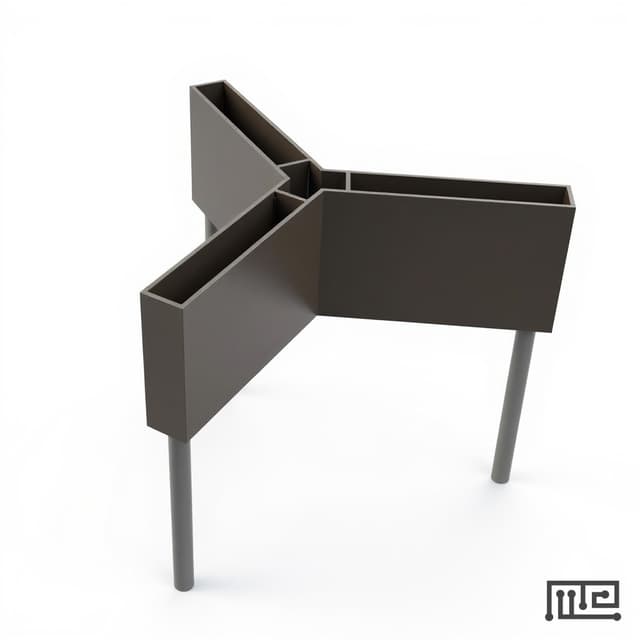
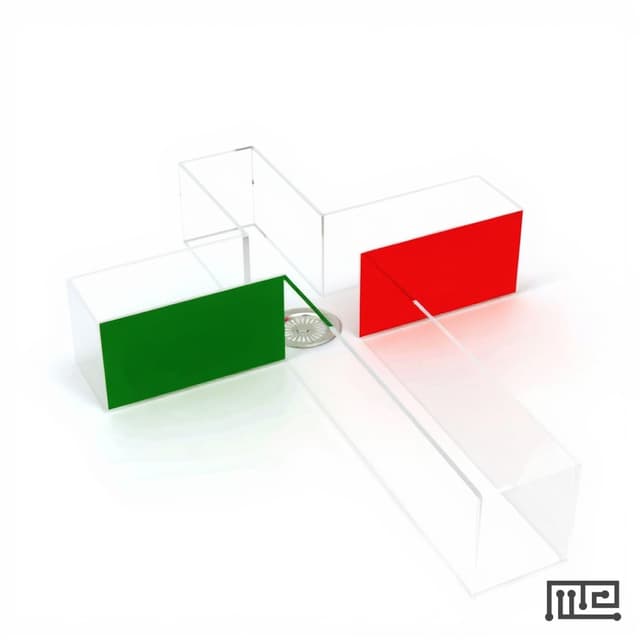
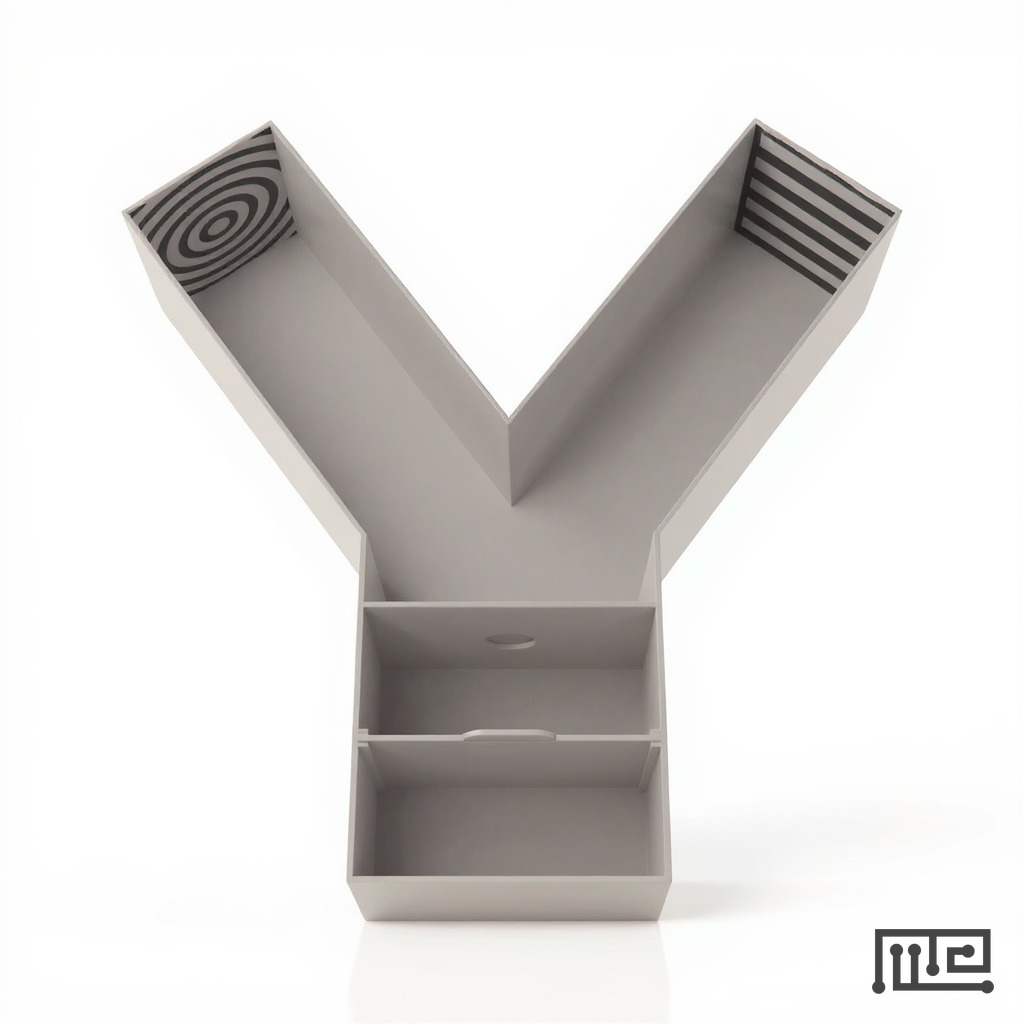
The Honeybee Y Maze is a specialized behavioral testing apparatus designed for investigating spatial learning, memory, and decision-making in honeybees and other hymenopteran species. This precisely constructed maze features a Y-shaped configuration with standardized dimensions optimized for bee navigation studies, including 40 cm arm length, 20 cm arm width, and a controlled entrance system with a 5 cm diameter hole positioned 20 cm from the decision point.
The apparatus enables researchers to conduct controlled choice experiments, spatial memory assessments, and foraging behavior studies in honeybees. The design incorporates a sliding door system (27 cm width) for trial control and standardized arm dimensions that accommodate natural bee flight patterns while maintaining experimental rigor. This tool is essential for studies examining pollinator cognition, navigation mechanisms, and learning paradigms in apian research.
How It Works
The Y-maze operates on the principle of binary choice decision-making, where honeybees must select between two alternative pathways to reach a goal location. The apparatus exploits the natural foraging behavior of bees, who navigate using spatial landmarks and memory to locate food sources. During testing, bees enter through the standardized entrance hole and proceed down the entrance arm until reaching the decision point, where they must choose between left or right arms.
The 20 cm distance between the entrance and decision point allows sufficient flight space for the bee to assess environmental cues and make informed choices. The sliding door mechanism enables precise temporal control over access to different maze sections, allowing researchers to manipulate trial conditions and implement various experimental protocols. Visual cues, olfactory stimuli, or reward placement in specific arms can be used to study learning acquisition, memory retention, and spatial preference behaviors.
Features & Benefits
Add-ons and modifications
| Add-on | Price | Details |
|---|---|---|
| Honeybee Y maze | $990 | Diameter of entrance hole: 5cm Height of maze: 20cm Length of maze arms: 40cm Width of maze arms: 20cm Width of sliding door: 27cm Distance between entrance hol |
Add any of these to your quote request.
Behavioral Construct
- spatial learning
- decision making
- memory
- navigation
- choice behavior
- foraging behavior
Automation Level
- manual
Research Domain
- Behavioral Pharmacology
- Developmental Biology
- Environmental Monitoring
- Learning and Memory
- Neuroscience
Species
- Honeybee
Compatible Tracking Software
- ConductVision
Shipping weight
- 21.0 lb
Shipping box
- L: 43.2 cm
- W: 38.0 cm
- H: 27.9 cm
| Feature | This Product | Typical Alternative | Advantage |
|---|---|---|---|
| Arm Length Specification | 40 cm standardized arm length | Variable arm lengths without standardization | Ensures consistent flight distances across experiments for reproducible spatial memory assessments. |
| Entrance Control System | 5 cm diameter entrance with sliding door mechanism | Open access or manual blocking systems | Provides precise temporal control over trial initiation and prevents interference between subjects. |
| Decision Point Distance | 20 cm standardized distance from entrance to decision point | Non-standardized approach distances | Allows consistent cue processing time for reliable choice behavior analysis. |
| Species-Specific Sizing | Dimensions optimized for honeybee flight patterns | Generic insect maze dimensions | Accommodates natural bee navigation behavior while maintaining experimental control. |
This apparatus provides standardized dimensional specifications and precise temporal control mechanisms specifically optimized for honeybee behavioral research. The integrated sliding door system and species-appropriate sizing distinguish it from generic insect testing chambers.
Practical Tips
Allow bees to acclimate to the testing environment for 5-10 minutes before beginning trials.
Why: Reduces stress-related behaviors that can confound spatial learning measurements.
Inspect sliding door alignment weekly and lubricate mechanism monthly with appropriate food-safe lubricant.
Why: Ensures consistent timing control and prevents mechanical failures during critical experiments.
Verify arm dimensions and entrance hole diameter quarterly using precision measuring tools.
Why: Maintains dimensional accuracy required for standardized behavioral protocols and reproducible results.
Record environmental conditions (temperature, humidity, lighting) for each testing session.
Why: Environmental factors significantly influence bee behavior and are essential for result interpretation.
If bees show reluctance to enter, check for residual cleaning chemical odors or inadequate lighting conditions.
Why: Chemical contamination or poor lighting can inhibit natural foraging behavior and bias experimental outcomes.
Ensure adequate ventilation in the testing area and maintain emergency protocols for bee handling.
Why: Protects both subjects and researchers while maintaining experimental validity.
Setup Guide
What’s in the Box
- Honeybee Y-maze apparatus (typical)
- Sliding door mechanism (typical)
- Assembly hardware (typical)
- User manual (typical)
Warranty
ConductScience provides a standard one-year manufacturer warranty covering defects in materials and workmanship, with technical support for setup and operational guidance.
Compliance
What is the optimal lighting condition for honeybee Y-maze testing?
Honeybees perform optimally under broad-spectrum lighting that includes UV wavelengths, typically 300-700 nm, with intensity around 1000-2000 lux to simulate natural foraging conditions.
How should the maze be cleaned between trials to prevent odor contamination?
Clean all surfaces with 70% ethanol followed by distilled water rinse, allowing complete drying between subjects to eliminate pheromone trails that could bias subsequent trials.
What temperature range is suitable for bee behavioral testing?
Maintain ambient temperature between 22-26°C during testing sessions, as honeybees become less active below 20°C and may exhibit stress behaviors above 28°C.
Can this maze accommodate different honeybee species or strains?
The dimensions are optimized for Apis mellifera, but can accommodate most honeybee species of similar size; consult product datasheet for specific dimensional tolerances.
What types of rewards or stimuli can be used in the arms?
Sucrose solutions (typically 10-50% concentration), pollen, or scent markers can be placed in arm terminals, with concentration and type depending on experimental objectives.
How long should individual trial durations be?
Trial duration typically ranges from 2-10 minutes depending on the specific behavioral paradigm, allowing sufficient time for choice behavior without inducing fatigue.
Have a question about this product?
Have a question? Just ask.
Send it over and we'll email you a personalized answer — no call, no scheduling.
Prefer to talk it through?
Accessories
Enhance your setup with compatible accessories

Frequently Bought Together