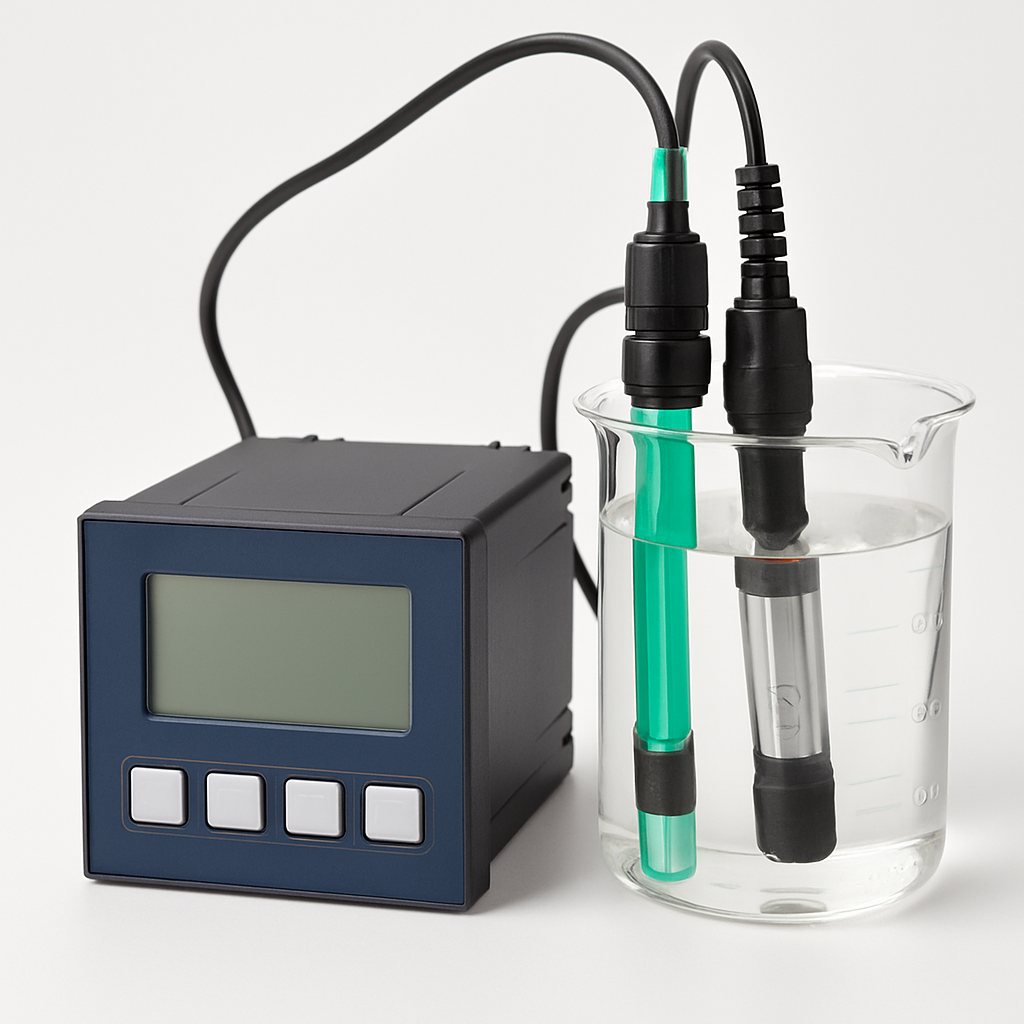
Industrial Residual Chlorine Controller
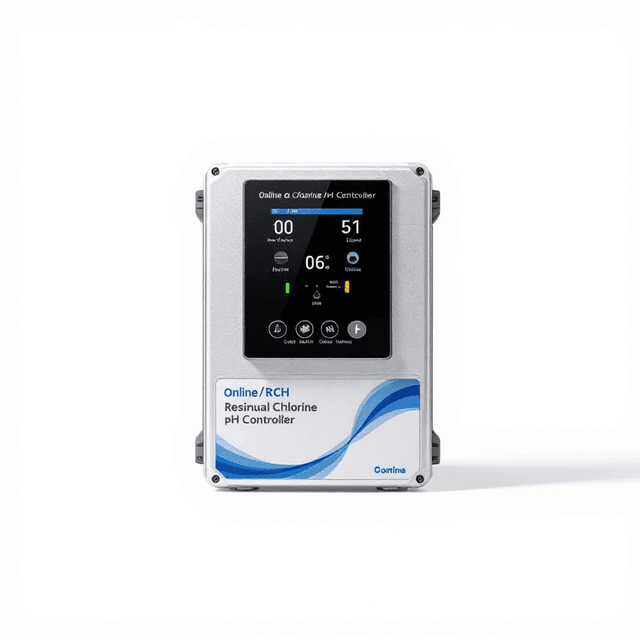
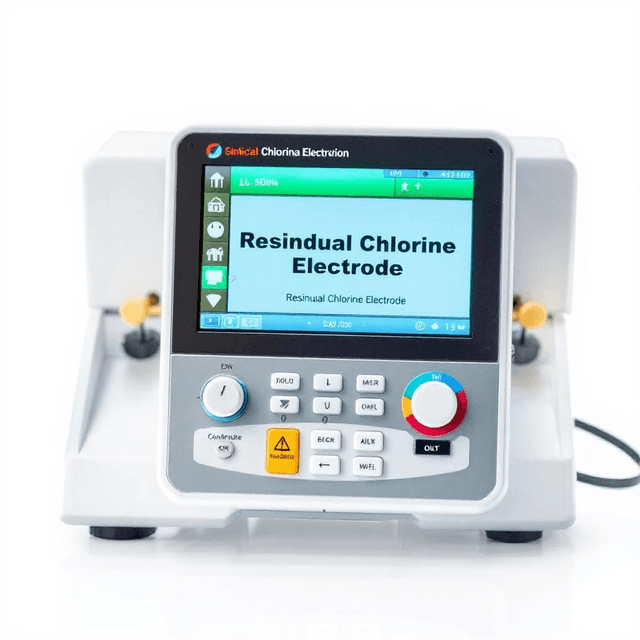
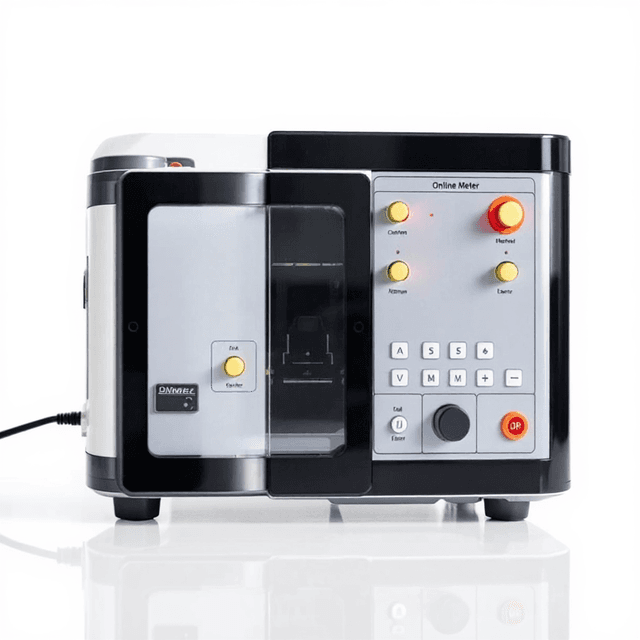
Industrial residual chlorine controller for continuous monitoring and control of chlorine levels in water treatment applications.
Ensures optimal disinfection and complies with regulatory standards.

Louise Corscadden, PhD
Director of Science · ConductScience
Ask Louise about Industrial Residual Chlorine Controller fit, setup, configuration, or quote prep.
Already working with us? Sign in to connect this with My Scientist.
Key Specifications
Full details →- Model fit
- Configured during quote
- SKU family
- CS-LH-CL650
- Shipping box
- 11.5 x 9.6 x 9.6 cm
- Ordering
- Online checkout and quote request available
- Category
- Industrial Sensors
- Build notes
- Confirm accessories, station layout, and support needs before purchase
Description
The Industrial Residual Chlorine Controller is an advanced online monitoring and control instrument designed for continuous measurement and regulation of residual chlorine in water treatment systems. This controller provides real-time monitoring to ensure optimal disinfection levels and regulatory compliance in municipal water supplies, cooling systems, and industrial applications.
Applications
- Municipal water treatment and distribution systems
- Industrial water recirculation and cooling systems
- Swimming pool and spa water management
- Wastewater treatment facilities
- Food and beverage processing
- Pharmaceutical water systems
Key Features
- Online residual chlorine measurement and control
- Real-time monitoring and automated control
- High accuracy and reliability
- Durable construction for industrial environments
- Easy installation and operation
- Regulatory compliance monitoring
- Automated data logging and reporting
- Multiple control outputs for integration with treatment systems
Technical Specifications
| Parameter | Specification |
|---|---|
| Measurement Range | 0-10 mg/L residual chlorine |
| Accuracy | ±0.1 mg/L or ±5% of reading |
| Response Time | Less than 60 seconds |
| Display | Digital LCD display with real-time readings |
| Control Output | 4-20 mA signal output and relay contacts |
| Power Supply | AC 110-240V, 50/60 Hz |
| Operating Temperature | 0-60°C |
| Sensor Type | Amperometric sensor |
| Installation | Wall-mounted or panel-mounted |
| Certifications | ISO 9001, CE certified |
How It Works
The controller uses an amperometric sensor to continuously measure residual chlorine levels in the water stream. The sensor generates an electrical signal proportional to the chlorine concentration, which is processed by the controller's electronics. The controller displays the real-time measurement and provides automated control signals to maintain chlorine levels within the desired setpoint range.
Benefits
- Regulatory Compliance: Ensures residual chlorine levels meet EPA and local water quality standards
- Safety: Prevents over-chlorination and maintains adequate disinfection
- Cost Efficiency: Optimizes chlorine usage and reduces chemical waste
- Reliability: Continuous monitoring prevents contamination events
- Integration: Compatible with SCADA systems and automated control networks
- Maintenance: Easy sensor replacement and calibration procedures
Source Information
Specifications sourced from LoHandBio industrial water quality monitoring equipment catalog.
How It Works
The controller employs electrochemical sensing principles for both chlorine and pH measurement. Residual chlorine detection utilizes amperometric sensing, where chlorine species undergo reduction reactions at the electrode surface, generating measurable current proportional to concentration. The sensor responds to hypochlorous acid (HOCl), the primary disinfecting species, with resolution to 0.001 mg/L for this critical parameter.
pH measurement relies on glass electrode potentiometry, where the potential difference across a selective glass membrane varies logarithmically with hydrogen ion activity according to the Nernst equation. The high input impedance (≥1×10¹²Ω) minimizes loading effects and enables accurate measurement across the full 0-14 pH range with ±0.02 pH accuracy.
Temperature compensation algorithms automatically correct both measurements for thermal effects, ensuring accuracy across the 0-60°C operating range. The microprocessor continuously processes sensor signals, applies calibration coefficients, and outputs standardized 4-20 mA signals corresponding to user-defined measurement ranges.
Features & Benefits
Model
- LH-CL650
Product Name
- Industry online residual chlorine/pH controller
Measure range & Accuracy
- 0-14 (pH) ±0.02pH
Resolution
- 0.01pH, 0.01mg/L(residual chlorine),0.001mg/L(HOCL)
Input Resistance
- â¥1x10 ¹²Ω
Temp Compensation
- Manual / Auto temperature compensation
Communication
- RS485, standard Modbus
Signal output
- 4-20mA output, Maximum loop 750Ω, 0.01%FS
Power supply
- 220V AC 10%,50/60Hzz
Hole size
- 91x91mm
Automation Level
- semi-automated
Brand
- ConductScience
Size
- 96x96x115mm
Weight
- 0.9KG
Research Domain
- Analytical Chemistry
- Environmental Monitoring
- Industrial Hygiene
Shipping weight
- 1.98 lb
Shipping box
- L: 11.5 cm
- W: 9.6 cm
- H: 9.6 cm
| Feature | This Product | Typical Alternative | Advantage |
|---|---|---|---|
| Multi-parameter display capability | Simultaneous display of chlorine, pH, temperature, output current, and alarm status | Single-parameter displays require multiple instruments for comprehensive monitoring | Reduces panel space requirements and provides synchronized measurement data for better process understanding. |
| Resolution specifications | 0.01 pH, 0.01 mg/L chlorine, 0.001 mg/L HOCl resolution | Standard controllers often provide lower resolution specifications | Higher resolution enables detection of small process variations critical for optimized chemical dosing control. |
| Temperature compensation range | Automatic 0-60°C temperature compensation | Limited temperature ranges or manual compensation requirements | Maintains accuracy across wide process temperature variations without operator intervention. |
| Data storage capacity | 50 measurement data logging with >10 year power-down protection | Basic controllers often lack internal data storage | Provides measurement history for process analysis and regulatory documentation without external logging systems. |
| Communication interfaces | RS485 MODBUS protocol plus 4-20 mA output with 750Ω loop capability | Single interface options or limited loop drive capability | Dual communication methods ensure compatibility with both legacy analog systems and modern digital networks. |
| Input impedance | ≥1×10¹²Ω pH input resistance | Lower input impedance in basic controllers | High impedance minimizes loading effects on pH electrodes, improving measurement stability and electrode life. |
The LH-CL650 offers integrated dual-parameter monitoring with high-resolution measurement capabilities and comprehensive communication options. The combination of automatic temperature compensation, data logging, and dual-output interfaces provides operational flexibility for industrial monitoring applications.
Practical Tips
Perform pH calibration using temperature-equilibrated buffers and ensure the reference electrode junction is properly hydrated before calibration.
Why: Temperature differences between buffer and electrode cause measurement errors, while dry junction potentials create calibration drift.
Prepare chlorine calibration standards fresh daily using certified sodium hypochlorite solutions and verify concentration with DPD titration.
Why: Chlorine solutions decompose rapidly, especially under light exposure, leading to calibration errors if aged standards are used.
Clean pH electrodes weekly with appropriate cleaning solutions and store in pH 4 buffer or electrode storage solution when not in use.
Why: Protein and mineral buildup on electrode surfaces causes slow response and measurement drift, while proper storage maintains electrode hydration.
Inspect sensor cable connections monthly for corrosion or moisture intrusion, especially in high-humidity environments.
Why: Cable moisture creates leakage currents that affect high-impedance pH measurements and can cause erratic readings.
Install sensors in locations with adequate flow velocity (>0.3 m/s) but away from air injection or chemical addition points.
Why: Stagnant conditions allow biofilm formation while turbulent mixing near injection points creates non-representative measurements.
Set alarm hysteresis to 5-10% of the measurement range to prevent false alarms from normal process fluctuations.
Why: Tight hysteresis causes alarm chattering from measurement noise, while excessive hysteresis delays response to actual process upsets.
If pH measurements become sluggish, check reference electrode filling solution level and junction cleanliness before replacing electrodes.
Why: Low electrolyte levels or blocked junctions are common causes of slow response that can be corrected without electrode replacement.
Compare controller readings monthly against portable meter measurements using grab samples to verify measurement accuracy.
Why: Online analyzers can develop systematic biases from fouling or calibration drift that are best detected through independent verification.
Setup Guide
What’s in the Box
- LH-CL650 controller unit
- pH electrode and reference electrode
- Residual chlorine sensor
- Temperature compensation probe
- Power cable (220V AC)
- RS485 communication cable
- Installation mounting hardware
- User manual and calibration documentation
Warranty
ConductScience provides a standard 1-year manufacturer warranty covering defects in materials and workmanship, with technical support available for calibration procedures and troubleshooting guidance.
Compliance
References
Background reading relevant to this product:
What calibration standards are required for accurate chlorine measurement?
Use certified sodium hypochlorite solutions or DPD standardization methods. Prepare fresh chlorine standards daily due to volatility, and perform calibration at multiple concentration points spanning the expected measurement range.
How does temperature affect chlorine and pH measurements?
The controller provides automatic temperature compensation from 0-60°C for both parameters. pH exhibits approximately 59 mV/pH/decade temperature coefficient, while chlorine sensor response varies with temperature-dependent equilibrium between HOCl and OCl- species.
What is the recommended maintenance schedule for the electrodes?
Clean electrodes weekly with appropriate solutions, perform pH calibration monthly using fresh buffers, verify chlorine calibration bi-weekly with standardized solutions, and replace electrodes when response time exceeds 90 seconds or calibration drift becomes excessive.
Can this controller differentiate between free and total chlorine?
The standard configuration measures total available chlorine. Free chlorine measurement requires specific electrode selection and may need additional sample conditioning to eliminate chloramine interference. Consult product datasheet for electrode compatibility.
What are the communication protocol specifications for SCADA integration?
RS485 interface uses standard MODBUS RTU protocol with configurable baud rates and device addresses. The 4-20 mA outputs can be scaled to user-defined ranges with 0.01%FS accuracy and maximum 750Ω loop resistance.
How does sample matrix affect measurement accuracy?
High ionic strength solutions may affect pH junction potential and chlorine sensor response. Turbidity, organics, and metal ions can interfere with measurements. Consider sample conditioning or filtration for challenging matrices.
What is the typical electrode response time and stability?
pH electrodes typically reach 95% response within 30-60 seconds in well-buffered solutions. Chlorine sensors respond within 60 seconds to concentration changes. Long-term stability depends on sample matrix and maintenance frequency.
How does this controller compare to colorimetric chlorine methods?
Electrochemical measurement provides continuous online monitoring without reagent consumption or sample handling. Response time is faster than colorimetric methods, but may require more frequent calibration and electrode maintenance compared to discrete colorimetric analysis.
Have a question about this product?
Have a question? Just ask.
Send it over and we'll email you a personalized answer — no call, no scheduling.
Prefer to talk it through?
Accessories
Enhance your setup with compatible accessories
Frequently Bought Together