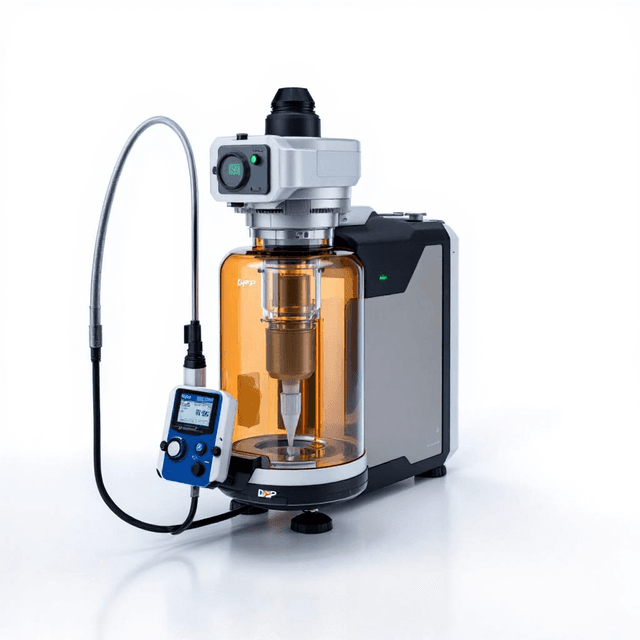
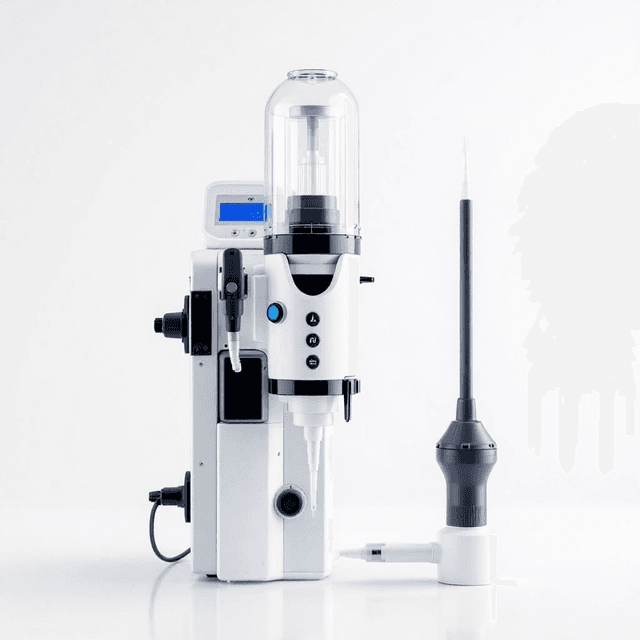
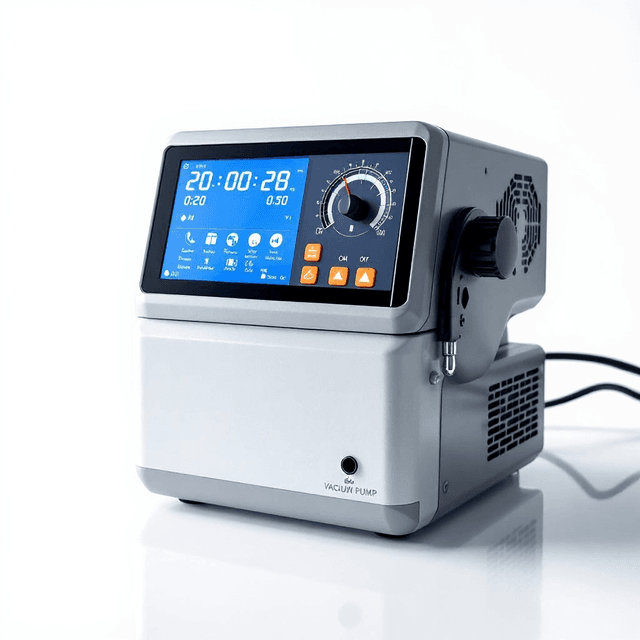
Intelligent Flow Rate Peristaltic Pump FPP Series
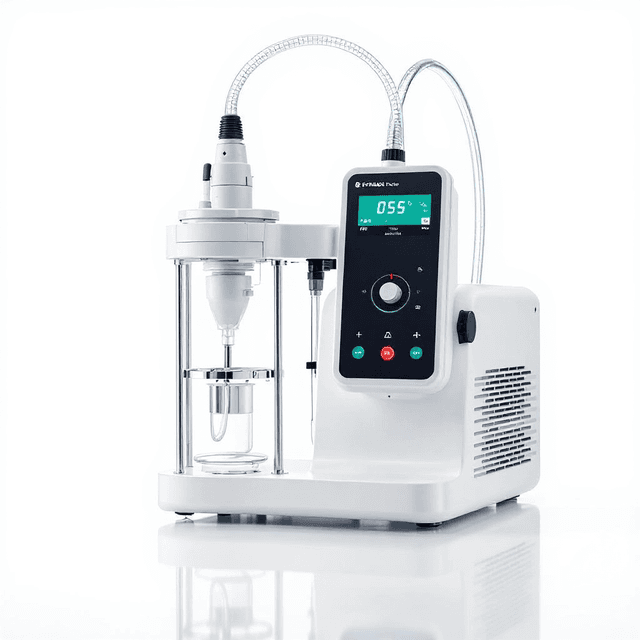
Laboratory-grade peristaltic pump with intelligent flow rate control for precise, contamination-free fluid transfer and dispensing applications.
| Automation Level | semi-automated |

The Intelligent Flow Rate Peristaltic Pump FPP Series delivers precise, continuous fluid transfer through positive displacement pumping technology. This laboratory-grade pump utilizes a rotating roller system that compresses and releases flexible tubing to generate pulsation-free flow, making it suitable for applications requiring gentle handling of sensitive fluids and accurate volumetric delivery.
The system operates on the principle of occlusive pumping, where fluid is contained entirely within the tubing and never contacts internal pump components. This design eliminates cross-contamination risks and simplifies cleaning protocols between samples. The intelligent flow rate control system allows researchers to program and maintain specific flow rates with high precision, supporting both continuous operation and programmable dispensing protocols.
How It Works
Peristaltic pumps operate through positive displacement mechanics, where a series of rollers or shoes compress flexible tubing against a curved track called a pump head. As the rotor assembly turns, the rollers sequentially occlude the tubing, creating a moving seal that pushes fluid forward through the tube. The fluid being pumped remains completely contained within the tubing and never contacts internal pump components, ensuring sterile fluid pathways.
The FPP Series incorporates intelligent flow control through microprocessor-based speed regulation and feedback systems. Flow rate accuracy is maintained by precisely controlling the rotational speed of the pump head, with the actual volumetric output determined by the internal diameter of the tubing and the displacement volume per revolution. This relationship allows for predictable flow rates and accurate volume dispensing across a wide range of fluid viscosities.
The pump's gentle action minimizes shear stress on sensitive biological samples while maintaining consistent pulsation-free flow. The occlusive pumping mechanism creates a positive seal that prevents backflow and maintains prime even when the pump is stopped, making it ideal for applications requiring intermittent operation or precise start-stop control.
Features & Benefits
Automation Level
- semi-automated
Research Domain
- Analytical Chemistry
- Cell Biology
- Environmental Monitoring
- Food Science
- Microbiology
- Pharmaceutical QC
Weight
- 6.0 kg
Dimensions
- L: 24.0 mm
- W: 21.2 mm
- H: 14.0 mm
Comparison Guide
| Feature | This Product | Typical Alternative | Advantage |
|---|---|---|---|
| Contamination Control | Complete fluid isolation within disposable tubing pathway | Fixed internal fluid pathways requiring extensive cleaning between samples | Eliminates cross-contamination risks and simplifies changeover procedures between different fluids or experiments. |
| Flow Rate Control | Intelligent microprocessor-based speed regulation system | Basic manual speed adjustment with limited precision | Enables programmable flow rates and automated operation for consistent experimental conditions. |
| Maintenance Requirements | Simple tubing replacement with no internal component cleaning | Complex disassembly and cleaning of internal fluid pathways | Reduces downtime and simplifies maintenance procedures in busy laboratory environments. |
| Volume Capacity | Unlimited continuous volume delivery | Batch operation requiring periodic refilling or limited reservoir capacity | Supports long-term experiments and high-volume applications without operator intervention. |
| Footprint Efficiency | 24.0 x 21.2 x 14.0 cm compact design with 6.0 kg weight | Larger bench-mounted systems with higher weight requirements | Maximizes laboratory bench space utilization while maintaining full pumping performance. |
The FPP Series combines intelligent flow control with contamination-free operation in a compact laboratory footprint. The peristaltic design eliminates the cleaning complexity of traditional pumps while providing unlimited volume capacity and programmable operation for automated experimental protocols.
Practical Tips
Verify flow rate accuracy using a graduated cylinder and stopwatch at your typical operating speed before starting experiments.
Why: Tubing variations and wear can affect actual flow rates compared to theoretical calculations.
Inspect tubing regularly for wear patterns, especially at roller contact points, and establish replacement schedules based on operating hours.
Why: Worn tubing can cause flow rate irregularities and potential fluid leaks during critical experiments.
Prime the system completely before starting experiments and verify steady flow without air bubbles in the tubing.
Why: Air bubbles in the fluid path can cause flow rate variations and measurement errors in analytical applications.
Select tubing inner diameter based on your required flow rate range to optimize pump speed settings and precision.
Why: Operating at moderate speeds provides better flow stability and longer tubing life compared to extreme speed settings.
If flow rate becomes erratic, check for tubing kinks, blockages, or improper seating in the pump head.
Why: Mechanical obstructions are the most common cause of flow irregularities in peristaltic pumping systems.
Use appropriate tubing materials for your specific fluids and verify chemical compatibility before extended contact.
Why: Chemical incompatibility can cause tubing failure, leading to fluid leaks and potential safety hazards.
Allow the pump to reach steady-state operation for several minutes before collecting critical data or samples.
Why: Initial startup transients can affect flow rate stability and introduce variability in early measurements.
Keep spare tubing of appropriate sizes on hand to minimize experimental downtime when replacement is needed.
Why: Tubing is a consumable component and unexpected failure can halt time-sensitive experiments.
Setup Guide
What’s in the Box
- FPP Series peristaltic pump main unit
- Power adapter and cord
- Standard pump tubing set (typical)
- Tubing installation tool (typical)
- Quick start guide and user manual
- Calibration verification certificate (typical)
Warranty
ConductScience provides a comprehensive 1-year manufacturer warranty covering parts and labor, with technical support available for installation, calibration, and operational guidance throughout the warranty period.
Compliance
What tubing materials are compatible with this pump for organic solvent applications?
Tubing compatibility depends on chemical resistance requirements. Consult product datasheet for complete chemical compatibility charts covering common solvents, acids, and bases. Typical materials include silicone, Viton, and specialized chemically-resistant formulations.
How accurate is the flow rate control across different viscosity fluids?
Peristaltic pumps maintain volumetric accuracy regardless of fluid viscosity due to positive displacement mechanics. Flow rate precision depends on tubing selection and speed control resolution - consult specifications for detailed accuracy specifications.
Can this pump handle continuous operation for long-term experiments?
Yes, peristaltic pumps are designed for continuous operation. Tubing replacement intervals depend on operating conditions and fluid compatibility. Monitor tubing condition regularly and establish replacement schedules based on experimental requirements.
What maintenance procedures are required for optimal performance?
Primary maintenance involves regular tubing inspection and replacement. Clean external surfaces with appropriate solvents and verify flow rate calibration periodically. Consult user manual for detailed maintenance schedules and troubleshooting procedures.
How do I select appropriate tubing size for my flow rate requirements?
Flow rate is determined by tubing inner diameter and pump speed. Larger diameter tubing provides higher flow rates at given speeds. Consult flow rate charts provided with pump documentation for specific tubing size recommendations.
Is the pump suitable for sterile applications?
Yes, the fluid pathway is contained entirely within replaceable tubing, eliminating cross-contamination. Use sterile tubing and appropriate connection methods for aseptic applications. The pump itself does not require sterilization between samples.
What remote control options are available for automated systems?
Consult product specifications for available communication interfaces and control options. Many laboratory pumps offer RS-232, USB, or analog control inputs for integration with automated systems and data acquisition platforms.
How does this pump compare to syringe pumps for precise dispensing?
Peristaltic pumps provide continuous flow capability and unlimited volume capacity compared to syringe pumps' batch operation. Both offer high precision, but peristaltic pumps eliminate dead volume and provide easier fluid changeover for multi-sample applications.
Have a question about this product?
Accessories
Enhance your setup with compatible accessories
Frequently Bought Together
Upgrade Options