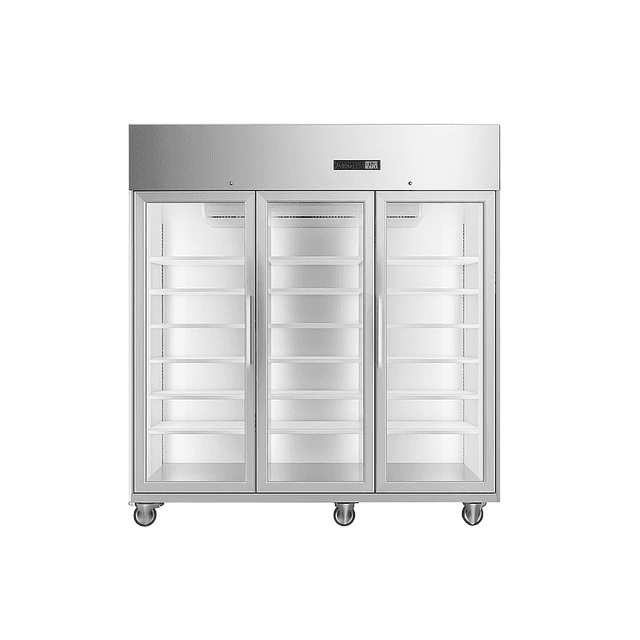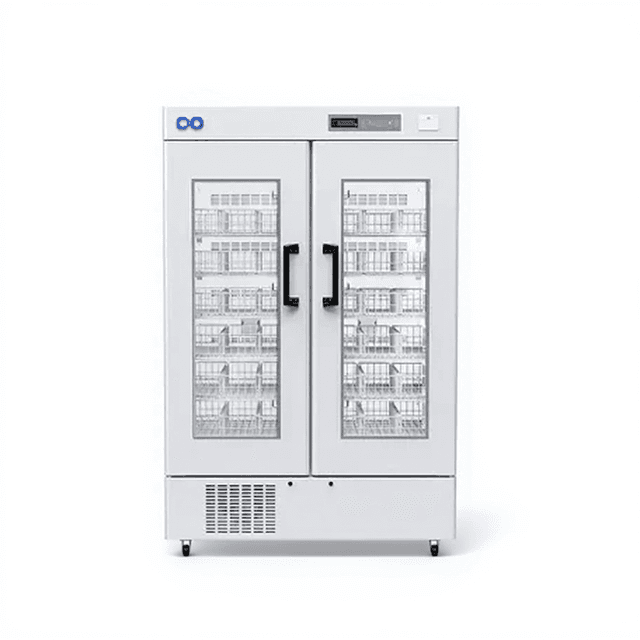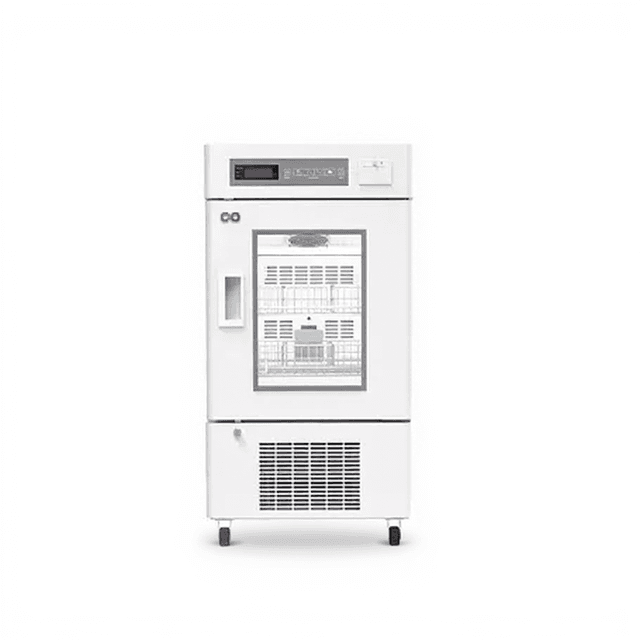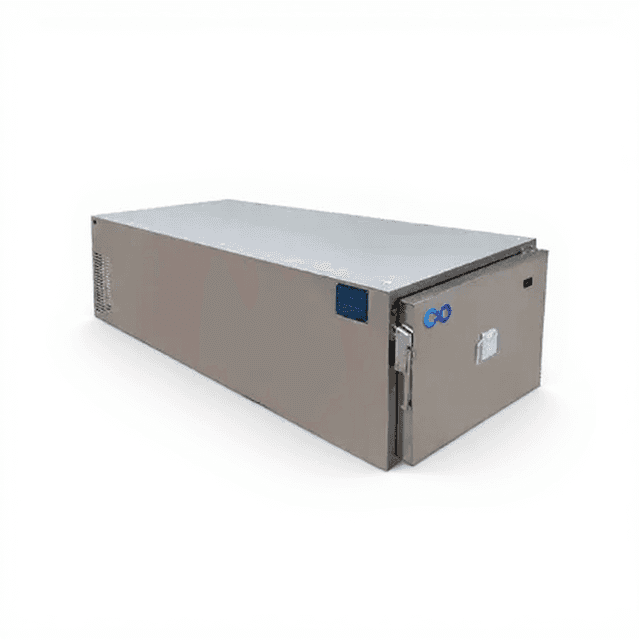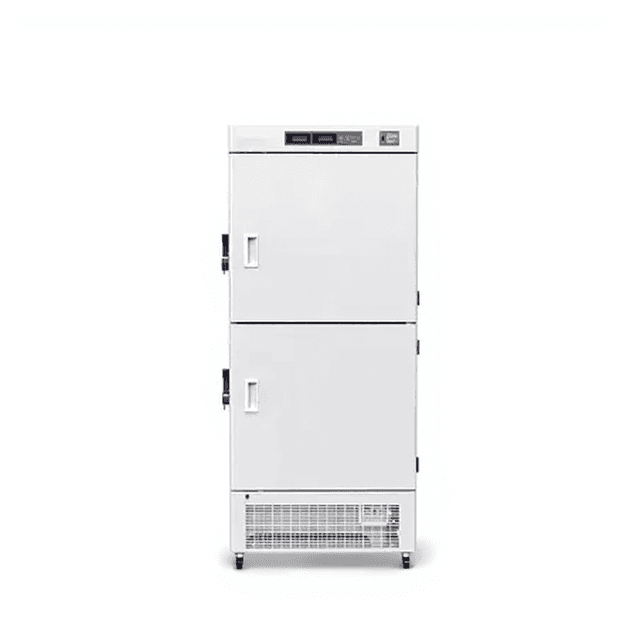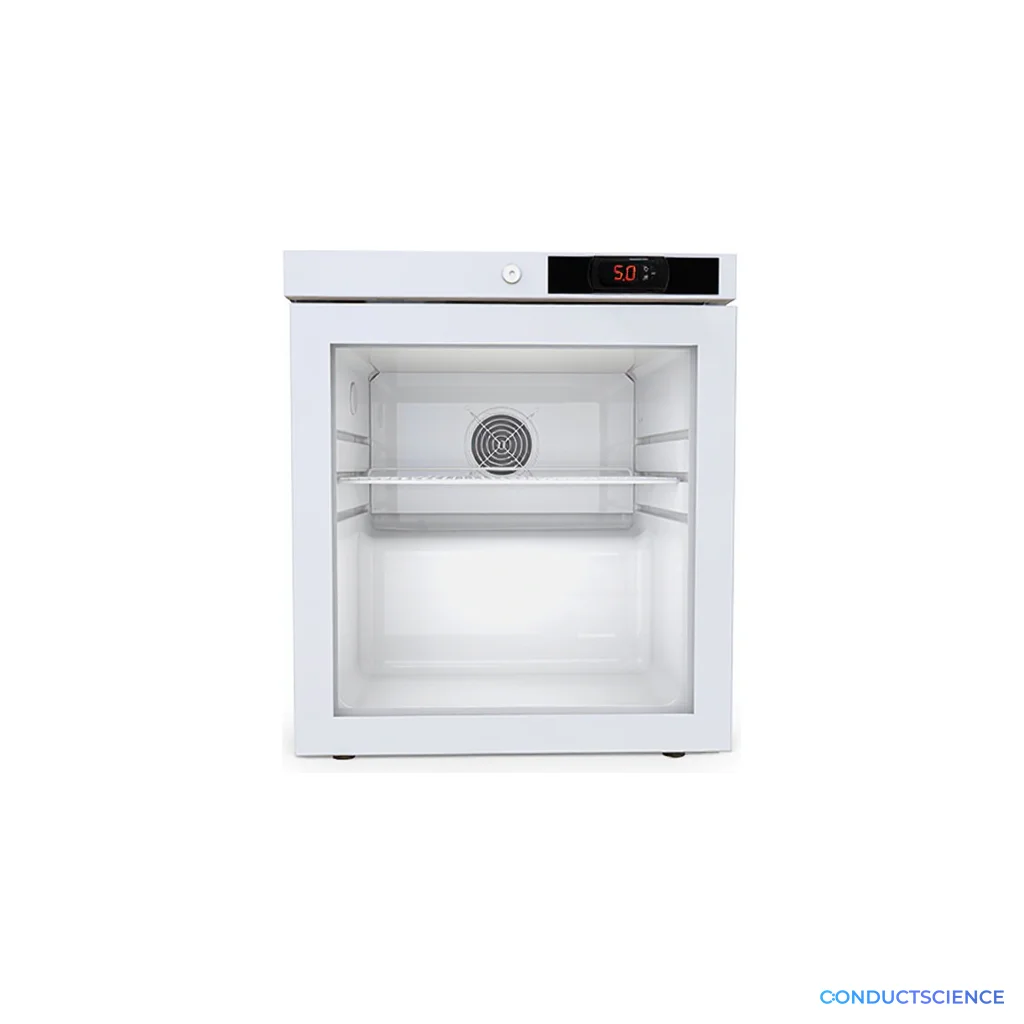
Laboratory Refrigerator(Economic Type)Vertical type 46L 150L 320L 400L
Vertical laboratory refrigerator with microprocessor control maintaining 2-8°C for reliable sample storage in research facilities.

Louise Corscadden, PhD
Director of Science · ConductScience
Ask Louise about Laboratory Refrigerator(Economic Type)Vertical type 46L 150L 320L 400L fit, setup, configuration, or quote prep.
Already working with us? Sign in to connect this with My Scientist.
Key Specifications
Full details →- Model fit
- Configured during quote
- SKU family
- BIO-0079
- Shipping box
- 42.6 x 40.0 x 29.5 cm
- Ordering
- Online checkout and quote request available
- Category
- Lab Equipment
- Build notes
- Confirm accessories, station layout, and support needs before purchase
The Laboratory Refrigerator (Economic Type) provides reliable temperature-controlled storage for biological samples, reagents, and temperature-sensitive materials in research environments. Available in four capacity options (46L, 150L, 320L, 400L), this vertical-type refrigerator maintains temperatures between 2-8°C with microprocessor control and LED display for precise monitoring.
The unit features air-cooling refrigeration with R600a refrigerant and includes comprehensive alarm systems for temperature deviations, thermostat faults, and door switch monitoring. The international brand compressor ensures consistent performance for sample preservation requirements in laboratory settings.
How It Works
The laboratory refrigerator operates through vapor compression refrigeration using R600a refrigerant and air-cooling technology. The compressor circulates refrigerant through the system, removing heat from the interior chamber through evaporation and condensation cycles. Air circulation maintains uniform temperature distribution throughout the storage compartment.
Microprocessor control continuously monitors internal temperature via integrated sensors, automatically adjusting compressor operation to maintain the 2-8°C range. The LED display provides real-time temperature readings while the alarm system monitors for temperature deviations beyond ±1°C accuracy limits, thermostat malfunctions, and door opening events.
Features & Benefits
Automation Level
- semi-automated
BPR-5V150
- BPR-5V320
150L
- 320L
Temp. Range
- 2~8℃
Temp. Accuracy
- 1℃
Temp. Uniformity
- ≤2℃
Temp. Stability
- ≤3℃
Control System
- Microprocessor control
Alarm
- High and low temperature alarm, thermostat fault alarm, door switch alarm
Refrigeration Type
- Air-cooling
Refrigerant
- R600a/25g
R600a/31g
- R600a/34g
Compressor
- International famous brand compressor/1
Brand
- ConductScience
Research Domain
- Analytical Chemistry
- Cell Biology
- Clinical Diagnostics
- Immunology
- Microbiology
- Pharmaceutical QC
Capacity
- 46L
Display Type
- LED
Shipping weight
- 21.0 lb
Shipping box
- L: 42.6 cm
- W: 40.0 cm
- H: 29.5 cm
| Feature | This Product | Typical Alternative | Advantage |
|---|---|---|---|
| Temperature Range | 2-8°C with ±1°C accuracy | Basic models may have wider temperature ranges or lower accuracy | Precise temperature control maintains sample integrity for temperature-sensitive biological materials |
| Capacity Options | Four capacity choices: 46L, 150L, 320L, 400L | Entry-level units often available in fewer size options | Multiple capacities accommodate varying laboratory storage requirements and space constraints |
| Control System | Microprocessor control with LED display | Basic models may use mechanical thermostats | Digital control provides precise temperature management and continuous monitoring capabilities |
| Alarm Functions | High/low temperature, thermostat fault, and door switch alarms | Basic units may have limited alarm capabilities | Comprehensive monitoring protects valuable samples from temperature excursions and equipment failures |
| Temperature Uniformity | ±2°C throughout chamber | Entry-level models may have less uniform temperature distribution | Consistent conditions throughout storage space ensure reliable sample preservation regardless of location |
This laboratory refrigerator offers microprocessor control with comprehensive alarm systems across multiple capacity options. The precise temperature control and uniform distribution provide reliable sample storage with digital monitoring capabilities for research applications.
Practical Tips
Verify temperature accuracy using calibrated thermometer placed in center of chamber after 24-hour stabilization period.
Why: Ensures displayed temperature matches actual storage conditions for sample integrity.
Clean condenser coils monthly and inspect door seals regularly for proper closure and temperature maintenance.
Why: Maintains cooling efficiency and prevents temperature fluctuations that could compromise sample quality.
Load samples gradually and avoid overloading to maintain proper air circulation and temperature uniformity.
Why: Prevents temperature spikes and ensures consistent cooling throughout the storage compartment.
If temperature alarms activate, check door closure first before assessing sample integrity or contacting technical support.
Why: Door opening is the most common cause of temperature deviations and can be quickly resolved.
Document temperature readings and alarm events according to laboratory quality procedures for regulated environments.
Why: Maintains traceability and compliance with quality management requirements for sample storage.
Ensure adequate ventilation around the unit and avoid blocking air vents to prevent compressor overheating.
Why: Proper ventilation maintains equipment performance and prevents potential safety hazards from overheating.
Setup Guide
What’s in the Box
- Laboratory refrigerator main unit
- Power cord
- User manual and operation guide
- Temperature monitoring documentation (typical)
- Adjustable shelving (typical)
Warranty
ConductScience provides standard 1-year manufacturer warranty covering parts and labor with technical support for operation and maintenance guidance.
Compliance
What is the temperature recovery time after door opening?
Recovery time depends on door opening duration and ambient conditions. The microprocessor control and compressor system are designed to restore set point temperatures, though specific recovery times should be verified during installation validation.
How should temperature be monitored and documented?
The LED display provides continuous temperature readings. For regulated environments, external temperature monitoring with data logging capabilities may be required to maintain documentation records.
What maintenance is required for optimal performance?
Regular cleaning of interior surfaces, condenser coil cleaning, door seal inspection, and temperature calibration verification according to laboratory quality procedures.
Can the unit operate reliably in varying ambient conditions?
Performance depends on ambient temperature and ventilation. Consult product datasheet for specific operating environment requirements and temperature coefficient specifications.
What alarm response procedures should be established?
Develop protocols for responding to high/low temperature alarms, thermostat fault alarms, and door switch alarms, including sample assessment and backup storage procedures.
How does this compare to chest-type laboratory refrigerators?
Vertical design provides easier sample access and organization compared to chest-type units, while maintaining similar temperature control performance for 2-8°C storage requirements.
Have a question about this product?
Have a question? Just ask.
Send it over and we'll email you a personalized answer — no call, no scheduling.
Prefer to talk it through?
Accessories
Enhance your setup with compatible accessories