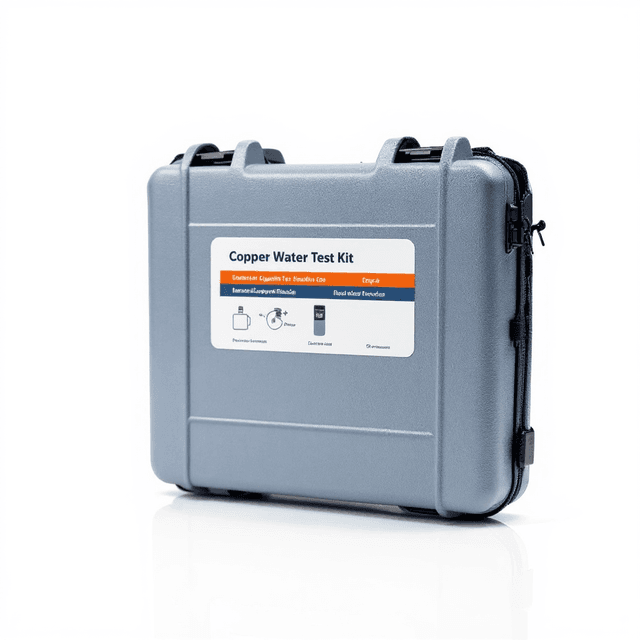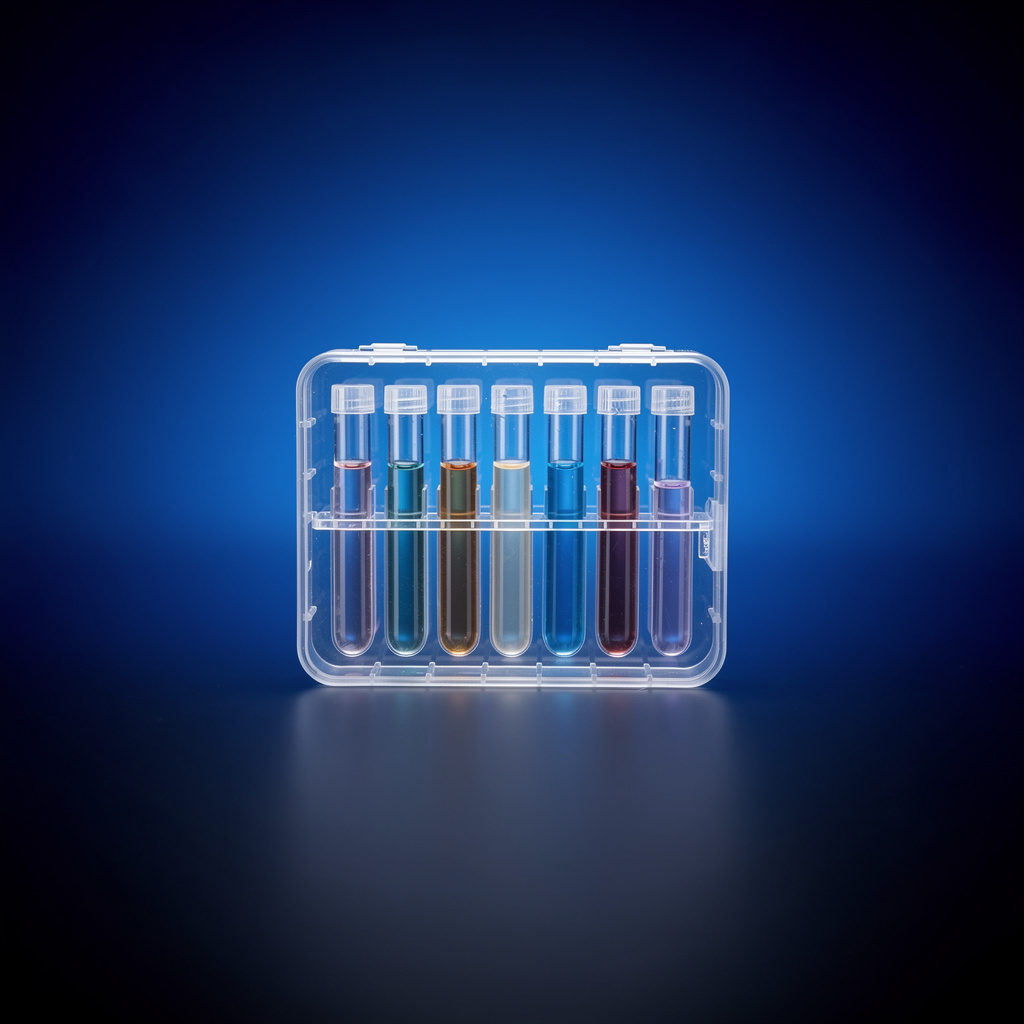
Total Chromium Test Tube
Colorimetric test tube system for total chromium analysis in aqueous samples, measuring 0.5-20 mg/L range for environmental and industrial monitoring applications.

Louise Corscadden, PhD
Director of Science · ConductScience
Ask Louise about Total Chromium Test Tube fit, setup, configuration, or quote prep.
Already working with us? Sign in to connect this with My Scientist.
Key Specifications
Full details →- Model fit
- 1 selectable configurations
- SKU family
- CS-LH-LAB019
- Sizing
- 8.8 x 7.3 x 5.9 cm
- Ordering
- Online checkout and quote request available
- Category
- Water Test Kits
- Build notes
- Confirm accessories, station layout, and support needs before purchase
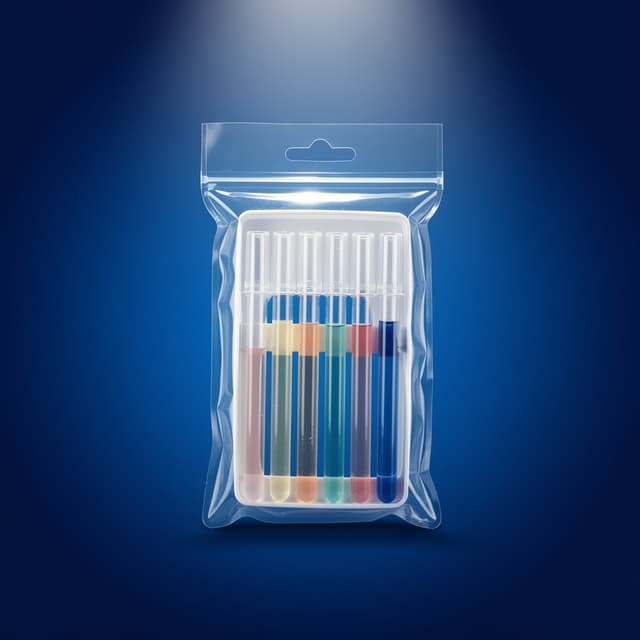
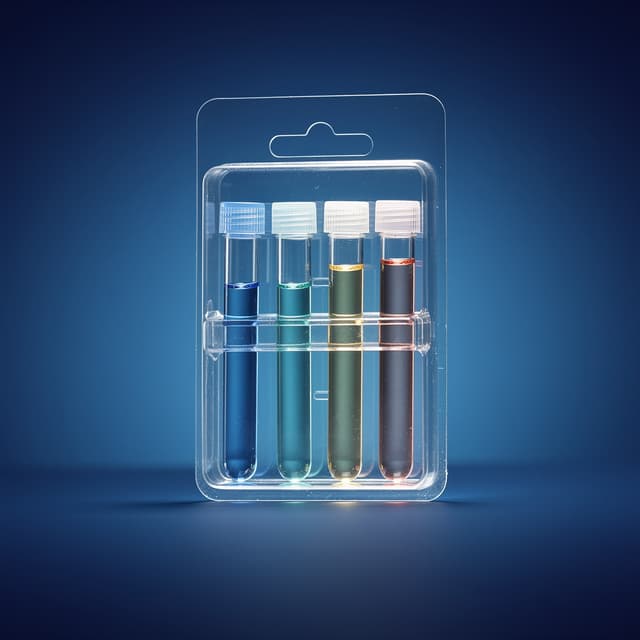
The Loahnd Total Chromium Test Tube provides colorimetric analysis for total chromium content in aqueous samples with a measurement range of 0.5-20 mg/L. This test tube system employs established colorimetric chemistry for quantitative chromium detection in environmental waters, industrial effluents, and laboratory samples. The product enables field-portable analysis without requiring complex instrumentation, making it suitable for routine monitoring applications where rapid results are needed.
The colorimetric approach offers visual color development proportional to chromium concentration, allowing both qualitative assessment through color comparison and quantitative measurement using spectrophotometric analysis. The multi-point calibration range (0.5, 1, 2, 5, 10, 20 mg/L) accommodates diverse sample types from trace environmental monitoring to higher-concentration industrial applications. Sample preparation and analysis can be completed using standard laboratory procedures without specialized equipment requirements.
How It Works
The colorimetric test tube system operates on the principle of selective chemical complexation between chromium ions and colorimetric reagents, producing colored complexes with absorbance proportional to chromium concentration. When sample is added to the test tube containing pre-measured reagents, chromium species form colored complexes that can be visually assessed or measured spectrophotometrically.
The color development follows Beer's law within the specified concentration range, allowing quantitative determination through absorbance measurement at the appropriate analytical wavelength. The test tube format provides controlled reagent stoichiometry and reaction conditions, ensuring reproducible color development across the calibration range. Sample matrix effects are minimized through the optimized reagent formulation designed for aqueous samples.
Total chromium measurement includes all oxidation states present in the sample, providing comprehensive assessment of chromium content without requiring speciation. The colorimetric response develops within a defined time period, after which absorbance can be measured using standard spectrophotometric equipment or compared against color standards for semi-quantitative analysis.
Features & Benefits
Weight
- 0.26 kg
Dimensions
- L: 8.8 mm
- W: 7.3 mm
- H: 5.9 mm
| Feature | This Product | Typical Alternative | Advantage |
|---|---|---|---|
| Measurement Range | 0.5-20 mg/L total chromium | Basic test kits often limited to narrower ranges or single detection levels | Broad range accommodates both trace environmental monitoring and higher-concentration industrial applications in a single analytical system |
| Calibration Points | Six-point calibration at 0.5, 1, 2, 5, 10, 20 mg/L | Entry-level kits may offer fewer calibration levels | Multiple calibration points improve quantitative accuracy across the full measurement range for diverse sample types |
| Analysis Type | Total chromium measurement | Some methods limited to specific oxidation states | Comprehensive chromium assessment without requiring sample pretreatment for speciation analysis |
| Sample Format | Aqueous samples directly analyzable | Varies by method and sample preparation requirements | Direct analysis capability reduces sample preparation time and potential contamination sources |
| Detection Method | Colorimetric with spectrophotometric quantification | Visual comparison methods may offer limited quantitative capability | Dual capability supports both rapid visual assessment and precise quantitative measurement using standard laboratory equipment |
| Portability | Test tube format for field deployment | Laboratory-based methods require fixed instrumentation | Field-portable analysis enables onsite monitoring and immediate results for operational decision-making |
This total chromium test tube system combines broad measurement range capabilities with field-portable analysis format. The multi-point calibration system and direct aqueous sample compatibility provide quantitative accuracy suitable for both environmental monitoring and industrial applications. The colorimetric approach offers practical field deployment advantages while maintaining compatibility with standard laboratory spectrophotometric equipment.
Practical Tips
Prepare fresh calibration standards using certified reference materials and analyze them alongside samples to verify measurement accuracy.
Why: Calibration verification ensures reliable quantitative results and identifies potential reagent degradation or procedural errors.
Store test tubes in cool, dry conditions away from direct light and check reagent appearance before use for signs of degradation.
Why: Proper storage maintains reagent stability and color development consistency throughout the product shelf life.
Allow color development to proceed for the full specified time period and measure samples promptly after color stabilization.
Why: Complete reaction time ensures maximum color development while prompt measurement prevents potential color fading or drift.
If color development appears weak or inconsistent, verify sample pH is within acceptable range and reagents have not expired.
Why: pH conditions and reagent quality directly affect color formation chemistry and measurement reproducibility.
Run duplicate analyses on each sample and include blank controls to assess background interference and measurement precision.
Why: Duplicate measurements identify analytical variability while blanks detect contamination or reagent interference issues.
Handle test tubes and reagents according to safety data sheet requirements and dispose of analyzed samples following local regulations.
Why: Proper handling protects analyst safety and ensures environmental compliance for chemical waste disposal.
Filter samples containing visible particulates before analysis to prevent interference with colorimetric measurement.
Why: Particulate matter can cause light scattering and turbidity that interferes with accurate absorbance readings.
Document ambient temperature during analysis as reaction kinetics may be temperature-dependent for optimal results.
Why: Temperature variations can affect color development rate and final absorbance values, impacting measurement accuracy.
Setup Guide
What’s in the Box
- Total chromium test tubes with pre-measured reagents
- Calibration standards at specified concentration levels (typical)
- Sample preparation instructions and protocol guide (typical)
- Color comparison chart for semi-quantitative analysis (typical)
- Quality control procedures documentation (typical)
Warranty
ConductScience provides a standard one-year manufacturer warranty covering material defects and reagent stability under proper storage conditions. Technical support is available for analytical procedures and troubleshooting.
Compliance
References
Background reading relevant to this product:
What is the detection limit and linear range for chromium quantification?
The measurement range spans 0.5-20 mg/L with calibration points at 0.5, 1, 2, 5, 10, and 20 mg/L. The lower detection limit of 0.5 mg/L is suitable for environmental monitoring applications where chromium contamination assessment is required.
Can this method distinguish between different chromium oxidation states?
This is a total chromium analysis that quantifies all oxidation states present in the sample without speciation. For hexavalent chromium analysis specifically, consult product datasheet for alternative methods or sample preparation requirements.
What sample preparation is required before analysis?
Aqueous samples should be filtered to remove particulates and allowed to reach room temperature. Sample pH may require adjustment depending on the analytical protocol - consult the method instructions for specific preparation requirements.
How stable are the reagents and color-developed samples?
Test tube reagent stability depends on storage conditions as specified by the manufacturer. Color-developed samples should be measured within the time window specified in the protocol to ensure accurate results.
What spectrophotometric equipment is needed for quantitative analysis?
Any UV-visible spectrophotometer capable of measurement at the specified analytical wavelength can be used. For semi-quantitative analysis, color comparison against provided standards may be sufficient depending on accuracy requirements.
Are there known interferences with this chromium analysis method?
Colorimetric chromium methods may experience interference from other metal ions at high concentrations. Consult the method documentation for specific interference information and sample preparation steps to minimize matrix effects.
How does this compare to instrumental analysis methods like ICP-MS?
This colorimetric method offers lower equipment cost and greater portability compared to ICP-MS, though with reduced sensitivity and specificity. It provides practical field analysis capability where rapid results are needed without laboratory infrastructure.
What is the typical analysis time per sample?
Analysis time includes color development period plus spectrophotometric measurement. Total time per sample typically ranges from 15-30 minutes depending on the specific protocol and number of replicate measurements required.
Have a question about this product?
Have a question? Just ask.
Send it over and we'll email you a personalized answer — no call, no scheduling.
Prefer to talk it through?
Accessories
Enhance your setup with compatible accessories
Frequently Bought Together