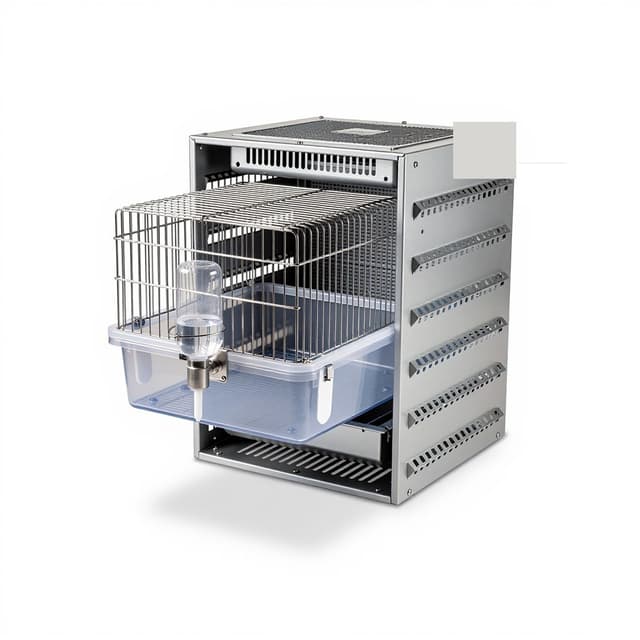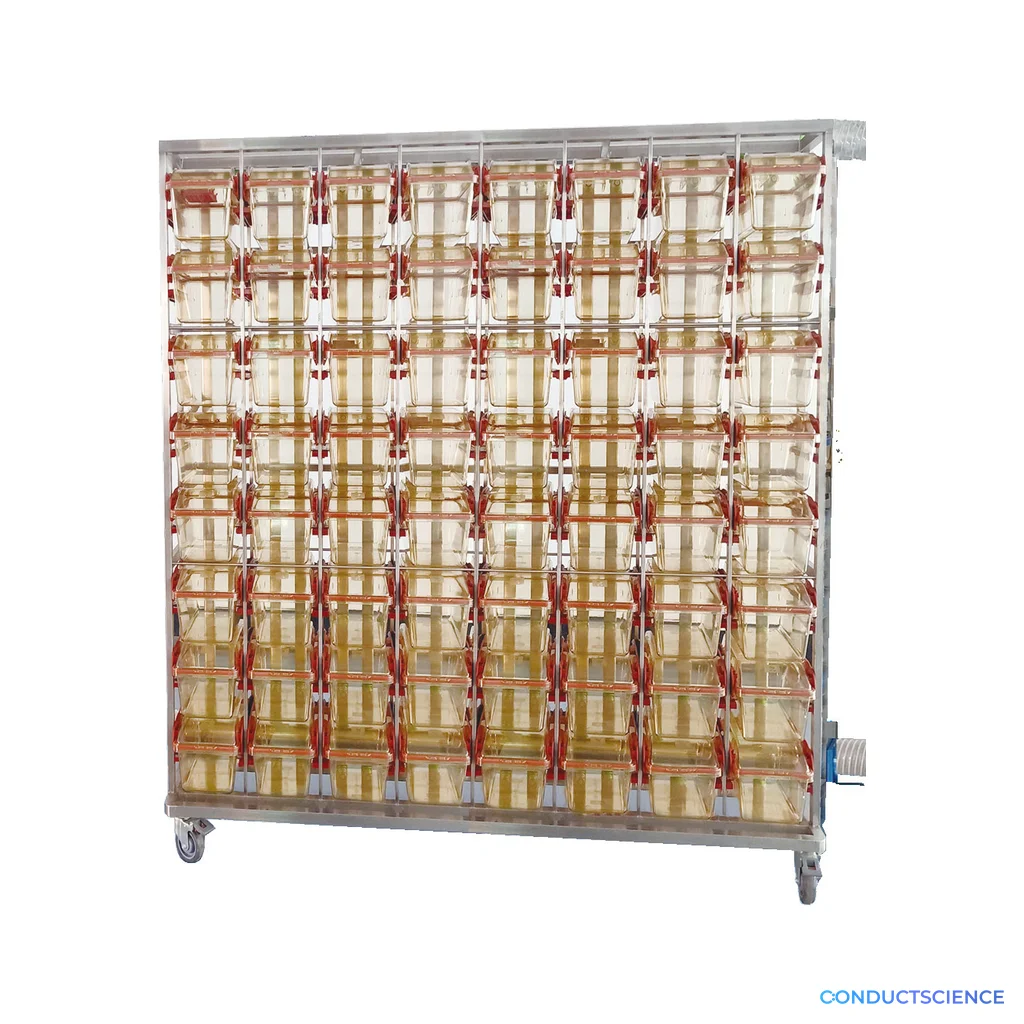
Mouse Negative-Pressure Biosafety IVC System
Negative-pressure mouse IVC housing for studies that require cage-level containment, filtered exhaust, and a defined response when a cage leaves the rack.
The 380 × 215 × 190 mm cage uses self-closing inlet and exhaust valves, an adjustable -50 to -10 Pa operating range, and a PTFE exhaust filter rated at least 99.99% at 0.3 µm. Four rack layouts support room, care, and biosafety planning.

Louise Corscadden, PhD
Director of Science · ConductScience
Ask Louise about Mouse Negative-Pressure Biosafety IVC System fit, setup, configuration, or quote prep.
Already working with us? Sign in to connect this with My Scientist.
Key Specifications
Full details →- Cage dimensions
- 380 × 215 × 190 mm
- Operating pressure
- -50 to -10 Pa · adjustable
- Ventilation performance
- ≥20 air changes/h · 0.05-0.13 m/s · ISO 5 · ≤50 dB(A)
- Cage airtightness
- ≥5 min pressure decay from -100 Pa to 0 Pa
- Exhaust filter
- PTFE · 85 × 135 × 25 mm · ≥99.99% at 0.3 µm
- Rack layouts
- 49 cages · 7 × 7 · 1640 × 500 × 1680 mm, 56 cages · 7 × 8 · 1870 × 500 × 1680 mm, 56 cages · 8 × 7 · 1640 × 500 × 1885 mm, 64 cages · 8 × 8 · 1870 × 500 × 1885 mm
Build cage-level containment into the mouse housing workflow
This negative-pressure mouse IVC system is intended for research programs that need animal housing, filtered exhaust, and containment procedures to work as one operating plan. Negative pressure helps direct airflow into the cage while the exhaust path is filtered. That makes the housing decision relevant to investigators, veterinary staff, biosafety teams, animal-care personnel, and facilities engineers, not only to the number of cage positions available.
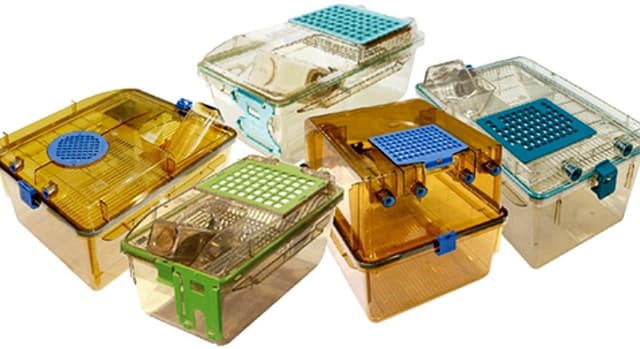
Each mouse cage measures 380 × 215 × 190 mm and operates across an adjustable -50 to -10 Pa pressure range. The catalog records airflow from 0.05 to 0.13 m/s, at least 20 air changes per hour, ISO 5 air cleanliness, a settling count of 0, and noise no greater than 50 dB(A). Airtightness is stated as at least 5 minutes for pressure decay from -100 Pa to 0 Pa. A removable PTFE exhaust filter measures 85 × 135 × 25 mm and is rated at least 99.99% at 0.3 µm.
Self-closing inlet and exhaust valves close when the cage is removed from the rack. This feature supports planned cage changes, transfers, and exception handling, but it does not replace the institution's biosafety assessment or work practices. Teams should define how cages are identified, observed, moved, opened, sanitized, and returned, as well as what happens after a pressure alarm, power interruption, damaged seal, or suspected exposure.
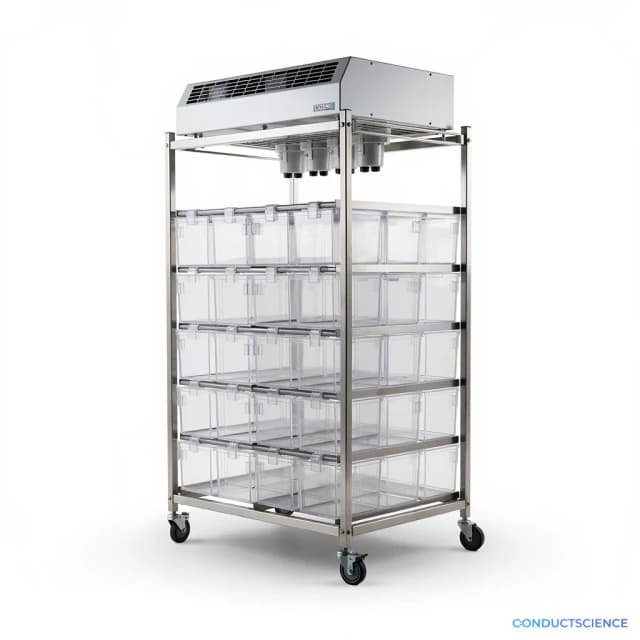
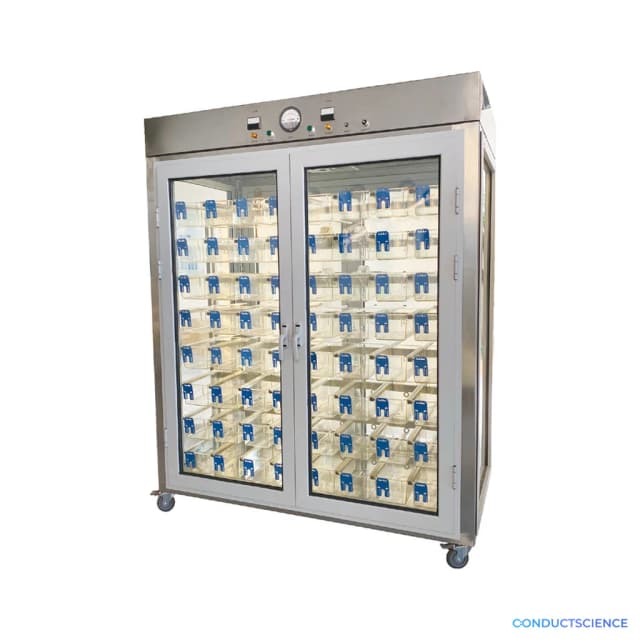
Four rack layouts range from 49 to 64 cages. Selection should account for approved stocking, study duration, cohort separation, staff reach, cage-change frequency, room exhaust capacity, aisle clearance, and emergency access. The F2 main unit combines stainless and powder-coated construction with H14 HEPA filtration and a VHP connection. The quote should identify the selected layout, operating setpoint, room interface, controls, alarms, and monitoring responsibilities.
Share the risk assessment, animal protocol, expected cage population, room drawing, exhaust plan, decontamination method, alarm response, backup plan, and delivery route with ConductScience. The final quote will define the cage and rack arrangement, ventilation package, filters, controls, accessories, installation, testing, training, and commissioning. This gives the research team a clear basis for operating the housing within its approved containment program.
Features & Benefits
Cage dimensions
- 380 × 215 × 190 mm
Operating pressure
- -50 to -10 Pa · adjustable
Ventilation performance
- ≥20 air changes/h · 0.05-0.13 m/s · ISO 5 · ≤50 dB(A)
Cage airtightness
- ≥5 min pressure decay from -100 Pa to 0 Pa
Exhaust filter
- PTFE · 85 × 135 × 25 mm · ≥99.99% at 0.3 µm
Rack layouts
- 49 cages · 7 × 7 · 1640 × 500 × 1680 mm
- 56 cages · 7 × 8 · 1870 × 500 × 1680 mm
- 56 cages · 8 × 7 · 1640 × 500 × 1885 mm
- 64 cages · 8 × 8 · 1870 × 500 × 1885 mm
Containment interfaces
- Self-closing cage valves · H14 HEPA · VHP connection
Setup Guide
What’s in the Box
- Selected mouse negative-pressure IVC system; cages, rack, ventilation unit, filters, controls, accessories, and commissioning scope confirmed in the quote
How should the pressure setpoint be selected?
Use the institution's biosafety assessment, animal protocol, room exhaust conditions, and commissioning results to define the approved setpoint.
What happens when a cage is removed?
The cage inlet and exhaust valves are designed to close, while the approved procedure still governs transfer, opening, cleaning, and exception handling.
Which rack capacity is best?
Choose the smallest layout that meets the animal program while preserving care access, exhaust capacity, service clearance, and contingency housing.
Have a question about this product?
Have a question? Just ask.
Send it over and we'll email you a personalized answer — no call, no scheduling.
Prefer to talk it through?