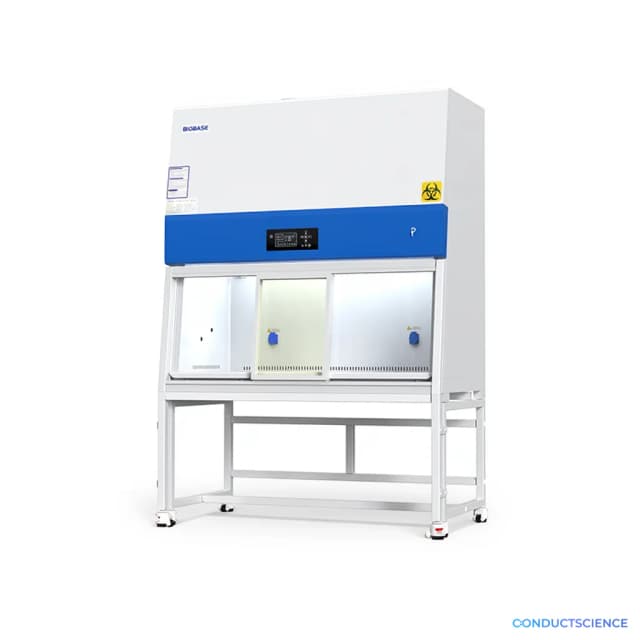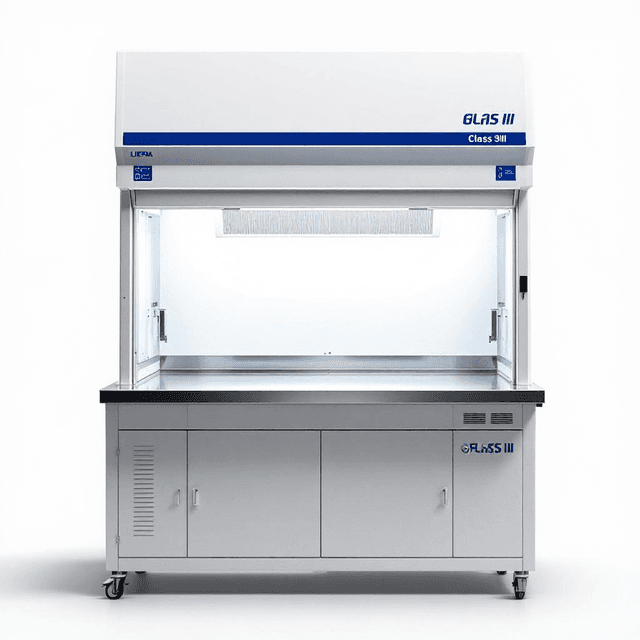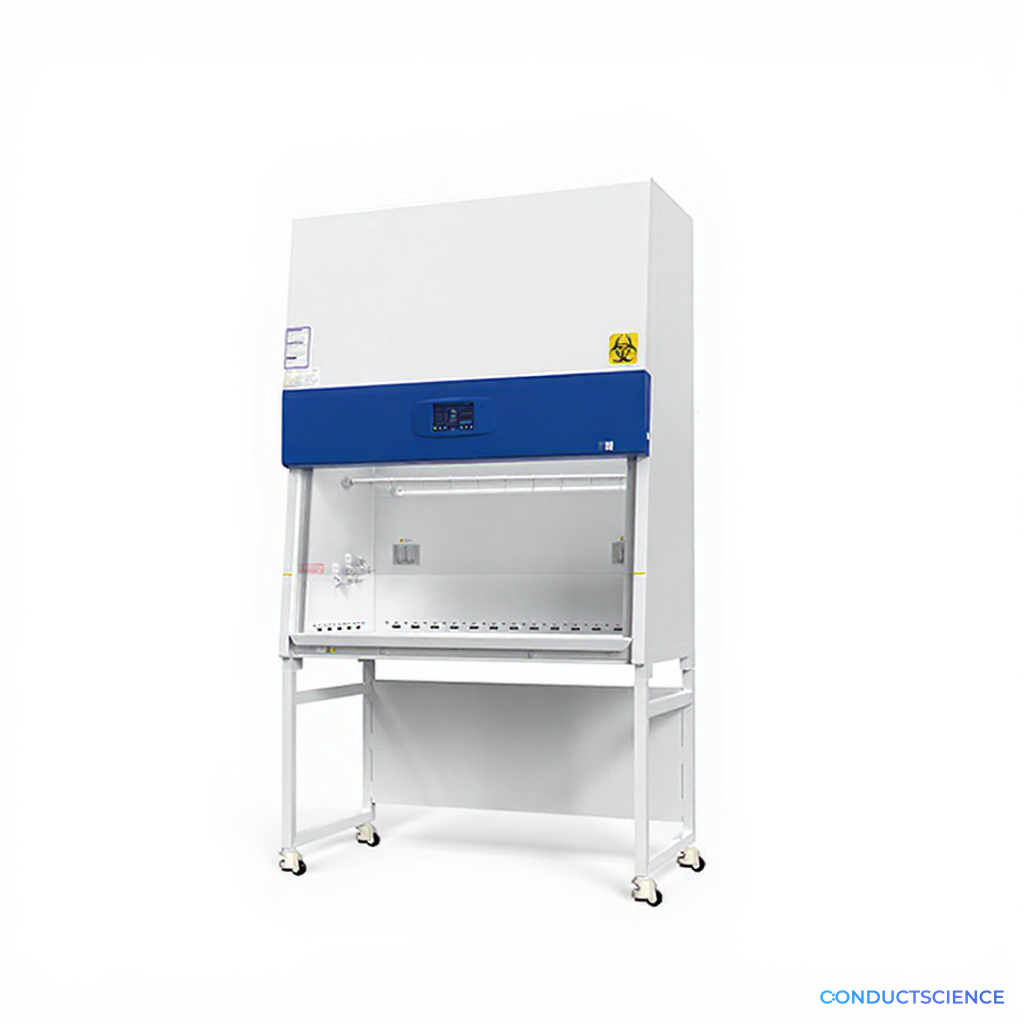
NSF Certified Biological Safety Cabinet
NSF 49 certified Class II Type A2 biosafety cabinet with dual 99.995% HEPA filtration, 40% exhaust / 60% recirculation airflow, motorized front window, and 7-inch touchscreen.
Available in 3 ft, 4 ft, and 6 ft configurations.

Louise Corscadden, PhD
Director of Science · ConductScience
Ask Louise about NSF Certified Biological Safety Cabinet fit, setup, configuration, or quote prep.
Already working with us? Sign in to connect this with My Scientist.
Key Specifications
Full details →- Model fit
- 3 selectable configurations
- SKU family
- BIO-0891
- Shipping box
- 222.0 x 138.3 x 77.5 cm
- Ordering
- Online checkout and quote request available
- Category
- Clean Benches & Fume Hoods
- Build notes
- 304 stainless steel
The NSF Certified Class II Type A2 Biosafety Cabinet provides triple containment protection — personnel, product, and environment — during work with biological materials up to Biosafety Level 2. The Type A2 design recirculates 60% of cabinet air through HEPA filtration for downflow protection while exhausting 40% externally, making it suitable for work with low-to-moderate risk biological agents and trace amounts of volatile chemicals.
Dual HEPA filters rated at 99.995% efficiency at 0.12μm provide both downflow and exhaust filtration. The motorized two-layer laminated toughened glass front window (≥6mm, anti-UV) with 254mm (10 inch) sash opening interlocks with the UV lamp and fan for safe operation. An EC motor with automatic speed adjustment maintains calibrated inflow velocity, with a 7-inch touch color display showing real-time airflow status. Alarms trigger for abnormal airflow velocity, filter replacement intervals, unsafe window height, and high filter pressure.
The working area is constructed from 304 stainless steel with a cold-rolled steel frame and anti-bacterial powder-coated exterior. Included accessories: LED lamps (×2), UV lamp, base stand, stainless steel water and gas taps, drain valve, waterproof sockets (×2), stainless steel IV bar with hooks, and remote control.
Available Configurations
| Size | Work Area (W×D×H) | Inflow | Downflow (60%) | Power | Gross Weight | 3-Year Warranty |
|---|---|---|---|---|---|---|
| 3 ft | 910×600×660mm | 445 m³/h (259 cfm) | 649 m³/h | 400W | 280 kg | $2,097 |
| 4 ft | 1210×600×660mm | 587 m³/h (346 cfm) | 863 m³/h | 500W | 330 kg | $2,997 |
| 6 ft | 1700×600×660mm | 824 m³/h (485 cfm) | 1212 m³/h | 700W | 410 kg | $3,597 |
Use the Size selector above to choose your configuration. Warranty pricing is 30% of product price for 3 years of coverage.
How It Works
The Class II Type A2 biosafety cabinet operates on the principle of directional airflow containment using HEPA filtration technology. Room air enters through the front opening and is immediately captured by negative pressure, preventing contaminated air from escaping the work chamber. This inflow air, along with recirculated air from the work surface, passes through a supply HEPA filter that removes 99.97% of particles 0.3 micrometers and larger.
The filtered air creates a protective downflow curtain over the work surface at approximately 863 m³/h, shielding samples from environmental contamination. Air is then drawn through perforated work surfaces into a rear plenum where it splits: 60% recirculates through the supply HEPA filter for reuse, while 40% is exhausted through a separate HEPA filter to the building exhaust system. This balanced airflow design maintains negative pressure containment while providing sterile working conditions.
Critical airflow velocities are maintained by calibrated fans and monitored through the control system. The cabinet maintains an average face velocity of 0.38-0.51 m/s at the sash opening, ensuring personnel protection without creating turbulent conditions that could compromise containment or sterile technique.
Features & Benefits
Airflow Split
- 40% exhaust / 60% recirculation
HEPA Filter Efficiency
- 99.995% at 0.12μm
Noise Level
- ≤67dB (NSF 49)
Illumination
- ≥1000 Lux
Sash Opening
- 254mm (10 inch)
Power Supply
- AC 115V, 60Hz / AC 230V, 50/60Hz
Ground Resistance
- ≤0.10Ω
Work Surface Material
- 304 stainless steel
Certification
- NSF 49
Brand
- ConductScience
Warranty (3 years)
- 30% of product price
Shipping weight
- 330.0 lb
Shipping box
- L: 222.0 cm
- W: 138.3 cm
- H: 77.5 cm
| Feature | This Product | Typical Alternative | Advantage |
|---|---|---|---|
| Work Chamber Size | 1210×600×660mm internal dimensions | Entry-level models often provide 900×600×660mm or smaller work areas | Larger work surface accommodates multiple experiments and standard equipment configurations simultaneously |
| Airflow Design | Type A2 with 60% recirculation and 40% exhaust | Type A1 cabinets offer 70% recirculation with no exhaust capability | Exhaust pathway enables work with minute amounts of toxic chemicals while maintaining energy efficiency |
| Certification Standard | NSF certified performance validation | Some models lack third-party certification or use manufacturer testing only | Independent NSF certification provides verified containment performance for regulatory compliance |
| Sash Opening Height | 470mm maximum opening with 200mm tested safety height | Smaller units may have 400mm or less maximum opening | Greater access height facilitates equipment manipulation and reduces ergonomic strain during extended procedures |
| Downflow Velocity | 863 m³/h (507 CFM) downflow rate | Budget models often provide lower downflow rates around 600-700 m³/h | Higher downflow velocity provides more robust product protection against environmental contamination |
This NSF-certified biosafety cabinet combines substantial work area dimensions with validated Type A2 performance characteristics. The 40% exhaust capability and robust airflow rates provide versatility for biological and limited chemical applications while maintaining energy efficiency through partial air recirculation.
| Model | SKU | Listed price | Status | Shipping box |
|---|---|---|---|---|
| 6 ft | BSC-6FA2-NA | $11,990.00 | Available | 224.0 x 187.3 x 77.5 cm |
| 4 ft | BSC-4FA2-NA | $9,990.00 | Available | 222.0 x 138.3 x 77.5 cm |
| 3 ft | BSC-3FA2-NA | $6,990.00 | Available | 222.0 x 108.7 x 77.5 cm |
Practical Tips
Schedule annual NSF certification including face velocity, downflow uniformity, and smoke containment testing with qualified technicians.
Why: Maintains validated performance parameters and ensures continued regulatory compliance for biological containment.
Replace HEPA filters when pressure drop exceeds manufacturer specifications or during annual certification if performance declines.
Why: Degraded filters compromise both containment effectiveness and energy efficiency of the airflow system.
Allow cabinet to run for 5 minutes before use and avoid rapid arm movements that disrupt airflow patterns at the sash opening.
Why: Stabilized airflow and smooth technique maintain the protective air curtain essential for both personnel and product protection.
Position materials toward the rear of work surface and avoid placing items on airflow grilles or near the front sash opening.
Why: Proper item placement maintains unobstructed airflow patterns critical for containment and sterile working conditions.
If airflow alarms activate, check for blocked exhaust pathways, overloaded work surfaces, or damaged sash mechanisms before continuing work.
Why: Airflow disruptions compromise biological containment and must be resolved before resuming potentially hazardous procedures.
Never use the cabinet for volatile organic solvents or chemicals exceeding the minute quantity limitations of Type A2 design.
Why: Air recirculation can concentrate chemical vapors to unsafe levels since 60% of air is refiltered and returned to the work chamber.
Document airflow certification results and maintain logs of HEPA filter replacement dates for quality assurance compliance.
Why: Proper documentation demonstrates equipment validation history required for regulatory audits and research data integrity.
Clean work surfaces with appropriate disinfectants after each use and perform weekly decontamination of interior surfaces.
Why: Regular decontamination prevents cross-contamination between experiments and maintains sterile working environment.
Setup Guide
What’s in the Box
- NSF Certified Class II Type A2 Biosafety Cabinet (main unit)
- Power cord and electrical connections
- User manual and operation instructions
- NSF certification documentation
- Installation hardware (typical)
- Airflow verification smoke tubes (typical)
- Work surface cleaning protocol (typical)
Warranty
ConductScience provides a standard one-year manufacturer warranty covering defects in materials and workmanship, with technical support for installation, operation, and maintenance procedures.
Compliance
References
Background reading relevant to this product:
What types of biological agents can be safely handled in this Type A2 cabinet?
This NSF-certified Class II Type A2 cabinet is designed for BSL-2 biological agents including most bacteria, viruses, and cell cultures. With 40% exhaust capability, it can also handle minute amounts of toxic chemicals, but consult institutional biosafety committees for specific agent approvals.
How often does the cabinet require airflow certification and what parameters are tested?
Annual certification is typically required, testing face velocity (0.38-0.51 m/s), downflow velocity uniformity, containment (smoke patterns), and HEPA filter integrity. Some institutions require semi-annual testing for high-risk applications.
Can this cabinet be connected to building exhaust systems or does it require dedicated ducting?
The Type A2 design with 40% exhaust can operate with either canopy connections to building exhaust or direct hard ducting. Consult facility engineers for proper exhaust system integration and backdraft prevention.
What are the power requirements and installation considerations?
Consult product datasheet for specific electrical requirements. Installation requires level positioning, adequate clearance for service access, and proper exhaust connection. Cabinet weighs 330 kg requiring appropriate floor support.
How does air recirculation affect work with volatile chemicals?
The 60% air recirculation limits use to minute amounts of chemicals with low volatility and toxicity. For significant chemical work, consider Type B2 total exhaust cabinets or chemical fume hoods instead.
What maintenance procedures are required for continued NSF certification?
Routine maintenance includes HEPA filter replacement, airflow system cleaning, UV light replacement if equipped, and motor/blower servicing. Annual professional certification includes all critical airflow and containment testing.
Can standard laboratory equipment be operated inside the work chamber?
The 1210×600×660mm internal dimensions accommodate most standard equipment including microscopes, small centrifuges, and pipettors. Avoid blocking airflow grilles and maintain clear exhaust pathways for proper containment.
How does this cabinet compare to Class I or Class III biological safety cabinets?
Unlike Class I cabinets, this Class II provides both personnel and product protection through HEPA-filtered downflow. Compared to Class III glove boxes, it offers easier access and equipment use while maintaining appropriate containment for BSL-2 work.
Can this biological safety cabinet be used on a benchtop?
Yes. The BSC-3FA and BSC-4FA series cabinets are delivered as benchtop units with optional legs available separately. Before installation, ensure your workbench has sufficient load-bearing capacity: at least 200 kg for the BSC-3FA series and at least 250 kg for the BSC-4FA series.
What workbench load-bearing capacity is required for benchtop installation?
The minimum workbench load-bearing capacity required is 200 kg for the BSC-3FA series and 250 kg for the BSC-4FA series.
Have a question about this product?
Have a question? Just ask.
Send it over and we'll email you a personalized answer — no call, no scheduling.
Prefer to talk it through?
Accessories
Enhance your setup with compatible accessories