Behavioral Mazes

Operant Conditioning

SKU CS-958362-02
$8,190.00
Unit: Each

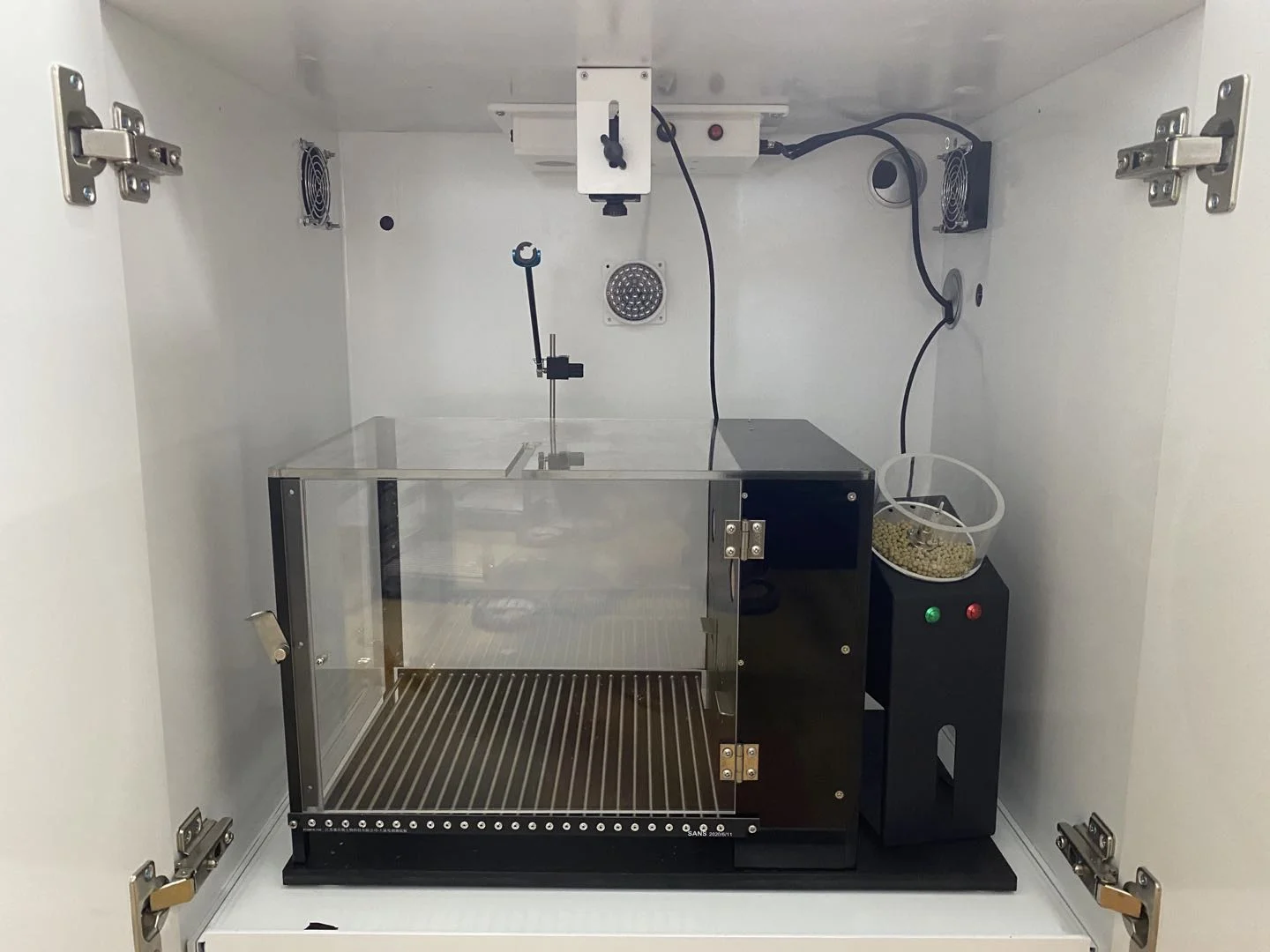
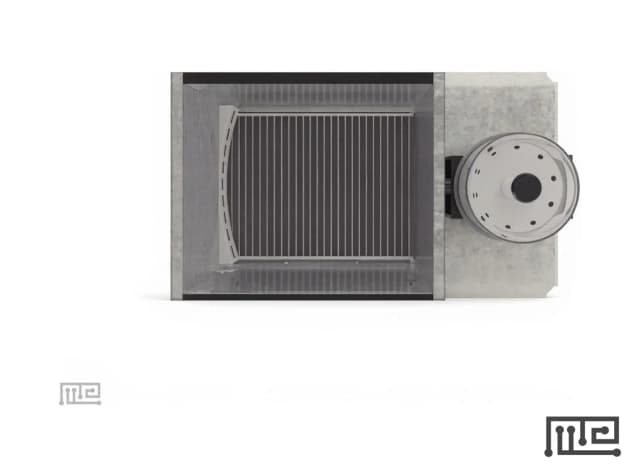
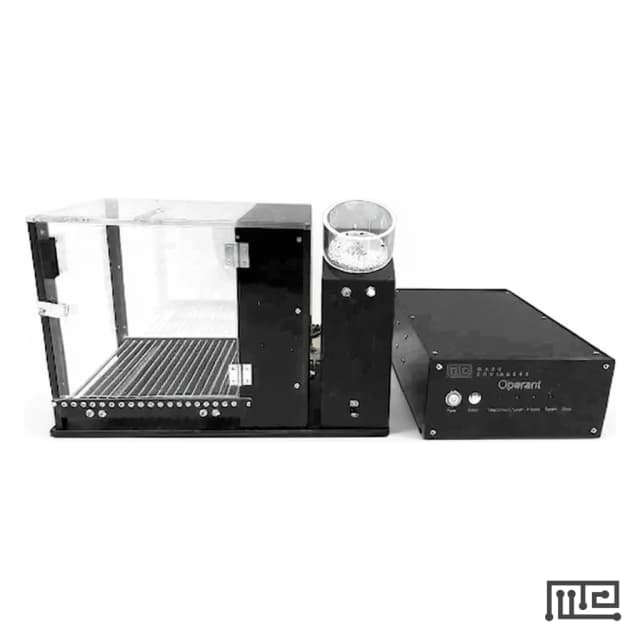
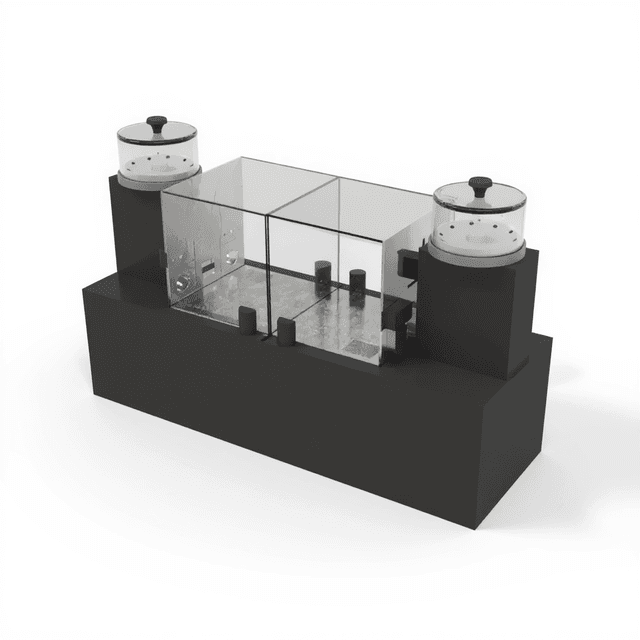
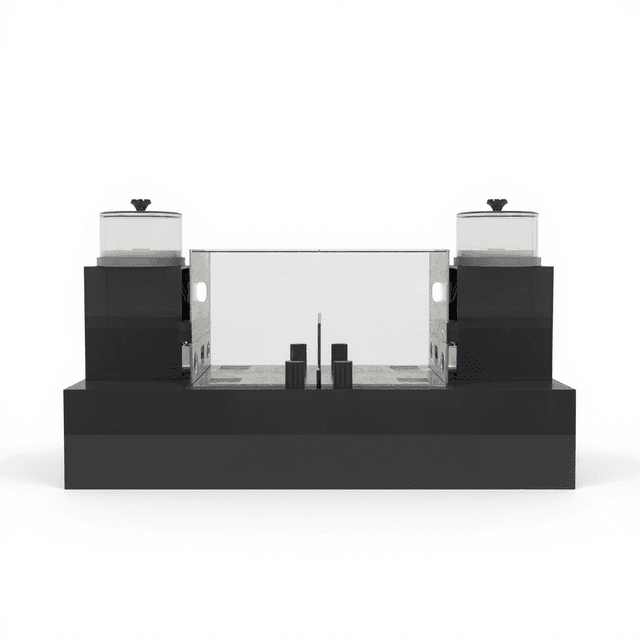
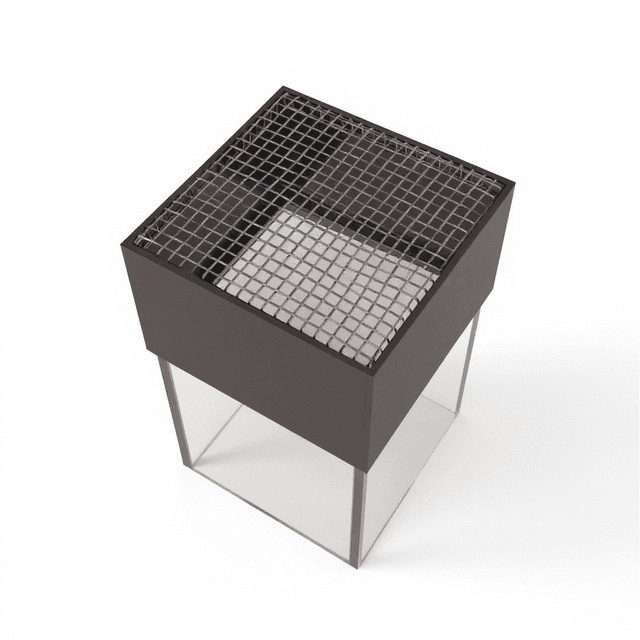
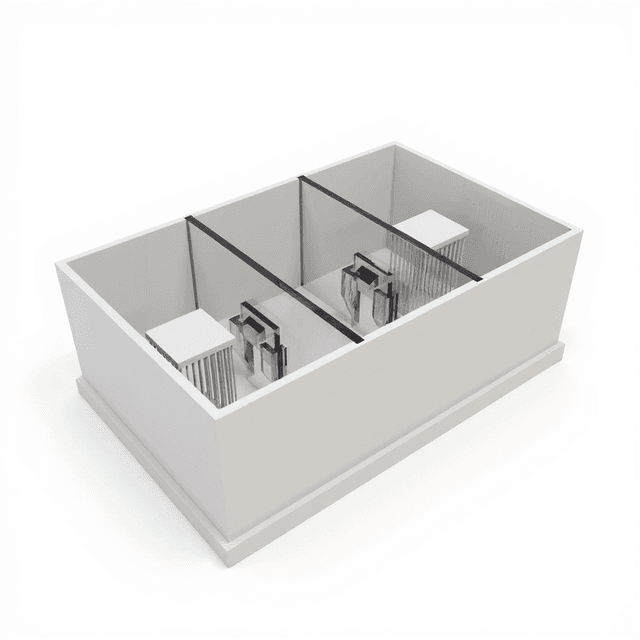
Automated operant conditioning chambers for studying learned behaviors in mice and rats through programmable reinforcement schedules and stimulus delivery systems.

Species SKU CS-958362-02
$8,190.00
Unit: Each

Shipping costs at most $1,000. Order at this price, and we email the exact cost within one business day, before you pay.

Scientist guidance
Louise Corscadden, PhD, Director of Science

Louise Corscadden, PhD

Director of Science · ConductScience

Ask Louise about Operant Conditioning fit, setup, configuration, or quote prep.

Papers that mention operant conditioning

From 2021 to 2025, 945 animal research papers mentioned operant conditioning. The count covers the test on any apparatus, not only this one.

Key Specifications

Full details →
Chamber Interior Dimensions Mouse
20x20x20 cm (LxWxH)
Chamber Interior Dimensions Rat
30x30x30 cm (LxWxH)
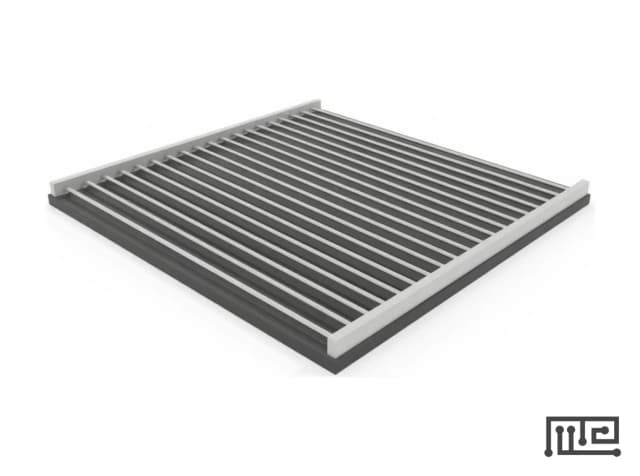
Shock Grid Dimensions Mouse
18 x 18 cm
Shock Grid Dimensions Rat
27 x 27 cm
Shock Grid Rod Diameter Mouse
3mm
Sizing
Mouse: Chamber size 18 cm; Rat: Chamber size 26 cm
Category: Behavioral Mazes

Research data

Operant conditioning in published research

945 animal research papers in PubMed from 2021 to 2025 mention operant conditioning

24% fewer than the 1,247 papers from 2011 to 2015

These counts are for the test, whoever made the apparatus, not for this product.

Papers per year that mention operant conditioning152 papers in 2001, a peak of 266 in 2014, and 174 in 2025.
Compare with another test
Highlight in each bar
2021 to 2025Operant conditioning 945 papers

The lists below cover 2021 to 2025, the years in the band.

Hover over a bar to see its year. Click or tap a bar to show only that year in the lists below, or drag across the bars to show a span of years. On a keyboard, use the arrow keys on the chart to read each year, and the menus below it to pick the years.

What the 945 papers from 2021 to 2025 mention

A paper can mention more than one species, test or condition, so the percentages can add up to more than 100%.

Species

  • Mice 307 papers (32%)
  • Rats 516 papers (55%)

This product comes in a mouse size and a rat size.

Conditions they study

  • Anxiety 28 papers (3%)
  • Cognitive impairment and dementia 24 papers (3%)
  • Pain conditions 21 papers (2%)

Other tests they mention

Where operant conditioning ranks

Rank the tests by

By papers from 2021 to 2025, operant conditioning ranks 18th of the 90 tests we track.

Score this test with ConductVision

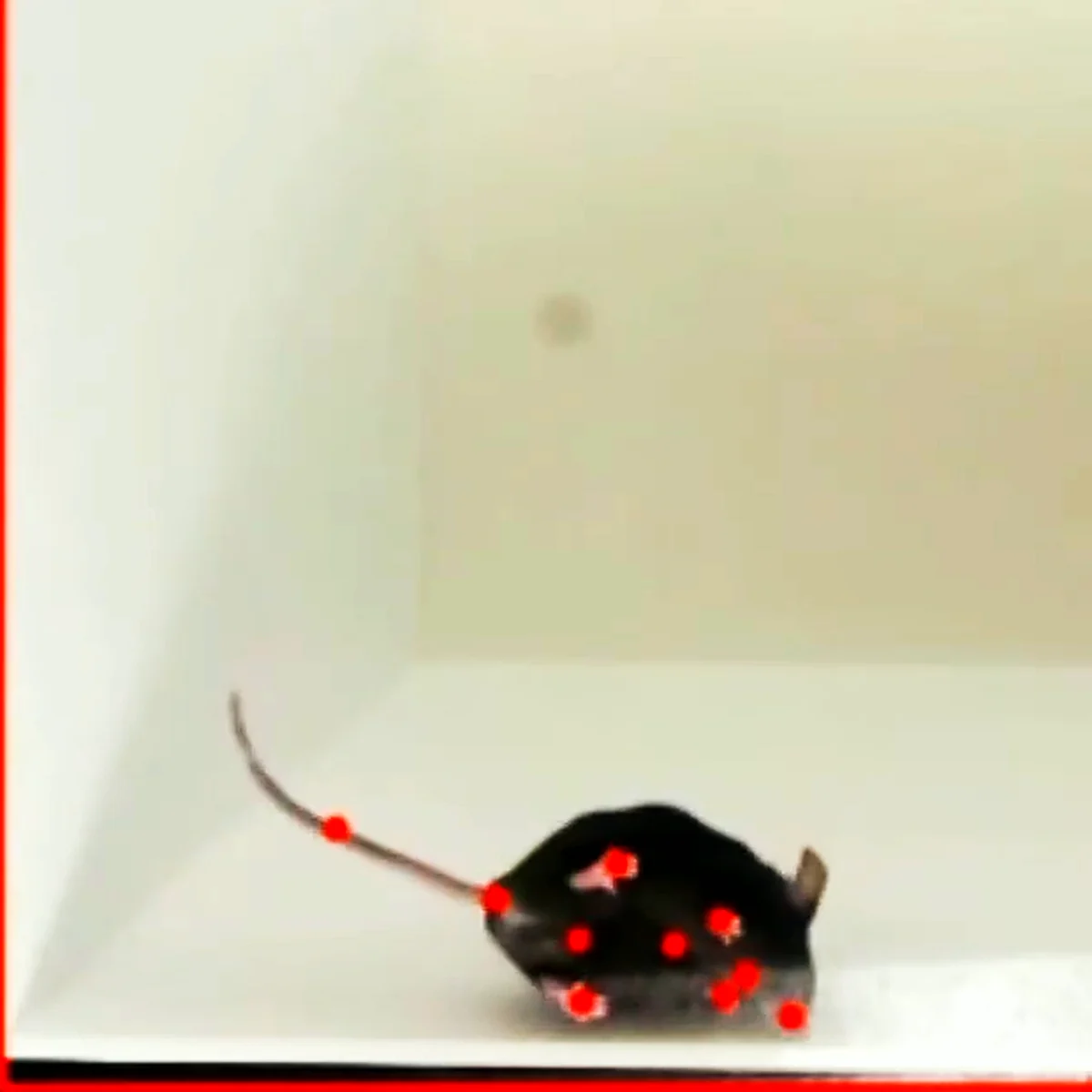
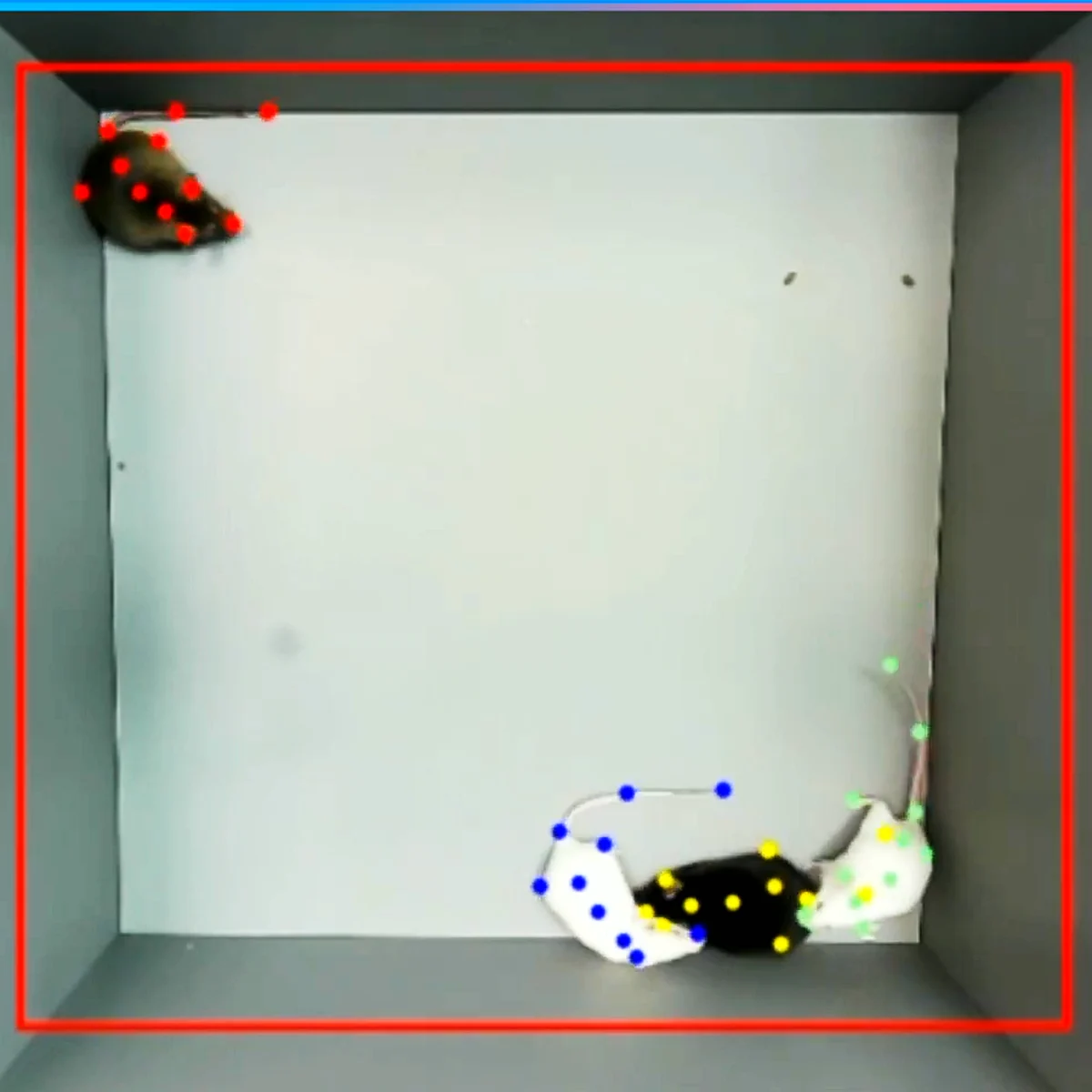
ConductVision is our video-tracking software. Record your sessions on video, and it reports the measures listed below.

What it measures

Add ConductVision and the Advanced Rodent Module to your quote

This test needs the Advanced Rodent Module, an add-on to the ConductVision license.

ConductVision

$1,490 per year

A 5-year license is $3,990 in total.

The Advanced Rodent Module runs on this license. On its own, the license scores standard tests such as the open field, the elevated plus maze, the Y-maze and the Morris water maze. Results export as CSV files.

Ask a question

Have a question? Just ask.

Send it over and we'll email you a personalized answer, with no call or scheduling.

Personalized email reply
Usually within one business day
Helpful answers published here

Prefer to talk it through?

Ask your question

Type it below and we'll email you a personalized answer, with no meeting required.

We'll only use your email to send your answer; broadly useful answers may be published anonymously.

Accessories

Enhance your setup with compatible accessories

Total: $0.00

Creator Insights

B. F. SkinnerOriginated operant conditioning and the operant chamber (Skinner box)Harvard University

About the Creator

Burrhus Frederic Skinner (1904–1990) was an American psychologist who spent most of his career at Harvard University and founded operant conditioning as an experimental science. He designed the operant conditioning chamber — the Skinner box — in which an animal makes discrete responses such as lever presses followed by programmed reinforcement, allowing precise measurement of how behavior is acquired, maintained and extinguished. His 1938 monograph The Behavior of Organisms formalized the framework, and his 1948 paper “Superstition in the pigeon” showed that behavior can be adventitiously shaped by non-contingent reinforcement. The operant paradigm became the methodological backbone of behavioral pharmacology and the neuroscience of reinforcement, motivation and addiction.

To view B. F. Skinner’s publications, visit PubMed.

Did you work with B. F. Skinner? to suggest corrections or share material for these Creator Insights.

ConductScience celebrates method creators: researchers who, through rigorous and often ingenious experiments, develop the tools that reveal how the brain and body work. These are real scientific discoveries that become everyday instruments for the labs that follow.

Foundational paper
  1. Skinner, B. F. (1948). “Superstition” in the pigeon. Journal of Experimental Psychology, 38(2), 168–172. doi:10.1037/h0055873

§ 1

Introduction

The Operant Conditioning Chamber measures voluntary, reinforced responding by recording how a rodent presses a lever or pokes an aperture for food or liquid under a programmed reinforcement schedule. Ferster and Skinner systematized how schedules of reinforcement shape characteristic, stable patterns of responding. 1

Because the schedule defines the relationship between responses and reinforcers, the chamber yields separable readouts: response rate indexes operant output, reinforcers earned index reinforcement, and discrimination accuracy indexes stimulus control. Touchscreen variants extend this to visual discrimination for translational batteries. 1

Food or water motivation, the schedule of reinforcement, satiety, training stage, and chamber calibration all change response rate and accuracy independent of the construct of interest. A defensible protocol fixes the schedule, monitors motivation under a controlled deprivation level, records training stage, and calibrates the manipulanda and dispenser. 1

§ 2

Methods

2.1 Procedure

Schedule-controlled acquisition with response-rate, reinforcer, and discrimination scoring under a controlled motivational level.

Pre-test setup

  1. 1.Deprivation and habituation: Establish a controlled food or water deprivation level and habituate animals to the chamber and dispenser so responding reflects the schedule rather than novelty or extreme hunger.
  2. 2.Magazine and shaping: Train magazine approach and shape the first manipulandum responses before the test schedule, so later sessions measure schedule control rather than instrumental acquisition.
  3. 3.Define the schedule: Fix the reinforcement schedule (for example fixed-ratio, variable-interval), the session length, and the reinforcer type and volume before collecting test data.
  4. 4.Calibrate manipulanda: Verify lever force or nose-poke detection and dispenser delivery so a missed reinforcer is not scored as a behavioral change.

Trial sequence

  1. 1.Start the session: Begin the session under the programmed schedule with the house light on and the manipulanda available as defined.
  2. 2.Record responses and reinforcers: Log every response and each delivered reinforcer with timestamps to derive response rate and reinforcers earned.1
  3. 3.Present discriminative stimuli: In discrimination tasks, present the stimulus that signals reinforcement and score responses under stimulus control as correct or incorrect.3
  4. 4.Log latency and timing: Record response latency and inter-response time to characterize motivation, speed, and the schedule-typical response pattern.
  5. 5.Clean between subjects: Run the planned session, then clean the chamber, manipulanda, and dispenser to remove odor and food residue before the next subject.

Critical methodological constraints

  • Motivation and deprivation. Over- or under-deprivation changes response rate and latency independent of the manipulation; monitor and report body weight.5
  • Schedule of reinforcement. Different schedules produce different characteristic response patterns. Pooling sessions run on different schedules confounds schedule control; fix and report the schedule.2
  • Training stage. Response rate and accuracy rise across shaping and acquisition. A single session can confound the construct with task learning; test at a stable, pre-defined criterion.1
  • Apparatus calibration. Calibrate the manipulanda and verify reinforcer delivery before testing.

2.2 Measurement & Analysis

Core operant endpoints separating output, reinforcement, stimulus control, motivation, and schedule timing.

Response Rate

Operant output

Responses per unit time on the manipulandum, the primary index of operant output under the schedule.1

Reinforcers Earned

Reinforcement

Number of reinforcers delivered in the session, indexing how effectively the animal met the schedule requirement.

Discrimination Accuracy

Stimulus control

Percent correct responses under a discriminative stimulus, indexing stimulus control in discrimination tasks.3

Response Latency

Motivation and speed

Time from stimulus or trial onset to the first response, indexing motivation and processing speed.

Inter-Response Time

Schedule control

Time between successive responses, characterizing the schedule-typical pattern and distinguishing steady from bursting responding.2

+ Additional metrics: reinforcement rate, post-reinforcement pause, magazine latency, trials completed, body weight under deprivation, and per-session apparatus notes.

2.3 reinforced-response fraction (analysis)

A compact fraction of responses that met the schedule and produced reinforcement.

Inline calculator

Type the values your tracker recorded.

Full calculator with 95% CI ->
Reinforced-response rate

80.0%

Formula: reinforced responses / (reinforced responses + non-reinforced responses) x 100. Interpret with the schedule, deprivation level, and reinforcers earned because a high fraction under a lean schedule means something different from the same fraction under a rich one. 1

2.4 sample-size planning

Estimate the N per group needed to detect a literature-anchored operant effect at the endpoint you plan to report. Override the defaults with your own pilot numbers.

Lesion vs control rat under a fixed reinforcement schedule; representative magnitudes anchored to schedule-controlled responding in Ferster & Skinner (1957).1

Cohen's d

1.50

N per group at 80% power

7

Total N

14

With attrition cushion

16

At 70% / 90% power

6 / 10

Methods sentence

Need ANOVA, proportions, paired design, or a power curve? Open in the full Sample-Size Calculator →

Formula: n = 2 · ((zα/2 + zβ) / d)2, where d = |μ₁ − μ₂| / σ. Assumes equal allocation, normality, and homoskedasticity. The attrition cushion inflates total N by 1 / (1 − dropout); confirm with your IACUC.

§ 3

Results

3.1 Sample apparatus output

Representative output from an operant session under a fixed reinforcement schedule.

Table 1 · Per-animal Operant Conditioning Chamber scoring output

AnimalGroupResponse rateReinforcersAccuracyReinforced fraction
OC-001Control42/min9488%79.0%
OC-002Control45/min9790%81.2%
OC-003Control40/min9287%78.3%
OC-004Lesion28/min6371%80.4%
OC-005Lesion26/min6069%79.1%
OC-006Lesion30/min6472%80.0%

Synthetic example for illustration only. Interpret response rate and reinforcers earned relative to the schedule and deprivation level before drawing conclusions.

§ 4

Discussion

Limitations of the paradigm, methodological caveats, and current directions.

4.1 Common confounds

Variables that can shift Operant Conditioning Chamber results apart from the effect under study.

Food and water motivation

The deprivation level sets baseline responding. Over- or under-deprivation changes response rate and latency independent of the manipulation, so motivation must be controlled and reported.

Schedule of reinforcement

Each schedule produces a characteristic response pattern, so pooling sessions run on different schedules confounds schedule control with the variable of interest.

Satiety

Within-session satiety reduces responding late in a session, mimicking a deficit. Standardize session length and pre-session feeding so satiety is not read as a behavioral change.

Training stage

Response rate and accuracy rise across shaping and acquisition, so a single session can confound the construct with task learning unless tested at a stable criterion.

Chamber calibration

Lever force, aperture sensitivity, and dispenser reliability change measured responding. Uncalibrated manipulanda or missed reinforcers distort rate and accuracy.

Confound checklist

Tick the confounds your protocol addresses, then export a methods-paragraph blurb you can paste into your manuscript.

Preview exported markdown

4.2 Construct validity caveats

The operant chamber is strongest when the schedule, deprivation level, training stage, and apparatus calibration are fixed and reported before testing. A single response rate is a screening signal; an effect is most defensible when response rate, reinforcers earned, accuracy, and timing move in a schedule-consistent pattern across the same cohort. 1

4.3 Special considerations

How do I separate motivation from learning?

Hold deprivation at a controlled level and test at a stable training criterion. Response rate and latency track motivation, while discrimination accuracy tracks stimulus control, so reading them together separates a motivational change from a learning change.

When should I use a touchscreen chamber?

Use the touchscreen kit when the question is visual discrimination and stimulus control rather than simple response rate. It presents and reinforces graphical stimuli and supports translational task batteries.

How should I report the schedule?

State the exact schedule, the reinforcer type and volume, the session length, and the deprivation level. The same response fraction means different things under a lean versus a rich schedule, so the schedule must travel with the result.

4.4 Current directions

Quarterly editorial review of emerging Operant Conditioning Chamber methodology. Q2 2026

Methods

Schedule and deprivation reporting

Reporting the exact schedule, reinforcer parameters, and deprivation level is increasingly expected so response rate and accuracy are comparable across labs.

Emerging

Touchscreen discrimination platforms

Touchscreen chambers extend operant testing to visual discrimination and stimulus-control tasks with automated, reproducible stimulus presentation.

Methods

Manipulandum calibration

Calibrating lever force, aperture sensitivity, and dispenser delivery across rigs reduces apparatus-driven differences in measured responding.

Emerging

High-throughput session logging

Automated per-response logging supports large operant batteries and fine-grained analysis of inter-response time and post-reinforcement pause within one cohort.

§ 5

Background references

6 selected methods and validation studies of the Operant Conditioning Chamber, from any lab.

  1. Ferster CB, Skinner BF. Schedules of Reinforcement. Appleton-Century-Crofts. New York; 1957. doi:10.1037/10627-000
  2. Dews PB. The effect of multiple S-delta periods on responding on a fixed-interval schedule. J Exp Anal Behav. 1962;5:369-374. doi:10.1901/jeab.1962.5-369
  3. Bussey TJ, Holmes A, Lyon L, et al. New translational assays for preclinical modelling of cognition in schizophrenia: the touchscreen testing method for mice and rats. Neuropharmacology. 2012;62(3):1191-1203. doi:10.1016/j.neuropharm.2011.04.011
  4. Horner AE, Heath CJ, Hvoslef-Eide M, et al. The touchscreen operant platform for testing learning and memory in rats and mice. Nat Protoc. 2013;8(10):1961-1984. doi:10.1038/nprot.2013.122
  5. Mar AC, Horner AE, Nilsson SR, et al. The touchscreen operant platform for assessing executive function in rats and mice. Nat Protoc. 2013;8(10):1985-2005. doi:10.1038/nprot.2013.123
  6. Robbins TW. The 5-choice serial reaction time task: behavioural pharmacology and functional neurochemistry. Psychopharmacology. 2002;163(3-4):362-380. doi:10.1007/s00213-002-1154-7
Operant Conditioning
$8,190.00
Added to quoteView Quote