1 / 3
Pasta Matrix Reaching Task
SKU CS-958384
$690.00
IncludesStandard care
Behavioral testing apparatus for assessing skilled forelimb reaching behavior, distance, and dexterity in laboratory rodents through pasta retrieval tasks.
CE MarkedBAA available
Scientist guidance

Louise Corscadden, PhD
Director of Science · ConductScience
Ask Louise about Pasta Matrix Reaching Task fit, setup, configuration, or quote prep.
Already working with us? Sign in to connect this with My Scientist.
Key Specifications
Full details →- Model fit
- Mouse, Rat
- SKU family
- CS-958384
- Sizing
- Pasta Matrix Reaching Task for Rat: Length 35 cm · Width 14 cm
- Ordering
- Online checkout and quote request available
- Category
- Behavioral Mazes
- Build notes
- Confirm accessories, station layout, and support needs before purchase
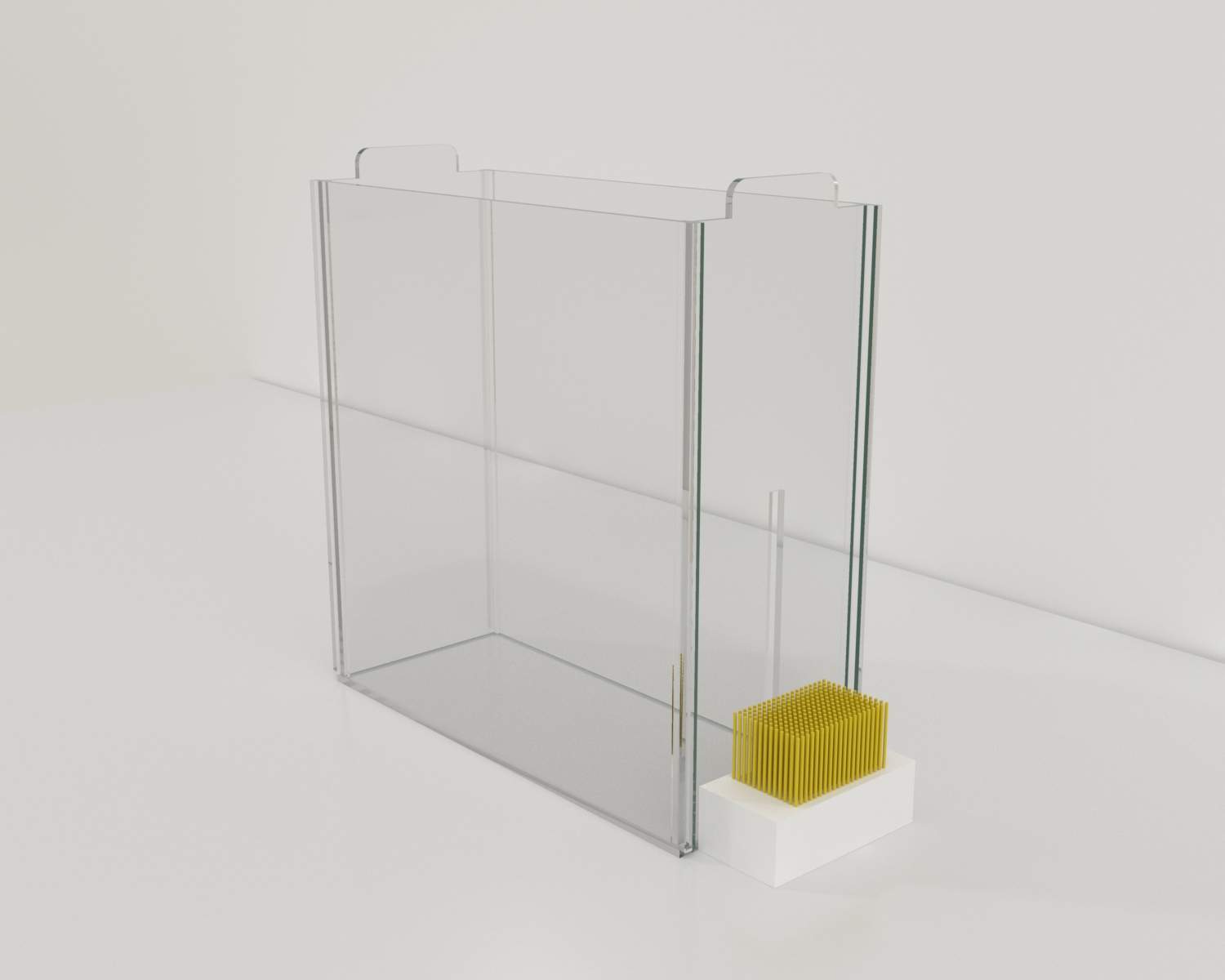
The Pasta Matrix Reaching Task is a behavioral testing apparatus designed to assess skilled forelimb reaching behavior in laboratory rodents. The apparatus consists of a test chamber with a narrow vertical slit in the front wall, through which animals must reach to retrieve pasta pieces arranged in a matrix pattern at varying distances. This paradigm provides quantitative measurements of reaching distance, direction, and dexterity, making it valuable for evaluating motor function recovery, neural plasticity, and the effects of therapeutic interventions.
The design accommodates both mice and rats with species-specific slit widths (0.6 cm for mice, 1.0 cm for rats) to ensure appropriate reaching constraints. The apparatus allows researchers to systematically evaluate skilled motor performance by positioning pasta targets at predetermined locations, creating a standardized assessment of forelimb motor control and learning capabilities in rodent models of neurological disorders.
How It Works
The Pasta Matrix Reaching Task operates on the principle of constrained reaching behavior, where animals must extend their forelimb through a narrow vertical opening to retrieve food rewards positioned at various distances and angles. The apparatus design limits the animal's ability to use compensatory strategies, requiring precise motor control and coordination of shoulder, elbow, and digit movements.
During testing, pasta pieces are arranged in a predetermined matrix pattern at measured distances from the chamber wall. Animals must accurately judge distance and direction while executing reaching movements through the restrictive slit. The narrow opening prevents the use of both forelimbs simultaneously and constrains the reaching trajectory, making this a sensitive measure of skilled motor function. Performance metrics include successful retrieval rate, maximum reaching distance, and accuracy of directional targeting.
The task capitalizes on the natural foraging behavior of rodents while imposing motor constraints that reveal subtle deficits in neural control. Changes in reaching performance can indicate alterations in motor cortex function, basal ganglia circuitry, or spinal motor control systems.
Features & Benefits
Species-specific slit dimensions
Accommodates both mice (0.6 cm) and rats (1.0 cm) with appropriately sized reaching constraints for each species
Matrix positioning system
Enables systematic placement of pasta targets at predetermined distances and angles for standardized testing protocols
Constrained reaching paradigm
Eliminates compensatory strategies and isolates skilled forelimb movements for sensitive motor assessment
Modular assembly design
Allows for easy setup, breakdown, and storage between testing sessions
Integrated storage solution
Includes organized storage system for components and accessories to maintain apparatus integrity
Standardized test chamber
Provides consistent environmental conditions across testing sessions and between laboratories
One-year warranty coverage
Ensures long-term reliability and support for extended research protocols
Add-ons and modifications
| Add-on | Price | Details |
|---|---|---|
| Pasta Matrix Reaching Task for Mice | $590 | Chamber - Length: 24cm, Width: 9.5cm, Height: 24cm Front chamber vertical slit: 0.6cm width |
Add any of these to your quote request.
Sizes by model
| Measurement | Pasta Matrix Reaching Task for Rat |
|---|---|
| Length | 35 cm |
| Width | 14 cm |
| Height | 35 cm |
- Chamber -
- Front chamber vertical slit
- Width 1 cm
Warranty Length
- 1 YEAR
Storage Included
- True
Assembly Required
- True
Behavioral Construct
- motor coordination
- skilled reaching
- forelimb dexterity
- motor learning
- spatial accuracy
Automation Level
- manual
Research Domain
- Behavioral Pharmacology
- Learning and Memory
- Motor Function
- Neurodegeneration
- Neuroscience
- Pain Research
Compatible Tracking Software
- ConductVision
Shipping weight
- 6.06 lb
Shipping box
- L: 65.0 cm
- W: 36.0 cm
- H: 27.0 cm
| Feature | This Product | Typical Alternative | Advantage |
|---|---|---|---|
| Slit Width Precision | Species-specific dimensions (0.6 cm mice, 1.0 cm rats) | Generic openings often require manual adjustment | Ensures consistent reaching constraints optimized for each species' anatomical requirements. |
| Target Positioning | Systematic matrix grid system | Single-point or random target placement | Enables comprehensive spatial mapping of reaching capabilities across multiple distances and directions. |
| Assembly Design | Modular components with integrated storage | Fixed structures without storage solutions | Facilitates transport between testing rooms and organized component storage between sessions. |
| Species Compatibility | Dual-species design accommodating mice and rats | Single-species apparatus requiring separate units | Supports comparative studies and laboratory efficiency with one versatile system. |
| Warranty Coverage | One-year comprehensive warranty | Limited or no warranty protection | Provides long-term reliability assurance for extended research protocols and studies. |
The apparatus combines species-specific precision with systematic spatial assessment capabilities. The modular design with integrated storage enhances laboratory workflow efficiency while maintaining standardized testing conditions.
| Model | SKU | Listed price | Status | Shipping box |
|---|---|---|---|---|
| Rat | CS-958384 | $690.00 | Available | 35 x 14 x 35 cm |
| Mouse | CS-958384 | $590.00 | Available | 24 x 9.5 x 24 cm |
Neuroscience
Evaluating motor recovery following stroke, spinal cord injury, or other neurological lesions by measuring reaching accuracy and range of motion.
Behavioral Pharmacology
Assessing the motor effects of pharmacological interventions on skilled reaching performance in animal models of movement disorders.
Motor Function
Quantifying baseline motor capabilities and tracking changes in forelimb dexterity over time in rodent models of neurodegenerative diseases.
Learning and Memory
Investigating motor learning processes by monitoring improvement in reaching accuracy and efficiency across training sessions.
Neurodegeneration
Characterizing progressive motor deficits in models of Parkinson's disease, Huntington's disease, and other movement disorders.
Pain Research
Evaluating how chronic pain conditions affect voluntary motor behavior and skilled limb movements in rodent models.
Practical Tips
Calibration
Verify slit width dimensions monthly using precision measuring tools to ensure consistent reaching constraints.
Why: Maintaining exact dimensions is critical for data reproducibility and comparison across testing sessions.
Maintenance
Disassemble and inspect all components after every 10-15 testing sessions to check for wear or damage.
Why: Regular inspection prevents equipment failure during critical experimental phases.
Best Practices
Standardize pasta size, shape, and placement timing to minimize variability between testing sessions.
Why: Consistent reward properties ensure that performance changes reflect motor function rather than motivational factors.
Troubleshooting
If animals show reluctance to reach, verify food restriction protocols and confirm pasta palatability.
Why: Adequate motivation is essential for reliable motor performance assessment.
Data Quality
Record environmental conditions (temperature, lighting, noise) for each session to identify potential confounding variables.
Why: Environmental factors can influence motor performance and should be controlled or documented.
Safety
Inspect slit edges regularly for sharp points or damage that could injure animals during reaching movements.
Setup Guide
Unpack and Inspect
Remove all components from packaging and verify completeness against the included parts list. Inspect for any shipping damage.
Assemble Test Chamber
Follow assembly instructions to construct the test chamber, ensuring the front wall slit is properly aligned and dimensions match species specifications.
Position Matrix Grid
Install the pasta positioning grid system at the specified distance from the front slit to create standardized target locations.
Calibrate Measurements
Use provided measuring tools to verify distances and mark reference points for consistent pasta placement across testing sessions.
Prepare Test Environment
Place apparatus in a quiet testing room with appropriate lighting and minimal visual distractions that could interfere with reaching behavior.
Acclimate Animals
Allow test subjects to habituate to the chamber environment before beginning formal testing protocols.
Establish Baseline
Conduct initial reaching assessments to determine individual baseline performance before experimental manipulations.
What’s in the Box
- Test chamber components (typical)
- Front wall with species-specific slits (typical)
- Pasta positioning grid system (typical)
- Assembly hardware and tools (typical)
- Measuring guides and calibration tools (typical)
- Storage containers (included)
- Assembly instructions and user manual (typical)
Warranty
ConductScience provides a comprehensive one-year manufacturer warranty covering defects in materials and workmanship, with technical support available for setup assistance and troubleshooting throughout the warranty period.
Compliance
ARRIVE GuidelinesCommonly used in behavioral studies following ARRIVE reporting standards for animal research methodology and data presentation.
Guide for Care and Use of Laboratory AnimalsSupports behavioral testing protocols conducted under institutional guidelines for laboratory animal welfare and experimental procedures.
References
Background reading relevant to this product:
1.Mark Ballermann et al. (2001) “The pasta matrix reaching task: a simple test for measuring skilled reaching distance, direction, and dexterity in rats” Journal of Neuroscience Methods doi:10.1016/s0165-0270(01)00326-0
2.Gerlinde A. S. Metz et al. (2001) “Chronic levodopa therapy does not improve skilled reach accuracy or reach range on a pasta matrix reaching task in 6‐OHDA dopamine‐depleted (hemi‐Parkinson analogue) rats” European Journal of Neuroscience doi:10.1046/j.0953-816x.2001.01615.x
Q
What is the optimal pasta size and placement distance for standardized testing?
A
Consult the product protocol guide for species-specific pasta dimensions and standardized matrix distances. Typically, small pasta pieces are positioned at measured intervals from the front slit.
Q
How many training sessions are required before reliable baseline measurements?
A
Most animals require 3-5 habituation sessions followed by 5-10 baseline training sessions to achieve stable reaching performance, though this varies by species and individual.
Q
Can the apparatus be modified for unilateral reaching assessments?
A
Yes, the design allows for modifications to restrict reaching to one forelimb by adjusting animal positioning or adding barriers within the test chamber.
Q
What data should be collected during each testing session?
A
Record successful retrievals, maximum reaching distance, directional accuracy, number of attempts per target, and time to complete reaching movements for comprehensive motor assessment.
Q
How does this compare to other skilled reaching paradigms?
A
The pasta matrix provides more systematic distance and directional assessment compared to single-target reaching tasks, while being less complex than multi-limb coordination tests.
Q
What maintenance is required between testing sessions?
A
Clean all surfaces with appropriate disinfectant, inspect components for wear, and verify slit dimensions remain accurate. Replace any damaged parts promptly.
Q
Can the apparatus accommodate animals with motor impairments?
A
Yes, the design works well for animals with various degrees of motor deficit, as it allows measurement of partial reaching movements and compensatory strategies.
Have a question about this product?
Track rodents with ConductVision
ConductVision is our video-tracking software. Record your sessions on video, and it scores standard rodent tests, such as those listed below.
Examples of tests it scores
To check whether ConductVision scores your protocol in this apparatus, ask in your quote request.
Ask a question
Have a question? Just ask.
Send it over and we'll email you a personalized answer — no call, no scheduling.
Personalized email reply
Usually within one business day
Helpful answers published here
Prefer to talk it through?
Frequently Bought Together
Total: $2,730.00

Pasta Matrix Reaching Task
$690.00
Added to quoteView Quote