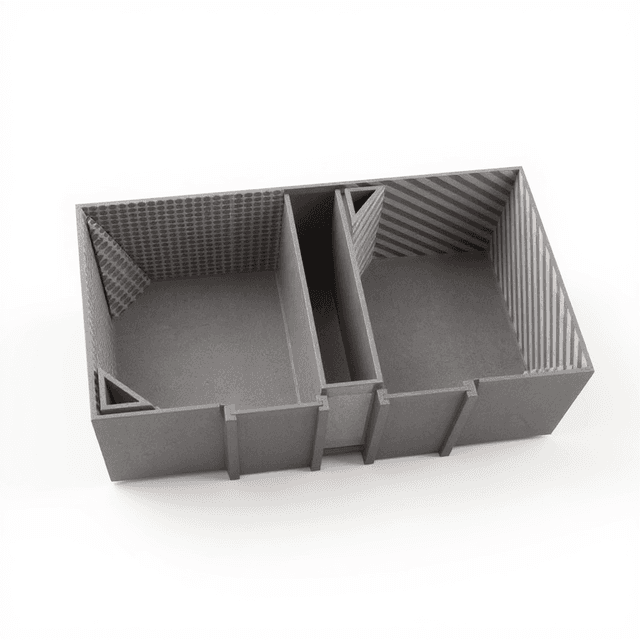
Pig Hole Board
Motor function assessment apparatus for evaluating fine motor control and dexterity in porcine research models through standardized peg-board manipulation tasks.

Louise Corscadden, PhD
Director of Science · ConductScience
Ask Louise about Pig Hole Board fit, setup, configuration, or quote prep.
Already working with us? Sign in to connect this with My Scientist.
Key Specifications
Full details →- Model fit
- Pig
- SKU family
- CS-958171
- Shipping box
- 65.0 x 36.0 x 27.0 cm
- Ordering
- Online checkout and quote request available
- Category
- Behavioral Mazes
- Build notes
- Confirm accessories, station layout, and support needs before purchase
The Pig Hole Board is a specialized motor function assessment apparatus designed for evaluating fine motor control, dexterity, and coordination in porcine research models. This behavioral testing platform presents animals with a standardized peg-board configuration that requires precise limb positioning and manipulation skills to complete task objectives.
The apparatus supports controlled evaluation of motor learning, recovery assessment following neurological interventions, and baseline motor performance characterization in swine models. Research applications include studies of motor development, injury rehabilitation protocols, and neurodegenerative disease progression where quantitative motor assessment is required.
How It Works
The Pig Hole Board operates on the principle of fine motor skill assessment through controlled manipulation tasks. Animals are presented with a board containing standardized openings or peg configurations that require precise limb coordination to complete specific objectives, such as retrieving food rewards or manipulating objects.
Motor performance is evaluated through direct observation and timing of task completion, with metrics including accuracy of limb placement, time to task completion, and error frequency. The standardized configuration ensures reproducible testing conditions across experimental sessions and between subjects.
Assessment protocols typically involve training phases to establish baseline performance followed by experimental manipulation and subsequent retesting to quantify motor function changes. The apparatus design accommodates the anatomical and behavioral characteristics of porcine subjects while maintaining experimental control.
Features & Benefits
Behavioral Construct
- motor coordination
- fine motor control
- dexterity
- motor learning
- procedural memory
Automation Level
- manual
Research Domain
- Addiction Research
- Behavioral Pharmacology
- Developmental Biology
- Learning and Memory
- Motor Function
- Neurodegeneration
Species
- Pig
Compatible Tracking Software
- ConductVision
Shipping weight
- 6.06 lb
Shipping box
- L: 65.0 cm
- W: 36.0 cm
- H: 27.0 cm
| Feature | This Product | Typical Alternative | Advantage |
|---|---|---|---|
| Species-Specific Design | Designed specifically for porcine subjects with appropriate dimensions and hole configurations | Generic peg-boards often require adaptation from rodent or primate models | Ensures ecologically valid motor assessment that matches natural porcine movement patterns and capabilities. |
| Construction Durability | Durable construction materials suitable for repeated use | Laboratory-built apparatus may have variable build quality | Provides consistent testing surface characteristics and long-term reliability in active research environments. |
| Standardization | Standardized hole configuration and dimensions | Custom apparatus often lack standardized specifications | Enables comparison of results across different research groups and facilitates meta-analyses of motor function data. |
The Pig Hole Board offers specialized motor assessment capabilities with species-appropriate design and standardized testing conditions. Provides reliable measurement platform for fine motor control evaluation in porcine research models.
Practical Tips
Establish consistent testing times and environmental conditions to minimize confounding variables in motor performance assessment.
Why: Motor performance can be influenced by circadian rhythms and environmental factors.
Inspect hole edges and surface integrity regularly for wear patterns that could affect task difficulty.
Why: Surface changes can introduce uncontrolled variables that affect motor assessment reliability.
Record multiple camera angles during testing sessions to capture complete motor behavior sequences.
Why: Comprehensive documentation enables detailed analysis of movement patterns and error types.
Establish baseline performance metrics for each subject before experimental manipulation begins.
Why: Individual baseline measurements provide reference points for detecting treatment-related changes in motor function.
Allow adequate habituation time if subjects show reluctance to interact with the apparatus initially.
Why: Novel object neophobia can confound motor assessment if not addressed through proper familiarization protocols.
Ensure apparatus edges and surfaces are smooth to prevent injury during active motor tasks.
Why: Subject safety is essential for ethical research conduct and preventing injury-related confounds in motor assessment.
Setup Guide
What’s in the Box
- Pig Hole Board apparatus (typical)
- User manual and setup instructions (typical)
- Cleaning and maintenance guidelines (typical)
Warranty
ConductScience provides standard manufacturer warranty coverage with technical support for proper apparatus function and material defects. Warranty terms typically include one year coverage for manufacturing defects and access to application support.
Compliance
Protocol and background
Introduction
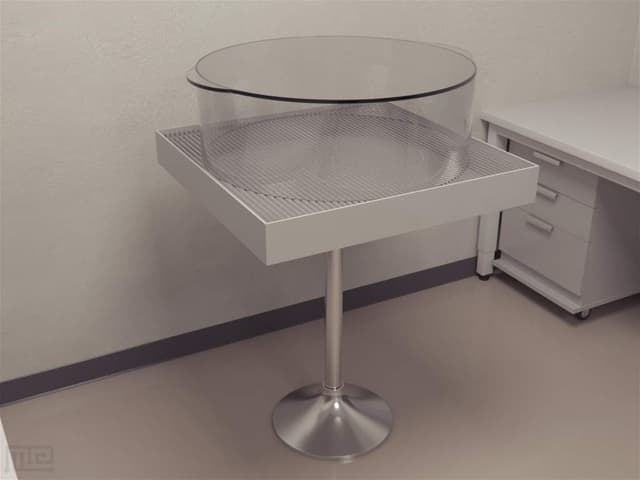
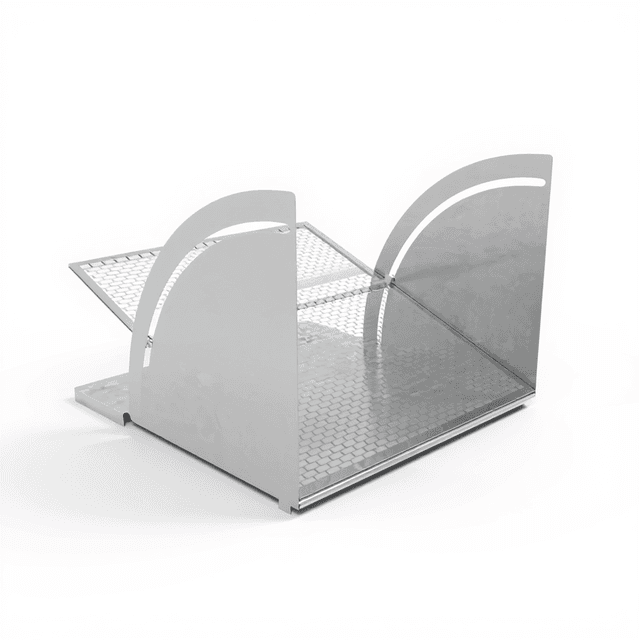
The Pig Hole Board uses the same principle as the rodent Hole Board to study spatial learning and memory in pigs. The Pig Hole Board consists of a testing arena that has buckets, which can be baited with food, screwed to the concrete floor. The buckets contain a perforated grid under which a food reward can be deposited which masks odor cues emanating from the reward. Thus, preventing discrimination between baited and un-baited buckets by reliance on olfactory cues. The arena has a guillotine door in the middle of one of the sidewalls, that serves as the entrance to the testing arena.
The Pig Hole Board provides an environment to test the cognitive flexibilities in pigs in response to different spatial configurations of the baited and un-baited buckets. Observing the order of visits and repeated visits to an already visited bucket allow evaluation of working memory and reference memory of pigs. The Pig Hole Board can also be easily adapted for different experimental protocols, such as by inclusion of multiple entry points to evaluate the effect of different start points on performances. The Pig Hole Board can also be used to test the effects of diseases and disorders, brain lesions, and pharmacological manipulations on learning and memory. Further, improved understanding of the cognitive abilities of pigs can be used to improve animal welfare.
Other apparatus used in the evaluation of pig behaviors include the Pig T-maze, the Piglet T-maze, the Pig 8 Arm Radial Maze, the Pig Open Field, and the Pig Hebb-Williams Maze.
Apparatus and Equipment
The Pig Hole Board consists of a testing arena that measures 8.0m x 7.6m and connects to the pen room through a passage. A guillotine door is present in the middle of one of the sidewalls that serve as the entrance along with an exit door in the corner of the same side wall. Sixteen buckets which are equally distanced from each other are tightly screwed to the concrete floor of the testing arena. Each bucket has a perforated grid bottom under which a food reward can be deposited. The concrete floor is covered with black mats to equalize the unevenness of the floor and provides good contrast for the video camera.
Training protocol
Clean the apparatus after every trial. Clean the buckets with a wet towel between trials. Replace the food reward on the bottom of the buckets after every trial. Appropriately light the maze arena. A tracking and recording system such as the Noldus Ethovision XT can be used to assist with observations.
Habituation and Pre-training
After a week of handling, allow the subjects to explore the passage between the pens. After two weeks of handling allow the subjects to explore the Pig Hole Board. After three weeks of handling guide the subjects individually to the Pig Hole Board and back to their pens. Ring a doorbell to allow the subjects to familiarize the sound of the doorbell with returning to their pens. Place a food reward in 8 of the 16 buckets of the apparatus. Allow the subjects to find and eat the rewards. Conduct the trial for 1 min and extend this period by 1 min on each succeeding day. Place the food reward in all 16 buckets for the last 3 trials. Ring the doorbell and return the subject to its pen after it finds all the 16 rewards or maximum session duration is reached. Conduct pretraining trials for 7 consecutive days.
Pig Hole Board acquisition task
Bait 4 buckets with the food reward in a predetermined configuration. Slide the entry door upwards and let the subject enter the Pig Hole Board. Allow the subject to explore the maze and find the food rewards. Conduct the trial until the subject finds all the 4 rewards or until 10 minutes have elapsed. Provide an audio cue once the trial stops. Return the subject to its home pen. Change the configurations of the baited and un-baited buckets for every trial (if required). Conduct a total of 28 trials or as required.
Pig Hole Board reversal task
Following the acquisition trials, conduct 16 reversal trials for 8 days. Reverse the configurations of the baited buckets from the acquisition trials. Perform the task using the same protocol as the acquisition trials.
Evaluation of working and reference memory in pigs
Arts et al. (2009) evaluated working and reference memory in pigs using the Pig Hole Board. It was also used to test whether stress affected performance in the task. Ten pairs of female, full siblings (Finish Landrace×York F1) were used. The study involved three phases which consisted of different configurations of baited holes; phase A (Baited buckets 2, 7, 9, and 16), phase B (Baited buckets 1,8, 10, and 15) and phase C (Baited buckets 3, 6, 12, and 13). Pigs were subjected to mixing stress by being housed with unfamiliar pigs during phase C. For phases A and B it was observed that working and reference memory improved during training. Trial duration also decreased over trials. For phase C, it was observed that mixing stress before the trials did not affect task performance as the working memory and reference memory performance did not differ between the stress and non-stressed groups. Trial duration decreased at a similar pace in the stressed and non-stressed pigs during trials. Overall, all pigs rapidly reduced the number of re-visits to baited holes (working memory) and to un-baited holes (reference memory).
Evaluation of the influence of environment enrichment on the working and reference memory in pigs
Bolhuis et al. (2013) evaluated the influence of different housing conditions (barren vs. enriched) during rearing on the cognitive performance of pigs. Thirty-two pigs (Sus scrofa domesticus) were subjected to 30 trials on a Pig Hole Board. It was observed that pigs from a barren environment had a higher number of working memory errors and a lower working memory score as compared to pigs from an enriched environment. The reference memory scores increased with time and errors decreased across trials and were not affected by housing conditions. Apart from the working memory and reference memory of pigs, the general working memory was also calculated as the ratio between the number of buckets visited and the total number of visits. The general working memory improved over trial blocks and was higher for enriched pigs than barren housed pigs. Personality type did not affect performance in the task. Overall, housing conditions did not affect reference memory performance, but environmental enrichment improved working memory performance.
Evaluation of the effects of late prenatal and/or early postnatal exposure to a Western-type diet on the cognition of pigs
Clouard et al. (2016) examined the effects of 8 weeks prenatal and/or 8 weeks postnatal exposure to a western diet enriched in saturated fat, sucrose, and cholesterol on the cognitive performance of piglets in later life. Thirty-six multiparous sows (Topigs 20) and their litters (Tempo 3 x Topigs 20) were tested in the Pig Hole Board task that had 4 baited buckets. In the acquisition trials, it was observed that the piglets which were exposed to the prenatal western diet had higher working memory scores and made fewer errors than piglets exposed to the prenatal control diet. Reference memory scores were not significantly affected by the prenatal diet. Latency to the first bucket visit and the fourth bucket visit were not influenced by the prenatal diet. However, the inter-visit interval tended to be longer. Piglets exposed to the prenatal western diet made fewer visits in total and consumed fewer rewards during the first trial block than piglets exposed to the prenatal control diet. In the reversal trials, it was observed that piglets exposed to the prenatal western diet tended to have higher working memory and reference memory scores and made fewer errors as compared to the piglets exposed to the prenatal control diet. The prenatal western diet increased the inter-visit duration and reduced the total number of visits and resulted in longer latency to visit the first bucket. Latency to fourth reward and the number of rewards consumed were not influenced by the prenatal diet.
Data Analysis
The following can be observed on a Pig Hole Board:
- Number of times subject puts its nose above a bucket
- Number of times subject finds a food reward
- Number of times subject visits a baited bucket
- Number of times subject visits an un-baited bucket
- Number of times subject revisits a bucket
- Total number of buckets visited
- Time taken to complete a trial
Strengths and Limitations
Strengths
The Pig Hole Board is an open arena equipped with buckets that have a perforated grid base. The bucket design allows placement of food rewards under the grid which prevents the use of olfactory cues during the task. The maze allows assessment of spatial learning and memory in pigs using different configurations of the baited and un-baited buckets. The Pig Hole Board task can easily be modified by utilizing the inclusion of multiple entries which would increase the working memory load of the subjects by randomly placing them in different start positions. It is a non-aversive task that does not elicit stress or fear. The Pig Hole Board can also be used to test the effects of diseases and disorders, brain lesions, and pharmacological manipulations on learning and memory.
Limitations
Stress may interfere with task performance. The exploratory drive and motivation to find food for subjects is necessary to complete the task. Factors such as age, gender, and strain of the subjects may contribute towards their task behavior. Unnecessary stimuli may affect the way the subject performs the task. Proper cleaning of the Pig Hole Board is needed before starting each trial.
Summary
- The Pig Hole Board is used to study spatial learning and memory in pigs.
- The Pig Hole Board consists of a testing arena that has 16 equally distanced buckets screwed on to the concrete floor.
- Each bucket has a perforated grid bottom to prevent the use of odor cues for locating food.
- The Pig Hole Board can be used for the assessment of cognitive flexibilities in pigs in response to different spatial configurations of the baited and un-baited buckets.
References
- Arts, J. W., van der Staay, F. J., & Ekkel, E. D. (2009). Working and reference memory of pigs in the spatial holeboard discrimination task. Behavioural brain research, 205(1), 303-306. doi: 10.1016/j.bbr.2009.06.014
- Bolhuis, J. E., Oostindjer, M., Hoeks, C. W., de Haas, E. N., Bartels, A. C., Ooms, M., & Kemp, B. (2013). Working and reference memory of pigs (Sus scrofa domesticus) in a holeboard spatial discrimination task: the influence of environmental enrichment. Animal cognition, 16(5), 845-850.
- Clouard, C., Kemp, B., Val-Laillet, D., Gerrits, W. J., Bartels, A. C., & Bolhuis, J. E. (2016). Prenatal, but not early postnatal, exposure to a Western diet improves spatial memory of pigs later in life and is paired with changes in maternal prepartum blood lipid levels. The FASEB Journal, 30(7), 2466-2475.
From the Maze Engineers documentation for this apparatus.
What motor parameters can be reliably measured using this apparatus?
The apparatus enables measurement of task completion time, accuracy of limb placement, error frequency, and learning curve progression. Specific metrics depend on the experimental protocol and scoring criteria established for each study.
How should the apparatus be cleaned between subjects?
Clean all surfaces with appropriate disinfectant solution compatible with the construction materials. Ensure complete drying between subjects to prevent contamination and maintain consistent testing conditions.
What age range of pigs can effectively use this apparatus?
Consult product specifications for recommended subject size and age ranges. The apparatus design should accommodate the motor development stage and physical capabilities of the intended research subjects.
How many training sessions are typically required before reliable data collection?
Training requirements vary by individual subject and experimental objectives. Most protocols include 3-5 habituation sessions followed by baseline performance establishment before experimental manipulation begins.
Can the apparatus be modified for different motor assessment tasks?
Modification potential depends on the specific construction design and materials. Consult manufacturer guidelines regarding approved modifications that maintain apparatus integrity and safety.
What data recording methods work best with this apparatus?
Video recording with multiple camera angles provides comprehensive behavioral documentation. Combine with standardized scoring sheets and timing devices for quantitative motor performance metrics.
Have a question about this product?
Have a question? Just ask.
Send it over and we'll email you a personalized answer — no call, no scheduling.
Prefer to talk it through?