Portable Refrigerator
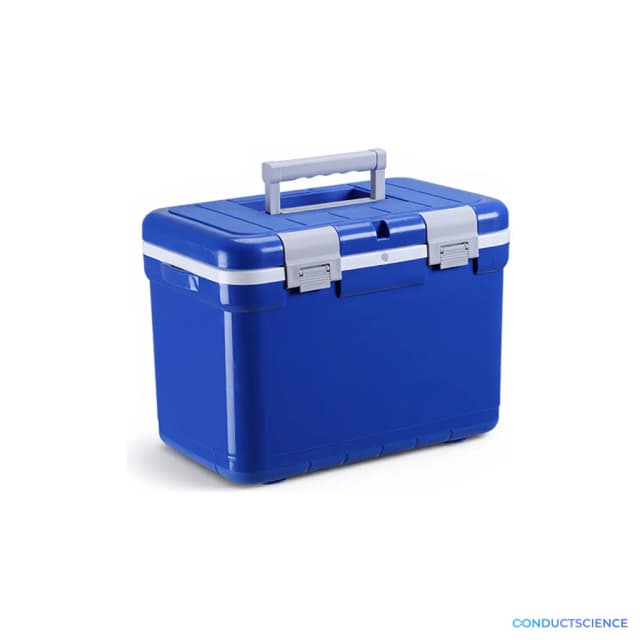
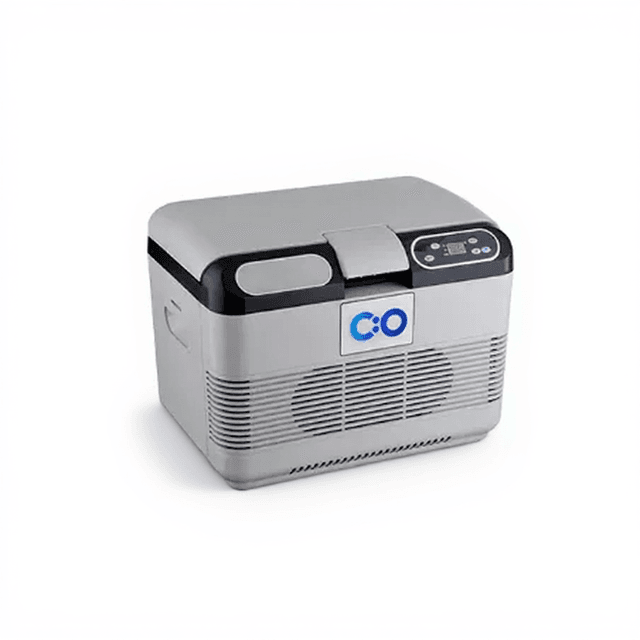
Compact portable refrigeration unit for laboratory sample preservation and transport applications, measuring 38.0 × 23.0 × 24.5 cm with 3.8 kg operational weight.

Louise Corscadden, PhD
Director of Science · ConductScience
Ask Louise about Portable Refrigerator fit, setup, configuration, or quote prep.
Already working with us? Sign in to connect this with My Scientist.
Key Specifications
Full details →- Model fit
- Configured during quote
- SKU family
- BIO-0135
- Shipping box
- 23.0 x 38.0 x 24.5 cm
- Ordering
- Online checkout and quote request available
- Category
- Cold Storage
- Build notes
- Confirm accessories, station layout, and support needs before purchase
The Portable Refrigerator (BIO-0135) is a compact cold storage solution designed for laboratory and field applications requiring reliable temperature control for biological samples, reagents, and sensitive materials. With dimensions of 38.0 cm × 23.0 cm × 24.5 cm and weighing 3.8 kg, this unit provides convenient portability while maintaining stable refrigeration for sample preservation during transport or in space-constrained laboratory environments.
This refrigeration system addresses critical storage needs where standard laboratory refrigerators are impractical due to location constraints or mobile research requirements. The compact form factor enables integration into field research setups, temporary laboratory configurations, or as supplementary cold storage for high-priority samples requiring isolated temperature control.
How It Works
The portable refrigeration system operates through vapor compression refrigeration principles, utilizing a refrigerant cycle to extract heat from the internal chamber and dissipate it to the external environment. A compressor circulates refrigerant through an evaporator coil within the storage chamber, where heat absorption causes the refrigerant to vaporize, effectively cooling the interior space.
Temperature control is maintained through thermostat regulation of the compressor cycle, ensuring consistent cooling performance across varying ambient conditions. The compact design optimizes heat exchange efficiency while minimizing power consumption, enabling reliable cold storage in portable applications where traditional refrigeration infrastructure is unavailable or impractical.
Features & Benefits
Automation Level
- manual
Research Domain
- Analytical Chemistry
- Clinical Diagnostics
- Environmental Monitoring
- Food Science
- Microbiology
- Pharmaceutical QC
Shipping weight
- 3.8 lb
Shipping box
- L: 23.0 cm
- W: 38.0 cm
- H: 24.5 cm
| Feature | This Product | Typical Alternative | Advantage |
|---|---|---|---|
| Form Factor | 38 × 23 × 24.5 cm compact design | Larger benchtop units often require more laboratory space | Fits in space-constrained environments while maintaining refrigeration capability |
| Portability | 3.8 kg operational weight | Standard laboratory refrigerators are stationary installations | Enables mobile research applications and field sample preservation |
| Power Requirements | Self-contained refrigeration system | Some portable coolers require external power or consumable cooling media | Provides consistent cooling without ongoing supply requirements |
| Temperature Control | Thermostat-controlled cooling system | Passive cooling systems offer limited temperature regulation | Maintains precise temperature control for sensitive sample preservation |
This portable refrigerator combines compact dimensions with active cooling capability, offering researchers a mobile cold storage solution that maintains consistent temperature control without requiring permanent laboratory infrastructure or consumable cooling supplies.
Practical Tips
Use a calibrated reference thermometer to verify internal temperature accuracy before storing critical samples.
Why: Ensures sample preservation temperatures meet protocol requirements and maintain analyte stability.
Clean internal surfaces regularly with appropriate laboratory disinfectants and inspect door seals for integrity.
Why: Prevents contamination and maintains thermal efficiency for consistent cooling performance.
Allow adequate ventilation clearance around cooling vents and avoid overloading to maintain proper air circulation.
Why: Ensures optimal heat dissipation and uniform temperature distribution throughout the storage chamber.
If temperature fluctuates, check ambient conditions and verify door seal closure before adjusting thermostat settings.
Why: Environmental factors and seal integrity significantly affect cooling system performance and temperature stability.
Document temperature readings at regular intervals and maintain logs of any deviations from target temperature.
Why: Provides quality assurance documentation for sample integrity and regulatory compliance requirements.
Ensure stable placement on level surfaces and secure power connections to prevent unit displacement or electrical hazards.
Why: Prevents equipment damage and maintains safe operating conditions in laboratory environments.
Setup Guide
What’s in the Box
- Portable refrigerator main unit
- Power adapter and cord (typical)
- User manual and operating instructions (typical)
- Temperature monitoring guide (typical)
- Warranty documentation (typical)
Warranty
ConductScience provides a standard 1-year manufacturer warranty covering defects in materials and workmanship, with technical support for operational questions and troubleshooting assistance.
Compliance
What is the temperature range and stability of this portable refrigerator?
Temperature specifications including operational range, stability tolerance, and cooling capacity should be verified in the product datasheet to ensure compatibility with specific sample preservation requirements.
What power requirements are needed for operation?
Power consumption, voltage requirements, and adapter specifications should be consulted in technical documentation to ensure compatibility with available power infrastructure in field or laboratory settings.
How long can the unit maintain temperature during power interruptions?
Thermal retention characteristics and insulation properties vary by design; consult product specifications for holdover time estimates under different ambient conditions and loading scenarios.
What is the internal storage volume capacity?
Internal dimensions and usable storage volume should be verified in product documentation to determine sample capacity and container compatibility for specific applications.
Can temperature be monitored remotely or logged?
Data logging capabilities, alarm functions, and monitoring interface options should be confirmed in technical specifications if continuous temperature documentation is required.
How does performance vary with different ambient temperatures?
Operating temperature range and performance curves under various environmental conditions should be reviewed in product documentation for field deployment planning.
What maintenance is required for optimal performance?
Routine cleaning procedures, filter replacement schedules, and preventive maintenance requirements should be followed per manufacturer guidelines to ensure reliable operation.
Have a question about this product?
Have a question? Just ask.
Send it over and we'll email you a personalized answer — no call, no scheduling.
Prefer to talk it through?