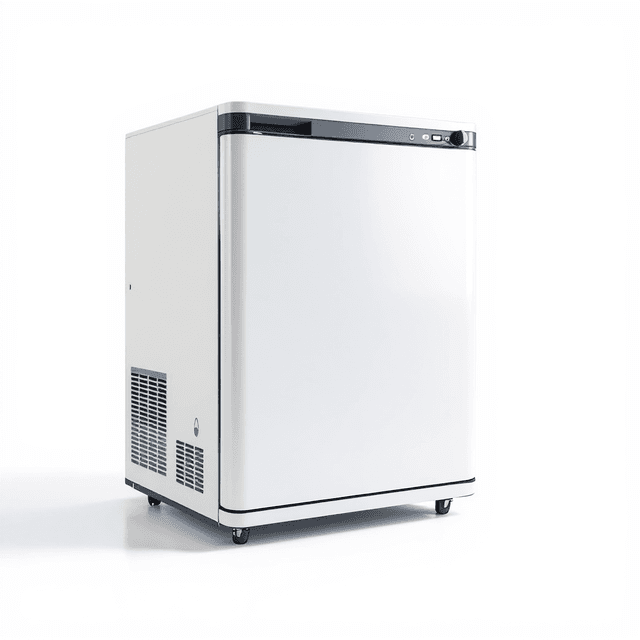
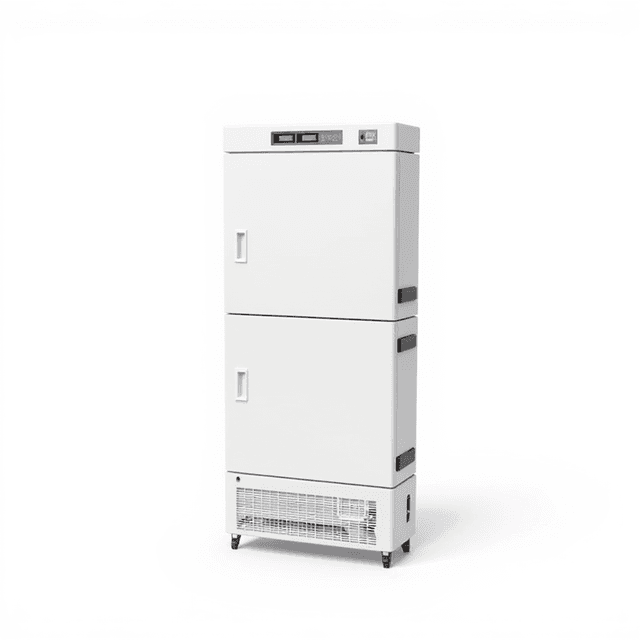
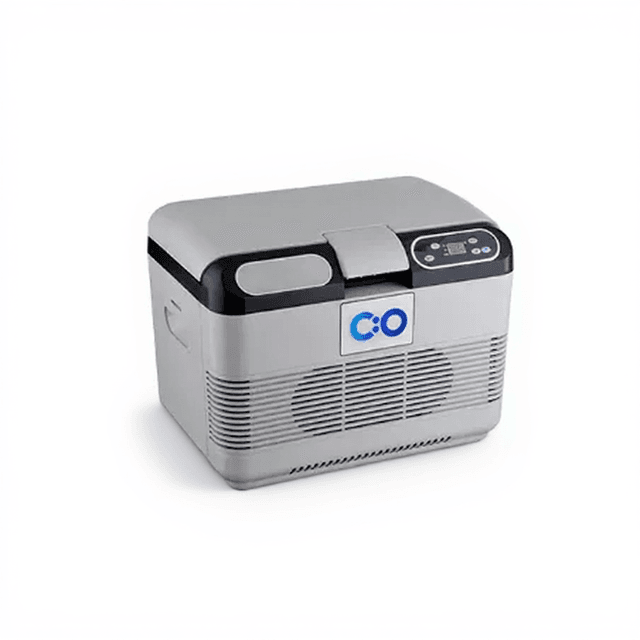
Portable Refrigerator 12L
Compact 12-liter portable refrigeration unit providing controlled cold storage for biological samples, reagents, and specimens in laboratory and field research applications.

Louise Corscadden, PhD
Director of Science · ConductScience
Ask Louise about Portable Refrigerator 12L fit, setup, configuration, or quote prep.
Already working with us? Sign in to connect this with My Scientist.
Key Specifications
Full details →- Model fit
- Configured during quote
- SKU family
- BIO-0136
- Shipping box
- 13.19 x 9.45 x 6.69 cm
- Ordering
- Online checkout and quote request available
- Category
- Cold Storage
- Build notes
- Confirm accessories, station layout, and support needs before purchase
The Portable Refrigerator 12L provides reliable cold storage for temperature-sensitive biological samples, reagents, and specimens in laboratory and field research environments. With compact dimensions of 24.0 x 33.5 x 17.0 cm and a 12-liter capacity, this unit offers controlled cooling for applications requiring sample preservation during transport or temporary storage.
Designed for research environments where standard refrigeration infrastructure may be unavailable or impractical, this portable unit supports workflows involving sample collection, fieldwork, and laboratory procedures requiring consistent temperature maintenance. The unit's portability enables temperature-controlled storage across diverse research settings while maintaining sample integrity.
How It Works
The portable refrigerator operates using thermoelectric cooling technology, typically employing Peltier effect modules that create a temperature differential when electrical current is applied. The system uses semiconductor materials to transfer heat from the internal chamber to the external environment, providing consistent cooling without mechanical compressors.
Temperature control is maintained through electronic regulation circuits that monitor internal conditions and adjust cooling output accordingly. The compact design integrates insulation materials to minimize heat transfer while maximizing cooling efficiency within the 12-liter storage volume.
Features & Benefits
Automation Level
- manual
Research Domain
- Analytical Chemistry
- Cell Biology
- Clinical Diagnostics
- Environmental Monitoring
- Food Science
- Microbiology
- Pharmaceutical QC
Shipping weight
- 6.39 lb
Shipping box
- L: 13.19 cm
- W: 9.45 cm
- H: 6.69 cm
| Feature | This Product | Typical Alternative | Advantage |
|---|---|---|---|
| Storage Capacity | 12-liter internal volume | Entry-level portable units often provide 6-8 liter capacity | Larger capacity accommodates multiple sample containers and reduces need for frequent sample transfers |
| Cooling Technology | Thermoelectric cooling system | Basic models may use passive insulation or less efficient cooling methods | Active cooling maintains consistent temperatures without reliance on external cooling media |
| Portability | Compact 24.0 x 33.5 x 17.0 cm dimensions | Larger units may exceed benchtop space limitations | Compact design fits standard laboratory spaces while maintaining useful storage volume |
| Power Flexibility | Electronic temperature regulation | Manual temperature control systems require frequent adjustment | Automated temperature control reduces monitoring requirements during extended operations |
This 12-liter portable refrigerator combines thermoelectric cooling technology with compact dimensions suitable for laboratory and field applications. The unit provides active temperature control in a portable format that accommodates multiple sample containers while fitting standard benchtop spaces.
Practical Tips
Verify temperature accuracy using calibrated thermometers placed in multiple locations within the chamber.
Why: Temperature uniformity varies across the storage volume and affects sample integrity.
Clean cooling vents regularly to maintain optimal heat dissipation and cooling efficiency.
Why: Blocked vents reduce cooling performance and increase power consumption.
Allow unit to reach thermal equilibrium before loading temperature-sensitive samples.
Why: Loading samples into an unstabilized unit can cause temperature overshoots that damage specimens.
Arrange samples to allow air circulation around containers and avoid blocking internal vents.
Why: Proper air circulation maintains temperature uniformity and prevents hot spots within the chamber.
Monitor power consumption and cooling performance if temperature control becomes inconsistent.
Why: Changes in cooling efficiency may indicate thermoelectric module degradation or power supply issues.
Record temperature monitoring data during critical sample storage periods for documentation requirements.
Why: Temperature logs provide evidence of proper sample handling for quality assurance and regulatory compliance.
Ensure adequate ventilation around the unit's exterior cooling surfaces during operation.
Why: Proper ventilation prevents overheating of thermoelectric components and maintains cooling efficiency.
Setup Guide
What’s in the Box
- Portable refrigerator main unit
- Power adapter with cord (typical)
- User manual and operation guide (typical)
- Temperature monitoring documentation (typical)
Warranty
ConductScience provides standard one-year manufacturer warranty covering defects in materials and workmanship, with technical support for proper operation and maintenance procedures.
Compliance
What temperature range can this portable refrigerator maintain?
Consult product datasheet for specific temperature range capabilities and cooling performance specifications under different ambient conditions.
How long can the unit maintain temperature during power interruptions?
Temperature retention depends on ambient conditions, internal load, and insulation properties. Monitor actual performance with your specific samples and environmental conditions.
Can this unit be used for both refrigeration and freezing applications?
Cooling capability depends on the thermoelectric system specifications. Verify temperature range in product datasheet to confirm suitability for freezing requirements.
What power sources are compatible with this refrigerator?
Consult specifications for voltage requirements, power consumption, and available adapter options for different electrical systems.
How should temperature accuracy be verified for critical samples?
Use calibrated independent thermometers to verify internal temperature accuracy and stability under your specific operating conditions.
What maintenance procedures are required for optimal performance?
Regular cleaning of cooling vents, temperature calibration verification, and power connection inspection help maintain consistent cooling performance.
Can multiple samples with different temperature requirements be stored simultaneously?
The unit maintains a single temperature throughout the chamber. Separate storage units are required for samples with different temperature requirements.
Have a question about this product?
Have a question? Just ask.
Send it over and we'll email you a personalized answer — no call, no scheduling.
Prefer to talk it through?