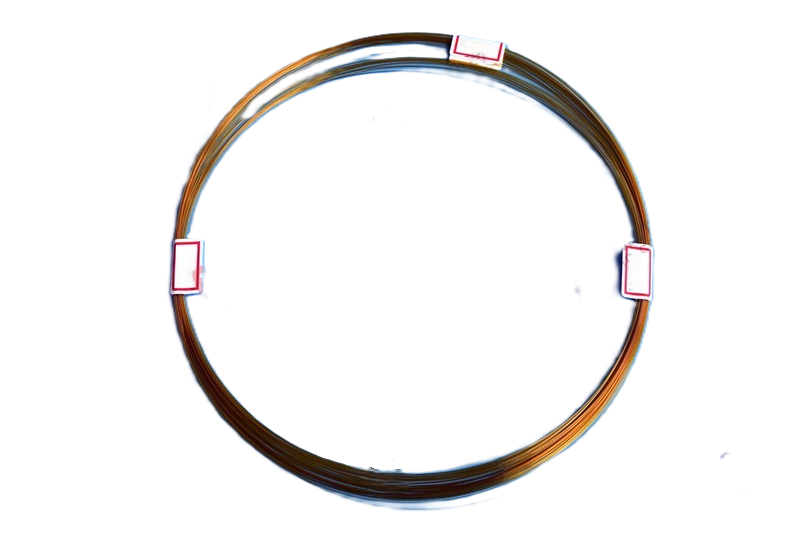
Quartz Capillary Tubes for Microfluidics
Fused silica capillary tubes with polyamide coating offering 5-530 μm internal diameter range and 300 Kpsi tensile strength for microfluidic applications and analytical separations.

Louise Corscadden, PhD
Director of Science · ConductScience
Ask Louise about Quartz Capillary Tubes for Microfluidics fit, setup, configuration, or quote prep.
Already working with us? Sign in to connect this with My Scientist.
Key Specifications
Full details →- Model fit
- Configured during quote
- SKU family
- WHM-0052
- Shipping box
- 100.0 x 5.0 x 5.0 cm
- Ordering
- Online checkout and quote request available
- Category
- Lab Equipment
- Build notes
- Fused silica, polyamide coated
Quartz capillary tubes manufactured from fused silica with polyamide coating provide precise microfluidic channel formation and sample manipulation in research applications. These high-purity tubes feature internal diameters ranging from 5–530 μm with tensile strength of 300 Kpsi, enabling reliable performance across demanding experimental conditions. The polyamide coating enhances handling durability while maintaining the optical clarity and chemical inertness of fused silica.
Operating temperatures up to 350–400°C accommodate thermal cycling protocols and high-temperature analytical procedures. The dimensional precision and surface properties of these capillary tubes support reproducible fluid dynamics in microfluidic devices, chromatographic separations, and single-cell analysis systems where controlled flow geometries are critical for experimental accuracy.
Available Models
| Model Name | SKU / Item Number | Inner Diameter (μm) | Outer Diameter (μm) |
|---|---|---|---|
| Quartz Capillary Tube | WH-MXG-005365 | 5 | 365 |
| Quartz Capillary Tube | WH-MXG-010365 | 10 | 365 |
| Quartz Capillary Tube | WH-MXG-015365 | 15 | 365 |
| Quartz Capillary Tube | WH-MXG-020365 | 20 | 365 |
| Quartz Capillary Tube | WH-MXG-025365 | 25 | 365 |
| Quartz Capillary Tube | WH-MXG-040365 | 40 | 365 |
| Quartz Capillary Tube | WH-MXG-050365 | 50 | 365 |
| Quartz Capillary Tube | WH-MXG-075365 | 75 | 365 |
| Quartz Capillary Tube | WH-MXG-100200 | 100 | 200 |
| Quartz Capillary Tube | WH-MXG-100365 | 100 | 365 |
| Quartz Capillary Tube | WH-MXG-130500 | 130 | 500 |
| Quartz Capillary Tube | WH-MXG-150365 | 150 | 365 |
| Quartz Capillary Tube | WH-MXG-200320 | 200 | 320 |
| Quartz Capillary Tube | WH-MXG-250370 | 250 | 370 |
| Quartz Capillary Tube | WH-MXG-320450 | 320 | 450 |
| Quartz Capillary Tube | WH-MXG-450690 | 450 | 690 |
| Quartz Capillary Tube | WH-MXG-530690 | 530 | 690 |
How It Works
Fused silica capillary tubes function through precise control of internal geometry and surface chemistry. The silica matrix provides exceptional chemical inertness and optical transparency, while the controlled internal diameter creates predictable flow dynamics based on Poiseuille's law. Fluid flow rates scale with the fourth power of internal diameter, making dimensional precision critical for reproducible performance.
The polyamide coating serves as a protective barrier against mechanical stress while maintaining flexibility during handling. This coating prevents surface damage that could introduce flow irregularities or particle generation. At elevated temperatures up to 400°C, the fused silica maintains dimensional stability and chemical inertness, enabling thermal cycling protocols without geometric distortion.
Surface interactions between sample components and the silica inner wall can be controlled through chemical modification or coating protocols. The high tensile strength of 300 Kpsi allows these tubes to withstand pressure differentials encountered in high-performance separation techniques and microfluidic applications requiring precise flow control.
Features & Benefits
ID Range
- 5-530 um
Tensile Strength
- 300 Kpsi
Max Temperature
- 350-400 C
Brand
- ConductScience
Material
- Fused silica, polyamide coated
Research Domain
- Analytical Chemistry
- Cell Biology
- Environmental Monitoring
- Materials Science
- Microbiology
- Pharmaceutical QC
Shipping weight
- 0.05 lb
Shipping box
- L: 100.0 cm
- W: 5.0 cm
- H: 5.0 cm
| Feature | This Product | Typical Alternative | Advantage |
|---|---|---|---|
| Internal Diameter Range | 5-530 μm continuous range | Limited to standard fixed sizes (50, 75, 100 μm common) | Enables optimization of flow rates and separation efficiency for specific analytical requirements. |
| Tensile Strength | 300 Kpsi | Standard glass tubes often provide lower mechanical strength | Withstands higher pressure differentials in demanding analytical applications without failure. |
| Temperature Rating | 350-400°C maximum operating temperature | Polymer alternatives limited to 60-150°C ranges | Accommodates high-temperature analytical procedures and thermal cycling protocols. |
| Material Composition | Fused silica with polyamide coating | Borosilicate glass or polymer materials | Combines chemical inertness and optical clarity with enhanced handling durability. |
| Surface Properties | Low surface activity silica interior | Varies by manufacturer and treatment | Minimizes analyte interactions that can compromise quantitative analysis accuracy. |
These capillary tubes provide an extensive diameter range with high mechanical strength and temperature capability. The fused silica construction offers exceptional chemical compatibility and optical properties for demanding analytical applications.
Practical Tips
Select internal diameter based on required linear velocity and acceptable pressure drop for your analytical method.
Why: Optimizes separation efficiency while maintaining system compatibility and flow stability.
Flush tubes with appropriate solvents between samples and store filled with compatible solvent to prevent drying.
Why: Prevents sample carryover and maintains consistent flow characteristics over extended use periods.
Verify actual internal diameter using flow rate measurements with known viscosity standards before critical applications.
Why: Ensures accurate flow calculations and validates tube specifications for quantitative analytical work.
Wear safety glasses and use proper cutting techniques when preparing tubes to avoid silica particle generation.
Why: Prevents eye injury and respiratory exposure to silica particles during tube preparation procedures.
If flow irregularities develop, inspect for coating damage or internal blockages using appropriate visualization methods.
Why: Early detection of tube degradation prevents analytical artifacts and maintains data quality.
Condition new tubes with multiple column volumes of mobile phase before introducing samples for analysis.
Why: Establishes equilibrium surface chemistry and removes potential manufacturing residues that could affect results.
Maintain consistent tube orientation and avoid excessive bending to preserve dimensional integrity during use.
Why: Prevents stress-induced changes in internal geometry that can affect flow reproducibility and separation performance.
Setup Guide
What’s in the Box
- Quartz capillary tubes (quantity varies by order)
- Product specification sheet (typical)
- Handling and storage recommendations (typical)
Warranty
ConductScience provides standard warranty coverage against manufacturing defects with technical support for proper installation and application guidance. Mechanical damage from improper handling or cutting is not covered under warranty terms.
Compliance
What factors determine appropriate internal diameter selection for my application?
Internal diameter selection depends on required flow rate, sample viscosity, detection sensitivity, and pressure drop constraints. Smaller diameters (5-50 μm) suit single-cell work and high-efficiency separations, while larger diameters (100-530 μm) accommodate higher flow rates and viscous samples.
How do I prevent clogging during sample analysis?
Pre-filter samples through 0.2 μm filters, use appropriate solvent conditioning, and maintain proper flow rates. Avoid introducing particulates or precipitates that exceed 10% of the internal diameter.
Can these tubes withstand organic solvents and acids?
Fused silica is compatible with most organic solvents and dilute acids. Avoid hydrofluoric acid and strong bases above pH 10, which can etch silica surfaces and compromise tube integrity.
What is the recommended storage and handling protocol?
Store in original packaging away from mechanical stress. Handle with appropriate tools to avoid coating damage. Keep in clean, dry environment and avoid temperature extremes during storage.
How do I achieve clean cuts without creating flow disturbances?
Use ceramic or diamond scribing tools to score the coating, then apply gentle bending force for clean separation. Inspect cut ends under magnification to verify perpendicular geometry and absence of chips.
What pressure ratings apply to these tubes?
Consult product datasheet for specific pressure ratings, which vary with internal diameter and temperature. The 300 Kpsi tensile strength indicates suitability for high-pressure applications when properly supported.
Are these tubes compatible with mass spectrometry interfaces?
Yes, the fused silica construction and dimensional precision make these tubes suitable for MS sample introduction systems. Verify compatibility with specific ionization sources and flow rate requirements.
Have a question about this product?
Have a question? Just ask.
Send it over and we'll email you a personalized answer — no call, no scheduling.
Prefer to talk it through?
Accessories
Enhance your setup with compatible accessories