Small-Animal Retractors and Curettes
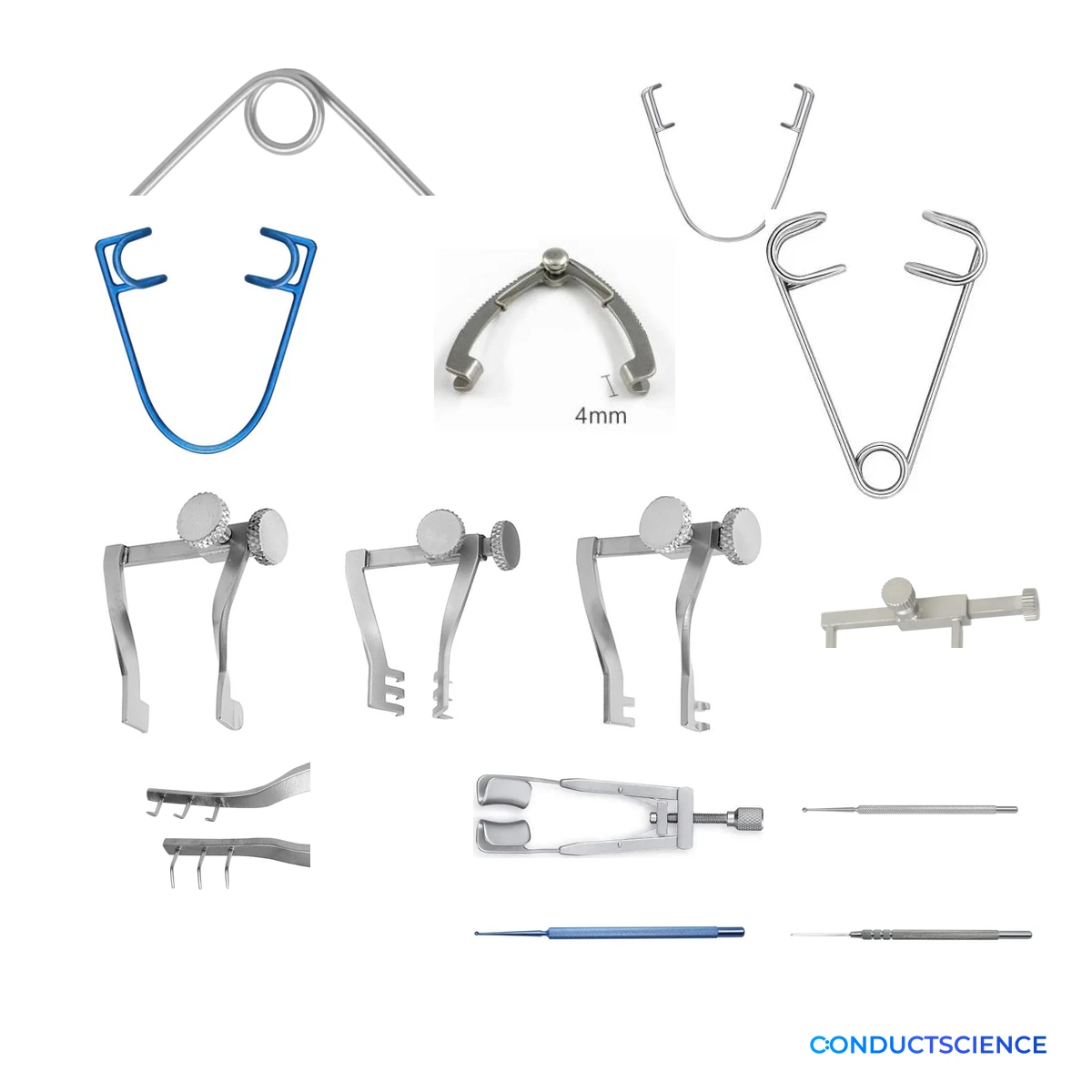
Selectable small-animal hooks, retractors, micro curettes, micro spatulas, and a micro exfoliation instrument for surgical exposure, tissue presentation, skeletal access, field opening, scraping, separating, and tray completion, with sharp and ball-tip hooks, Colibri and V-shape retractors, atraumatic blade and tooth-paw retractors, 1.5 mm to 3.5 mm stainless steel or titanium curettes, 1.2 mm and 2 mm micro spatulas, and a 4 mm double-curved micro exfoliation option.

Louise Corscadden, PhD
Director of Science · ConductScience
Ask Louise about Small-Animal Retractors and Curettes fit, setup, configuration, or quote prep.
Already working with us? Sign in to connect this with My Scientist.
Key Specifications
Full details →- Model fit
- 29 selectable configurations
- SKU family
- CS-SRG-RETRACTORS-CURETTES
- Sizing
- Model-specific dimensions confirmed from the selected configuration
- Ordering
- Online checkout and quote request available
- Category
- Surgical Instruments
- Build notes
- Confirm accessories, station layout, and support needs before purchase
Overview
The Small-Animal Retractors and Curettes page gives small-animal surgery labs one selection surface for exposure, retraction, curettage, scraping, separating, and fine-access support tools. The family includes sharp hooks, blunt-tip and ball-tip hooks, ovarian hooks, Colibri retractors, compact V-shape retractors, atraumatic blade retractors, tooth-paw retractors, titanium and stainless steel micro curettes, micro spatulas, and a double-curved micro exfoliation instrument.
The selection value is matching exposure geometry to the surgical field. Hook variants cover 12 cm to 16 cm tools with sharp, blunt, ball-tip, and 8 mm tip-width options. Retractor variants cover 2 cm to 8 cm total lengths and 5 mm to 50 mm maximum spread, including wire-steel, V-shape, atraumatic blade, blunt-tooth, and sharp-tooth paw profiles. Curette variants cover titanium or stainless steel materials with 1.5 mm, 2.5 mm, and 3.5 mm tip diameters, while the fine-separation choices add 1.2 mm and double-curved 2 mm micro spatulas plus a double-curved 4 mm micro exfoliation option.
Scientific Use
Small-animal retractors and curettes support surgical exposure and tissue presentation in spinal, orthopedic, cardiovascular, reproductive, cranial-window, perfusion, and general survival surgery stations. They are especially useful when the procedure needs a compact self-retaining retractor, controlled field opening, gentle atraumatic blade exposure, toothed retraction, fine scraping, or a narrow spatula for delicate separation.
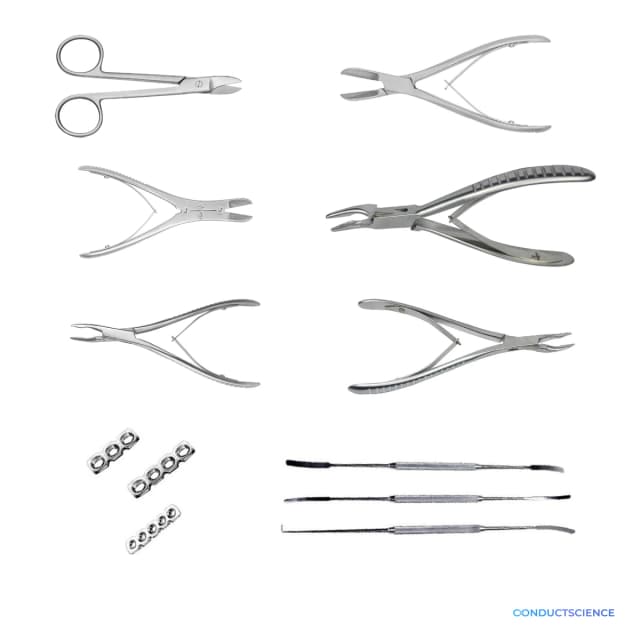
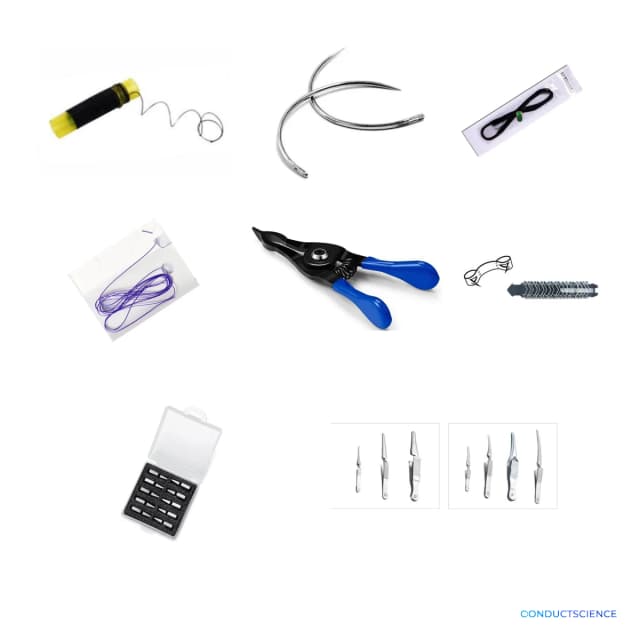
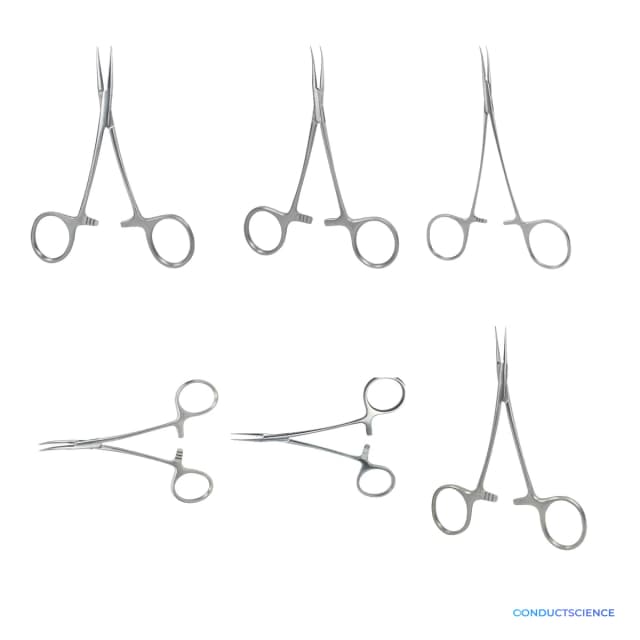
Pair this page with fine tweezers, hemostatic forceps, needle holders, wound closure supplies, bone instruments, magnification, anesthesia, warming, and sterile preparation selected around the procedure. For a broader purchase, use the procedure-specific kit pages and add these variants as replenishment, replacement, or tray-specialization tools.
Buying Fit
Choose this page when the purchase is specifically a hook, retractor, curette, micro spatula, or micro exfoliation instrument rather than a full surgical kit. The selectable family keeps exposure tools, tooth and blade retractors, and fine scraping/separation tools in one URL so procurement can match the working depth, spread, paw profile, material, and tip geometry to the intended field.
Features & Benefits
Instrument groups
- Hooks, Colibri retractors, V-shape retractors, atraumatic blade retractors, tooth-paw retractors, micro curettes, micro spatulas, and micro exfoliation
Hook range
- Sharp, 8 mm width, two prolonged blunt tips, two prolonged ball tips, and ovarian single-ball hook options; 12 cm to 16 cm
Retractor spread
- 5 mm to 50 mm maximum spread; 2 cm to 8 cm total length depending on selected configuration
Paw and tip profiles
- Wire-steel, V-shape, atraumatic blades, 1x1 blunt teeth, 2x2 blunt teeth, 3x3 sharp teeth, and 3x3 blunt teeth
Curette and spatula tips
- Titanium or stainless steel curettes with 1.5 mm, 2.5 mm, or 3.5 mm tip diameters; 1.2 mm and 2 mm micro spatula tips; 4 mm double-curved micro exfoliation tip
Use fit
- Surgical exposure, tissue presentation, field opening, scraping, separation, and tray completion
| Model | SKU | Listed price | Status | Shipping box |
|---|---|---|---|---|
| Sharp hook, pattern A, 12 cm | CS-SRG-RET-HOOK-SHARP-A-120 | $24.99 | Available | Confirmed during quote |
| Sharp hook, pattern B, 12 cm | CS-SRG-RET-HOOK-SHARP-B-120 | $24.99 | Available | Confirmed during quote |
| Hook, 8 mm tip width, 13 cm | CS-SRG-RET-HOOK-8-130 | $34.99 | Available | Confirmed during quote |
| Hook, two prolonged blunt tips, 6 mm tip width, 16 cm | CS-SRG-RET-HOOK-BLUNT-2T-6-160 | $42.99 | Available | Confirmed during quote |
| Hook, two prolonged ball tips, 7.5 mm tip width, 16 cm | CS-SRG-RET-HOOK-BALL-2T-75-160 | $44.99 | Available | Confirmed during quote |
| Ovarian hook, single ball tip, 16 cm | CS-SRG-RET-OVARIAN-HOOK-BALL-160 | $39.99 | Available | Confirmed during quote |
| Colibri retractor, wire-steel paw, 15 mm maximum spread, 4 cm | CS-SRG-RET-COLIBRI-WIRE-15-40 | $42.99 | Available | Confirmed during quote |
| Colibri retractor, titanium, V-shape paw, 13 mm maximum spread, 2 cm | CS-SRG-RET-COLIBRI-TI-V-13-20 | $49.99 | Available | Confirmed during quote |
| Retractor, stainless steel, V-shape paw, 25 mm maximum spread, 3 cm | CS-SRG-RET-SS-V-25-30 | $72.99 | Available | Confirmed during quote |
| Retractor, titanium, V-shape paw, 25 mm maximum spread, 3 cm | CS-SRG-RET-TI-V-25-30 | $89.99 | Available | Confirmed during quote |
| Retractor, V-shape paw, 6 mm maximum spread, 2 cm | CS-SRG-RET-V-6-20 | $54.99 | Available | Confirmed during quote |
| Retractor, atraumatic blades, 30 mm maximum spread, 5.5 cm | CS-SRG-RET-ATRAUMATIC-30-55 | $99.99 | Available | Confirmed during quote |
| Retractor, 1x1 blunt teeth paw, 10 mm maximum spread, 2 cm | CS-SRG-RET-1X1-BLUNT-10-20 | $74.99 | Available | Confirmed during quote |
| Retractor, 3x3 sharp teeth paw, 5 mm maximum spread, 2 cm | CS-SRG-RET-3X3-SHARP-5-20 | $89.99 | Available | Confirmed during quote |
| Retractor, 2x2 blunt teeth paw, 10 mm maximum spread, 2 cm | CS-SRG-RET-2X2-BLUNT-10-20 | $79.99 | Available | Confirmed during quote |
| Retractor, 3x3 sharp teeth paw, 18 mm maximum spread, 3 cm | CS-SRG-RET-3X3-SHARP-18-30 | $161.99 | Available | Confirmed during quote |
| Retractor, atraumatic blades, 25 mm maximum spread, 8 cm | CS-SRG-RET-ATRAUMATIC-25-80 | $134.99 | Available | Confirmed during quote |
| Retractor, wire-steel paw, 40 mm maximum spread, 8 cm | CS-SRG-RET-WIRE-40-80 | $149.99 | Available | Confirmed during quote |
| Retractor, 3x3 blunt teeth paw, 20 mm maximum spread, 8 cm | CS-SRG-RET-3X3-BLUNT-20-80 | $139.99 | Available | Confirmed during quote |
| Retractor, atraumatic blades, 50 mm maximum spread, 7.5 cm | CS-SRG-RET-ATRAUMATIC-50-75 | $164.99 | Available | Confirmed during quote |
| Micro curette, stainless steel, 1.5 mm tip diameter, 11 cm | CS-SRG-CURETTE-SS-15-110 | $103.99 | Available | Confirmed during quote |
| Micro curette, stainless steel, 2.5 mm tip diameter, 11 cm | CS-SRG-CURETTE-SS-25-110 | $103.99 | Available | Confirmed during quote |
| Micro curette, stainless steel, 3.5 mm tip diameter, 11 cm | CS-SRG-CURETTE-SS-35-110 | $103.99 | Available | Confirmed during quote |
| Micro curette, titanium, 1.5 mm tip diameter, 11 cm | CS-SRG-CURETTE-TI-15-110 | $126.99 | Available | Confirmed during quote |
| Micro curette, titanium, 2.5 mm tip diameter, 11 cm | CS-SRG-CURETTE-TI-25-110 | $126.99 | Available | Confirmed during quote |
| Micro curette, titanium, 3.5 mm tip diameter, 11 cm | CS-SRG-CURETTE-TI-35-110 | $126.99 | Available | Confirmed during quote |
| Micro spatula, 1.2 mm tip width, 0.3 mm tip thickness, 12.5 cm | CS-SRG-SPATULA-MICRO-12-03-125 | $39.99 | Available | Confirmed during quote |
| Micro spatula, double-curved, 2 mm tip width, 0.3 mm tip thickness, 14 cm | CS-SRG-SPATULA-MICRO-DC-20-03-140 | $90.99 | Available | Confirmed during quote |
| Micro exfoliation instrument, double-curved, 4 mm tip width, 18 cm | CS-SRG-EXFOLIATION-MICRO-DC-40-180 | $78.99 | Available | Confirmed during quote |
Practical Tips
Include the target species and procedure context in the quote request.
Why: Mouse and rat small-animal surgical exposure, retraction, curettage, scraping, separation, and tray completion workflows may require different handling scale and support components.
Review anesthesia and animal-support equipment alongside the surgical kit.
Why: Surgical instruments are only one part of a reproducible small-animal procedure setup.
Treat exact kit contents as quote-confirmed rather than fixed from the preview page.
Why: This keeps the public listing accurate while allowing the final configuration to match the lab workflow.
Setup Guide
What’s in the Box
- 1 x selected small-animal hook, retractor, micro curette, micro spatula, or micro exfoliation configuration
- Configuration selected by hook tip, paw shape, maximum spread, material, total length, curette tip diameter, spatula tip geometry, or micro exfoliation geometry where applicable
Warranty
Support, replacement, and fulfillment terms are confirmed with the final quote and institutional purchasing requirements.
Compliance
Which Small-Animal Retractors and Curettes configurations are available?
The page includes sharp hooks, blunt-tip hooks, ball-tip hooks, ovarian hooks, Colibri retractors, V-shape retractors, atraumatic blade retractors, blunt-tooth and sharp-tooth retractors, titanium and stainless steel micro curettes, micro spatulas, and a micro exfoliation option.
When should I choose a hook versus a retractor?
Choose a hook when the workflow needs focused tissue presentation or a narrow access point. Choose a retractor when the field needs a maintained spread, defined paw profile, or self-retaining exposure.
What does maximum spread mean for the retractor options?
Maximum spread is the specified opening range for the selected retractor. The family covers compact 5 mm and 6 mm choices through broader 40 mm and 50 mm options, so labs can match spread to the operative field.
When are micro curettes useful?
Micro curettes are useful for fine scraping, cleaning, separating, and access work where the 1.5 mm, 2.5 mm, or 3.5 mm tip diameter is the main selection point.
When should I choose a micro spatula or micro exfoliation option?
Choose a micro spatula when the workflow needs a narrow flat tip for fine separation or transfer. Choose the double-curved micro exfoliation option when the station needs a broader 4 mm fine-separation tool with angled access.
How should these be paired with other surgical instruments?
Pair exposure tools with fine tweezers, hemostatic forceps, scissors, handles and blades, bone instruments, wound closure supplies, magnification, anesthesia, warming, and sterile preparation selected around the procedure.
Have a question about this product?
Have a question? Just ask.
Send it over and we'll email you a personalized answer — no call, no scheduling.
Prefer to talk it through?
Accessories
Enhance your setup with compatible accessories
Frequently Bought Together