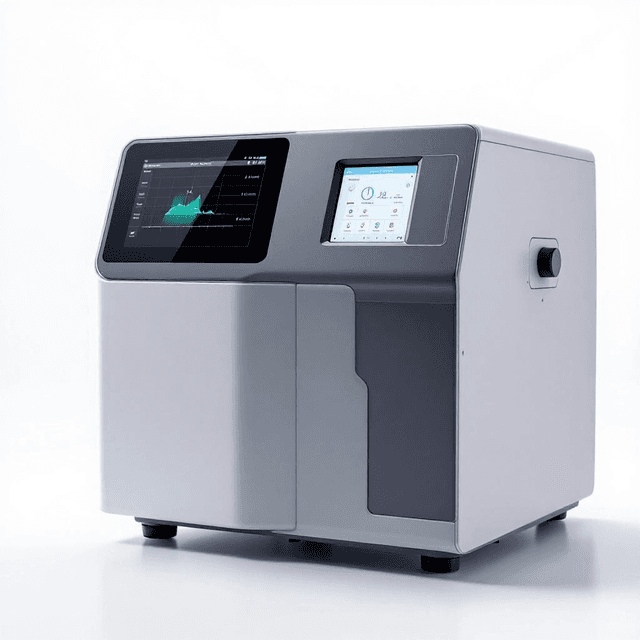
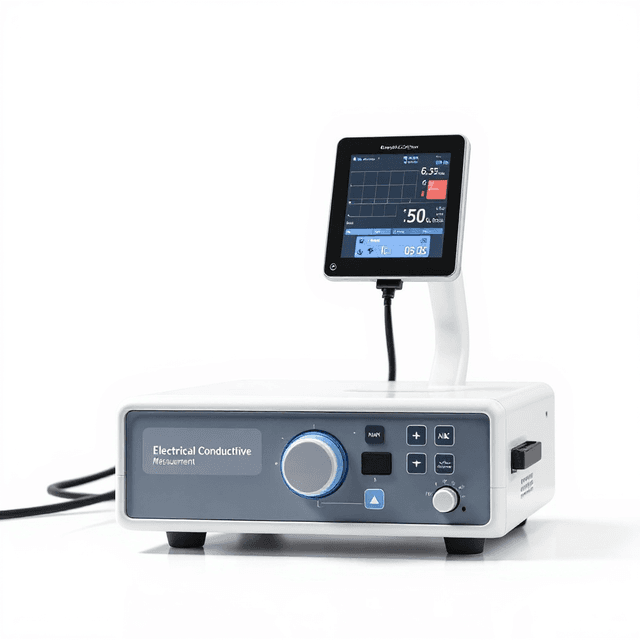
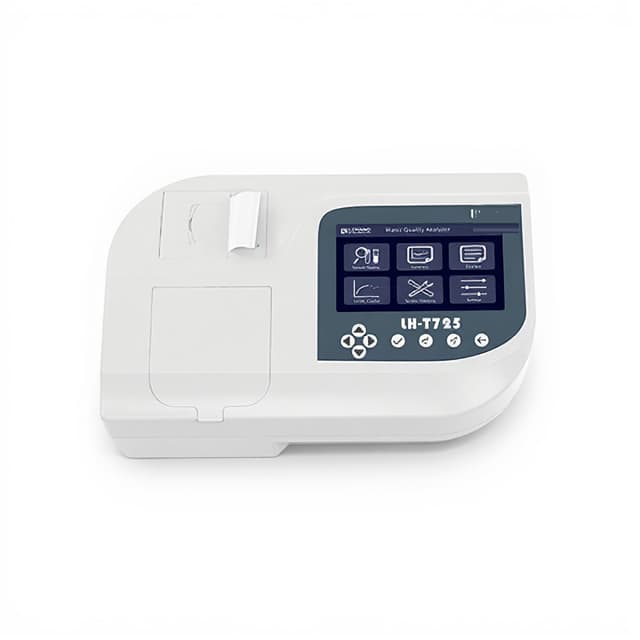
Total Nitrogen Meter
Portable spectrophotometric analyzer for total nitrogen determination in water samples, featuring battery operation and 0.5-50 mg/L measurement range for field applications.

Louise Corscadden, PhD
Director of Science · ConductScience
Ask Louise about Total Nitrogen Meter fit, setup, configuration, or quote prep.
Already working with us? Sign in to connect this with My Scientist.
Key Specifications
Full details →- Model fit
- Configured during quote
- SKU family
- CS-LH-NIT001
- Shipping box
- 8.8 x 7.3 x 5.9 cm
- Ordering
- Online checkout and quote request available
- Category
- Benchtop Analyzers
- Build notes
- Confirm accessories, station layout, and support needs before purchase
The Total Nitrogen Meter CS-LH-NIT001 is a portable spectrophotometric analyzer designed for quantitative determination of total nitrogen content in water samples. Utilizing rapid digestion spectrophotometry at 410nm wavelength with LED light source, this instrument provides field-ready nitrogen analysis with a measuring range of 0.5-50 mg/L and ±10% accuracy.
The battery-powered design addresses the challenge of conducting water quality assessments in remote locations without electrical infrastructure. The instrument employs alkaline battery operation with over 30 hours of continuous use, making it suitable for extended field campaigns and on-site monitoring applications where laboratory access is limited.
How It Works
The instrument operates on the principle of rapid digestion spectrophotometry, where organic and inorganic nitrogen compounds in the water sample are converted to a measurable chemical species through controlled digestion. The digestion process breaks down complex nitrogen-containing molecules into simpler forms that can be quantified spectrophotometrically.
Following digestion, the sample is analyzed using LED-based spectrophotometry at 410nm wavelength. At this specific wavelength, the nitrogen-derived reaction products exhibit characteristic light absorption that is directly proportional to the total nitrogen concentration in the original sample. The instrument's detector measures the absorbance and converts it to concentration values using pre-programmed calibration curves.
The portable design incorporates battery-powered electronics optimized for field use, allowing measurements to be performed outside laboratory settings while maintaining analytical accuracy within ±10% of the true value across the 0.5-50 mg/L measurement range.
Features & Benefits
test item
- Total nitrogen
measuring range
- 0.5-50mg/L
light source
- LED
Wavelength
- 410nm
test method
- Rapid digestion spectrophotometry
working condition
- 0-50â , Rh:0-80%
battery life
- more than 30 hours
Automation Level
- manual
Brand
- ConductScience
Accuracy
- ±10%
Research Domain
- Analytical Chemistry
- Environmental Monitoring
- Food Science
- Industrial Hygiene
- Pharmaceutical QC
Shipping weight
- 0.26 lb
Shipping box
- L: 8.8 cm
- W: 7.3 cm
- H: 5.9 cm
| Feature | This Product | Typical Alternative | Advantage |
|---|---|---|---|
| Measurement Range | 0.5-50 mg/L total nitrogen | Laboratory instruments often provide wider ranges but require facility infrastructure | Range covers typical environmental concentrations while maintaining field portability |
| Analytical Accuracy | ±10% measurement accuracy | Laboratory methods may achieve higher precision but with longer analysis times | Provides reliable quantitative data suitable for field screening and monitoring applications |
| Power Requirements | Battery operation with >30 hour life | Benchtop analyzers require AC power connections | Enables measurements in remote locations without electrical infrastructure |
| Analysis Method | Rapid digestion spectrophotometry at 410nm | Traditional methods often use different wavelengths or digestion protocols | Optimized wavelength selection and digestion chemistry for efficient nitrogen determination |
| Operating Conditions | 0-50°C temperature, 0-80% humidity tolerance | Laboratory instruments typically require controlled environmental conditions | Functions reliably across diverse field conditions for outdoor monitoring applications |
The CS-LH-NIT001 offers field-portable nitrogen analysis with 0.5-50 mg/L range and ±10% accuracy, utilizing battery-powered rapid digestion spectrophotometry. The 30+ hour battery life and environmental tolerance make it suitable for extended field campaigns where laboratory access is limited.
Practical Tips
Verify calibration using certified reference standards at the beginning of each field campaign and after extended storage periods.
Why: Maintains measurement accuracy and identifies any drift in instrument response over time.
Clean the optical measurement chamber regularly and inspect for residue buildup that could affect light transmission.
Why: Prevents systematic errors caused by optical interference and maintains consistent spectrophotometric performance.
Allow samples to equilibrate to ambient temperature before analysis to ensure consistent digestion kinetics.
Why: Temperature variations can affect reaction rates and final absorbance readings in spectrophotometric analysis.
If readings appear inconsistent, check test tube cleanliness and ensure proper sample mixing before measurement.
Why: Contaminated tubes or poorly mixed samples are common sources of analytical variability in field measurements.
Run duplicate measurements on 10% of samples and record environmental conditions during field analysis.
Why: Provides quality assurance data and helps identify environmental factors affecting measurement precision.
Handle digestion reagents according to chemical safety protocols and ensure adequate ventilation during sample processing.
Why: Digestion chemistry may involve hazardous reagents requiring appropriate safety precautions.
Dilute high-concentration samples with distilled water and record dilution factors for accurate concentration calculations.
Why: Maintains measurements within the validated analytical range while preserving sample integrity.
Store the instrument in a dry environment and remove batteries during extended periods of non-use.
Why: Prevents moisture damage to electronics and eliminates battery leakage risks during storage.
Setup Guide
What’s in the Box
- Total Nitrogen Meter main unit
- Test tubes and sample holders (typical)
- Digestion reagents starter kit (typical)
- User manual and quick start guide
- Calibration reference standards (typical)
- Protective carrying case (typical)
Warranty
ConductScience provides a standard one-year manufacturer warranty covering defects in materials and workmanship, with technical support for instrument operation and maintenance protocols.
Compliance
References
Background reading relevant to this product:
What is the detection limit for total nitrogen measurement?
The instrument measures nitrogen concentrations from 0.5 mg/L, which represents the lower detection limit. For samples below this threshold, consult the product datasheet for sensitivity enhancement options.
How does the rapid digestion method compare to traditional Kjeldahl analysis?
Rapid digestion spectrophotometry significantly reduces processing time while maintaining comparable accuracy to Kjeldahl methods, with the advantage of field portability and immediate results.
What sample volume is required for analysis?
Consult the product datasheet for specific sample volume requirements, which typically depend on the concentration range and desired measurement precision.
Can the instrument differentiate between organic and inorganic nitrogen species?
This instrument measures total nitrogen content after complete digestion, providing the sum of all nitrogen-containing compounds rather than speciation data.
What is the recommended calibration frequency?
Calibration frequency should be established based on usage intensity and accuracy requirements, with verification using certified reference standards before critical measurements.
How should samples be preserved for delayed analysis?
For optimal results, analyze samples immediately after collection. If storage is necessary, consult standard water analysis preservation protocols for nitrogen determinations.
What interferences might affect nitrogen measurements?
High turbidity, extreme pH values, or interfering chemical species may affect results. Sample filtration and pH adjustment may be required for accurate measurements.
Have a question about this product?
Have a question? Just ask.
Send it over and we'll email you a personalized answer — no call, no scheduling.
Prefer to talk it through?