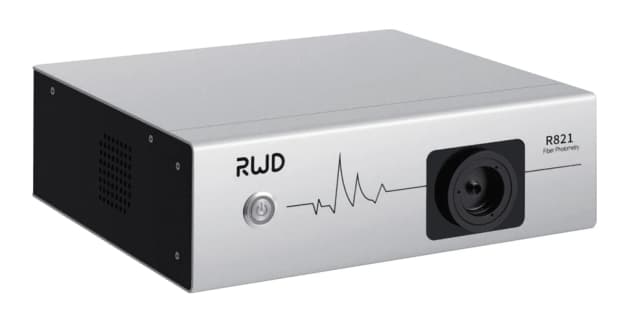
Tricolor Multichannel Fiber Photometry System
Fiber photometry is a technology to detecting the activity of neurons in the brain nucleus of freely moving animals. It sums up the overall fluorescence of neurons expressing a genetically encoded calcium indicator(GECI) or neurotransmitter probes...
| excitation_wavelengths | 410nm, 470nm, 560nm |
| maximum_channels | 9 channels |
| reference_wavelength | 410nm |
| green_fluorescence_wavelength | 470nm |
| red_fluorescence_wavelength | 560nm |
| compatible_green_indicators | GCaMP, dLight |

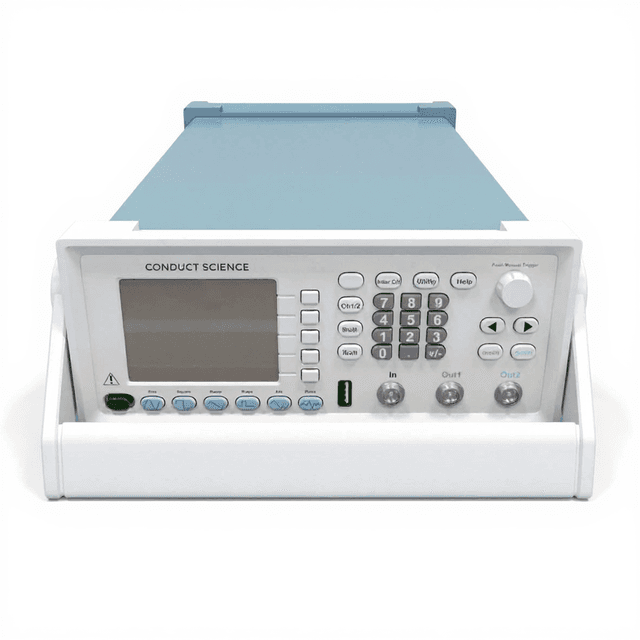
R821 TriColor Multichannel Fiber Photometry System has three excitation light sources, 410nm, 470nm and 560nm, of which 410 is used to acquire reference signal and eliminate noise. The system can record signal of green fluorescence indicator like GCaMP and dLight or neurotransmitter probe and red fluorescence indicator like RCaMP, jrGECO1a or neurotransmitter probe.
Fiber photometry calcium imaging is becoming increasingly popular in neuroscience research and, based on its advantages, is now an indispensable tool for the real-time detection of neural signals.
Specifications
| Product Parameter | Details |
|---|---|
| Wavelength of excitation light | 410nm 470nm 560nm |
| Power | Min 0µW, Max≥100µW, adjustable with an accuracy of 0.1µW |
| Number of channels | 9 |
| Frame rate of fluorescent sampling | Max 250fps |
| Digital signal interface | 4 Input /4Output |
| Multiple signal input & output ports | USB 3.0 (software control), 4 digital Signal input, 4 Digital signal output, CHAS (Grounding Interface), Optogenetics(Model R821) |
| Signal output | Output frequency 0-500Hz, adjustable output pulse width and duration |
| Marking | Manual marking (10), automatic marking (4), ROI marking (9) |
| Behavior camera | 1920*1080(30fps) 1280*720(60fps)
Switchable among multiple frame rates of resolution |
| Compatible | Compatible with optogenetics for recording and stimulation at the same site |
Product Features
- Three kinds of excitation light sources, that is 410nm、470nm and 560nm, are respectively used for excitation of reference, green fluorescence and red fluorescence.
- Multiple excitation lights combinations to address a variety of experimental needs: 410nm | 470nm | 560nm | 470nm and 560nm | 470nm, 560nm and 410nm.
- Support simultaneus recording up to 9 channels: suitable for simultaneous experiment of multiple animals or multiple brain locations-
- Dual highly sensitive detectors enabling independent and sequential detection to avoid interference of fluorescence excitation and detection, acquiring more accurate signal.
- Professional acquisition and analysis softwares are flexible and easy to operate with data processing functions available. No matlab programming is required;
- Supports multiple acquisition modes including continuous acquisition, interval acquisition, acquisition upon trigger, delayed acquisition and timing acquisition.
- Live display of DeltaF/F acquisition to check scale of signal changes during acquisition.
- Customized adjustment of output signal parameter, easily trigger and control external excitation equipment to achieve closed-cycle control of excitation and recording.
- Compatible with optogenetics for recording and stimulation at the same site.
Standard Configuration
| Item | Qty | Specifications | Description |
|---|---|---|---|
| Fiber Photometry
Main Device |
1 | Includes: Host, power cord, 3 USB cables, USB expansion interface, software U disk | Dimension:
31.5 cm x 30.3cm x 11.1cm |
| Software | 1 | Includes pre-installed software, I5-10500H/16G/ 500G/WIN10(1920*1080) | Integrated software: Data acquisition and analysis |
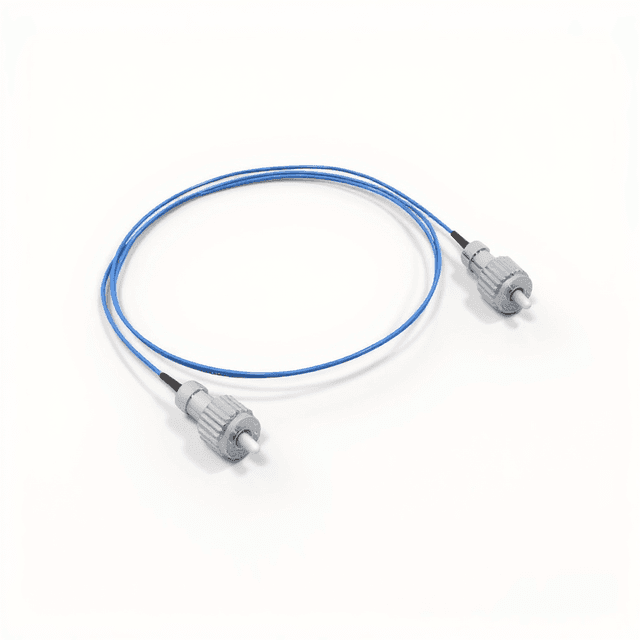
| Optical fiber | 1 | Low Autofluorescence Fiber-optic Patch Cords 200um/ 0.37NA/2m,Ф1.25mm or Ф2.5mm | Small and flexible: minimal tissue damage |
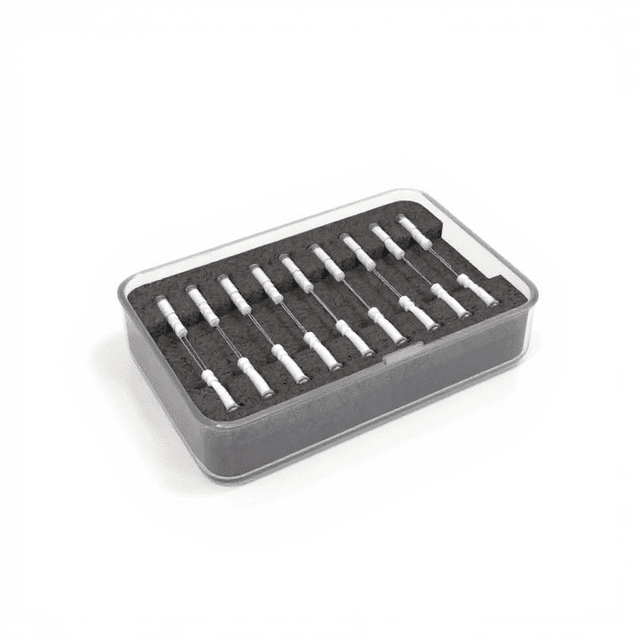
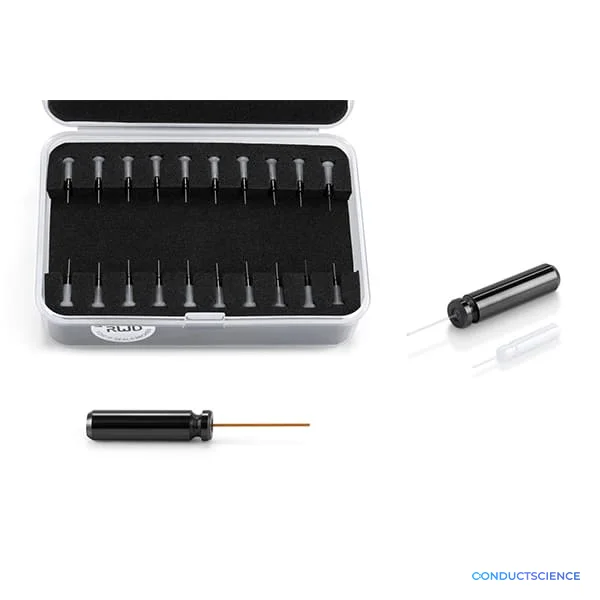
| Fiber Cannula sleeves | 1 | Black Ceramic Sleeves, Φ1.25mm or Φ2.5mm | -- |
| Behavior Camera | 1 | Record video of animal behavior and identify animal tracks,USB3.0,3M | Flexible viewing of behavior videos. Simultaneously data in vivo animals. |
| Behavior Camera bracket | 1 | Adjustable height range0.8-1.5m,Rotation Angle 360° | -- |
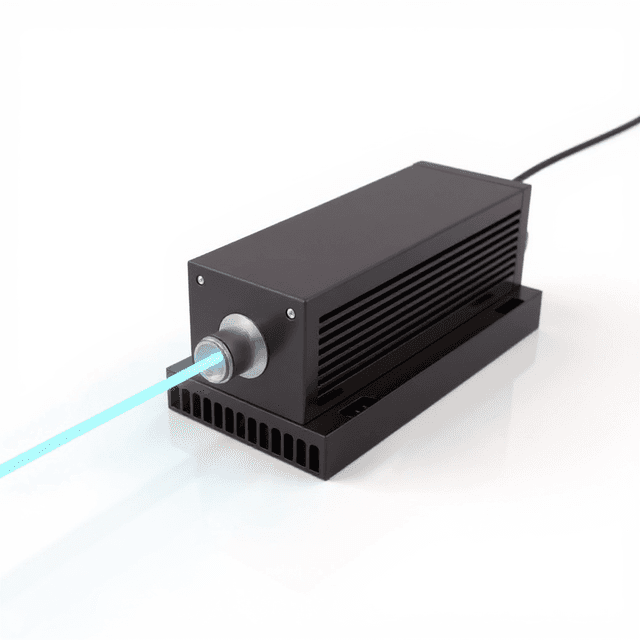
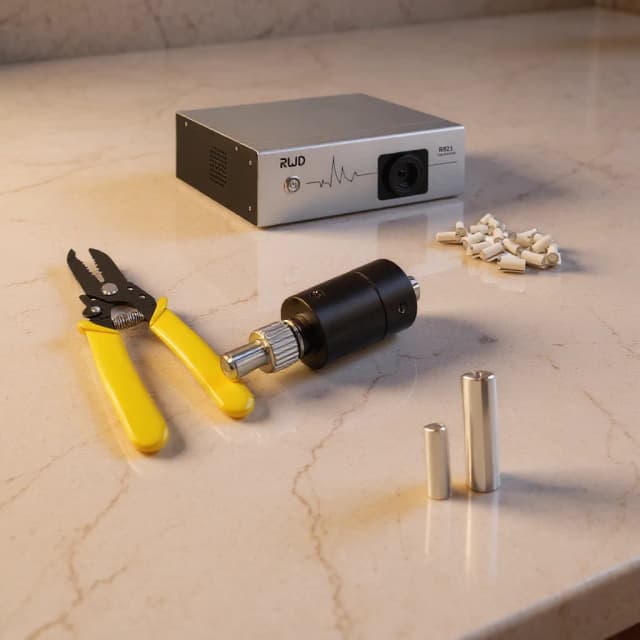
| Photobleaching device | 1 | FC/PC Patch Cord photobleaching machine(R810-1) | Reduce autofluorescence interference |
| U disk | 1 | Software key(Not for analysis function) | Back up drivers and software |
Advantages
Optic probe small & flexible
The implanted fiber optic probe is small and flexible and resulting in minimal tissue damage and allows recording from multiple brain regions simultaneously.
Integrates data acquisition, analysis & plotting.
Bonsai software and MATLAB programming are not required. Data analysis includes data clipping, bleaching correction, smoothing, movement correction, event heat map, peak statistics, and area under curve and heat map of behavior trajectory.
Easy Connection to Other Equipment.
4-input and 4-output interface for easy connection with other equipment such as optogenetics and electrophysiology for the closed-loop study of stimulation and recording.
Multiple Behavioral Events Synchronize & Mark.
The software can synchronize and mark multiple special behavioral events or external input signals during the experiment.
9 Channels Support
Support up to 9 channels, suitable for simultaneous experiment of multiple animals or multiple brain locations
More Accurate Signal, Avoid Interference
Dual highly sensitive detectors enabling independent and sequential detection to avoid interference of fluorescence excitation and detection, acquiring more accurate signal. The 410nm light source can be used to reflect the background noise signal, thus ensuring the acquisition of true fluorescence data.
Principle
Fiber photometry emerges as a sophisticated technology meticulously designed for the precise detection of neural activity within the brain nuclei of unrestrained animals. This method entails the amalgamation of fluorescence emitted by neurons expressing genetically encoded calcium indicators (GECI) or neurotransmitter probes. (Adelsberger, 2005).
The evolution of fiber photometry calcium imaging spans nearly a decade, earning commendation from diverse laboratories for its rigorous scientific merit. Its application extends to the systematic investigation of regulatory mechanisms governing animal behavior. One reason for the growth of this technique is the ongoing development of biosensors that measure general cellular activity, or the activity of specific neurotransmitters such as glutamate, GABA, acetylcholine, serotonin, dopamine, norepinephrine, and orexin (Bruno et al., 2021).
Fiber photometry constitutes an optical methodology wherein light serves as a stimulus to initiate and quantify variations in fluorescence arising from structural alterations in an expressed biosensor. Briefly, light of a specific wavelength for excitation is transmitted through an implanted optical fiber, and the ensuing fluorescence is conveyed back via the same fiber to a photodetector. Subsequently, a digital optical intensity signal is generated, hypothesized to depict the proportional quantity of the target-bound sensor situated at the distal end of the fiber (Li et al., 2019).
The detected signal emanates from the tissue surrounding the fiber tip, with a spatial extent ranging from 50 to 400 um, thus constituting a regional or 'bulk' measurement. Owing to the genetic encoding of biosensors, their expression can be directed toward specific circuits and/or cell types, where stability may endure for extended durations, spanning weeks to months.
This protracted temporal capacity distinguishes fiber photometry from other in vivo techniques, enabling repetitive recordings over considerable time frames (Gunaydin, et al., 2014). Notably, this methodology has facilitated unprecedented insights into the correlation between population activity within specific cell groups and various facets of intricate behaviors, including but not limited to movement, memory, motivation, appetitive and aversive learning, among others.
As remarked by Simpson et al., 2023, Fiber photometry has gained popularity for in vivo monitoring of neural signals in behaving animals due to its practical advantages. In comparison to other methods like electrophysiology, it offers signals with molecular and cellular specificities, higher spatial resolution, and much higher temporal resolution. It outperforms microdialysis in terms of temporal resolution and can provide concurrent recordings of dopamine, revealing differences in observable temporal dynamics. Additionally, photometry is more sensitive for certain analytes/environments compared to cyclic voltammetry and allows access to molecules without electrochemical methods. Its practical benefits include less invasive surgical procedures, flexibility with lightweight optical fibers, and the availability of cost-effective "plug-and-play" systems, making it accessible for diverse researchers to study brain-behavior relationships at scale. Furthermore, fiber photometry generates relatively low-sized and less complex raw data compared to other in vivo techniques like electrophysiology and imaging.
The integration of fluorescent reporters with fiber photometry enables the monitoring of cell-type-specific neuronal activity and the assessment of specific gene expression levels (Chen et al., 2013). This experimental approach, crucial for investigating brain functions, involves studying correlations between neuronal activity and natural animal behavior. Traditional electrophysiological recording, renowned for its high temporal resolution, has provided profound insights into neural circuit functions. However, employing light-sensitive proteins for optical tagging in electrophysiological recordings is technically challenging, sensitive to noise interference during natural behaviors, and inefficient.
Fiber photometry, leveraging genetically-encoded Ca2+ indicators like GCaMP proteins, facilitates the monitoring of genetically-defined neuron populations. Numerous research groups have utilized fiber photometry to make exciting observations of neuronal activation patterns during various behaviors, including affective reward- and punishment-related behaviors (Wang et al., 2017), feeding behaviors, social behaviors (Chen et al., 2015), arousal, and long-term learning. Moreover, fiber photometry allows for the measurement of gene expression levels, as demonstrated in a study of circadian rhythms by monitoring circadian clock gene expression using bioluminescent reporters (Mei et al., 2018).
Main Applications
- Detection of Ca2+ and neurotransmitter signals
- Investigation of neural circuit functionality
- Exploration of mechanisms underlying neurological diseases
- Development of new fluorescent sensor probes
- Experiments involving optical principles
References
Adelsberger, H., Garaschuk, O., & Konnerth, A. (2005). Cortical calcium waves in resting newborn mice. Nature neuroscience, 8(8), 988-990.
Bruno, C. A., O'Brien, C., Bryant, S., Mejaes, J. I., Estrin, D. J., Pizzano, C., & Barker, D. J. (2021). pMAT: An open-source software suite for the analysis of fiber photometry data. Pharmacology, biochemistry, and behavior, 201, 173093. https://doi.org/10.1016/j.pbb.2020.173093
Chen, T.-W., Wardill, T. J., Sun, Y., Pulver, S. R., Renninger, S. L., Baohan, A., Schreiter, E. R., Kerr, R. A., Orger, M. B., Jayaraman, V., Looger, L. L., Svoboda, K., & Kim, D. S. (2013). Ultrasensitive fluorescent proteins for imaging neuronal activity. Nature, 499(7458), 295+. https://link.gale.com/apps/doc/A337370689/HRCA?u=anon~1e8d50e8&sid=googleScholar&xid=109ca2eb
Chen, Y., Lin, Y. C., Kuo, T. W., & Knight, Z. A. (2015). Sensory detection of food rapidly modulates arcuate feeding circuits. Cell, 160(5), 829–841. https://doi.org/10.1016/j.cell.2015.01.033
Gunaydin, L. A., Grosenick, L., Finkelstein, J. C., Kauvar, I. V., Fenno, L. E., Adhikari, A., Lammel, S., Mirzabekov, J. J., Airan, R. D., Zalocusky, K. A., Tye, K. M., Anikeeva, P., Malenka, R. C., & Deisseroth, K. (2014). Natural neural projection dynamics underlying social behavior. Cell, 157(7), 1535–1551. https://doi.org/10.1016/j.cell.2014.05.017
Li, Y., Liu, Z., Guo, Q., & Luo, M. (2019). Long-term Fiber Photometry for Neuroscience Studies. Neuroscience bulletin, 35(3), 425–433. https://doi.org/10.1007/s12264-019-00379-4
Mei, L., Fan, Y., Lv, X., Welsh, D. K., Zhan, C., & Zhang, E. E. (2018). Long-term in vivo recording of circadian rhythms in brains of freely moving mice. Proceedings of the National Academy of Sciences of the United States of America, 115(16), 4276–4281. https://doi.org/10.1073/pnas.1717735115
Simpson, E. H., Akam, T., Patriarchi, T., Blanco-Pozo, M., Burgeno, L. M., Mohebi, A., Cragg, S. J., & Walton, M. E. (2023). Lights, fiber, action! A primer on in vivo fiber photometry. Neuron, S0896-6273(23)00890-5. Advance online publication. https://doi.org/10.1016/j.neuron.2023.11.016
Wang, D., Li, Y., Feng, Q., Guo, Q., Zhou, J., & Luo, M. (2017). Learning shapes the aversion and reward responses of lateral habenula neurons. eLife, 6, e23045. https://doi.org/10.7554/eLife.23045
How It Works
Fiber photometry operates on the principle of fluorescence excitation and detection through implanted optical fibers. LED light sources at specific wavelengths are delivered through a fiber optic cannula to excite genetically encoded fluorescent indicators expressed in target neural populations. When neurons are active, intracellular calcium levels increase, binding to calcium indicators like GCaMP and causing conformational changes that alter fluorescence intensity. The emitted fluorescence is collected through the same fiber and detected by highly sensitive photodetectors.
The tricolor design enables simultaneous recording from multiple fluorescent indicators with distinct spectral properties. The 410nm isosbestic wavelength serves as a control channel that excites the indicator but is insensitive to calcium fluctuations, allowing correction for motion artifacts and photobleaching. The 470nm channel optimally excites green indicators (GCaMP, dLight), while the 560nm channel targets red indicators (RCaMP, jrGECO1a). This multi-wavelength approach enables ratiometric measurements and simultaneous monitoring of different signaling modalities.
Digital signal processing converts raw fluorescence measurements to ΔF/F calculations in real-time, providing immediate visualization of neural activity. The system's high temporal resolution (up to 250fps) captures rapid neural dynamics, while the 9-channel configuration permits simultaneous recording from multiple brain regions or neural populations within a single experiment.
Features & Benefits
excitation_wavelengths
- 410nm, 470nm, 560nm
maximum_channels
- 9 channels
reference_wavelength
- 410nm
green_fluorescence_wavelength
- 470nm
red_fluorescence_wavelength
- 560nm
compatible_green_indicators
- GCaMP, dLight
compatible_red_indicators
- RCaMP, jrGECO1a
detector_type
- Dual highly sensitive detectors
input_output_interface
- 4-input and 4-output interface
acquisition_modes
- continuous acquisition, interval acquisition, acquisition upon trigger, delayed acquisition, timing acquisition
real_time_display
- Live display of DeltaF/F acquisition
optogenetics_compatible
- Yes
Behavioral Construct
- Learning and Memory
- Fear Conditioning
- Reward Seeking
- Motor Learning
- Spatial Navigation
- Social Interaction
Automation Level
- semi-automated
Brand
- RWD
Research Domain
- Addiction Research
- Anxiety and Depression
- Behavioral Pharmacology
- Learning and Memory
- Motor Function
- Neuroscience
- Pain Research
- Social Behavior
Species
- Mouse
- Rat
Weight
- 41.89 kg
Dimensions
- L: 34.0 mm
- W: 39.0 mm
- H: 33.0 mm
Comparison Guide
| Feature | This Product | Typical Alternative | Advantage |
|---|---|---|---|
| Number of Recording Channels | 9 channels | Entry-level systems often provide 1-2 channels, mid-range models offer 4 channels | Enables simultaneous recording from multiple brain regions for comprehensive circuit analysis within single experiments. |
| Excitation Wavelengths | Three wavelengths (410nm reference, 470nm green, 560nm red) | Single or dual wavelength systems with limited indicator compatibility | Supports diverse experimental paradigms with multiple indicators and provides isosbestic control for artifact correction. |
| Acquisition Rate | Up to 250fps | Basic systems often limited to 20-50fps sampling rates | Captures rapid neural dynamics and transient calcium events with high temporal precision for detailed kinetic analysis. |
| Power Control Precision | 0.1μW adjustable increments from 0-100μW | Fixed power settings or coarser adjustment steps | Optimizes signal-to-noise ratio while minimizing photobleaching through precise power titration for each preparation. |
| Optogenetics Integration | Built-in optogenetics with 0-500Hz stimulation | Requires separate optogenetics hardware and coordination | Simplifies experimental setup for manipulation studies and ensures precise temporal synchronization between stimulation and recording. |
| Behavioral Camera Integration | Integrated 1920×1080 camera with multiple frame rates | External camera systems requiring separate synchronization | Provides seamless behavioral correlation with neural data through hardware-synchronized video acquisition. |
The system offers comprehensive capabilities for advanced fiber photometry experiments through multi-wavelength excitation, high channel density, and integrated optogenetics. The combination of 9-channel recording capacity, 250fps acquisition rate, and tricolor design enables sophisticated experimental paradigms beyond the scope of basic fiber photometry systems.
Practical Tips
Perform daily power calibration using fluorescent standards to ensure consistent excitation across all channels and experimental sessions.
Why: LED output can drift with temperature changes and aging, affecting quantitative measurements between sessions.
Clean fiber optic tips between animals using lens tissue and appropriate solvents to maintain coupling efficiency.
Why: Contamination on fiber tips reduces light transmission and can introduce artifacts in fluorescence measurements.
Record 2-5 minutes of baseline activity before experimental manipulations to establish stable fluorescence levels for ΔF/F calculations.
Why: Baseline drift or instability can compromise quantitative analysis of activity-dependent fluorescence changes.
Monitor the 410nm reference signal quality throughout recordings to ensure effective motion artifact correction.
Why: Poor isosbestic signal indicates potential issues with fiber positioning or indicator expression that compromise artifact correction.
If signals appear saturated, reduce LED power before adjusting detector gain to preserve linear response characteristics.
Why: Detector saturation introduces non-linearities that distort quantitative fluorescence measurements and temporal dynamics.
Use consistent anesthesia protocols during fiber implantation to minimize variability in indicator expression and tissue response.
Why: Anesthetic choice and depth can affect tissue oxygenation and indicator expression patterns during viral transduction.
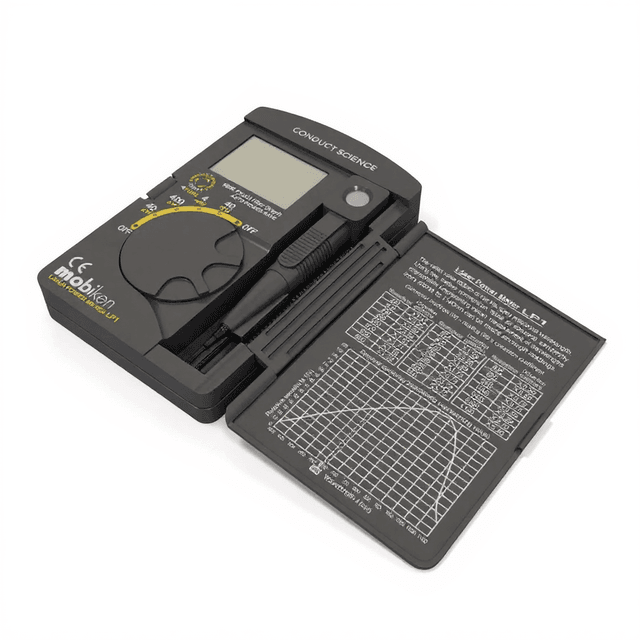
Verify LED power outputs with an optical power meter before animal recordings to prevent tissue damage from excessive illumination.
Why: High optical powers can cause local heating and tissue damage that compromises indicator expression and animal welfare.
Implement consistent behavioral habituation protocols before recording to minimize stress-related artifacts in neural signals.
Why: Stress responses can trigger calcium transients unrelated to the experimental manipulation, confounding data interpretation.
Setup Guide
What’s in the Box
- Main photometry control unit
- Three LED excitation modules (410nm, 470nm, 560nm)
- Set of 9 fiber optic cannulas (typical)
- Behavior camera module
- USB 3.0 control cable
- Digital I/O interface cables
- Fiber cleaning kit (typical)
- Calibration standards (typical)
- Software installation media
- User manual and quick start guide
Warranty
ConductScience provides a comprehensive 1-year manufacturer warranty covering all optical and electronic components with dedicated technical support for system optimization and troubleshooting.
Compliance
What calcium indicators are compatible with the 470nm excitation channel?
The 470nm channel optimally excites green fluorescent calcium indicators including GCaMP variants (GCaMP6s, GCaMP7, etc.) and neurotransmitter sensors like dLight for dopamine detection. Excitation efficiency depends on specific indicator spectral properties.
How does the 410nm reference channel correct for motion artifacts?
The 410nm wavelength represents an isosbestic point where fluorescence is independent of calcium binding. By calculating the ratio of 470nm/410nm or 560nm/410nm signals, motion artifacts and photobleaching effects common to both channels are mathematically canceled.
What is the optimal fiber core diameter for neural recordings?
Consult product datasheet for specific fiber specifications. Typical core diameters range from 200-400μm, with smaller cores providing better spatial resolution and larger cores increasing light collection efficiency.
Can I perform simultaneous optogenetic stimulation and photometry recording?
Yes, the system includes optogenetics compatibility with stimulation frequencies from 0-500Hz and adjustable pulse parameters. Stimulation and recording can occur through the same fiber or separate fibers depending on experimental design.
What is the temporal resolution for detecting calcium transients?
The system acquires up to 250fps, providing 4ms temporal resolution. This captures most physiologically relevant calcium dynamics, though the effective resolution depends on indicator kinetics and signal-to-noise ratio.
How many brain regions can be recorded simultaneously?
The 9-channel system permits recording from up to 9 different locations simultaneously, limited by the number of fiber implants and surgical feasibility in the experimental animal.
What data formats are supported for analysis?
Consult product datasheet for specific export formats. Most systems provide standard formats compatible with MATLAB, Python, and specialized fiber photometry analysis software packages.
What is the recommended LED power for chronic recordings?
Optimal power ranges from 10-50μW depending on indicator expression levels and tissue type. Start with lower powers (10-20μW) to minimize photobleaching and tissue heating during extended recordings.
Have a question about this product?
Accessories
Enhance your setup with compatible accessories
Replacement Parts & Consumables
Frequently Bought Together