
1 / 4
Tube Dominance Test
SKU 4902
$790.00
IncludesStandard care
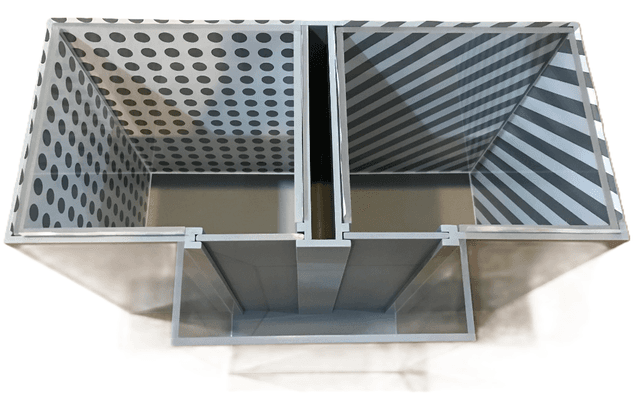
Standardized acrylic tube apparatus for quantitative assessment of social dominance and hierarchy behaviors in mice and rats through controlled competitive interactions.
CE MarkedBAA available
Scientist guidance

Louise Corscadden, PhD
Director of Science · ConductScience
Ask Louise about Tube Dominance Test fit, setup, configuration, or quote prep.
Already working with us? Sign in to connect this with My Scientist.
Key Specifications
Full details →- Model fit
- Mouse, Rat
- SKU family
- CS-958375
- Sizing
- Mouse: Length 30 cm · Diameter 3.175 cm; Rat: Length: 18.9" or 48cm.; Diameter: 2" or 5.5cm -recommended for 125 - 250gr rats; Entry to Door: 7.8" or 20cm.; Distance between doors: 3.1" or 8 cm; Acrylic: 0.2" or 0.6cm thick
- Ordering
- Online checkout and quote request available
- Category
- Classic Mazes
- Build notes
- Confirm accessories, station layout, and support needs before purchase
The Tube Dominance Test is a standardized apparatus for assessing social hierarchy and dominance behaviors in rodents. This behavioral assay utilizes a transparent acrylic tube with controlled entry points to evaluate competitive interactions between two animals, providing quantitative measures of dominance relationships within social groups.
The apparatus features species-specific dimensions optimized for mouse and rat studies, with precise spacing between entry doors and standardized tube diameters. The test paradigm measures displacement behaviors when two animals encounter each other in the confined tube space, allowing researchers to establish dominance rankings and investigate social behavioral phenotypes in various experimental contexts.
How It Works
The tube dominance test operates on the principle of competitive displacement behavior in a spatially restricted environment. When two animals are introduced simultaneously from opposite ends of the tube, their natural territorial and competitive instincts drive behavioral interactions that reveal dominance relationships.
The standardized tube dimensions create a controlled spatial constraint where only one animal can occupy the central space comfortably. The animal that successfully displaces its opponent by forcing it to retreat through its entry point demonstrates dominant behavior. Multiple trials between pairs establish consistent dominance rankings.
The transparent acrylic construction allows for direct behavioral observation and video recording, enabling detailed analysis of interaction patterns, latency to displacement, and behavioral strategies employed during competitive encounters.
Features & Benefits
Species-specific dimensions for mice and rats
Optimized tube diameters (3.5cm mouse, 5.5cm rat) ensure appropriate spatial constraints for natural competitive behaviors in each species.
Standardized entry door spacing
Precise distances between doors (4cm mouse, 8cm rat) provide consistent spatial parameters for reproducible dominance testing protocols.
Transparent acrylic construction
Clear visibility enables detailed behavioral observation and video recording for quantitative analysis of displacement patterns.
0.6cm thick acrylic walls
Robust construction withstands repeated use while maintaining structural integrity during competitive animal interactions.
Assembly required design
Modular construction allows for easy cleaning, sterilization, and compact storage between experimental sessions.
Included storage solution
Organized storage system maintains component integrity and enables efficient laboratory space utilization.
One-year warranty coverage
Extended warranty support ensures reliable operation throughout extended research studies and multi-year experiments.
Sizes by model
| Measurement | Mouse | Rat |
|---|---|---|
| Length | 30 cm | — |
| Diameter | 3.175 cm | — |
| Distance between doors | 4 cm | — |
| Size | Length: 18.9" or 48cm.; Diameter: 2" or 5.5cm -recommended for 125 - 250gr rats; Entry to Door: 7.8" or 20cm.; Distance between doors: 3.1" or 8 cm; Acrylic: 0.2" or 0.6cm thick |
- Mouse: (1.25 inch) -best for 30 - 70gr mice
- Mouse: Entry to Door: 13cm
- Mouse: Acrylic: 0.6cm thick
- Mouse: Diameters also available: 2.54cm (1 inch) and 3.81cm (1.5 inch) -best for 15 - 30gr mice and 70 - 125gr mice respectively
- Mouse: Please request a different diameter if required
- Rat: Length: 18.9" or 48cm
- Rat: Diameter: 2" or 5.5cm -recommended for 125 - 250gr rats
- Rat: Entry to Door: 7.8" or 20cm
- Rat: Distance between doors: 3.1" or 8 cm
- Rat: Acrylic: 0.2" or 0.6cm thick
Warranty Length
- 1 YEAR
Storage Included
- Yes
Assembly Required
- Yes
Behavioral Construct
- Social Dominance
- Competitive Behavior
- Social Hierarchy
- Territorial Behavior
- Displacement Behavior
Automation Level
- manual
Research Domain
- Aging Research
- Anxiety and Depression
- Behavioral Pharmacology
- Neurodegeneration
- Neuroscience
- Social Behavior
Compatible Tracking Software
- ConductVision
Shipping weight
- 6.06 lb
Shipping box
- L: 65.0 cm
- W: 36.0 cm
- H: 27.0 cm
| Feature | This Product | Typical Alternative | Advantage |
|---|---|---|---|
| Species-Specific Sizing | Dedicated mouse (3.5cm) and rat (5.5cm) diameter configurations | Single-size designs requiring manual scaling | Optimized dimensions ensure appropriate spatial constraints for natural competitive behaviors in each species. |
| Construction Material | 0.6cm thick transparent acrylic construction | Thinner materials or opaque constructions | Robust walls withstand repeated use while maintaining optical clarity for behavioral observation. |
| Assembly Design | Modular assembly with included storage system | Fixed construction designs | Facilitates thorough cleaning, sterilization, and compact laboratory storage between sessions. |
| Dimensional Standardization | Precise door spacing (4cm mouse, 8cm rat) with standardized entry distances | Variable or non-standardized dimensions | Consistent spatial parameters ensure reproducible results across different research groups and studies. |
This apparatus provides species-optimized dimensions with robust acrylic construction and modular assembly design. The standardized spatial parameters support reproducible dominance testing protocols across laboratory settings.
| Model | Size | SKU | Listed price | Status | Shipping box |
|---|---|---|---|---|---|
| Mouse | Length 30 cm · Diameter 3.175 cm · Distance between doors 4 cm | 4901 | $590.00 | Available | 38.1 x 17.78 x 7.62 cm |
| Rat | Length: 18.9" or 48cm.; Diameter: 2" or 5.5cm -recommended for 125 - 250gr rats; Entry to Door: 7.8" or 20cm.; Distance between doors: 3.1" or 8 cm; Acrylic: 0.2" or 0.6cm thick | 4902 | $790.00 | Available | 48 x 36.0 x 27.0 cm |
Social Behavior
Establishing dominance hierarchies within rodent colonies and measuring individual social rank positions for behavioral phenotyping studies.
Behavioral Pharmacology
Evaluating the effects of pharmacological interventions on social dominance behaviors and competitive interactions between animals.
Neuroscience
Investigating neural mechanisms underlying social dominance through correlation with neuronal activity patterns and brain imaging data.
Anxiety and Depression
Assessing social behavioral changes in anxiety and depression models, as dominance status correlates with stress-related behaviors.
Aging Research
Measuring age-related changes in social competitive behaviors and dominance establishment in aging animal models.
Neurodegeneration
Documenting social behavioral deficits in neurodegenerative disease models through quantitative dominance testing protocols.
Practical Tips
Calibration
Verify tube alignment and door spacing measurements before initial use and periodically during extended studies.
Why: Precise spatial parameters are critical for standardized behavioral responses and reproducible dominance measurements.
Maintenance
Disassemble apparatus weekly for thorough cleaning and inspect acrylic surfaces for scratches that could affect visibility.
Why: Regular maintenance prevents contamination buildup and ensures optimal optical clarity for behavioral observation.
Best Practices
Conduct habituation trials with individual animals before pairwise testing to reduce novelty effects on competitive behavior.
Why: Familiarity with the apparatus environment isolates dominance behaviors from exploration responses.
Best Practices
Randomize testing order and time intervals between trials to control for temporal effects on dominance expression.
Why: Systematic randomization prevents confounding variables from influencing dominance hierarchy establishment.
Data Quality
Record multiple trials between each animal pair and analyze consistency of dominance outcomes across sessions.
Why: Statistical verification of dominance relationships requires multiple data points to distinguish stable hierarchies from random interactions.
Troubleshooting
If animals avoid entering the tube, reduce environmental stressors and ensure appropriate temperature and lighting conditions.
Why: Environmental comfort is essential for natural competitive behaviors to emerge during dominance testing.
Safety
Monitor animal interactions continuously and terminate trials if aggressive behaviors exceed normal competitive displacement.
Why: Ensuring animal welfare while maintaining scientific validity requires careful observation of behavioral escalation.
Setup Guide
Unpack and Inspect Components
Remove all acrylic components from packaging and inspect for damage. Verify presence of tube sections, connecting hardware, and assembly instructions.
Assemble Tube Apparatus
Connect tube sections according to provided assembly guide, ensuring proper alignment of entry doors and secure joining of acrylic segments.
Position Testing Setup
Place assembled apparatus on stable testing surface with adequate lighting and video recording equipment positioned for behavioral observation.
Clean and Disinfect
Thoroughly clean all surfaces with appropriate disinfectant and allow to air dry completely before introducing animals.
Conduct Habituation Trials
Allow individual animals to explore the tube apparatus alone for 5-10 minutes to reduce novelty effects during testing.
Execute Dominance Testing
Introduce paired animals simultaneously from opposite tube entrances and record displacement behaviors according to established protocols.
Clean Between Trials
Remove scent traces between trials with ethanol wipe-down to prevent olfactory bias in subsequent testing sessions.
What’s in the Box
- Acrylic tube sections for assembly (typical)
- Connecting hardware and fasteners (typical)
- Assembly instructions and setup guide (typical)
- Storage organization system
- User manual with testing protocols (typical)
- Warranty documentation
Warranty
ConductScience provides a one-year manufacturer warranty covering defects in materials and workmanship, with technical support available for experimental protocol optimization and apparatus maintenance.
Compliance
IACUC GuidelinesCommonly used in behavioral studies subject to institutional animal care and use committee oversight for social behavior research protocols.
ARRIVE GuidelinesSupports standardized reporting of animal research through consistent apparatus specifications and reproducible testing procedures.
References
Background reading relevant to this product:
1.Andrew E. Arrant et al. (2016) “Progranulin haploinsufficiency causes biphasic social dominance abnormalities in the tube test” Genes Brain & Behavior doi:10.1111/gbb.12300
2.Wenyu Cao et al. (2017) “Role of early environmental enrichment on the social dominance tube test at adulthood in the rat” Psychopharmacology doi:10.1007/s00213-017-4717-3
3.Jianping Xie et al. (2021) “The combination of living Bifidobacterium, Lactobacillus, and Streptococcus improves social ranking and relieves anxiety‐like behaviors in competitive mice in a social dominance tube test” Brain and Behavior doi:10.1002/brb3.2453
4.Nuria García-Font et al. (2022) “Ca2+ imaging of self and other in medial prefrontal cortex during social dominance interactions in a tube test” Proceedings of the National Academy of Sciences doi:10.1073/pnas.2107942119
Q
What is the recommended trial duration for dominance testing?
A
Standard protocols typically employ 3-5 minute trials with multiple repetitions between pairs to establish consistent dominance relationships, though specific durations should be optimized for individual experimental designs.
Q
How many animals can be tested simultaneously?
A
The apparatus is designed for pairwise testing of two animals per trial, with dominance rankings established through systematic testing of all possible pairs within a social group.
Q
What cleaning protocols are recommended between trials?
A
Thorough cleaning with 70% ethanol between trials removes scent traces that could influence subsequent behavioral interactions, with complete disinfection recommended between different experimental groups.
Q
Can the apparatus accommodate juvenile animals?
A
The standardized dimensions are optimized for adult animals; consult product datasheet for specific size requirements when testing juvenile or smaller animal strains.
Q
How is dominance determined from the behavioral interactions?
A
Dominance is typically scored based on which animal successfully forces its opponent to retreat through the entry door, with multiple trials establishing statistical significance of dominance relationships.
Q
What video recording setup is recommended?
A
Overhead camera positioning provides optimal visibility of displacement behaviors, with additional side-angle recording useful for detailed behavioral analysis and latency measurements.
Q
How does this compare to other dominance testing methods?
A
The tube test provides more controlled spatial constraints compared to home cage observations, offering standardized conditions for quantitative dominance assessment with reduced environmental variables.
Have a question about this product?
Track rodents with ConductVision
ConductVision is our video-tracking software. Record your sessions on video, and it scores standard rodent tests, such as those listed below.
Examples of tests it scores
To check whether ConductVision scores your protocol in this apparatus, ask in your quote request.
Ask a question
Have a question? Just ask.
Send it over and we'll email you a personalized answer — no call, no scheduling.
Personalized email reply
Usually within one business day
Helpful answers published here
Prefer to talk it through?
Accessories
Enhance your setup with compatible accessories
Total: $0.00
Frequently Bought Together
Total: $2,280.00
Creator Insights
Gardner LindzeyIntroduced the tube test of social dominance (1961, with Winston & Manosevitz)University of Minnesota
About the Creator
Gardner Lindzey (1920–2008) was an American social and personality psychologist who held appointments at Harvard, the University of Minnesota and the University of Texas at Austin, and later directed the Center for Advanced Study in the Behavioral Sciences at Stanford. In 1961, with Harold Winston and Martin Manosevitz, he published a brief Nature report showing that inbred mouse strains differ consistently in social dominance, measured by which mouse retreats when two are placed at opposite ends of a narrow tube. The paper established the tube test’s core scoring logic — the displaced mouse is the subordinate — and demonstrated its reliability across strains. The tube test has since become a standard assay of social hierarchy in models of autism, aggression and neurodevelopment.
To view Gardner Lindzey’s publications, visit PubMed.
Did you work with Gardner Lindzey? to suggest corrections or share material for these Creator Insights.
ConductScience celebrates method creators: researchers who, through rigorous and often ingenious experiments, develop the tools that reveal how the brain and body work. These are real scientific discoveries that become everyday instruments for the labs that follow.
Foundational paper
- Lindzey, G., Winston, H., & Manosevitz, M. (1961). Social dominance in inbred mouse strains. Nature, 191(4787), 474–476. doi:10.1038/191474a0
Use this apparatus with
The complete Tube Dominance Test workflow
Track behavior
No exact ConductVision tube-dominance page is currently published. Wins, retreats, and push events are scored from a side-view video of the tube rather than overhead tracking; keep automated contest scoring as a roadmap gap.
Supporting page not yet builtRun protocol
Habituation, round-robin pairing, side-balancing, tube-diameter selection, and definitions for wins, retreats, and push events in the social-hierarchy contest.
ConductMaze Tube Dominance Protocol ->Analyze output
No exact tube-dominance analysis tool is currently published. Win rate, rank order, and rank stability are summarized from match logs rather than a dedicated analyzer; keep this as a roadmap gap.
Supporting page not yet builtConfiguration considerations
Common Tube Dominance Test setup decisions
Use these notes to scope species, cohort, tracking, and automation needs. Only verified product or support routes are linked from this section.
This productSingle-tube
Tube Dominance Test
Clear straight tube sized for two animals to meet head-to-head with start chambers at each end
Standard configuration for measuring social rank, scoring wins and losses as paired animals meet in the tube and one backs out.
Quote
Request QuoteBuyableMouse or rat
Species-Scaled Tube
Tube diameter and length scaled so animals cannot turn around or pass
Tube diameter sets whether animals can reverse or squeeze past, which directly shapes contest outcomes, so the bore should match the species and body size.
Quote
View options ->SpecialtyRound-robin rig
Round-Robin Hierarchy Rig
Multi-tube setup with cage-mate pairing schedule for full rank ordering
Best when the goal is a stable hierarchy across a cage rather than a single pairwise outcome, with a round-robin schedule that pits every animal against every cage-mate.
Quote
Request automation help§ 1
Introduction
The Tube Dominance Test measures social rank by recording which of two animals forces the other to back out of a narrow tube they enter from opposite ends. Lindzey and colleagues introduced the tube contest as a simple, repeatable index of social dominance among cage-mates. 1
The core readout is the win-loss ratio across pairings, which yields a rank order within a cage and, when run as a round-robin, a near-transitive hierarchy. The test became a standard assay for the neural basis of social dominance because contest outcomes are discrete, fast to score, and stable across repeated testing. 1
Body weight, prior social experience, tube diameter, side and start bias, and fatigue from repeated pairings all change contest outcomes independent of true rank. A defensible protocol balances start sides, fixes the tube diameter, schedules round-robin pairings, and tests rank stability across days before treating the order as a hierarchy. 1
§ 2
Methods
2.1 Procedure
Round-robin tube contests with side-balancing, win and retreat scoring, and rank-stability checks.
Pre-test setup
- 1.Habituation: Habituate animals to walking through the empty tube from both ends so the first contest reflects social dynamics rather than novelty of the apparatus.
- 2.Tube calibration: Select a tube diameter that prevents animals from turning around or passing, and confirm the length and start chambers are matched at both ends.
- 3.Define the schedule: Plan a round-robin pairing of every animal against every cage-mate so a full rank order, not just a single pairwise result, can be derived.
- 4.Set scoring rules: Pre-define a win as the opponent fully backing out, and define retreats and push events so active dominance and subordination are scored separately.
Trial sequence
- 1.Release from opposite ends: Release the two animals simultaneously from opposite ends so they meet near the middle of the tube.
- 2.Record the win: Score a win for the animal that remains in the tube when its opponent fully backs out, and log the loser.2
- 3.Score push and retreat: Count push events as active forward pressure and retreats as backward movement, since they distinguish active dominance from passive subordination.3
- 4.Balance the sides: Alternate which animal starts from which end across repeated pairings to cancel any side or start-direction bias.
- 5.Clean and repeat: Clean the tube between contests to remove odor cues, then run the remaining round-robin pairings on the planned schedule.
Critical methodological constraints
- Tube diameter. A bore that lets animals turn or pass invalidates the contest. Fix the diameter to the species so the only resolution is one animal backing out.3
- Side and start bias. A consistent start side can masquerade as dominance. Balance start ends across pairings so direction does not confound the win-loss record.
- Body weight. Heavier animals can win on mass rather than social rank. Report body weight and consider it when groups differ in size.1
- Rank stability. A single round can be noisy. Repeat testing across days and report rank stability before treating the order as a hierarchy.5
2.2 Measurement & Analysis
Core tube-dominance endpoints for social rank, contest dynamics, and test-retest quality control.
Win Rate
Social rank
Fraction of contests won across pairings, the primary index of an animal's position in the dominance hierarchy.2
Match Duration
Contest intensity
Time from meeting to resolution, indexing how contested a pairing was rather than only who won.3
Push Events
Active dominance
Count of forward pushing bouts, distinguishing active dominance from simply holding ground.
Retreat Events
Subordination
Count of backward movements by the eventual loser, indexing subordination distinctly from the win-loss outcome.
Rank Stability
Test-retest QC
Concordance of rank order across repeated days, the quality-control measure that distinguishes a stable hierarchy from noise.5
+ Additional metrics: body weight, transitivity of the hierarchy, latency to first push, start side, tube diameter, and per-contest video notes.
2.3 win rate (analysis)
A compact fraction of an animal's contests that ended in a win.
2.4 sample-size planning
Estimate the N per group needed to detect a literature-anchored social-rank effect at the endpoint you plan to report. Override the defaults with your own pilot numbers.
§ 3
Results
PubMed publication counts, sample apparatus output, and recent papers from a dated PubMed snapshot.
3.1 Publication trends
PubMed volume and co-occurring behavioral methods for tube-dominance and social-hierarchy studies.
3.2 Sample apparatus output
Representative output from a round-robin tube contest within a four-animal cage.
3.3 Recent findings (PubMed)
- Sep 2026PMID: 42705933
Do rodent social hierarchy assays measure social dominance or task performance?
Waters RP. Trends Neurosci. 2026 Sep 7.
Social hierarchy is a critical variable in rodent models of stress psychopathology and is often assessed using simplified competitive paradigms. These tasks frequently lack sufficient construct validity for social dominance, limiting interpretations of the neural mechanisms underlying social behavior.
- Aug 2026PMID: 42519052
Region-specific neural activity changes and hierarchical instability following social isolation.
Jung T, Kang M, Um S, et al.. iScience. 2026 Aug 21.
Social hierarchy contributes to maintaining group stability and coordination; yet, how social isolation affects hierarchical dynamics remains poorly understood.
- Aug 2026PMID: 42142746
The effect of social isolation on rat behavior and expression of genes related to neuroinflammation depends on sex.
Pavlova IV, Broshevitskaya ND. Behav Brain Res. 2026 Aug 5.
It is known that isolation in social animal species leads to the development of psychoemotional stress, which manifests itself not only in behavioral and cognitive disorders, but also in the activation of hormonal systems and in an increase in pro-inflammatory immune reactions of the body.
- Jun 2026PMID: 42395454
Individual differences in ethanol drinking meal structure are shaped by social environments.
Doyle MA, Edwards CM, Hallal SD, et al.. bioRxiv. 2026 Jun 22.
Alcohol use disorder (AUD) is marked by substantial heterogeneity in drinking behaviors and health outcomes, underscoring the need for preclinical models that capture interindividual variability. We recently developed open-source capacitive lickometer systems for high-resolution monitoring of mouse fluid intake.
- Jun 2026PMID: 42322523
The effect of cigarette smoking on the prevalence of oral candidiasis caused by Candida albicans and the expression of selected virulence genes among adults in Jordan.
Alkhadeir H, Hamad M, Aburayyan W. World J Microbiol Biotechnol. 2026 Jun 20.
Oral Candidiasis (OC) is considered one of the major fungal problems, and the infections are predominantly associated with habitual factors such as smoking. Candida albicans remains the most dominant species, and smoking has been shown to alter its virulence on a molecular level.
- May 2026PMID: 40956417
Sex differences in compulsive alcohol drinking phenotypes: implications for decision-making and social behavior in a preclinical model.
Olmedo-Córdoba M, León JJ, López-Villegas Á, et al.. Psychopharmacology (Berl). 2026 May.
Compulsivity is increasingly recognized as a transdiagnostic trait that amplifies vulnerability to alcohol use disorders. However, its specific role in shaping social behavior and decision-making remains underexplored.
§ 4
Discussion
Limitations of the paradigm, methodological caveats, and current directions.
4.1 Common confounds
Variables that can shift Tube Dominance Test results apart from the effect under study.
Body weight
Heavier animals can win contests on mass rather than social rank. Report body weight and consider it as a covariate when groups differ in size.
Prior social experience
Past winning or losing biases future contests through winner and loser effects. Document group history so experience does not masquerade as innate rank.
Tube diameter
A bore that lets animals turn or pass changes the contest entirely. Fix the diameter to the species so the only resolution is one animal backing out.
Side/start bias
A consistent start side can look like dominance. Balance start ends across pairings to cancel direction effects.
Repeated-pairing fatigue
Many contests in close succession fatigue animals and shift later outcomes. Space pairings and randomize order across the round-robin.
Preview exported markdown
## Tube Dominance Test — methods controls

Confounds controlled in this protocol:

- **Body weight.** Heavier animals can win contests on mass rather than social rank. Report body weight and consider it as a covariate when groups differ in size.
- **Prior social experience.** Past winning or losing biases future contests through winner and loser effects. Document group history so experience does not masquerade as innate rank.
- **Tube diameter.** A bore that lets animals turn or pass changes the contest entirely. Fix the diameter to the species so the only resolution is one animal backing out.
- **Side/start bias.** A consistent start side can look like dominance. Balance start ends across pairings to cancel direction effects.
- **Repeated-pairing fatigue.** Many contests in close succession fatigue animals and shift later outcomes. Space pairings and randomize order across the round-robin.
4.2 Construct validity caveats
The tube test is strongest when tube diameter, start sides, pairing schedule, and rank-stability checks are fixed before testing. A single round is a noisy index; balance start sides, run a round-robin, and confirm the order is stable across days, ideally cross-validating rank with an independent social assay. 1
4.3 Special considerations
How many rounds do I need for a stable rank?
A single round is noisy. Run a round-robin so every animal meets every cage-mate, then repeat across days and report rank stability before treating the order as a hierarchy.
Does body weight bias the result?
It can. Heavier animals may win on mass rather than rank, so report body weight and consider it as a covariate when groups differ in size.
How do I rule out a side bias?
Balance which animal starts from which end across pairings. A consistent start side can mimic dominance, so alternating ends cancels the direction advantage.
4.4 Current directions
Quarterly editorial review of emerging Tube Dominance Test methodology. Q2 2026
Methods
Round-robin standardization
Full round-robin pairing with balanced start sides yields a near-transitive hierarchy that is more defensible than isolated pairwise contests.
Emerging
Automated contest scoring
Side-view video and automated detection of pushes and retreats reduce observer burden and capture contest dynamics beyond the win-loss outcome.
Methods
Rank-stability reporting
Reporting test-retest concordance across days is increasingly expected because a single round can misorder a cage by chance.
Emerging
Cross-assay hierarchy validation
Tube-test rank is paired with warm-spot, ultrasonic, and barbering measures to confirm a hierarchy converges across independent social readouts.
§ 5
References
5 selected methods and validation references for Tube Dominance Test.
- Lindzey G, Winston H, Manosevitz M. Social dominance in inbred mouse strains. Nature. 1961;191:474-476. doi:10.1038/191474a0
- Wang F, Zhu J, Zhu H, Zhang Q, Lin Z, Hu H. Bidirectional control of social hierarchy by synaptic efficacy in medial prefrontal cortex. Science. 2011;334(6056):693-697. doi:10.1126/science.1209951
- Fan Z, Zhu H, Zhou T, Wang S, Wu Y, Hu H. Using the tube test to measure social hierarchy in mice. Nat Protoc. 2019;14(3):819-831. doi:10.1038/s41596-018-0116-4
- Wang F, Kessels HW, Hu H. The mouse that roared: neural mechanisms of social hierarchy. Trends Neurosci. 2014;37(11):674-682. doi:10.1016/j.tins.2014.07.005
- Zhou T, Sandi C, Hu H. Advances in understanding neural mechanisms of social dominance. Curr Opin Neurobiol. 2018;49:99-107. doi:10.1016/j.conb.2018.01.006

Tube Dominance Test
$790.00
Added to quoteView Quote
