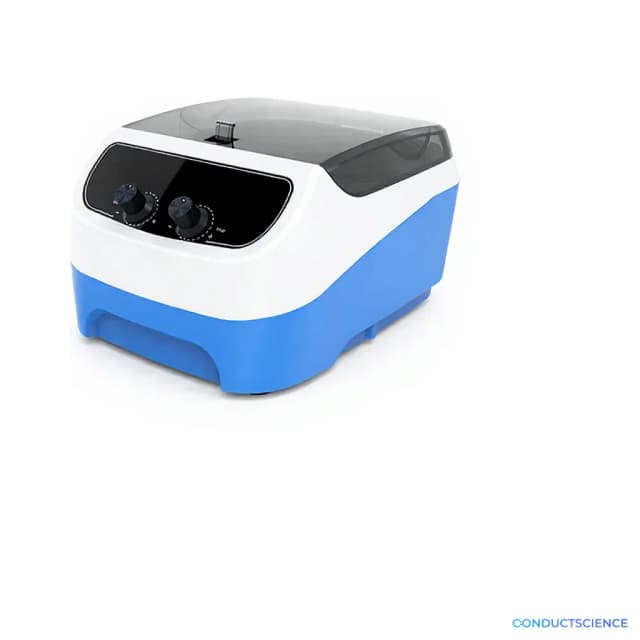
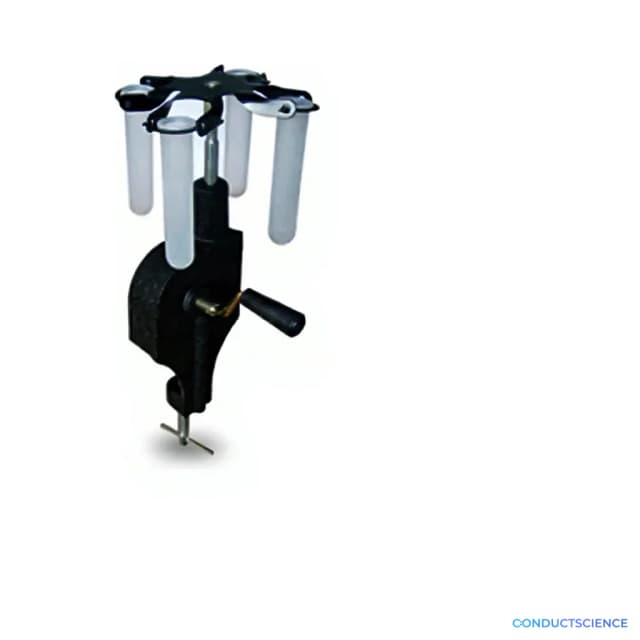
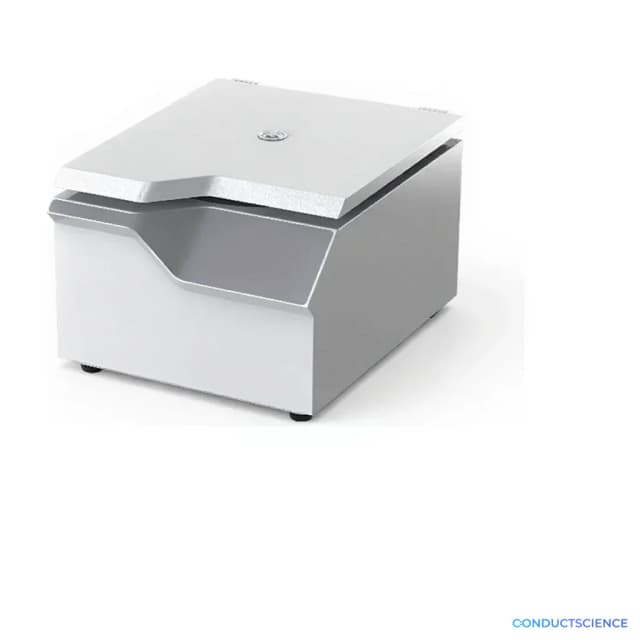
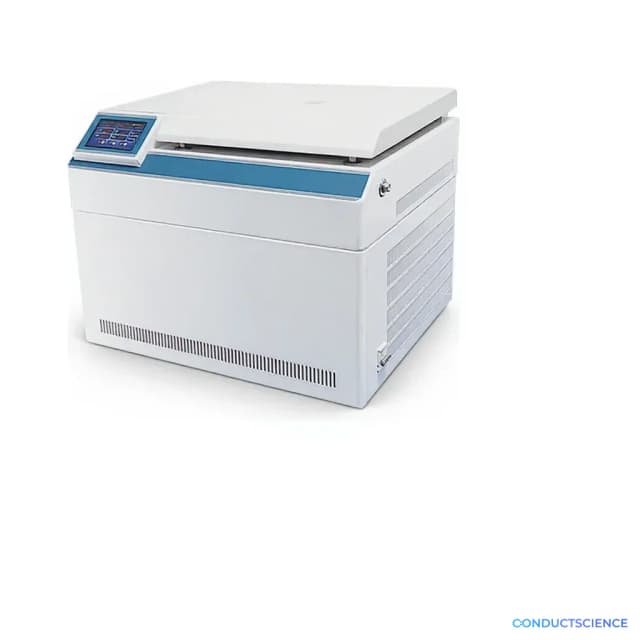
Vacuum Concentrator
Centrifugal vacuum concentrator with temperature control (RT-80°C), cold trap (-70°C), and 6×100ml capacity for solvent removal and sample concentration.

Louise Corscadden, PhD
Director of Science · ConductScience
Ask Louise about Vacuum Concentrator fit, setup, configuration, or quote prep.
Already working with us? Sign in to connect this with My Scientist.
Key Specifications
Full details →- Model fit
- Configured during quote
- SKU family
- BIO-0335
- Shipping box
- 30.4 x 36.0 x 44.8 cm
- Ordering
- Online checkout and quote request available
- Category
- Centrifuges
- Build notes
- Confirm accessories, station layout, and support needs before purchase
The ConductScience Vacuum Concentrator is a laboratory centrifugal evaporation system designed for solvent removal from multiple samples simultaneously. This system combines controlled vacuum, temperature regulation, and centrifugal force to concentrate samples without sample loss or thermal degradation. The unit accommodates up to 600ml total capacity (6 × 100ml vessels) with precise temperature control from room temperature to 80°C and vacuum regulation from 0.1 to 1000mbar.
The integrated cold trap operates from room temperature to -70°C, enabling efficient solvent recovery and protecting the vacuum pump from solvent vapors. With programmable timing up to 99 hours and 59 minutes, the system supports both short concentration procedures and extended drying protocols. The low noise operation (≤55dBA) makes it suitable for routine laboratory use without disrupting adjacent workstations.
How It Works
Vacuum concentration operates on the principle that reducing atmospheric pressure lowers the boiling point of solvents, enabling evaporation at temperatures below those that would cause thermal decomposition of heat-sensitive compounds. The system creates controlled vacuum conditions (0.1-1000mbar) while applying centrifugal force up to 2500rpm to prevent sample bumping and ensure uniform heating.
The temperature-controlled chamber maintains samples at optimal evaporation temperatures (RT-80°C) with ±1°C accuracy, while the cold trap (-70°C) condenses solvent vapors to protect the vacuum system and enable solvent recovery. Centrifugal force distributes samples evenly across vessel walls, increasing surface area for efficient evaporation while preventing sample loss through splashing.
The programmable timing system (0-99H59Min) allows for complete automation of concentration protocols, with the vacuum tolerance of 0.01mbar ensuring consistent processing conditions throughout extended runs.
Features & Benefits
Automation Level
- semi-automated
Temperature Control Range
- RT±80℃
Temperature of Cold Trap
- RT-70℃
Temperature control accuracy
- ±1℃
Maximum Capacity
- 6*100ml
Timing Range
- 0-99H59Min
Vacuum Control Range
- 0.1-1000mbr
Main Unit Vacuum Tolerance
- 0.01mbr
Noise
- ≤55dBA
External Size
- 360*448*304mm
Optional Rotor
- Angle Rotor
ELISA Plate Rotor
- 2x96 Holes
Brand
- ConductScience
Research Domain
- Analytical Chemistry
- Cell Biology
- Environmental Monitoring
- Food Science
- Materials Science
- Microbiology
- Pharmaceutical QC
Power/Voltage
- 220V 50HZ
Max speed
- 2,500 rpm
Shipping weight
- 29.98 lb
Shipping box
- L: 30.4 cm
- W: 36.0 cm
- H: 44.8 cm
| Feature | This Product | Typical Alternative | Advantage |
|---|---|---|---|
| Sample Capacity | 6×100ml simultaneous processing | Entry-level models often handle 2-4 tubes with smaller volumes | Higher throughput reduces processing time for multiple sample batches. |
| Temperature Control Accuracy | ±1°C accuracy from RT to 80°C | Basic units may have ±5°C variation | Precise temperature control prevents thermal degradation of sensitive compounds. |
| Vacuum Range and Tolerance | 0.1-1000mbar range with 0.01mbar tolerance | Limited vacuum control or higher tolerance variations | Fine vacuum control optimizes evaporation rates for different solvent systems. |
| Cold Trap Capability | Integrated cold trap to -70°C | External cold traps or no solvent recovery | Built-in solvent recovery and vacuum pump protection reduces operational costs. |
| Programming Flexibility | 0-99H59Min programmable timing | Manual operation or limited timer ranges | Extended automated operation enables overnight processing without supervision. |
| Noise Level | ≤55dBA operation | Higher noise levels in standard centrifugal systems | Quiet operation suitable for shared laboratory environments. |
This concentrator combines high-capacity multi-sample processing with precise environmental control and automated operation. The integrated cold trap, fine vacuum regulation, and extended programming capability provide comprehensive sample concentration with minimal operator intervention.
Practical Tips
Verify temperature accuracy using calibrated thermocouples in sample vessels before processing critical samples.
Why: Temperature calibration ensures reproducible concentration conditions and prevents thermal damage to sensitive compounds.
Clean the cold trap weekly and check vacuum fittings monthly for optimal performance.
Why: Regular maintenance prevents vacuum leaks and contamination that can compromise concentration efficiency.
Balance sample tubes carefully and avoid overloading individual vessels beyond 80% capacity.
Why: Proper loading prevents mechanical stress and ensures uniform concentration across all samples.
If samples are bumping violently, reduce vacuum gradually and lower temperature by 10-15°C.
Why: Gentle vacuum reduction and temperature adjustment prevent sample loss while maintaining concentration efficiency.
Record initial and final volumes for each sample to calculate concentration factors accurately.
Why: Volume documentation enables reproducible protocols and accurate concentration calculations for quantitative work.
Never exceed the maximum capacity and ensure proper ventilation when processing organic solvents.
Why: Overloading can cause mechanical failure, while adequate ventilation prevents vapor accumulation in the laboratory.
Pre-chill the cold trap for 30 minutes before starting concentration to ensure efficient solvent capture.
Why: Proper cold trap temperature prevents solvent breakthrough to the vacuum pump and improves recovery efficiency.
If vacuum levels fluctuate, check all seals and connections for leaks using leak detection solution.
Why: Vacuum integrity is critical for consistent evaporation rates and reproducible concentration times.
Setup Guide
What’s in the Box
- Vacuum Concentrator Main Unit
- Standard Rotor for 6×100ml vessels
- Power Cable
- User Manual
- Vacuum Tubing (typical)
- Sample Tubes Set (typical)
- Cold Trap Assembly (typical)
Warranty
ConductScience provides a one-year manufacturer warranty covering defects in materials and workmanship, with comprehensive technical support for installation and operation guidance.
Compliance
What types of solvents can be effectively removed using this concentrator?
The system handles most common organic solvents including alcohols, acetonitrile, dichloromethane, and water. The cold trap (-70°C) efficiently captures solvents with boiling points above -70°C, while the temperature control prevents thermal decomposition of heat-sensitive compounds.
How do I determine the optimal vacuum level for my samples?
Start with moderate vacuum (100-500mbar) and adjust based on solvent type and sample sensitivity. Lower pressures increase evaporation rate but may cause bumping in volatile solvents. Monitor sample behavior and adjust vacuum gradually to optimize concentration speed while maintaining sample integrity.
Can this system process aqueous samples effectively?
Yes, the temperature control up to 80°C combined with vacuum effectively removes water. For aqueous samples, use moderate temperatures (40-60°C) and gradual vacuum reduction to prevent violent boiling and sample loss.
What maintenance is required for optimal performance?
Regular cold trap cleaning, vacuum pump maintenance, and rotor balance verification are essential. Check vacuum fittings for leaks monthly and calibrate temperature controllers annually. Replace worn seals and gaskets as needed to maintain vacuum integrity.
How does this compare to rotary evaporators for sample concentration?
This concentrator offers simultaneous multi-sample processing with automated timing, while rotary evaporators typically handle single samples. The centrifugal force prevents bumping more effectively than rotary evaporation, making it ideal for heat-sensitive or volatile samples.
What is the typical concentration time for common solvents?
Concentration time varies with solvent type, volume, and conditions. Methanol and acetonitrile typically concentrate in 1-3 hours, while water may require 4-6 hours. The programmable timing allows optimization for specific applications and overnight processing.
Are there safety considerations for volatile organic solvents?
Ensure adequate laboratory ventilation and cold trap capacity for solvent volumes being processed. The sealed system design minimizes vapor exposure, but monitor cold trap fill level and replace coolant as needed. Consult material safety data sheets for specific solvents.
Can the system handle samples with high salt content?
Yes, the system effectively removes solvents from samples with dissolved salts. Use moderate temperatures to prevent salt precipitation and bumping. The centrifugal force helps maintain sample homogeneity during concentration of salt solutions.
Have a question about this product?
Have a question? Just ask.
Send it over and we'll email you a personalized answer — no call, no scheduling.
Prefer to talk it through?