1 / 2
Visual Water Box
SKU CS-958204
$4,049.99
IncludesStandard care
Behavioral testing apparatus for assessing aquatic motor function and spatial navigation in laboratory animals through controlled swimming tasks.
CE MarkedBAA available
Scientist guidance

Louise Corscadden, PhD
Director of Science · ConductScience
Ask Louise about Visual Water Box fit, setup, configuration, or quote prep.
Already working with us? Sign in to connect this with My Scientist.
Key Specifications
Full details →- Model fit
- Mouse, Rat
- SKU family
- CS-958204
- Sizing
- Mouse without monitors: Length of pool 93 cm · Depth of pool 26.6 cm; Mouse with monitors: Computer-controlled monitors x2: 28.6cm; Rat without monitors: Length of pool 140 cm · Depth of pool 40 cm; Rat with monitor: Computer-controlled monitors x2: 28.6cm
- Ordering
- Online checkout and quote request available
- Category
- Behavioral Mazes
- Build notes
- Confirm accessories, station layout, and support needs before purchase
Visual Water Box
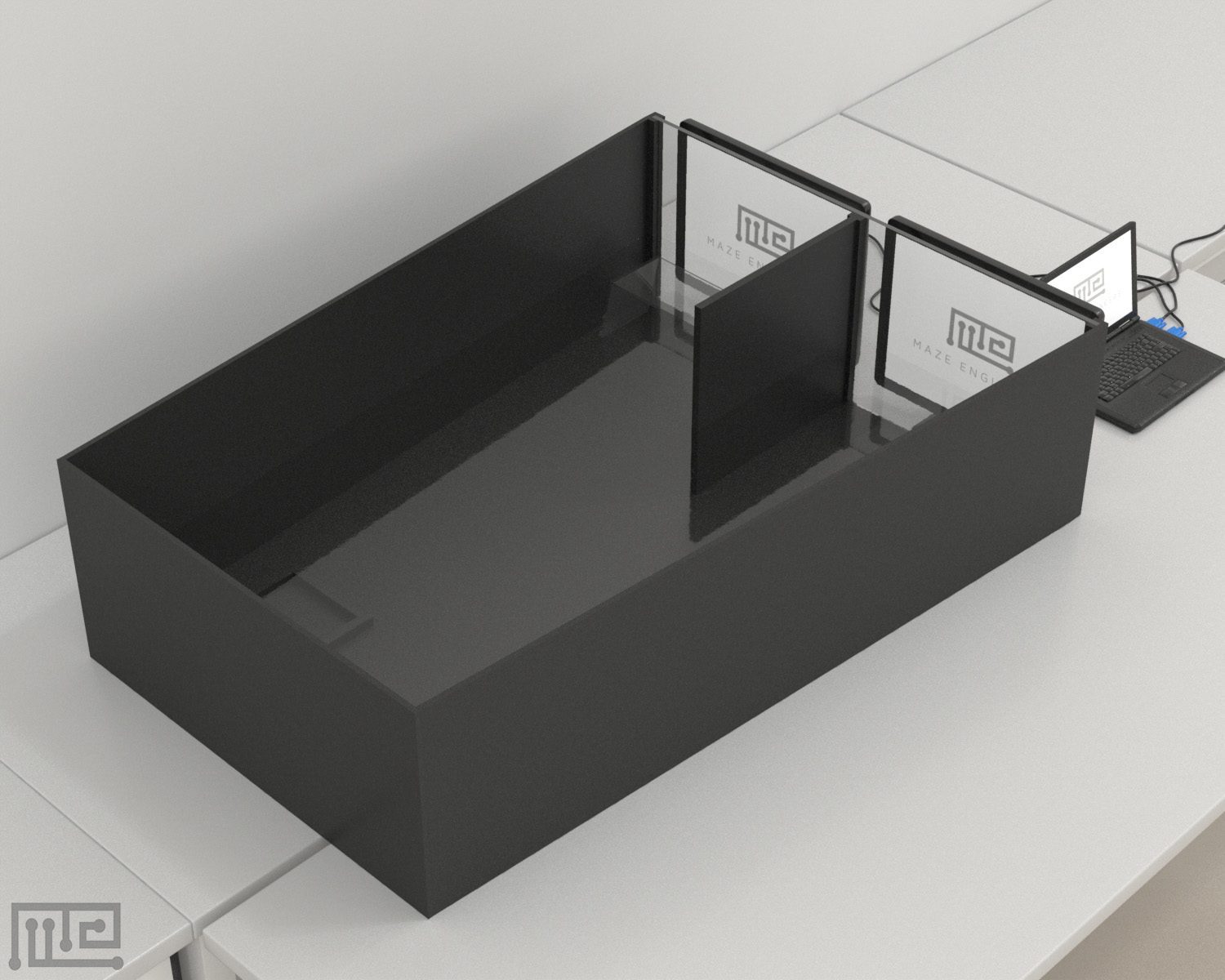
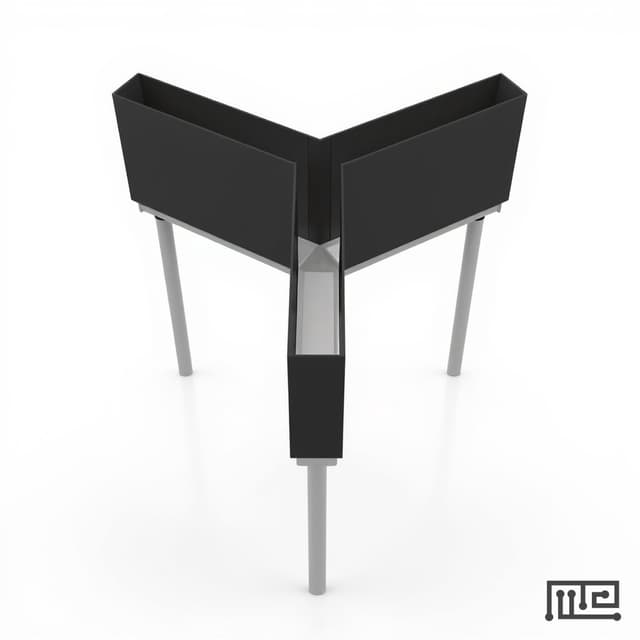
The Visual Water Box is a behavioral testing apparatus designed to evaluate learning and memory in rodents through visual stimulus association tasks. It features a trapezoidal pool with a release chute and computer-controlled monitors displaying visual cues, exploiting rodents' natural drive to escape water by locating a hidden platform.
Key Features
- Trapezoidal Pool: Narrow release chute with wider divided end
- Visual Components: Two optional 28.6cm computer-controlled monitors for customizable visual stimuli
- Platform System: Hidden escape platform as reward
- High Opaque Divider: Midline divider separating pool halves
- Software Compatible: ConductMaze protocol for stimulus customization and data tracking
Specifications
| Component | Mouse | Rat |
|---|---|---|
| Pool Length | 93cm | 140cm |
| Pool Depth | 26.6cm | 40cm |
| Release Chute | 23×5×13cm | 35×7×20cm |
| Divider Height | 26.6cm | 40cm |
| Escape Platform | 25×9×9.3cm | 37×13×14cm |
Research Applications
- Visual acuity assessment
- Pattern discrimination learning
- Age-related cognitive changes
- Environmental enrichment effects on vision
- Disease/disorder impacts on learning
Software
Compatible with ConductMaze Behavioral Protocol ($690 one-time, sold separately). Enables automated stimulus control, trial sequencing, and data export.
How It Works
The Visual Water Box operates on the principle of aquatic behavioral assessment, utilizing water as both a motivating environment and a medium for observing natural swimming behaviors. Animals are placed in the water-filled chamber where they must navigate using visual cues positioned around the apparatus to locate escape platforms or complete specific swimming tasks.
The system employs visual reference points that can be positioned at various locations around the perimeter, allowing researchers to create spatial learning paradigms. Water temperature is maintained at optimal levels to ensure animal welfare while providing sufficient motivation for active swimming behavior. The transparent construction enables comprehensive observation and video recording of swimming patterns, search strategies, and motor coordination.
Behavioral measures include swim speed, path length, search patterns, and latency to locate target zones. The apparatus design minimizes external distractions while providing adequate space for natural swimming behaviors, enabling quantitative assessment of both cognitive and motor function in aquatic environments.
Features & Benefits
Transparent construction
Enables comprehensive observation of swimming behavior and navigation patterns from multiple viewing angles
Visual cue positioning system
Allows flexible placement of spatial reference points to create customized learning paradigms and navigation tasks
Controlled aquatic environment
Provides standardized swimming conditions with precise temperature control for consistent behavioral assessment
Removable platform system
Enables various experimental protocols including hidden platform tasks and visible platform controls
Smooth interior surfaces
Prevents animal injury while allowing natural swimming behaviors without interference from surface textures
Adequate swimming space
Provides sufficient room for natural locomotion patterns while maintaining manageable observation area
Water drainage system
Facilitates easy cleaning and water changes between experimental sessions to maintain hygienic conditions
Sizes by model
| Measurement | Mouse without monitors | Mouse with monitors | Rat without monitors | Rat with monitor |
|---|---|---|---|---|
| Length of pool | 93 cm | — | 140 cm | — |
| Depth of pool | 26.6 cm | — | 40 cm | — |
| Length of divider | 27 cm | — | 41 cm | — |
| Height of divider | 26.6 cm | — | 40 cm | — |
| Size | Computer-controlled monitors x2: 28.6cm | Computer-controlled monitors x2: 28.6cm |
- Mouse without monitors: Length of release chute: 23cm
- Mouse without monitors: Width of release chute: 5cm
- Mouse without monitors: Height of release chute: 13cm
- Mouse without monitors: Length of escape platform: 25cm
- Mouse without monitors: Width of escape platform: 9cm
- Mouse without monitors: Height of escape platform: 9.3cm
- Mouse with monitors: Computer-controlled monitors x2: 28.6cm
- Mouse with monitors: mouse dimensions
- Rat without monitors: Length of release chute: 35cm
- Rat without monitors: Width of release chute: 7 m
- Rat without monitors: Height of release chute: 20cm
- Rat without monitors: Length of escape platform: 37cm
- Rat without monitors: Width of escape platform: 13cm
- Rat without monitors: Height of escape platform: 14cm
- Rat with monitor: Computer-controlled monitors x2: 28.6cm
- Rat with monitor: rat dimensions
Behavioral Construct
- spatial learning
- spatial memory
- motor coordination
- swimming behavior
- navigation
Automation Level
- manual
Research Domain
- Aging Research
- Behavioral Pharmacology
- Learning and Memory
- Motor Function
- Neurodegeneration
- Neuroscience
Species
- Mouse
- Rat
Compatible Tracking Software
- ConductVision
Shipping weight
- 6.06 lb
Shipping box
- L: 65.0 cm
- W: 36.0 cm
- H: 27.0 cm
| Feature | This Product | Typical Alternative | Advantage |
|---|---|---|---|
| Construction Material | Transparent construction for comprehensive observation | Many models use opaque materials limiting viewing angles | Enables detailed behavioral observation and video analysis from multiple perspectives |
| Visual Cue System | Flexible visual marker positioning around perimeter | Fixed cue arrangements in some systems | Allows customization of spatial learning paradigms for different research questions |
| Size and Portability | Compact design suitable for standard laboratory spaces | Larger systems requiring dedicated room space | Provides spatial learning assessment capability in laboratories with limited floor space |
| Platform Configuration | Removable platform system for multiple protocols | Some models have fixed or limited platform options | Supports various experimental paradigms within a single apparatus |
The Visual Water Box offers transparent construction and flexible configuration options in a compact design. The system provides essential features for aquatic behavioral assessment while maintaining ease of use and setup in standard laboratory environments.
Neuroscience
Evaluating spatial learning and memory formation through water maze navigation tasks that assess hippocampal-dependent cognitive function.
Behavioral Pharmacology
Testing the effects of pharmacological compounds on swimming behavior and motor coordination in aquatic environments.
Motor Function
Assessing swimming ability and aquatic motor coordination following neurological injury or disease progression.
Learning and Memory
Measuring acquisition and retention of spatial navigation skills through platform location tasks in controlled aquatic conditions.
Neurodegeneration
Monitoring progressive motor decline and cognitive impairment in animal models of neurodegenerative diseases through aquatic behavioral tasks.
Aging Research
Comparing swimming performance and spatial navigation abilities between young and aged animals to study age-related motor and cognitive changes.
Practical Tips
Calibration
Calibrate video tracking systems with known distance markers placed in the apparatus before beginning experiments.
Why: Ensures accurate measurement of swim distances and speeds for quantitative behavioral analysis.
Maintenance
Clean the apparatus thoroughly with mild detergent between experimental sessions and inspect for any damage to surfaces or drainage systems.
Why: Prevents contamination and ensures consistent environmental conditions across all test subjects.
Best Practices
Allow animals to acclimate to the water temperature for 30 seconds before starting behavioral trials.
Why: Reduces temperature-related stress that could interfere with natural swimming and navigation behaviors.
Troubleshooting
If animals show reluctance to swim, verify water temperature is within 24-26°C range and check for adequate lighting conditions.
Why: Temperature and lighting significantly affect animal motivation and swimming behavior in aquatic tasks.
Data Quality
Record multiple trials per animal and counterbalance starting positions to account for individual differences and positional biases.
Why: Improves statistical power and reduces confounding factors in spatial learning measurements.
Safety
Monitor animals continuously during swimming tasks and have towels readily available for immediate drying after trials.
Why: Ensures animal welfare and prevents hypothermia-related complications during extended testing sessions.
Setup Guide
Unpack and Inspect
Remove the apparatus from packaging and inspect all components for damage. Verify the integrity of the water chamber and visual cue markers.
Position Apparatus
Place the Visual Water Box on a stable, level surface in a quiet environment with consistent overhead lighting. Ensure adequate space around the perimeter for visual cue placement.
Install Visual Cues
Position visual reference markers at designated locations around the apparatus perimeter according to your experimental protocol. Ensure cues are clearly visible from within the water chamber.
Fill with Water
Add water to the appropriate depth, typically covering any platforms by 1-2 cm. Maintain water temperature at 24-26°C for optimal animal comfort and motivation.
Setup Recording
Position overhead camera or observation equipment to capture the entire water surface. Calibrate tracking software if using automated behavioral analysis.
Conduct Test Trial
Perform a preliminary test with a single animal to verify water temperature, platform placement, and recording system functionality before beginning formal experiments.
Begin Experiments
Follow established protocols for your specific behavioral paradigm, ensuring consistent trial timing and environmental conditions throughout the experimental session.
What’s in the Box
- Visual Water Box main unit (typical)
- Removable platform components (typical)
- Visual cue markers (typical)
- Drainage plug assembly (typical)
- Setup and operation manual (typical)
Warranty
ConductScience provides a standard one-year manufacturer warranty covering defects in materials and workmanship. Technical support is available for setup assistance and protocol optimization throughout the warranty period.
Compliance
Guide for the Care and Use of Laboratory AnimalsCommonly used in research facilities following NIH guidelines for animal welfare in behavioral testing protocols.
ARRIVE GuidelinesSupports standardized behavioral assessment protocols that enhance reproducibility and reporting quality in animal research.
Protocol and background
Introduction
The visual water box is used to study learning and memory behaviors in rodents when presented with a visual stimulus. It consists of a trapezoidal-shaped pool that is partially divided on one end creating two arms. At the end of each arm, a computer monitor is placed which displays visual stimuli.
The visual system has been widely used as a model to study different brain functions. Behavioral tasks allow understanding of the interaction of the visual system with other brain systems and can quantitively measure visual ability (Wong & Brown, 2007). The visual water box relies on the visual system of rodents and also exploits their natural inclination to escape from water by providing a hidden platform. The animals are tasked with associating the visual cue with the correct arm in order to reach the platform.
The visual water box can be used to evaluate different learning behaviors in rodents using different experimental protocols. Furthermore, the visual water box can also be used to evaluate the effects of diseases and disorders, brain lesions, and pharmacological manipulations on learning and memory. Other similar apparatuses used in the evaluation of learning and memory in rodents include the Visual cliff test and the Morris water Y-maze.
Apparatus and Equipment
The Visual Water Box is a trapezoidal-shaped pool with the narrow end of the pool equipped with a release chute measuring and the wider end of the pool divided by an opaque midline divider. The apparatus also comes with an escape platform that serves as the hidden platform.
Two monitors can be included to be placed at the bottom of each divided end of the pool. Visual cues and stimuli can be projected on each monitor and can be configured using our Conductor software,
Examples of visual cues and stimuli used with the Visual Water Box include variable contrasts, differing colors, differing moving images (Lin et al., 2008).
Take advantage of Neuralynx, Ethovision Integration, SMS and Email integration with the Conductor Science Software. No I/O Boxes Required
Training Protocol
Apply appropriate overhead lighting to the apparatus. A tracking and recording system such as the Noldus Ethovision XT can be used to assist with observations.
Fill the pool to a depth of 15 cm with room temperature water (22 °C).
Habituation and Pre-training
Display a low spatial frequency grating on one of the screens. Position the platform directly below the grating. Release the subject into the pool a few centimeters from the platform. Allow the subject to remain on the platform for a few seconds once it reaches it. Remove the subject from the platform. Switch the location of the grating and the platform to the opposite side and conduct another trial. Repeat the sequence a few times and gradually increase the release distance from the platform until the subject can reliably swim to the platform from the opposite end of the pool.
Visual water box training task
Display a low-frequency sine-wave grating of ~ 0.12 cycles/degree on one screen and a homogeneous gray on the other screen. Place the platform under the screen that displays the grating. Let the subject enter the visual water box through the release chute and locate the platform. Remove the subject from the box when it climbs onto the hidden platform or enters the arm with the gray screen. Randomly alternate grating and platform position in succeeding trials. Conduct trials until animals have achieved 80% of correct choices over 20-40 trials.
Visual water box visual acuity testing task
Display a low-frequency sine-wave grating on one screen and a homogeneous gray on the other computer screen. Place the subject in the release chute and allow it to find the platform under the grating. If a correct choice is made, increase the spatial frequency of the stimulus by adding one cycle to the stimuli on the screen. Continue this procedure until an error is made. Once an error occurs, run additional trials until four correct responses are made in sequence, or seven correct choices are made in a block of ten trials. After trials covering approximately half of the animal’s projected threshold are completed, increase the minimum number of trials to three, and then again increase it to four around three-quarters of the projected threshold. Test mice in groups of five to six in a session of ten interleaved trials. Conduct each session for 45-60 min. Perform a maximum of three sessions per day for mice and up to 15 sessions for rats. A final threshold estimate is generated in 2 or 3 days with about 60 trials for mice, and 150 for rats.
Evaluation of visual acuity in mice and rats
Prusky, West, and Douglas (2000) conducted a behavioral assessment of visual acuity in mice and rats on a Visual water box. For the training phase, the mice and rats were required to distinguish the low spatial frequency sine-wave grating (~0.12 cpd) from a homogenous gray screen. Accuracy of task performance was maintained at 70% of correct choices. Both animals performed at or near chance during the first trial block. However, after two to three more blocks of training, a near-perfect performance was achieved, indicating that both animals eventually learned the task. The testing phase included small incremental changes in the spatial frequency of the stimulus between successive blocks of trials until the ability of animals to distinguish a grating from gray fell to chance. It was observed that there was consistency in the acuity of animals within a species. The average acuity of mice was 0.49 cycles/degree, while the average acuity of rats was 0.94 cycles/degree.
Evaluation of age-related changes in visual acuity, learning, and memory in mice
Wong and Brown (2006) tested age-related changes in visual acuity, learning, and memory in DBA/2J and C57BL/6J and congenic B6. mpc1d and D2. mpc1b strains of mice. In addition to the Visual water box, mice were also tested on a Morris water maze and olfactory discrimination learning task. The Mice were of 6, 12, 18, and 24 months of age. When the mice were tested on the visual water box, it was observed that performance was dependent upon the age and strain of the subjects in visual detection, pattern discrimination and visual acuity in the four strains of mice. It was found that C57BL/6J and B6. mpc1d strains performance improved with age, while DBA/2J and D2. mpc1b strains performance got worse with age, in spite of both strains having the same practice. Age-related strain difference was also seen in the Morris water maze. Although at 6 months of age, there was no strain difference seen in the performance of the task, the difference in task performance was seen in 12, 18, and 24 months of age. The DBA/2J and D2. mpc1b mice had longer latencies and swam a greater distance to find the platform than the C57BL/6J and B6. mpc1d mice. Strains did not differ in performance in the olfactory learning task. The results indicated that a decrease in performance in some strains was a result of age-related vision loss or disorders which represents a link in age-related changes in the neurophysiology of the visual system and the deficits in visually guided behavior.
Evaluation of the effects of environmental enrichment on the visual abilities and ocular dominance of mice
Greifzu, Kalogeraki, and Löwel (2015) investigated the effect of environmental enrichment in C57BL/6J mice in a visual water box task. Subjects were either raised in an enriched environment (EE) or in standard cages (SC). For measurement of visual acuity, the mice had to distinguish a low spatial frequency grating of 0.086 cycles/degree from an equiluminant gray screen. For measurement of orientation discrimination, the mice were trained to distinguish between horizontal and vertical square wave gratings of 0.086 cycles/degree. Results indicated that old SC- mice had a visual acuity of 0.51 ± 0.02 cycles/degree, whereas old EE-mice had a visual acuity of 0.48 ± 0.01 cycles/degree. It was observed that visual acuity, orientation discrimination, and learning the visual water box task were similar in both EE and SC mice. Apart from the visual water box mice were also tested on the virtual-reality optomotor setup. It was observed that there were similar spatial frequency and contrast thresholds of the optomotor reflex in both EE- and SC-mice. After completion of all behavioral vision tests, visual cortical responses were recorded and analyzed. It was observed that environmental enrichment extended as well as restored ocular dominance plasticity into old age. Overall, visual acuity and other visual parameters were not higher in EE compared with SC-mice, however, raising mice in an enriched environment in contrast to standard cages increased brain plasticity and extensively modified the molecular composition of the cortex.
Data Analysis
The following parameters can be observed on the visual water box:
- Frequency of finding the hidden platform
- Frequency of entry into an incorrect arm
- Time spent to find the platform
- Time spent on the platform
- Frequency of errors
Strengths and Limitations
Strengths
The visual water box is used to study learning and memory behaviors in rodents when presented with visual stimuli displayed on two computer-controlled monitors. The monitors allow easy manipulation of the visual stimuli without interrupting the task. The visual water box challenges the natural inclination of rodents to escape from water by providing a hidden escape platform. The non-invasive nature of the visual water box makes it a reliable task to measure the visual capabilities of rodents. Evaluation of visual capabilities can be done with great speed compared to other behavioral techniques such as the forced-choice Y maze and the jumping stand. The visual water box can be used to study plasticity of the brain and can also be used to test the effects of diseases and disorders, brain lesions, and pharmacological manipulations on learning and memory.
Limitations
Training the subjects is essential to using this apparatus and uses a substantial amount of time. Accurate testing cannot be achieved through excessive retraining or prolonged testing. Preference of a single maze arm by the subject may affect task performance. Presence of unnecessary stimuli may affect the way the subject performs the task. Task performance may be influenced by age and strain of the subject. Overtraining of the subject can result in muscle fatigue. Forced swimming may be an aversive stimulus for the subject and may affect task performance.
Summary
- The Visual Water Box is used to study learning and memory behaviors in rodents when presented with a visual stimulus.
- The Visual Water Box consists of a trapezoidal-shaped pool that is partially divided on one end creating two arms. At the end of each arm, a screen is placed, which displays visual stimuli.
- Visual capabilities of rodents can easily be measured using the Visual Water Box and can be done with great speed.
- The Visual Water Box can also be used to test the effects of diseases and disorders, brain lesions, and pharmacological manipulations on learning and memory.
References
- Greifzu F., Kalogeraki E., Löwel S. (2016). Environmental enrichment preserved lifelong ocular dominance plasticity, but did not improve visual abilities. Neurobiology of Aging (41), 130–137. doi: 10.1016/j.neurobiolaging.2016.02.014
- Prusky G.T., West P.W., and Douglas R.M. (2002). Behavioral assessment of visual acuity in mice and rats. Vision Research, 40(16), 2201–2209.
- Wong A.A., & Brown R.E. (2007). Age-related changes in visual acuity, learning and memory in C57BL/6J and DBA/2J mice. Neurobiology of Aging, 28(10), 1577-1593. doi: 10.1016/j.neurobiolaging.2006.07.023
- Lin B, Koizumi A, Tanaka N, Panda S, Masland RH. Restoration of visual function in retinal degeneration mice by ectopic expression of melanopsin. Proc Natl Acad Sci U S A. 2008 Oct 14;105(41):16009-14. doi: 10.1073/pnas.0806114105. Epub 2008 Oct 3. PMID: 18836071; PMCID: PMC2572922.
From the Maze Engineers documentation for this apparatus.
Q
What water depth should be maintained for optimal swimming behavior?
A
Water depth should typically be 15-30 cm, sufficient to prevent animals from touching the bottom while swimming, with platforms submerged 1-2 cm below the surface for hidden platform tasks.
Q
How is water temperature controlled during experiments?
A
Water temperature should be maintained at 24-26°C using external heating systems or room temperature control, as the apparatus itself does not include integrated temperature control.
Q
Can the apparatus accommodate different platform configurations?
A
Yes, the system supports various platform placements and can be configured for visible platform controls, hidden platform tasks, or platform-free swimming assessments depending on experimental requirements.
Q
What video tracking requirements are needed for behavioral analysis?
A
Overhead camera placement with adequate resolution to track animal movement is recommended, with many researchers using automated tracking software to quantify swim paths and latencies.
Q
How frequently should water be changed between subjects?
A
Water should be changed between different experimental groups and whenever contamination occurs, with thorough cleaning recommended between sessions to prevent olfactory cues from affecting behavior.
Q
What visual cues work best for spatial navigation tasks?
A
High-contrast visual markers positioned around the apparatus perimeter are most effective, with consistent positioning throughout training and testing phases to maintain spatial reference integrity.
Have a question about this product?
Track rodents with ConductVision
ConductVision is our video-tracking software. Record your sessions on video, and it scores standard rodent tests, such as those listed below.
Examples of tests it scores
To check whether ConductVision scores your protocol in this apparatus, ask in your quote request.
Ask a question
Have a question? Just ask.
Send it over and we'll email you a personalized answer — no call, no scheduling.
Personalized email reply
Usually within one business day
Helpful answers published here
Prefer to talk it through?
Accessories
Enhance your setup with compatible accessories

Total: $0.00
Frequently Bought Together
Total: $590.00

Visual Water Box
$4,049.99
Added to quoteView Quote