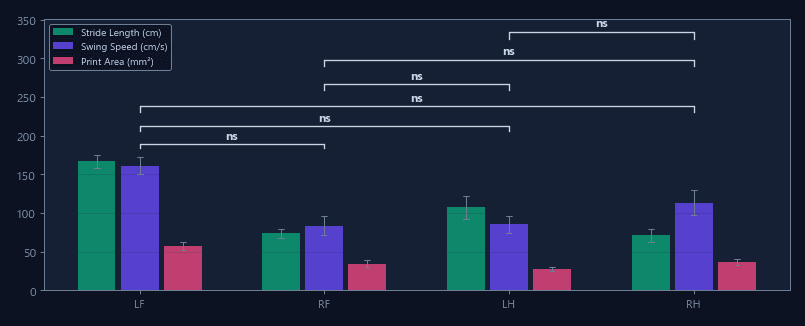
Per-paw gait parameters
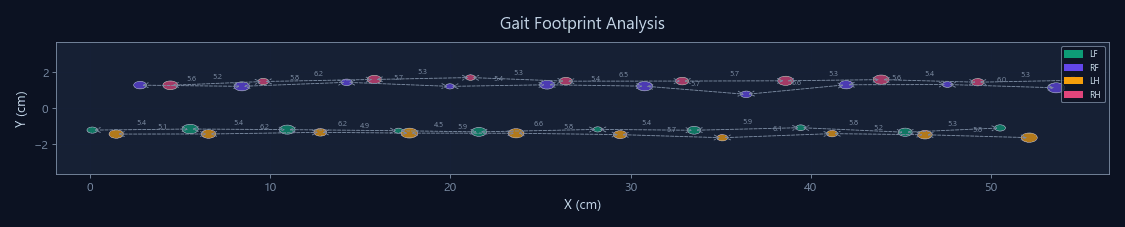
Stride length, stance duration, swing duration, stride frequency, duty cycle, and paw print area for each of four paws.
CSVJSON
Detailed locomotor kinematics from treadmill gait recordings
Stride length, stance duration, swing phase, paw print area, and inter-limb coordination — computed automatically from ventral paw video on standard treadmill setups.

CatWalk-style ventral paw analysis traditionally requires a proprietary walkway system costing $30,000+. Labs with standard treadmills or glass walkways cannot access the same level of gait analysis without manual frame-by-frame scoring.
ConductVision processes ventral paw video from any transparent treadmill or walkway. Hidden Markov Model-based stride detection classifies stance and swing phases for each paw independently, computing the full suite of gait parameters.
Stride length, stance duration, swing duration, stride frequency, duty cycle, and paw print area for each of four paws.
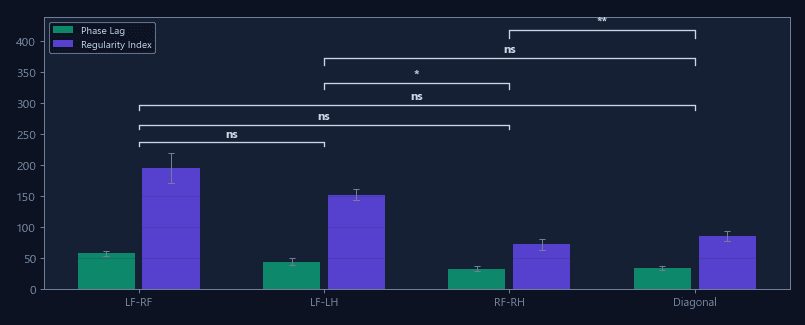
Phase relationships between limbs: regularity index, coupling symmetry, and step sequence pattern classification.
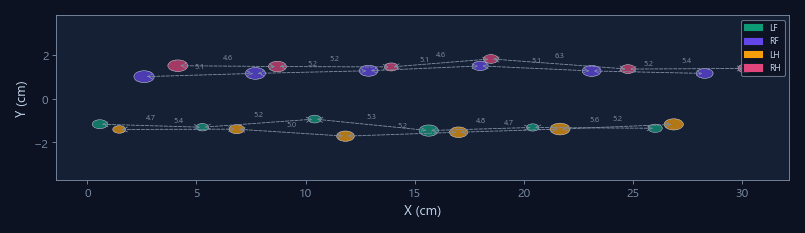
Print area, print length, print width, toe spread, and print intensity for each footfall — detecting guarding and weight distribution changes.
Paw placement asymmetry, reduced print area, and altered duty cycle on the affected side quantify pain-related gait changes.
Inter-limb coordination recovery after SCI — regularity index and step sequence pattern improvement over weeks.
Stride length reduction, increased stride variability, and shuffling gait pattern in 6-OHDA and MPTP models.
Toe spread reduction and print area changes detect peripheral neuropathy from chemotherapy or diabetic models.
| Feature | ConductVision | Typical systems |
|---|---|---|
| Hardware requirement | Any transparent treadmill/walkway | Proprietary CatWalk system ($30K+) |
| Stride detection method | HMM-based (adaptive) | Threshold-based (manual tuning) |
| Continuous recording | Unlimited duration | Run-by-run segmented |
| Inter-limb coordination | Automatic phase analysis | Manual calculation |
| Annual software license | $1,490 | $5,000+ per year |
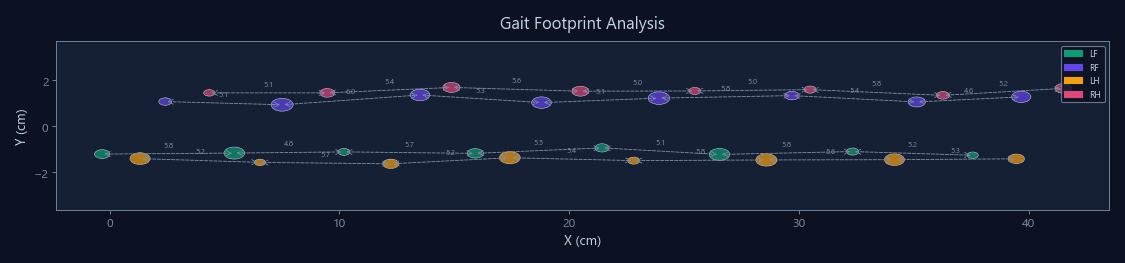
HMM-based stride detection from standard video with per-paw metrics — no treadmill or pressure plate required.
Automated balance beam scoring for traversal time, foot slips, and motor coordination.
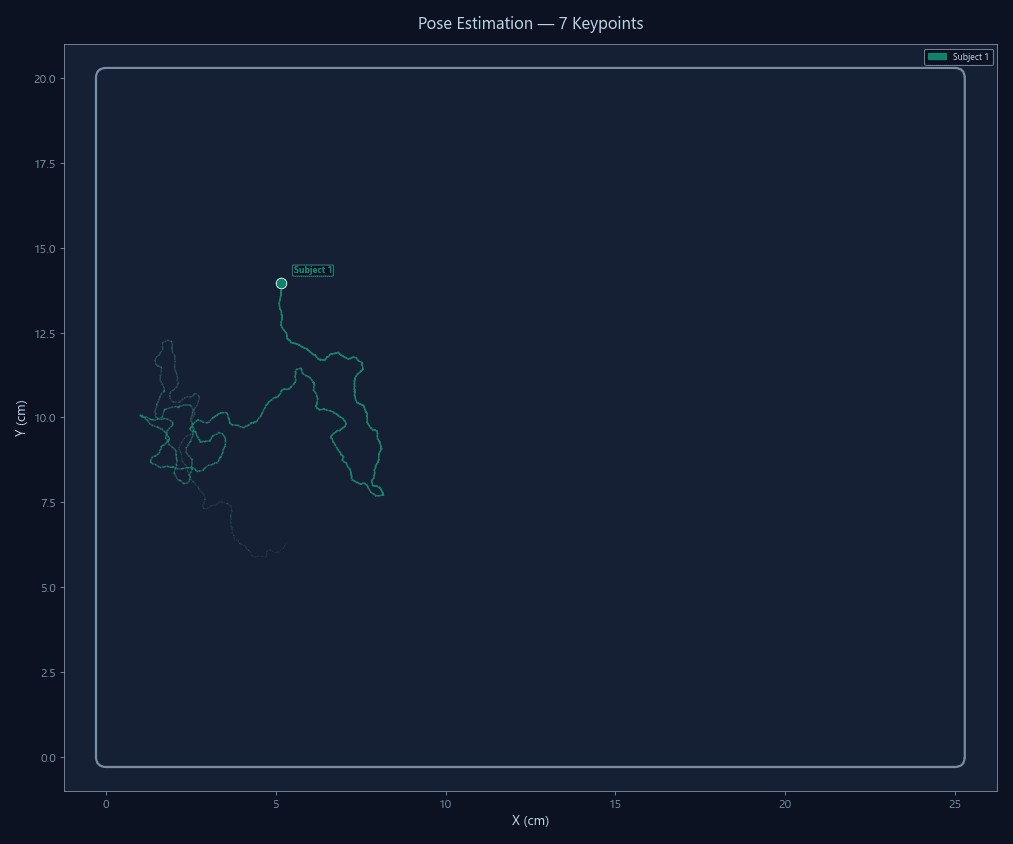
Multi-keypoint body part tracking — head, paws, tail, body center — with pretrained and custom model support.
Upload ventral paw video and get the complete suite of gait parameters without proprietary hardware.