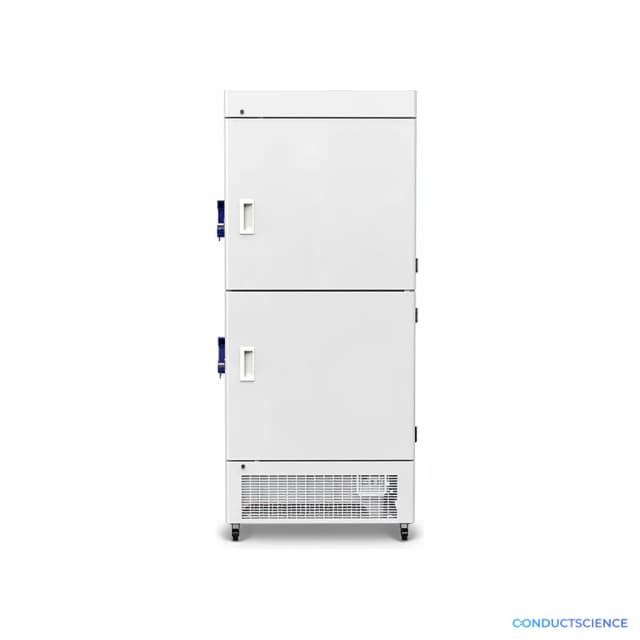
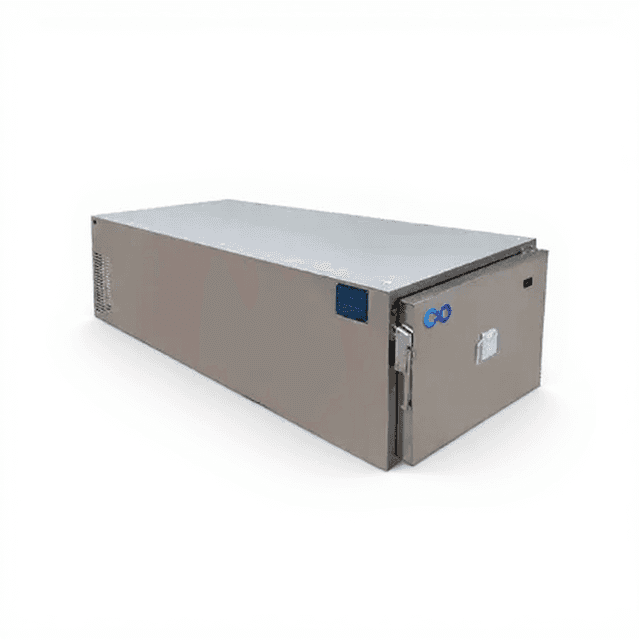
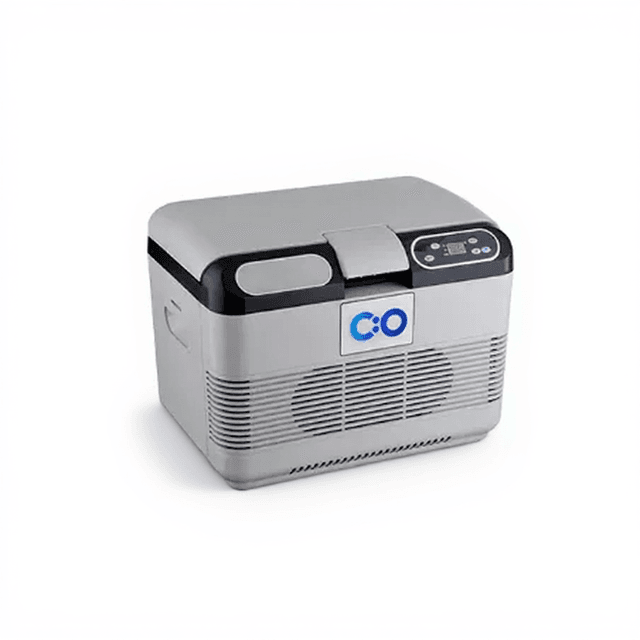
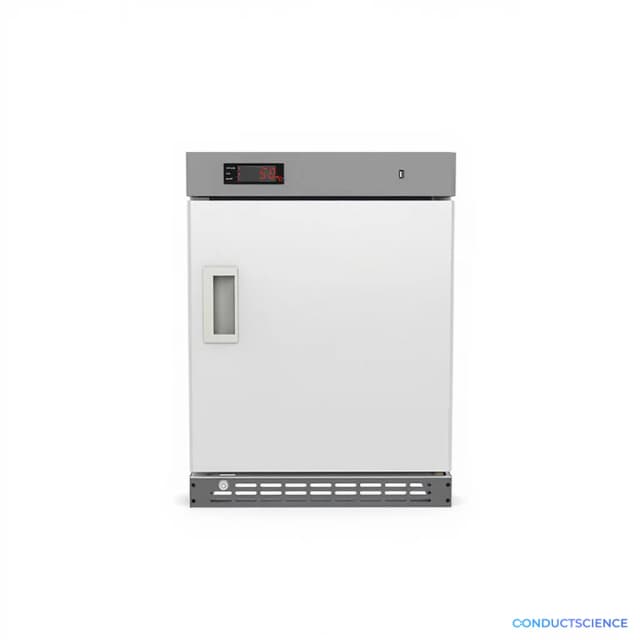
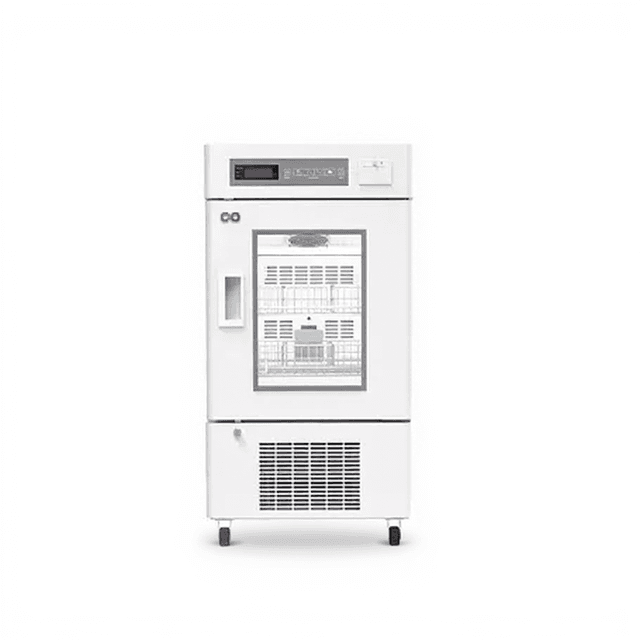
25℃ Freezer 368L 528L
Laboratory freezer providing precise 25℃ storage in 368L or 528L capacity for temperature-sensitive samples and reagents requiring elevated temperature preservation.

Louise Corscadden, PhD
Director of Science · ConductScience
Ask Louise about 25℃ Freezer 368L 528L fit, setup, configuration, or quote prep.
Already working with us? Sign in to connect this with My Scientist.
Key Specifications
Full details →- Model fit
- 2 selectable configurations
- SKU family
- BIO-0087
- Shipping box
- 188.4 x 75.0 x 73.6 cm
- Ordering
- Online checkout and quote request available
- Category
- Cold Storage
- Build notes
- Confirm accessories, station layout, and support needs before purchase
The 25℃ Freezer provides precise temperature-controlled storage at 25℃ for laboratory applications requiring elevated temperature preservation. Available in 368L and 528L capacities, this freezer maintains stable storage conditions for temperature-sensitive samples, reagents, and biological materials that require storage above ambient temperature but below body temperature.
The unit features robust insulation and temperature control systems designed for continuous laboratory operation. The substantial storage volume accommodates various sample containers and laboratory supplies while maintaining uniform temperature distribution throughout the storage compartment.
How It Works
The 25℃ freezer operates using a precision thermoelectric or compressor-based cooling system with integrated heating elements to maintain stable temperature control above ambient conditions. Temperature sensors continuously monitor internal conditions, with feedback control systems adjusting heating or cooling output to maintain the setpoint within tight tolerances.
Insulated cabinet construction minimizes thermal transfer while internal air circulation systems ensure uniform temperature distribution throughout the storage volume. The temperature control system compensates for ambient temperature variations and thermal load changes from door openings or sample additions.
Features & Benefits
Automation Level
- manual
Research Domain
- Analytical Chemistry
- Cell Biology
- Clinical Diagnostics
- Environmental Monitoring
- Microbiology
- Pharmaceutical QC
Shipping weight
- 153.0 lb
Shipping box
- L: 188.4 cm
- W: 75.0 cm
- H: 73.6 cm
| Feature | This Product | Typical Alternative | Advantage |
|---|---|---|---|
| Storage Capacity | 368L and 528L options available | Entry-level units often provide 100-300L capacity | Larger capacity reduces the need for multiple units and allows bulk storage of frequently used materials |
| Temperature Range | Precision 25℃ control | Some units offer broader temperature ranges with less precision at specific setpoints | Specialized temperature control ensures optimal conditions for materials requiring exactly 25℃ storage |
| Physical Footprint | 188.4 × 75.0 × 73.6 cm dimensions | Varies significantly based on capacity and design approach | Compact design maximizes storage capacity while fitting standard laboratory space constraints |
| Construction | Laboratory-grade construction with 153 kg operating weight | Consumer-grade units may lack robust construction for continuous operation | Heavy-duty construction ensures reliable performance in demanding laboratory environments |
The 25℃ freezer offers specialized temperature control with substantial storage capacity in a laboratory-appropriate form factor. The dual capacity options and precision temperature control address specific storage requirements not met by standard refrigeration equipment.
| Model | SKU | Listed price | Status | Shipping box |
|---|---|---|---|---|
| BDF-25V528D | BDF-25V528D | $4,229.00 | Available | 188.4 x 75.0 x 73.6 cm |
| BDF-25V368D | BDF-25V368D | $3,899.00 | Available | 188.4 x 75.0 x 73.6 cm |
Practical Tips
Verify temperature accuracy quarterly using calibrated reference thermometers placed at multiple locations within the storage compartment.
Why: Temperature uniformity can vary with location and loading patterns, requiring multiple point verification for validation.
Clean internal surfaces monthly and inspect door seals for proper closure to maintain temperature stability.
Why: Contamination and seal degradation can affect temperature control performance and energy efficiency.
Allow samples to reach room temperature before placing in the freezer to minimize temperature fluctuations and system load.
Why: Large temperature differentials can cause extended recovery times and affect other stored materials.
Implement continuous temperature logging with data backup to document storage conditions for regulatory compliance.
Why: Temperature documentation provides evidence of proper storage conditions for sample integrity verification.
Monitor temperature recovery patterns after door openings to identify potential issues with seals or control systems.
Why: Abnormal recovery times can indicate developing problems before they affect sample integrity.
Ensure adequate ventilation around the unit and verify proper electrical grounding for safe laboratory operation.
Why: Proper ventilation prevents overheating while grounding protects against electrical hazards in the laboratory environment.
Setup Guide
What’s in the Box
- 25℃ Freezer unit (typical)
- Power cable (typical)
- Temperature monitoring system (typical)
- User manual and installation guide (typical)
- Adjustable shelving system (typical)
Warranty
ConductScience provides a standard one-year manufacturer warranty covering parts and labor, with technical support for installation guidance and operational troubleshooting.
Compliance
References
Background reading relevant to this product:
What is the temperature stability and uniformity throughout the storage volume?
Temperature stability depends on the specific control system implementation. Consult product datasheet for temperature uniformity specifications and acceptable deviation ranges.
How long does temperature recovery take after door opening?
Recovery time varies with ambient conditions, door opening duration, and thermal load. Typical recovery to setpoint occurs within minutes for brief access periods.
What type of temperature monitoring and alarm systems are included?
Temperature monitoring capabilities should be verified in the product specifications. Many units include digital displays with alarm functions for temperature excursions.
Can the unit maintain temperature during power outages?
Temperature maintenance during power loss depends on insulation properties and ambient conditions. Consider backup power systems for critical applications.
What are the power requirements and operating costs?
Power consumption varies with capacity, ambient conditions, and usage patterns. Consult electrical specifications for voltage requirements and energy consumption data.
How does performance compare with incubators for 25℃ applications?
Unlike incubators designed for cell culture with CO2 control and humidity regulation, this freezer focuses on temperature-only storage with larger capacity for bulk materials.
What maintenance procedures are required for optimal performance?
Regular maintenance typically includes cleaning, temperature calibration verification, and inspection of seals and temperature sensors according to manufacturer recommendations.
Have a question about this product?
Have a question? Just ask.
Send it over and we'll email you a personalized answer — no call, no scheduling.
Prefer to talk it through?